
Classic Chevrolet Blazer Buyer's Guide
Complete buyer's guide for the classic Chevrolet K5 Blazer (1969–1994). Generation breakdown, frame and body inspection, 4WD system assessment, and current market values for drivers through to restored examples.

The full-size Chevrolet Blazer — the K5 — is the SUV that defined American open-air four-wheeling for two decades. From its 1969 launch through to the final 1994 model year, the K5 offered truck-based capability with a removable top, a big-block option, and enough room to actually work. Today it's one of the most collectible American SUVs on the market, and prices are moving accordingly.
History & Generations
First Generation (1969–1972)
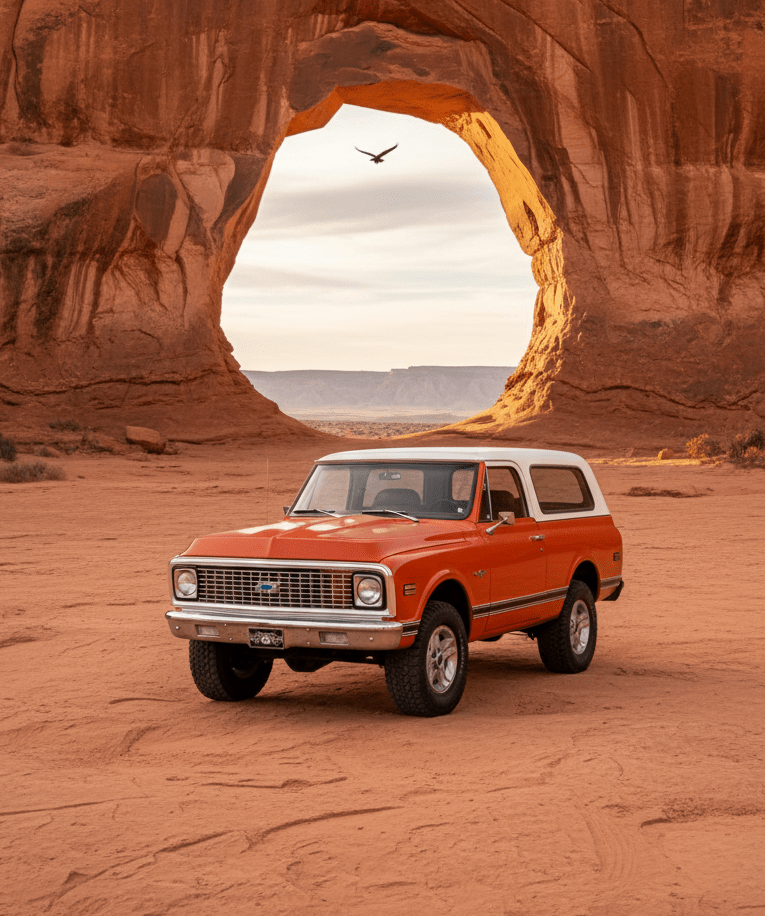
Chevrolet launched the K5 Blazer in 1969 directly in response to the Ford Bronco. The first-gen Blazer was wider, longer, and more powerful than the Bronco from day one — built on a shortened version of the C/K truck platform with a 104-inch wheelbase. It was offered with either a half cab (no rear roof) or a full removable hardtop. The base engine was a 250 inline-six, but most buyers optioned the 307, 350, or 400 small-block V8; the 307 and 350 small-block V8s were the V8 options (the first-generation K5 had no factory big-block). First-generation Blazers are the most collectible: the clean pre-federal-bumper styling and relative scarcity make them the market-topping examples.
Second Generation (1973–1991)
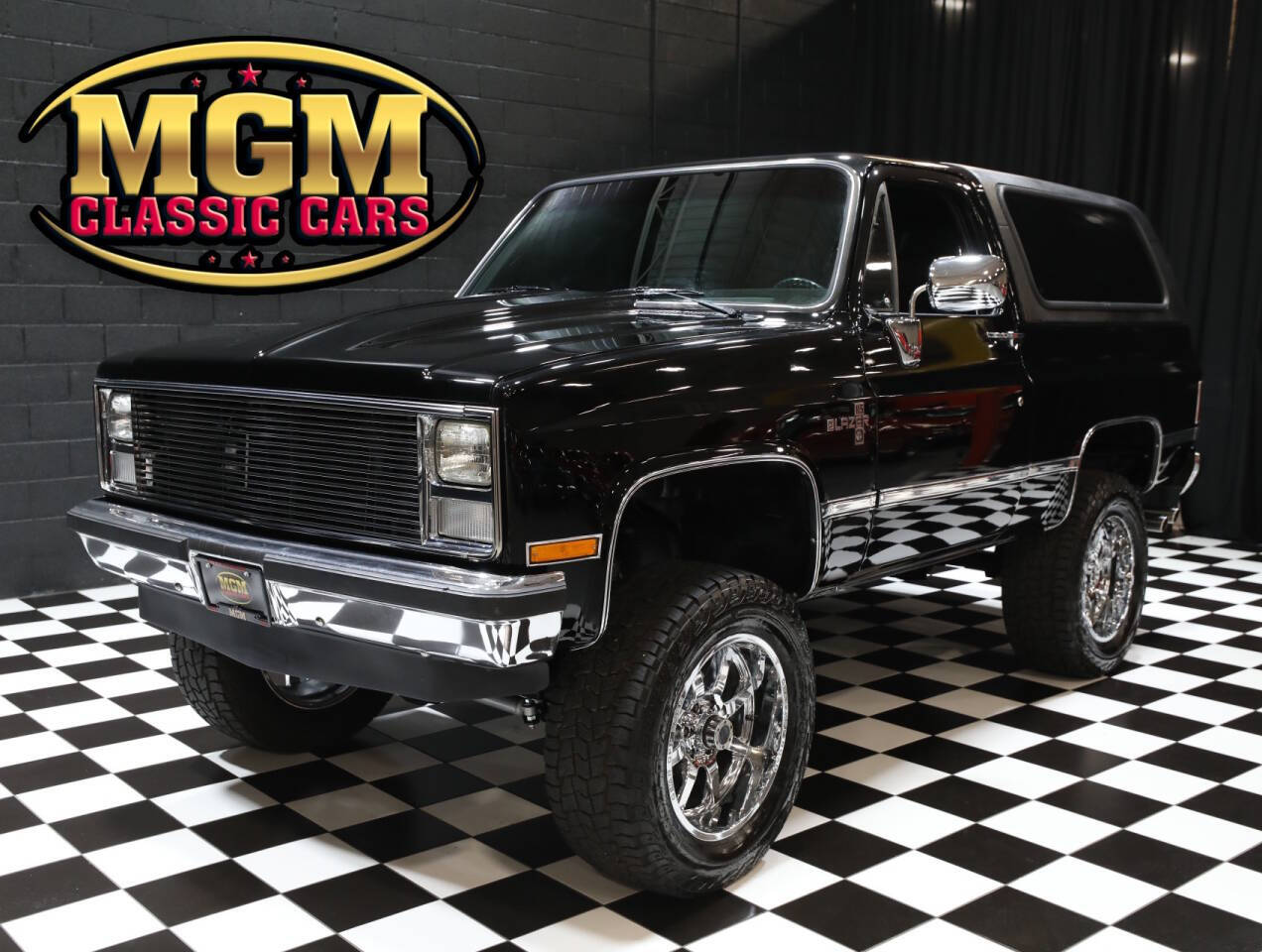
The 1973 redesign brought the squared-up styling that would remain fundamentally unchanged for nearly two decades. The new Blazer was heavier, more refined, and better-equipped — and it gained a proper rear bench seat and optional air conditioning that made it usable as a family vehicle. From a collector standpoint, the 1973–1980 round-headlight generation is the most desirable of this era. The 350 small-block is the right engine in any second-gen Blazer; the 400 and 454 big-blocks add value but add thirst in equal measure.
Final Generation (1992–1994)
The last three years of full-size Blazer production saw minimal changes before GM phased the model out in favour of the Tahoe. These are the most numerous and least expensive K5s on the market — mechanically sound but without the styling cachet of the earlier trucks.
What to Inspect First
Two things are non-negotiable on any K5 Blazer: the frame and the body tub. These trucks lived hard lives — trails, snow, beach, farm — and the evidence is almost always in the frame rails and the floor pans.
| Engine | Years Available | Notes |
|---|---|---|
| 250 I6 | 1969–1984 | Base engine. Reliable but underpowered off-road. |
| 350 V8 (small block) | 1969–1994 | The right engine. Best balance of power, parts, and economy. |
| 400 V8 (small block) | 1970–1980 | More torque than 350, known for cracking blocks if overheated. |
| 454 V8 (big block) | 1970–1974 | Rare, torque monster, premium value. |
"Don't buy somebody else's trail rig. A Blazer that's been lifted, locked, and run hard in the mud is a fun truck for the guy who built it — and an expensive puzzle for the next buyer. Either find a clean original that somebody actually cared for, or find a rust-free driver and build it your way from the start. The middle ground is where people lose money."
— Robert Halloran
Market Outlook
The K5 Blazer market has tracked closely behind the C10 pickup surge of the last five years, with first-generation (1969–1972) trucks in the strongest demand. A clean first-gen Blazer in solid unrestored condition now fetches $28,000–$55,000; restored examples in correct colour with documented history are pushing $70,000–$95,000. Second-generation (1973–1980) trucks with round headlights run $18,000–$40,000 for drivers, with showpieces at $50,000+. The 1981–1991 quad-headlight trucks remain the most accessible at $12,000–$28,000 for clean examples.
Browse Chevrolet Blazer listings
What to Look For
Frame first, always. Use a flashlight under the truck and probe the frame rails with a screwdriver at every point you can reach.Floor pans second. Remove the carpet and the rear seat. Full-floor inspection on both sides.
4WD system third. Engage both high and low range with the truck moving slowly. Both front locking hubs should engage without grinding.
Originality: a first-gen Blazer with its original 350 and matching-numbers drivetrain commands $10,000–$20,000 more than one with a replacement engine.
Pre-Purchase Checklist
-
Inspect frame rails under cab and rear body
Use flashlight and screwdriver. Check boxed sections and cab mounts. Rotten rails are a structural deal-breaker. -
Remove rear seat and check floor pan
Full floor pan inspection including corners. Patch panels over rust holes indicate hidden structural problems. -
Test 4WD engagement
Engage low-range and high-range 4WD. Both front lockouts should engage without grinding. -
Check front axle U-joints
Worn U-joints are common on high-mileage 4WD trucks. Grab the driveshaft and check for play. -
Inspect removable top mounting points
Header bar and top latches rust from the inside. Check mounting flanges for cracks or rust-through. -
Examine tailgate and rear body corners
Rear lower corners rot behind the wheel arches. Inspect with mirror and light. -
Verify engine casting numbers
Check casting numbers and partial VIN stamp on block. Confirms displacement for value assessment. -
Test brakes
Brake pulsation usually means warped rotors or drums. Check pad/shoe thickness. -
Check steering box play
More than 2 inches of dead travel at the steering wheel indicates a worn steering box — rebuildable. -
Document everything before purchase
Photo frame, floor, engine bay, all body panels, stamps, and tags.
Common Issues
Frame rust is the primary concern — these trucks were used hard and often garaged poorly. The frame rails under the cab and at the rear body mounts are the critical zones.Body rust concentrates at floor pans, lower cab corners, tailgate corners, and the windshield header area. The 4WD drivetrain is robust but high-mileage examples commonly need front axle U-joint replacement, transfer case shift linkage rebuild, and front differential service.
The 400 small-block (1970–1980) can crack the block if overheated. Verify cooling system history on any 400-powered truck.
More Blazer for sale
 Dealer
 United States
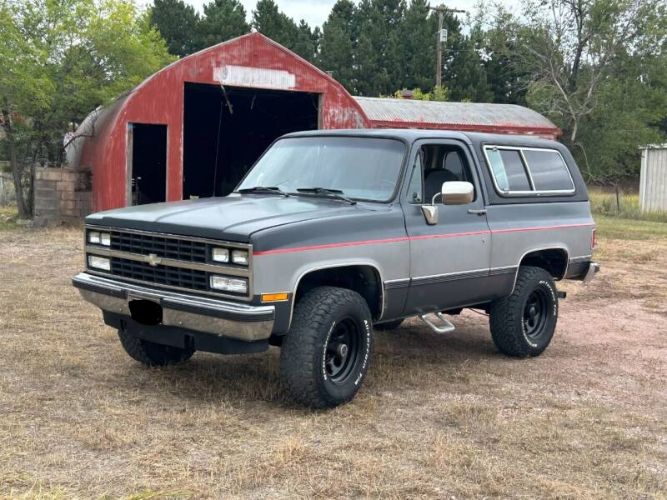
1990 Chevrolet Blazer
 Dealer
United States
Dealer
United States
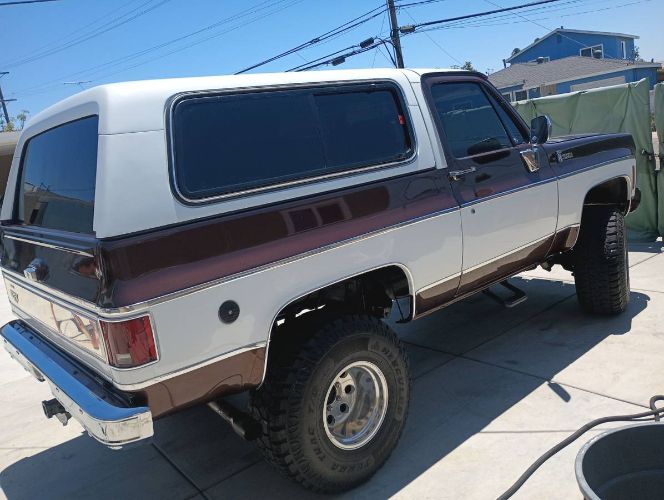
1977 Chevrolet Blazer
Pricing Guide
First-generation K5 Blazer (1969–1972): driver-quality examples run $28,000–$50,000. Restored correct-colour trucks: $65,000–$95,000. Big-block first-gens add $5,000–$15,000 premium.Second-generation round-headlight (1973–1980): clean drivers at $18,000–$38,000; restored show-quality at $45,000–$65,000.
Quad-headlight generation (1981–1991): $12,000–$28,000 for solid drivers. Heavily modified trail rigs trade at discounts to equivalent original trucks.
Fun Facts
The K5 Blazer name referred to the full-size platform. The smaller "S-10 Blazer" launched in 1983 was a completely different vehicle — smaller, lighter, and based on the S-10 pickup platform. Today's collectors distinguish carefully between the two.The 1969 Blazer outsold the Ford Bronco in its first year of production — 4,935 Blazers against 3,877 Broncos — despite being a late-year launch.
Frequently Asked Questions
Ready to find your Blazer?
Browse 6+ active Chevrolet Blazer listings on Classic Cars Arena.
View Listings →