
Chevrolet Cheyenne Buyer's Guide
The Chevrolet Cheyenne was General Motors' answer to the question: can a truck be both capable and comfortable? For two decades it was the top-trim C/K pickup — the truck that made it acceptable to use a work vehicle as a daily driver without apology.

Robert Halloran here. The Cheyenne name means something specific in the classic truck world — it was Chevrolet's top trim level for the C/K series from 1971 through 1994, positioning it above the Custom and Custom Deluxe as the luxury expression of the work truck. If you wanted the best Chevy pickup money could buy in 1972, you ordered a Cheyenne Super. The name has carried weight ever since.
Cheyenne trucks are now collected both as examples of peak 1970s truck luxury and as platforms for restomods where the full-length trim package adds a finished, upmarket look that bare Custom trucks can't replicate. Finding a clean original Cheyenne is worth the effort — these are the trucks that were actually cared for, because the people who paid Cheyenne prices tended to be the people who maintained their investment.
The Cheyenne Name's History
Chevrolet introduced the Cheyenne trim package for the 1971 model year C/K trucks, available on both the new-for-1973 Squarebody generation and the final year of the 1967–1972 second-gen trucks. The Cheyenne sat above the Custom Deluxe in Chevrolet's truck trim hierarchy and offered features that were genuinely novel in pickups of the era: color-keyed interiors, full carpeting, woodgrain instrument panel trim, and seating materials that would not have been out of place in a contemporary Chevrolet passenger car.
The "Cheyenne Super" variant available through 1973 was the absolute top of the line — a truck so equipped with comfort features that Chevy marketing struggled to position it without alienating buyers who associated trucks with utility rather than luxury. These trucks were genuinely good vehicles: capable of real work but comfortable enough for daily commuting, which was a novel proposition in 1971.
1971–1972: The Last of the Second Generation
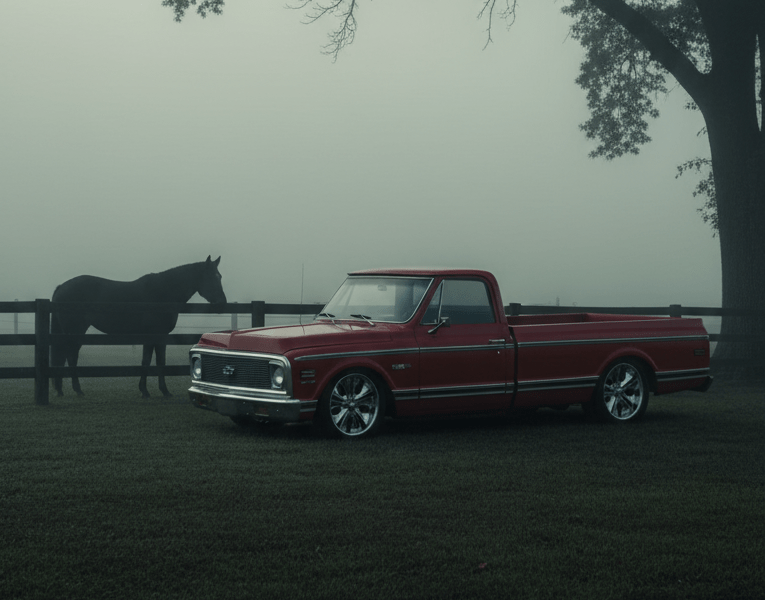
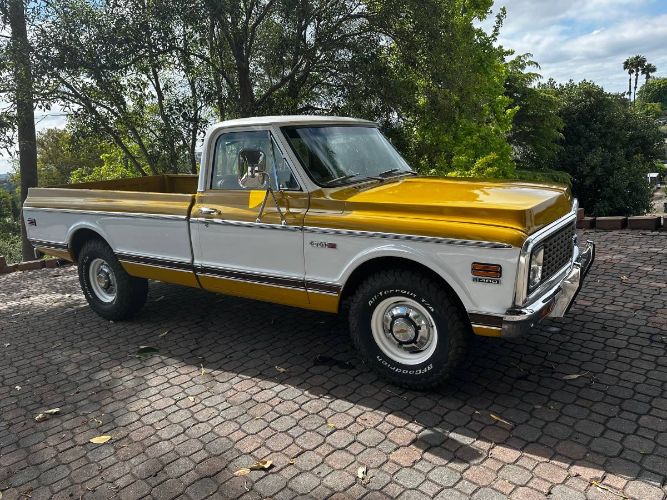
The Cheyenne trim on the 1967–1972 body is the most collectible expression of the nameplate. The combination of the handsome second-gen styling with the luxury trim creates a truck that stands apart from the Custom and Custom Deluxe equivalents. Woodgrain trim, full carpeting, and the "Cheyenne Super" seat upholstery options are the key identification points. These trucks are relatively rare because the trim was only available for two model years on this body style, and many original Cheyenne trucks have had their interiors replaced during decades of ownership.
1973–1987: The Squarebody Cheyenne
The Squarebody generation (1973–1987) is where the Cheyenne nameplate became most associated with the truck-as-lifestyle-vehicle proposition. The boxy, angular body had a functionality and purposefulness that appealed to the decade's sensibility, and the Cheyenne trim elevated it into something that could be parked in front of a suburban home without comment.
In 1975, Chevrolet introduced the Silverado trim level above the Cheyenne, pushing Cheyenne to a mid-tier position. This changed the dynamic significantly — from 1975 onward, Cheyenne was the "good but not best" trim, which means Cheyenne trucks from this era are often more affordable than Silverados while offering only marginally fewer features. For buyers who want the look without the Silverado premium, a late-1970s Cheyenne is excellent value.
The Cheyenne in the OBS Era (1988–1994)
The final generation of the C/K series continued the Cheyenne designation through 1994, when it was phased out as Silverado became the primary non-base trim. These OBS-generation Cheyenne trucks are practical classic vehicles — comfortable, capable, and old enough to be interesting while still usable as daily transportation. Low-mileage examples in original condition are becoming harder to find as the pool of honest survivors shrinks.
What Makes a Cheyenne Worth Buying
The honest case for seeking out a Cheyenne over a base Custom is straightforward: the interior quality is better, the overall condition of well-maintained examples tends to be better, and the market recognizes the trim level's premium. A correct Cheyenne with original interior and matching trim is worth meaningfully more than an equivalent Custom — and the premium is justified by the actual difference in equipment and build attention.
The case against is equally straightforward: finding a Cheyenne with original interior intact after 40–50 years of use is challenging. The carpets wore out, the woodgrain trim faded or cracked, and many owners replaced the interior with cheaper materials over time. A Cheyenne with a replaced interior is worth only marginally more than a Custom unless the replacement was done to correct Cheyenne specification.
Browse Chevrolet Cheyenne listings
What to Look For
Verify interior originality — this is what separates a premium Cheyenne from an equivalent Custom. Look for original Cheyenne-specific woodgrain trim inserts, correct upholstery pattern and material for the year, and full carpeting throughout (not rubber mats). On 1971–1972 trucks, verify the Cheyenne Super trim package if claimed. Check for the standard C/K rust issues: cab corners, floor pans, rear cab mounts. Confirm Cheyenne-specific exterior badging is present and correct.Pre-Purchase Checklist
-
Interior Originality
Inspect woodgrain trim inserts for correct pattern — replacement woodgrain is usually visibly different from original. -
Upholstery
Verify upholstery material and pattern matches Cheyenne specification for the model year. -
Carpet vs Rubber Mats
Cheyenne trucks had full carpeting — rubber mat replacements indicate interior wear or amateur restoration. -
Cheyenne Badging
Confirm Cheyenne emblems are present on the cab and tailgate — missing badging often indicates trim-level misrepresentation. -
Cab Corner Rust
Probe cab corners — rust here is nearly universal on untreated Squarebody trucks. -
Floor Pan & Rear Cab Mounts
Inspect floor pans from underneath and check rear cab mount area on 1973+ trucks. -
Door Trim Panels
Check Cheyenne-specific door trim panels for correct material and condition — reproductions vary in quality. -
Drivetrain Verification
Confirm engine and transmission match claimed specification via firewall tag decode.
Common Issues
Interior wear and replacement — the most common devaluation factor for Cheyenne trucks. Woodgrain trim fading, cracking, or replacement with incorrect materials. Carpet replacement with rubber mats. Same structural issues as all C/K trucks: cab corner rust, floor pan perforation, rear cab mount corrosion on Squarebody generation. Cheyenne-specific door trim panel deterioration.More Cheyenne for sale
 Dealer
 United States
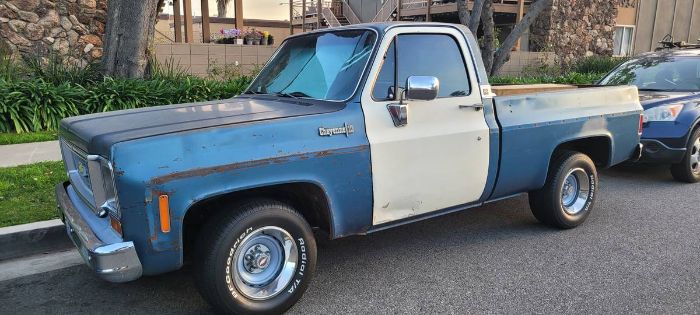
1974 Chevrolet Cheyenne
 Dealer
United States
Dealer
United States
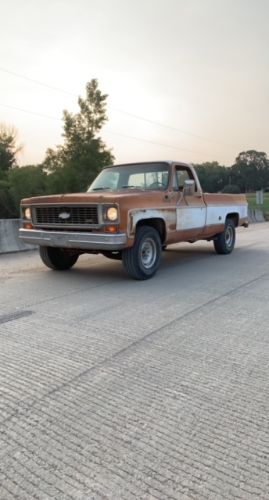
1973 Chevrolet Cheyenne
Pricing Guide
1971–1972 Cheyenne on second-gen body: $25,000–$55,000 for correct examples. 1973–1974 Cheyenne Super (Squarebody): $20,000–$40,000. 1975–1987 Cheyenne (mid-tier): $12,000–$28,000. 1988–1994 OBS Cheyenne: $8,000–$20,000 for clean low-mileage examples. Intact original Cheyenne interiors add $4,000–$10,000 premium over comparable Custom trucks.Fun Facts
The "Cheyenne Super" (1971–1973) was available with an interior package so upscale that it was compared favorably to Chevrolet passenger cars of the same era in contemporary automotive press tests. The name "Cheyenne" was chosen to evoke the frontier spirit — a tradition of naming some Chevrolet trucks after Native American peoples (Cheyenne, Apache) that continues to this day.Frequently Asked Questions
Ready to find your Cheyenne?
Browse 6+ active Chevrolet Cheyenne listings on Classic Cars Arena.
View Listings →