
Classic Chevrolet Corvair Buyer's Guide
Expert buyer's guide to the Chevrolet Corvair 1960–1969. Cooling tin inspection, engine seal diagnosis, Corsa turbo identification, suspension generations, and market pricing.

The Chevrolet Corvair was the most technically adventurous American car of the 1960s and the most politically controversial. Air-cooled, rear-engined, and available with a turbocharged engine two full decades before turbos became mainstream, the Corvair offered genuine European sports car character at Chevrolet prices. Ralph Nader painted it as dangerous; independent government testing largely exonerated the design. Today the Corvair is a legitimate collector car with a devoted community, excellent club support through CORSA, and one of the most engaging driving experiences in the classic American market — but its unique air-cooled engineering demands a buyer who knows what to inspect.
History & Generations
The Corvair launched for 1960 as GM's answer to the Volkswagen Beetle — air-cooled, rear-engined, fully independently sprung. Unlike the Beetle, it had a flat-six engine (not four) and a choice of body styles including coupe, sedan, convertible, station wagon, and even a van and pickup. General Motors sold over 250,000 Corvairs in the first model year.
First Generation (1960–1964)
The original Corvair used a swing-axle rear suspension that, under extreme cornering, produced handling behavior demanding driver skill. This is what Nader criticized. First-gen cars are attractive, affordable, and available in a wide range of body styles. The 1964 Monza Spyder offered a turbocharged engine making it especially collectible.
Second Generation (1965–1969)
Universally considered one of the most beautiful American designs of the decade. The 1965 redesign replaced the swing-axle with fully independent rear suspension — eliminating the first-gen controversy. The Corsa model introduced the turbocharged flat-six as a production engine, making it one of the first American turbocharged production cars, alongside the 1962 Oldsmobile Jetfire. These are the cars serious collectors want.
Years to Look For
- 1965–1966 Corsa: Top-spec second-gen. Turbocharged or quad-carb 140 hp flat-six. The most historically significant and desirable Corvair.
- 1967–1969: Final production years. Clean survivors with good CORSA spares support.
- 1964 Monza Spyder: Last year of the turbocharged first-gen in the original body. Unique combination of styling and turbo performance.
- 1960–1962 Lakewood wagon: Unusual air-cooled rear-engine station wagon with a devoted niche following.
What to Look For In Person
Go to the rear decklid first. Open it and audit every piece of cooling tin surrounding the engine — every section of aluminum shrouding that directs airflow from the belt-driven fan through the cylinder fins must be present and correctly installed. Missing tin is an immediate yellow flag. Check the fan belt and fan housing for cracks.
On turbo cars, grip the turbocharger shaft with the engine off and test for play. Minimal movement is acceptable; sloppy shake means the center section bearings are worn. A turbo rebuild at a Corvair specialist runs $300–$600.
| Engine | Configuration | Horsepower | Notes |
|---|---|---|---|
| Base flat-six | Air-cooled, 2 carbs | 80–95 hp | Standard 1960–1969 |
| 4-carb flat-six | Air-cooled, 4 carbs | 140 hp | Performance option 1965–1969 |
| Turbocharged flat-six | Air-cooled, turbo | 150 hp | Monza Spyder 1962–64, Corsa 1965–66 |
"Every Corvair I inspect, I go straight to the cooling tin before I do anything else. It's the first thing owners neglect and the most expensive to get wrong. Missing tin, cracked tin, badly-fitted tin — these cars will overheat and crack a cylinder if you run them that way. Get the tin right and the rest of the car follows."
— Mike Sullivan
Market Outlook
Corvairs are among the best values in the classic market. A clean second-gen coupe runs $12,000–$22,000 at a time when equivalent 1965–1969 Mustangs cost three times as much. Corsa turbocharged: $20,000–$35,000. First-gen convertibles: $18,000–$32,000. Second-gen convertibles carry a $5,000–$10,000 premium over coupes. Rampside pickups and Greenbrier vans have strong niche appreciation. The Corvair is one of the most undervalued collector cars in the American market.
Browse Chevrolet Corvair listings
 Dealer
 United States
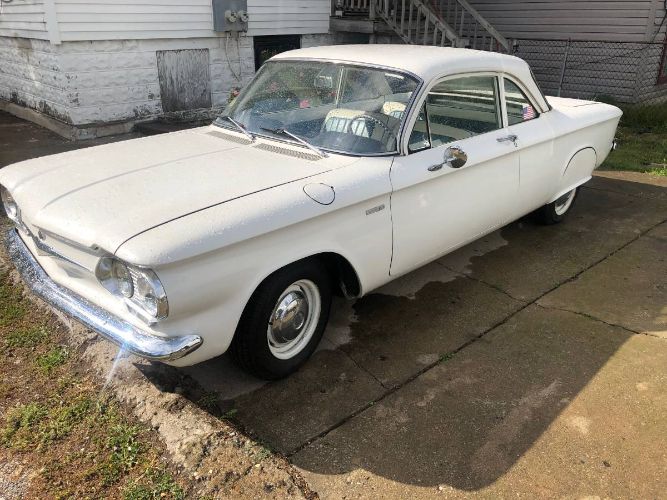
1961 Chevrolet Corvair
 Dealer
United States
Dealer
United States
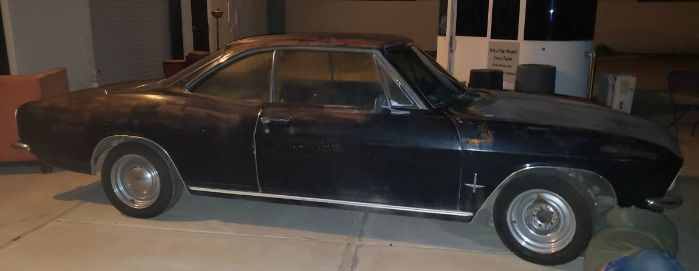
1966 Chevrolet Corvair
What to Look For
Inspect the cooling tin around the rear engine before anything else — every piece of shrouding must be present and correctly fitted. Missing tin causes cylinder overheating and cracking. Check the 12 push-rod tubes for oil seepage. Inspect the engine cradle crossmember underneath for rust — structural. On turbo cars, check turbocharger shaft play with engine off. Inspect body for unibody rust points: rocker panels, floor pans, lower quarters, and rear valance. On convertibles, inspect the top mechanism and header weatherstripping. Verify trim level via the firewall data plate to confirm Corsa or Monza designation.Pre-Purchase Checklist
-
Cooling Tin Audit
Open rear decklid and verify every piece of cooling shrouding is present, correctly installed, and undamaged. Missing tin = overheating risk. -
Push-Rod Tube Inspection
Check all 12 push-rod tubes for oil seepage. Light weeping is common on old engines; heavy oil loss means O-ring replacement needed. -
Engine Cradle Rust
Inspect the engine cradle crossmember from underneath for rust. Structural rot here requires welding repair. -
Turbo Shaft Play
On Spyder/Corsa turbo cars, check turbocharger shaft play with engine off. Excessive play indicates center section bearing wear. -
Carburetor Sync
Start the engine and listen for even running. A badly-synchronized 4-carb setup runs rough; a properly tuned one is smooth. -
Floor Pan Condition
Probe floor pans from underneath. Rust at seat mount areas and forward of the rear axle is common on unibody Corvairs. -
Rocker Panels
Check rockers with a magnet. Filler is non-magnetic. Check for perforation at the rocker-to-quarter junction. -
Trim Level Verification
Locate the firewall data plate and verify the original trim level: 500, 700, Monza, or Corsa. Corsa cars command a premium. -
Rear Suspension Condition
On 1960–1964 cars, inspect the camber compensator bar. On 1965–1969 cars, check the fully-independent U-joints for wear and play. -
Convertible Top Operation
Operate the top through a full raise-and-lower cycle. Check the header seal and side seals for leaks and smooth operation.
Common Issues
Missing or damaged cooling tin is the most serious reliability issue — overheating causes cracked cylinders, a very expensive repair ($3,000–$6,000). Push-rod tube O-ring failure causes oil seeping; budget $200–$400 for O-ring replacement. Engine cradle rust is structural and requires welding. Carburetor synchronization on 4-carb cars is a skill — a badly-tuned setup runs rough and deters buyers. Early swing-axle cars (1960–1964) reward understanding of the suspension geometry. Turbocharger center section bearing failure is repairable but requires a Corvair specialist.More Corvair for sale
United States
1961 Chevrolet Corvair
 Dealer
United States
Dealer
United States
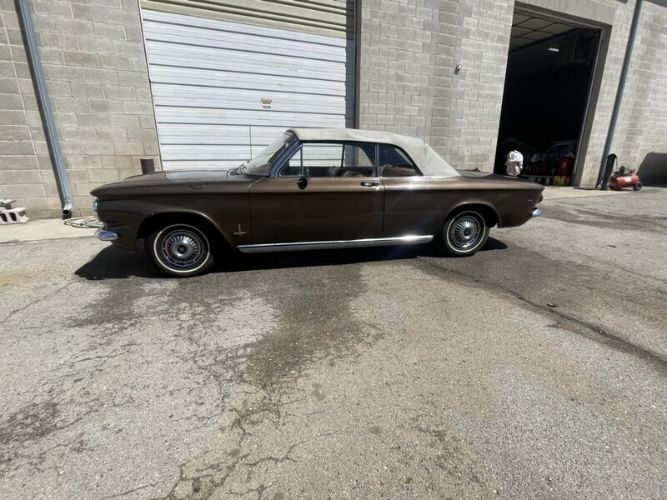
1963 Chevrolet Corvair
Pricing Guide
First-gen 1960–1964 base coupe driver: $7,000–$14,000. First-gen convertible: $15,000–$28,000. Monza Spyder turbo: $14,000–$22,000. Second-gen 1965–1969 base coupe: $10,000–$18,000. Corsa 4-carb: $16,000–$26,000. Corsa turbocharged: $20,000–$35,000. Second-gen convertible: add $5,000–$10,000. Rampside pickup: $18,000–$32,000. Greenbrier van: $12,000–$25,000. Corvairs remain a significant value relative to contemporary Mustangs and Camaros.Fun Facts
Ralph Nader published "Unsafe at Any Speed" in 1965 primarily targeting the Corvair — the same year Chevrolet introduced the fully revised second-gen with independent rear suspension. A 1972 NHTSA study found the 1960–1963 Corvair's handling "not significantly worse" than contemporary vehicles. The Corvair was the only American car built simultaneously as a sedan, coupe, convertible, station wagon, van, and pickup truck on the same platform.Frequently Asked Questions
Ready to find your Corvair?
Browse 6+ active Chevrolet Corvair listings on Classic Cars Arena.
View Listings →