
The pony car field takes shape
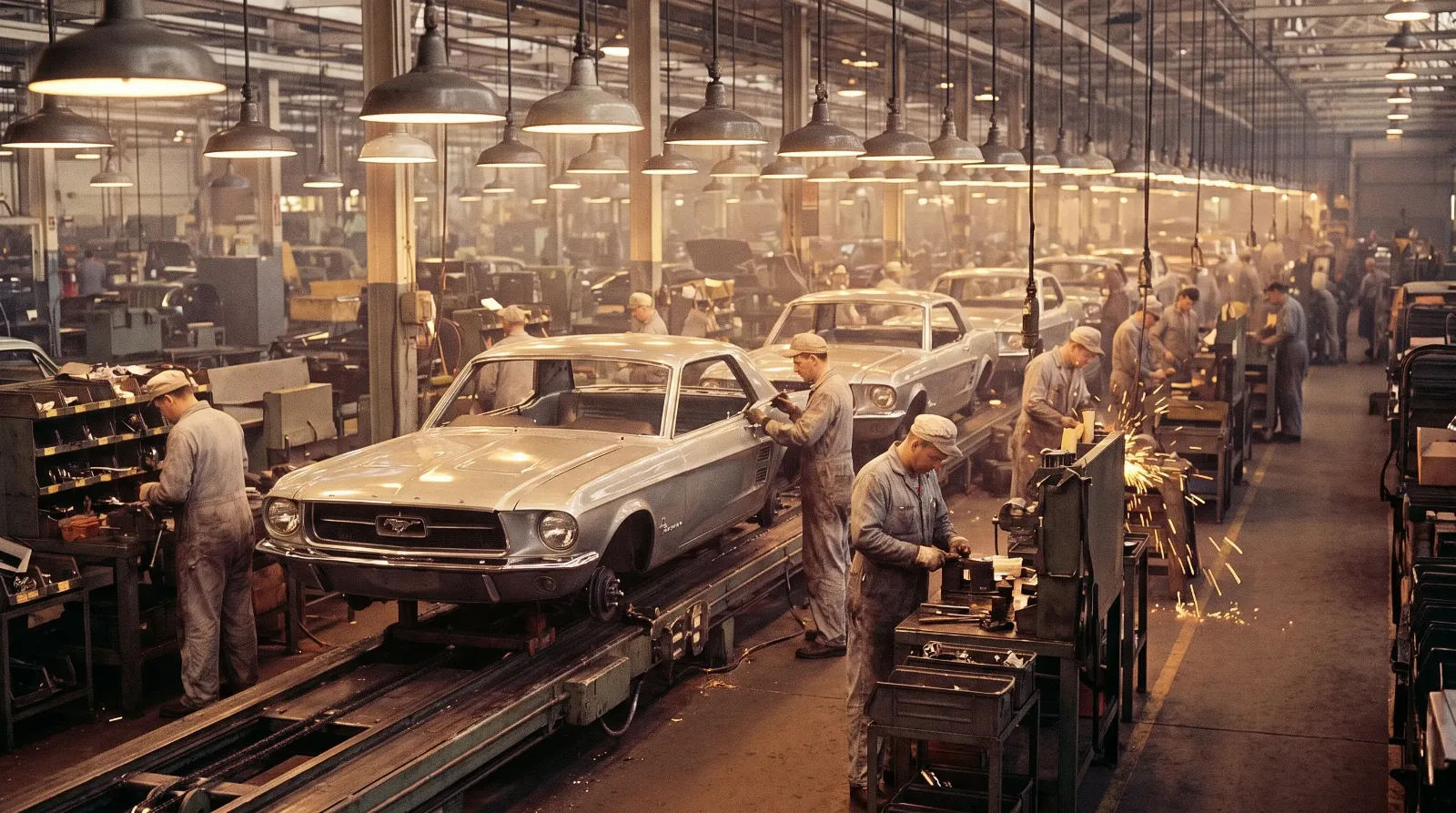
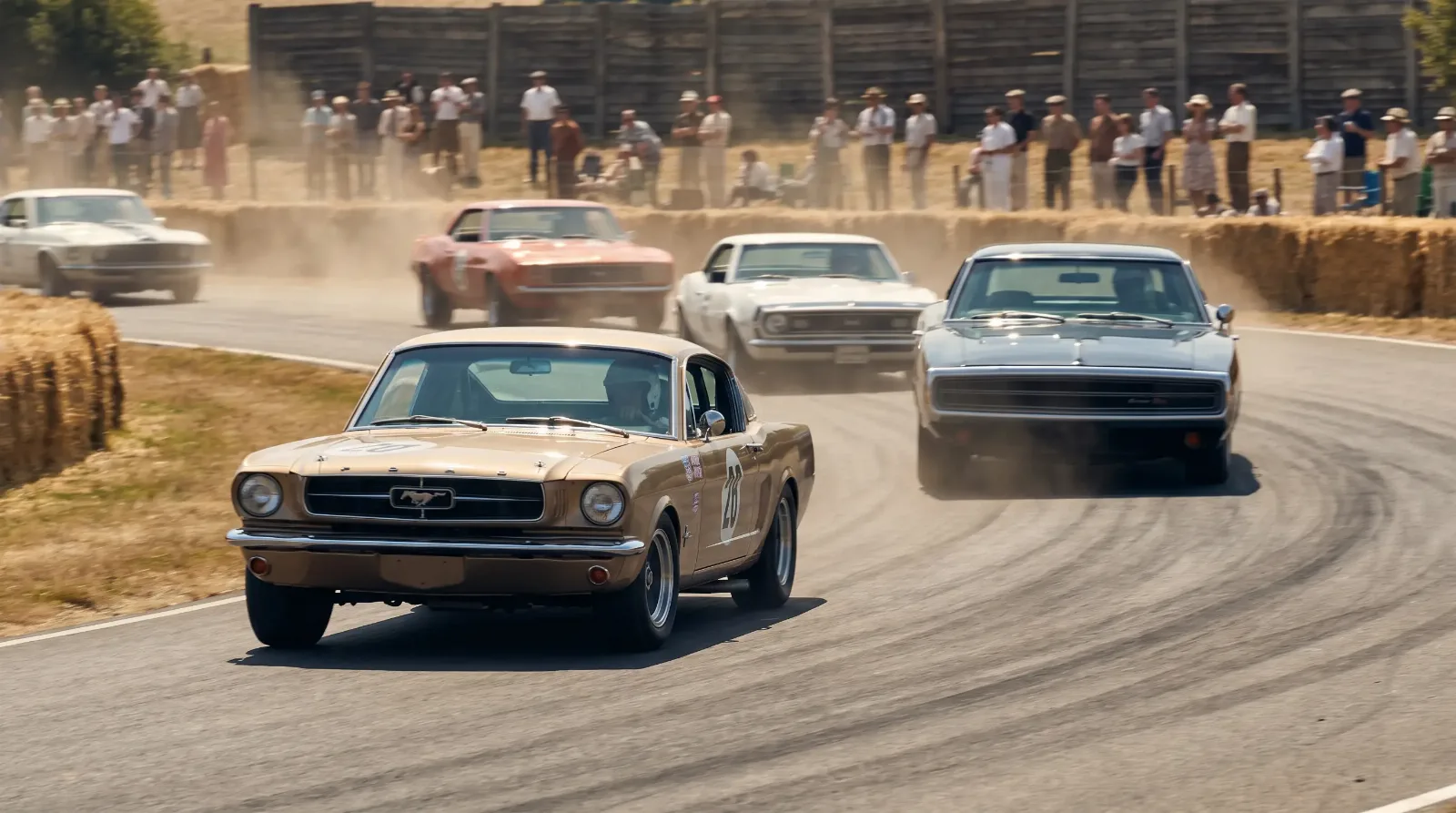
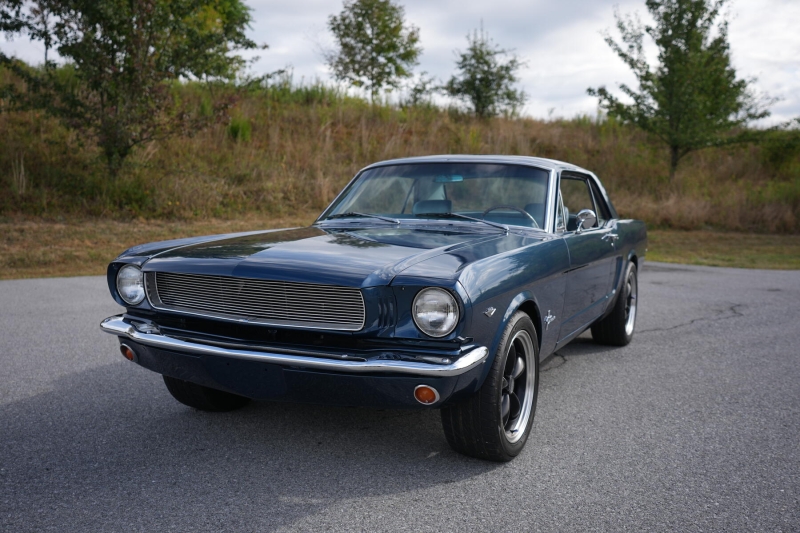
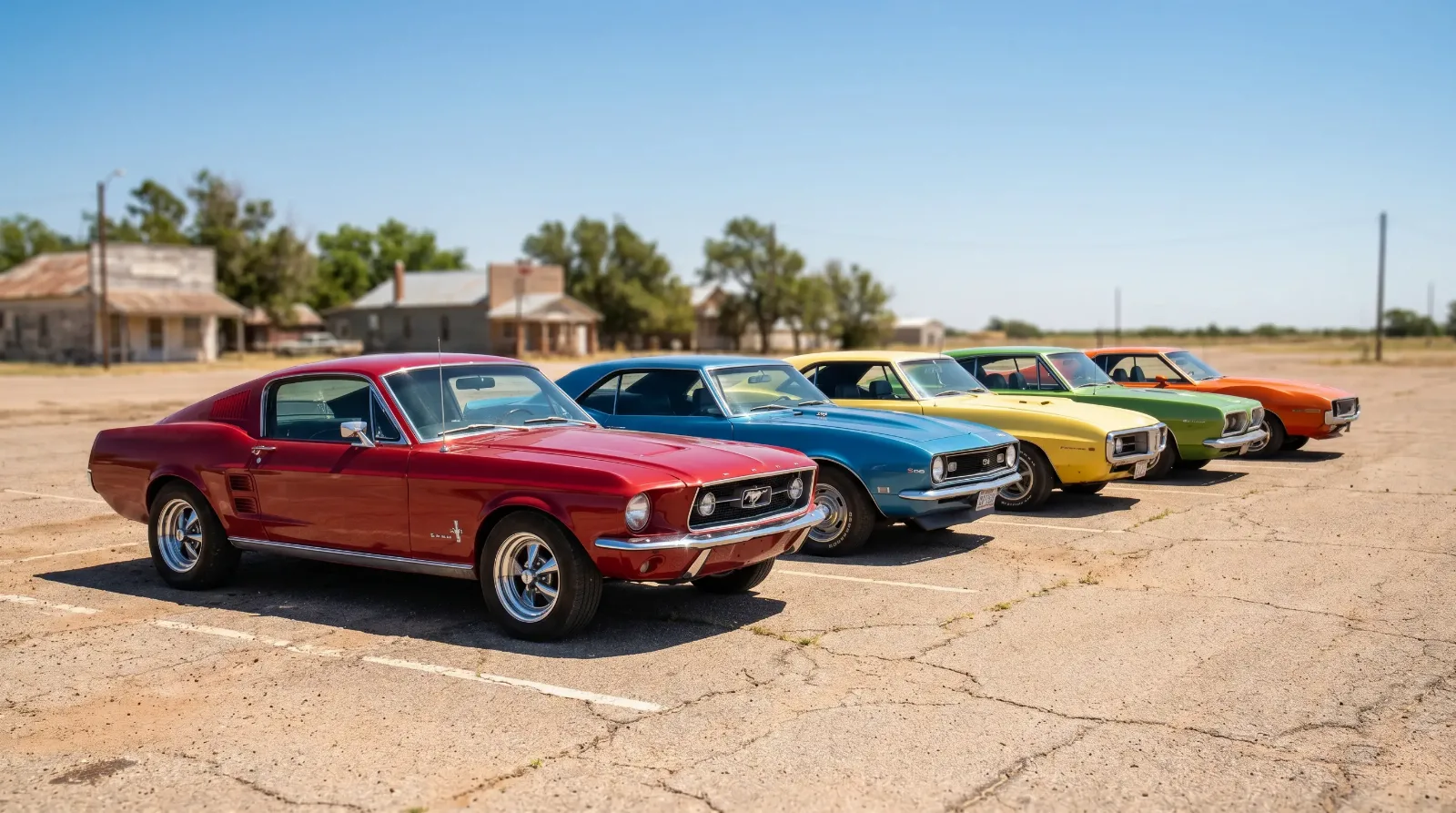
When Ford launched the Mustang in April 1964, it created something that did not exist yet: a category. The term "pony car" came after the fact, coined to describe a new kind of American compact, sporty and affordable, built on an economy-car platform but styled to carry a personality several sizes larger. The Mustang sold 418,812 units in its first twelve months, a record that stunned the industry and set every rival brand searching for an answer. Understanding the pony car phenomenon means understanding the cars that followed, how each was positioned, and why the Mustang remained the fixed point around which everything else orbited.
Each rival entered the segment with a clear strategic argument: the Mustang does this, we do that better. Some argued luxury. Some argued performance credentials. Some simply argued availability. None of them displaced the original.
Mercury Cougar: the upmarket platform-mate
Mercury's answer arrived for 1967, and it came from the most intimate possible position: the Cougar shared its unitized body structure and Falcon-derived chassis architecture with the Mustang itself. Ford Motor Company built both, and the family resemblance in the engineering was intentional. What Mercury did was stretch the wheelbase three inches longer than the Mustang's 108 inches to 111 inches, add a more formal roofline, and position the car squarely at buyers who wanted pony-car proportions wrapped in near-luxury trim.
Standard equipment on the base 1967 Cougar included a 200-horsepower 289 cubic-inch V8, something Mustang buyers paid extra to specify. The interior was noticeably more finished: full-width sequential turn signals at the rear became a Cougar signature detail immediately. Mercury framed the car not as a performance machine but as a "personal luxury" proposition, a phrase the brand used in its own marketing language.
The positioning was deliberate. Mercury was not trying to out-drag a Mustang GT. It was trying to attract a slightly older, slightly more affluent buyer who still wanted the silhouette but preferred a quieter cabin and more standard equipment. First-year 1967 production of 150,893 Cougars showed the strategy was viable, yet Mercury could never fully escape the shadow of the car beneath it. Automotive journalists of the era consistently reviewed the Cougar in direct reference to the Mustang, and readers understood the relationship immediately. The Cougar was a Mustang dressed for dinner, and that context was inescapable.
Pontiac Firebird: performance as the argument
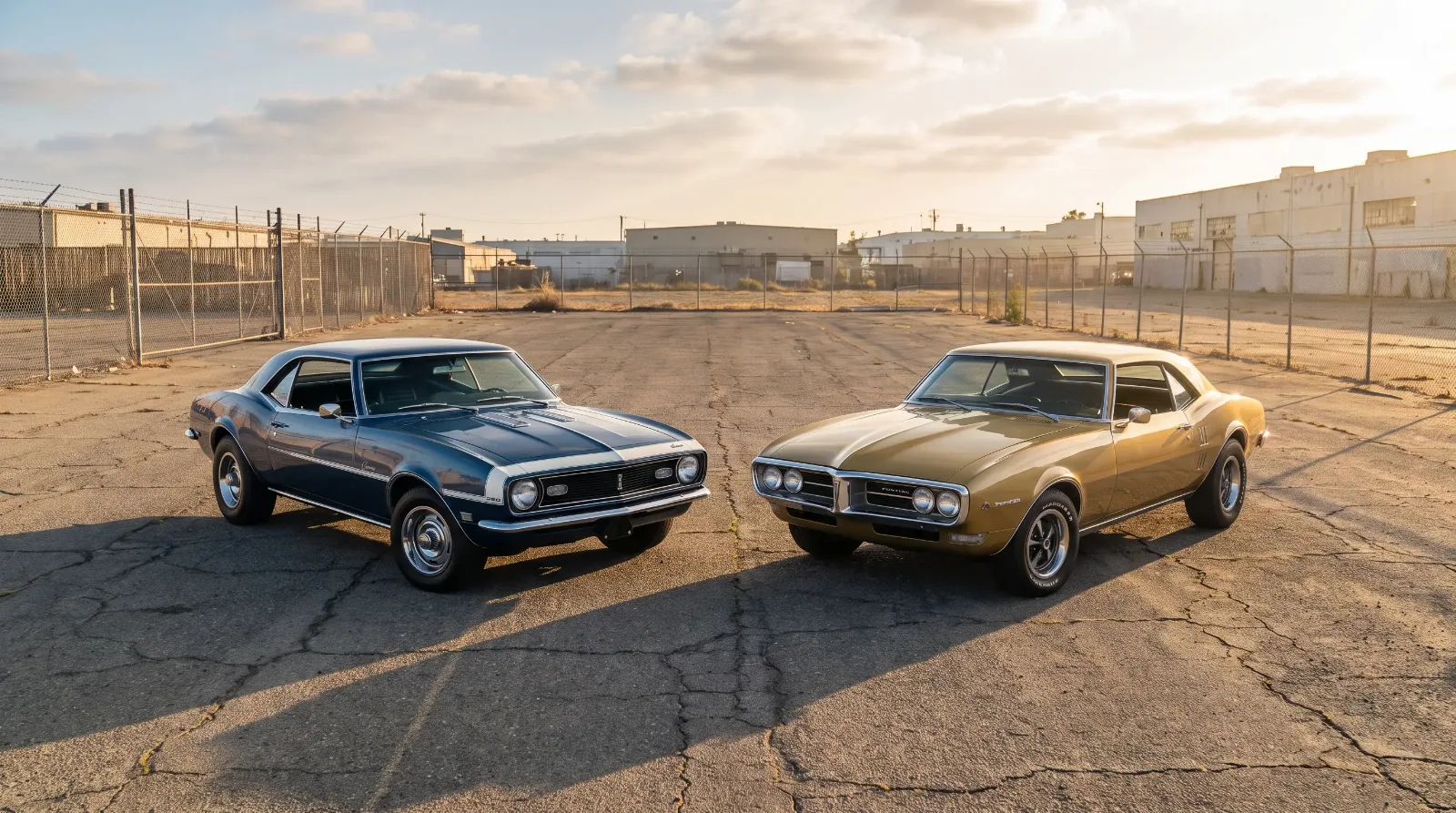
General Motors had already answered the Mustang with the Chevrolet Camaro, introduced for 1967 after two years of frantic internal development. Pontiac shared the Camaro's F-body platform but engineered a distinct car with its own sheetmetal, its own engine lineup, and its own personality. The Firebird arrived alongside the Camaro as a 1967 model, and from its first press photos the message was unmistakable: Pontiac was not interested in the personal-luxury lane that Mercury was pursuing.
What separated the Firebird from both the Mustang and its corporate sibling was Pontiac's emphasis on available power. The division offered the Firebird 400 with a 400 cubic-inch V8 officially rated at 325 horsepower, a figure the optional Ram Air version also carried on paper despite its hotter cam and functional hood scoops, since all 1967 400 engines used a throttle restrictor that kept the factory rating conservative. This was displacement territory the early Mustang GT had not occupied. The 1967 Mustang's largest available engine was the 390 cubic-inch FE-series big block, rated at 320 horsepower. Pontiac was making a direct performance comparison in the showroom.
The Firebird's interior carried Pontiac's characteristic attention to instrument design, with round gauges and a driver-focused cockpit that contrasted with the Mustang's somewhat flatter dash treatment of the same era. Pontiac also offered the Firebird Sprint package with a 215-horsepower overhead-cam six-cylinder, an engine configuration unusual enough in the American market that it read almost as a European sporting reference, which was absolutely the intent.
Where the Cougar positioned itself above the Mustang in comfort, the Firebird positioned itself alongside in performance, arguing that Pontiac engineering produced a more seriously athletic machine. The argument had merit in specific configurations, but the Mustang's production volume and established culture meant the Firebird was always measured against it rather than independently.
"The Firebird made you feel like Pontiac had something to prove, and in 1967 they probably did. That energy is exactly what makes the first-generation cars interesting to track down today."
— Patrick Walsh
Plymouth Barracuda: first to market, second in history
The historical record requires a clarification that still surprises many enthusiasts. The Plymouth Barracuda technically preceded the Mustang. Plymouth introduced the Barracuda on April 1, 1964, two weeks before Ford unveiled the Mustang at the New York World's Fair. By the calendar, the Barracuda should have defined the category. It did not, and understanding why tells you a great deal about how automotive culture works.
The original 1964-1966 Barracuda was built on the Valiant compact platform and wore Valiant body structure beneath a distinctive fastback greenhouse with an enormous wraparound rear window. Plymouth positioned it as a sporty compact, practical enough to carry four passengers and their luggage, spirited enough to interest younger buyers. The problem was timing and volume in the other direction. Ford's launch was a cultural event: simultaneous appearances on the covers of both Time and Newsweek, availability at 2,000 dealers on the same day, and a pricing strategy that started the Mustang well below $2,400. The Barracuda was already in showrooms, but Ford's rollout made the Mustang into a phenomenon before Plymouth had generated equivalent momentum.
Plymouth addressed the platform limitation aggressively with the 1970 redesign, which moved the Barracuda to its own E-body architecture shared with the Dodge Challenger. That generation produced the 'Cuda with 426 Hemi and 440 Six Pack configurations that are now among the most collectible muscle cars of the era. But by 1970 the pony car segment was already beginning to contract, and Plymouth was arriving at the performance argument exactly as the cultural context for it was shifting.
| Model | Brand | Intro Year | Platform | Positioning vs. Mustang |
|---|---|---|---|---|
| Ford Mustang | Ford | 1964 | Falcon-derived | The reference point |
| Plymouth Barracuda | Chrysler | 1964 | Valiant-derived | Earlier launch, smaller cultural footprint |
| Mercury Cougar | Ford | 1967 | Mustang-derived | Upscale personal luxury |
| Pontiac Firebird | GM | 1967 | F-body (Camaro) | Performance credentialing |
| AMC Javelin | AMC | 1968 | AMC proprietary | Value proposition, independent spirit |
AMC Javelin and why the Mustang remained the reference
American Motors Corporation entered the pony car field for 1968 with the Javelin, a cleanly styled two-door that offered a genuine alternative for buyers who wanted nothing to do with the Big Three on principle. AMC was the independent that had survived through economy cars and Rambler practicality, and the Javelin represented an uncharacteristic swing at the sporty-car market. The two-seat AMX variant, sharing the Javelin's platform with a shortened wheelbase, brought genuine performance credibility through Trans-Am racing participation.
The Javelin's argument was largely value and independence: here was a well-executed pony car from a company that did not have a Chevrolet or a Ford overshadowing it internally. AMC also used the Javelin in Trans-Am competition, where it raced against the Mustang and Camaro and occasionally beat them. But production volumes and dealer network limitations meant the Javelin remained a niche choice, respected in the enthusiast press and marginal in the sales charts.
What kept the Mustang at the center of every comparison was not simply that it sold more. It was that Ford had made the Mustang the reference before anyone else arrived. Every subsequent pony car was introduced to an audience that already understood the template, and every manufacturer framed their car in relation to it. The Cougar was for buyers who wanted more than the Mustang offered in comfort. The Firebird was for buyers who wanted more than the Mustang offered in Pontiac character and available displacement. The Barracuda was for buyers loyal to Chrysler products. The Javelin was for buyers loyal to AMC. The Mustang's share of mind was structural: it had named and populated the category before the others arrived, and the others could only define themselves in its context.
By the early 1970s, insurance costs, emissions regulations, and shifting fuel economics were compressing the entire segment. The rivals fell away one by one. The Javelin ended after 1974. The Barracuda after 1974. The Cougar evolved into a larger personal luxury coupe unrelated to the original pony formula. The Firebird survived until 2002, longer than any competitor, and did so by building its own culture and identity over three decades. The Mustang itself contracted with the Mustang II for 1974, then rebuilt in successive generations. It is still in production. The category it created, and the cultural position it claimed in April 1964, has never been surrendered.
Sources and notes
Production and specification figures cited here reflect commonly documented period records and may vary slightly between sources depending on whether they count calendar-year, model-year, or worldwide totals. Factory horsepower ratings of the era were often conservative or marketing-driven and should be read as published figures rather than independently measured output. Readers researching a specific car should verify details against original build documentation.
- Mercury Cougar — Wikipedia (first-generation production, 111-inch wheelbase, shared Falcon-derived chassis)
- Pontiac Firebird — Wikipedia (1967 F-body platform, 400 and Ram Air 325 hp rating, Sprint OHC six 215 hp)
- Plymouth Barracuda — Wikipedia (April 1, 1964 launch, Valiant platform, 1970 E-body redesign)
- AMC Javelin — Wikipedia (1968 introduction, AMC platform, Trans-Am racing)
- Hagerty — Overshadowed by the Mustang, 1967–70 Mercury Cougar interest is on the rise (Cougar positioning and market context)
- Mac's Motor City Garage — Mustang in a Tuxedo: The 1967 Mercury Cougar (Cougar specifications and Mustang relationship)