
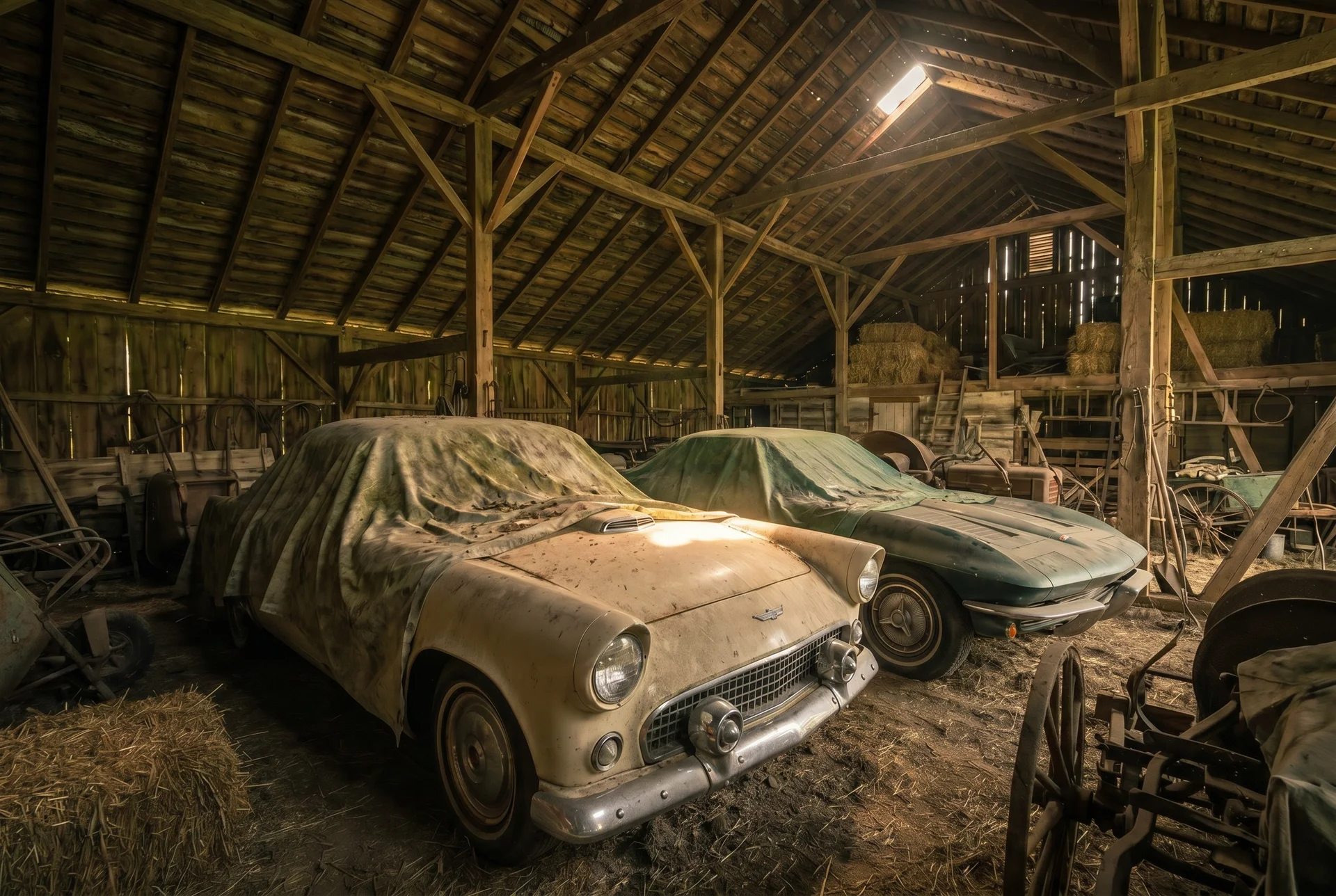
The barn find is the classic car hobby's most romantic concept. The untouched, time-capsule car sitting in a shed for forty years, waiting for a buyer who recognizes what it is. In reality, barn finds range from genuine discoveries to carefully staged presentations of questionable cars that have been freshly "rediscovered" for marketing purposes. Knowing the difference matters.
What Makes a Real Barn Find
Genuine unrestored cars share a consistent set of characteristics that are difficult to fake convincingly. The dust is real — and it accumulates differently than dust that's been applied for atmosphere. The rubber deteriorates in consistent patterns. The seats develop specific cracking and fading patterns based on how the car was stored and at what ambient temperature.
More importantly, real barn finds have documentation stories that are internally consistent. The car that's been in one family since new, where the original owner's name is on the title, where there's a maintenance log in the glove box in the same handwriting — that's a real barn find. The car that a dealer "discovered" without clear ownership history and can't explain where it was for thirty years — that's a different proposition.
Three Things to Check on Any Unrestored Car
Engine date codes against build date. A true barn find has an engine that was installed at the factory, which means the engine casting date will predate the car's body date by weeks, not years. An engine dated significantly after the car's known build window is a replacement engine, regardless of how original the rest of the car appears.
Door tag condition versus car condition. The Fisher Body door tag (or equivalent for non-GM cars) should show the same age and surface deterioration as the rest of the car. A fresh-looking tag on a supposedly forty-year barn find is a reproduction. A damaged or missing tag on an otherwise claimed-original car should prompt questions about what happened to it.
Ask about the storage history specifically. Not just "where was it stored" but "what condition was it in when you put it away," "when was it last driven," and "has anyone worked on it since it was parked." The seller who has specific answers to these questions — even imprecise ones like "my grandfather parked it when he couldn't find the right carburetor and then passed away" — is more credible than the seller who gives you generalities.
The Market for Unrestored Cars
The collector community has shifted significantly toward original-condition cars in the past decade. A car with honest patina — original paint that's faded but present, original interior that's worn but correct — often commands a premium over a freshly restored equivalent in the current market. This is a real market dynamic, not just hobbyist sentiment: authentic originality cannot be recreated, while a quality restoration can always be done.
Browse the barn finds section on Classic Cars Arena to see currently listed unrestored and survivor classics. When a real one appears, it typically sells quickly. Set up an alert for your target makes and models to catch them when they list.