
Mercedes-Benz 380 SL Buyer's Guide
The Mercedes-Benz 380 SL is the R107 generation at the intersection of elegance and engineering — a two-seat roadster that set the standard for open-top grand touring across two decades of production and still delivers the experience today.

Emily Chen here, and the R107 Mercedes SL is the car that most clearly explains what a grand touring roadster is supposed to be. Not a pure sports car — the 380 SL was never trying to compete with a Porsche for corner speed. Not a pure luxury car — the soft top is right there above your head. It's a machine engineered for covering long distances in complete comfort with a passenger who appreciates quality, and it executes that mission with a German thoroughness that was unmatched in 1980 and remains impressive today.
The 380 SL specifically was Mercedes's US-market answer to tightening emissions regulations. The 450 SL that it replaced used a 4.5-liter V8; the 380 SL's 3.8-liter unit was lighter, cleaner, and — in initial production — somewhat less satisfying. But the chassis, the interior, and the overall experience are the same R107 magic that made this generation the longest-running production SL in Mercedes history.
The R107 Generation: 1971–1989
The R107 SL had one of the longest production runs of any performance car in history: 18 years from 1971 to 1989. In that span, Mercedes offered the SL with multiple displacement V8 engines in different markets, but the basic architecture never changed. This consistency is actually good news for buyers — every R107 has the same fundamental strengths and weaknesses, making the market transparent and parts availability excellent.
The 380 SL (sold 1980–1985 in the US) replaced the 450 SL (1972–1980) to comply with the fuel economy standards that became increasingly strict in the early 1980s. The smaller displacement 3.8-liter V8 was initially criticized for reduced performance, but Mercedes updated the engine in 1981 and again throughout the 380's production run, eventually bringing output to acceptable levels. The concurrent European-market 380 SL used a slightly different specification, but US-market 380 SLs are what the classic market trades in.
The Dual Roof System
The R107's defining feature is its dual-roof system: a power-operated soft top for open-air motoring and a removable hardtop for year-round use. The hardtop transforms the SL into a completely different vehicle — quieter, more weatherproof, and visually closer to a fastback coupe. Many buyers store the hardtop during summer and use the soft top exclusively; others keep the hardtop on most of the year and lower the soft top for specific occasions.
Both roofs require attention. The soft top hydraulic mechanism is known for developing leaks and slow operation as seals age — a professional inspection and potential rebuild is almost always necessary on 40-year-old examples. The hardtop mounting hardware can corrode, making removal difficult. A 380 SL sold with both original tops in functional condition is worth meaningfully more than one with a single roof or a top in poor repair.
The 3.8-Liter V8: Understanding the Engine
The M116 3.8-liter V8 in the 380 SL is an all-aluminum engine that represents Mercedes engineering at its most careful. The casting quality, the machining tolerances, and the overall build standard were elite for 1980. The engine is smooth, quiet, and — with modern fuel — acceptably powerful for the car's character.
The known weakness of the M116 is the timing chain tensioner. The original plastic tensioner components degrade over time, and a failed tensioner can allow the timing chain to jump, causing significant engine damage. This is a well-documented issue with well-known solutions: updated tensioner hardware is available, and the replacement is not catastrophically expensive if done before failure. Any 380 SL with undocumented timing chain tensioner history should be considered a project car rather than a driver.
Interior and Electrical Systems
The R107 interior is a masterclass in understated luxury. The material quality — genuine wood, quality leather or MB-Tex vinyl, thick carpeting — holds up remarkably well when cared for. Finding a 380 SL with original, unmolested interior in good condition is increasingly valuable as the market matures. Reupholstered interiors in incorrect colors or materials are the most common devaluation factor.
The electrical system is the area where the R107's age shows most clearly. The Bosch K-Jetronic fuel injection (CIS), the climate control system, and the complex window operation system all have known age-related failure modes. Finding a 380 SL where everything works — especially the climate control and all power accessories — is a reliable indicator of overall maintenance quality.
Browse Mercedes-Benz 380 SL listings
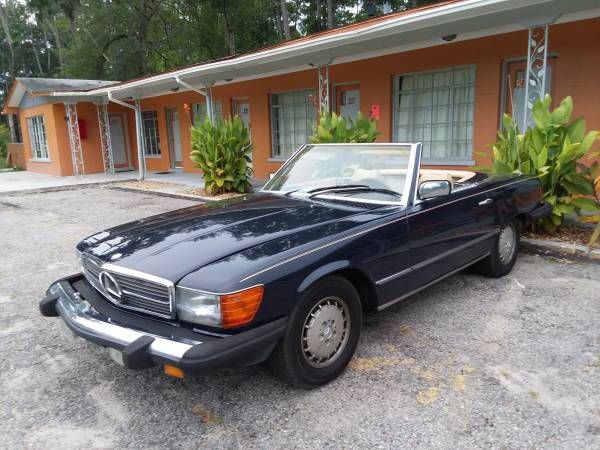 Dealer
 United States
1981 Mercedes-Benz 380 SL
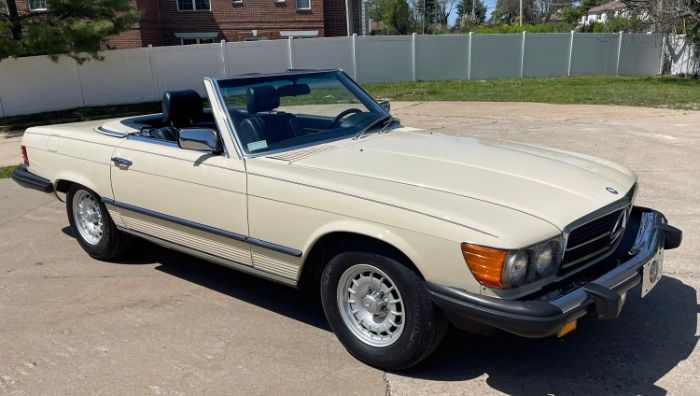 Dealer
United States
Dealer
United States
1984 Mercedes-Benz 380 SL
What to Look For
Verify the timing chain tensioner has been updated with modern hardware — original plastic tensioners are a known failure risk. Test all power accessories, especially the soft top hydraulics and climate control; non-functioning systems indicate deferred maintenance across the car. Check the soft top condition and hydraulic operation carefully. Inspect the hardtop mounting points for corrosion. Verify the full-leather interior is original and correctly colored — non-original reupholstery significantly affects value. Check for rust at the lower sill seams and rear fender areas.Pre-Purchase Checklist
-
Timing Chain Tensioner
Verify updated timing chain tensioner hardware — original plastic components are a known failure risk that can destroy the engine. -
Soft Top Operation
Test hydraulic soft top through full open and close cycle — both directions should be smooth and complete. -
Climate Control
Test the climate control through all modes including both hot and cold — vacuum system failures are common. -
Hardtop Condition
Inspect hardtop for cracks and verify mounting hardware is intact and corrosion-free. -
Interior Originality
Verify interior color and materials are original — incorrect reupholstery significantly affects value. -
Fuel Injection
Run the engine to temperature — idle should be stable and smooth at ~750 RPM with no hunting or stumbling. -
Lower Sill Rust
Inspect lower sill seams and rear fender lower edges — common rust locations on neglected examples. -
Service History
Verify timing chain tensioner service is documented — this is the most important maintenance record to have. -
Power Accessories
Test all power windows, mirrors, and seats — functioning accessories confirm overall maintenance quality.
Common Issues
Timing chain tensioner failure from degraded plastic components — a critical pre-purchase check. Soft top hydraulic system leaks causing slow or non-functional top operation. Climate control system failures (vacuum-operated components degrade with age). Fuel injection issues with the Bosch K-Jetronic (CIS) system, especially idle instability. Rust at lower sills and rear fender lower edges on poorly-maintained examples. Dashboard and interior trim cracking from UV exposure.More 380 SL for sale
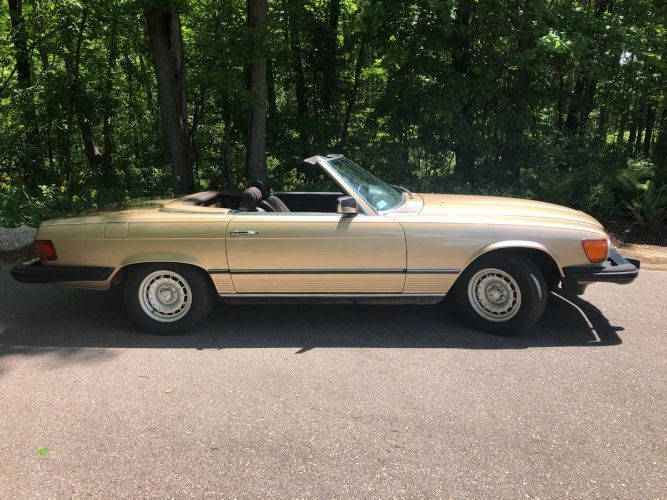 Dealer
United States
Dealer
United States
1981 Mercedes-Benz 380 SL
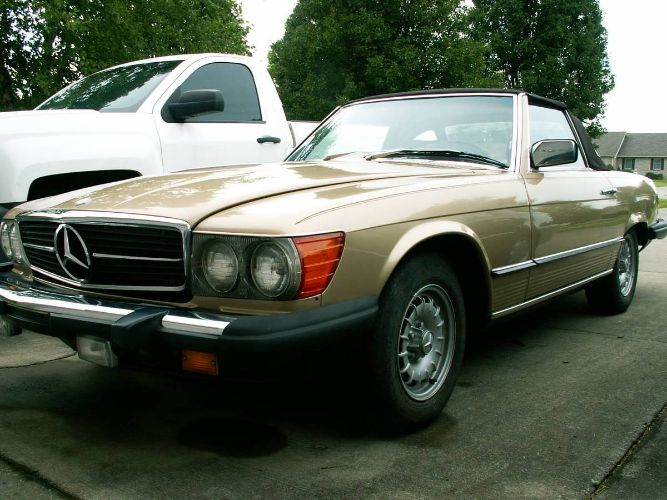 Dealer
United States
Dealer
United States
1983 Mercedes-Benz 380 SL
Pricing Guide
Driver-condition 380 SL with both tops: $18,000–$30,000. Well-maintained, fully functional 380 SL: $28,000–$45,000. Show-quality concours examples: $45,000–$65,000. Both tops present and functional adds $3,000–$6,000 over single-top examples. AMG or factory option upgrades (rare on 380 SL) add significant premium. Comparison: the 450 SL (1972–1980) commands 10–20% premium over the 380 SL due to larger-displacement engine preference.Fun Facts
The R107 SL was produced from 1971 to 1989 — an 18-year production run that is one of the longest in automotive history for an essentially unchanged design. The hardtop was engineered to be removable by two people in approximately 10 minutes, and the removal/storage procedure was documented step-by-step in the owner's manual. The 380 SL's aluminum V8 was among the most sophisticated engines offered in any American-market car of 1980.Frequently Asked Questions
Ready to find your 380 SL?
Browse 6+ active Mercedes-Benz 380 SL listings on Classic Cars Arena.
View Listings →