
Classic Mercury Grand Marquis Buyer's Guide
Definitive buyer's guide for classic Mercury Grand Marquis 1975-2011. Generation breakdown, Panther platform inspection, 4.6L Modular V8 verification, current pricing.

The Mercury Grand Marquis defined American full-size luxury motoring across thirty-six years of production (1975-2011). The 1975-1978 first-generation cars used the dramatic 460 V8 — the largest American passenger-car V8 of its era. The 1979 redesign moved the Grand Marquis to the legendary Panther platform shared with the Ford Crown Victoria and Lincoln Town Car — a body-on-frame chassis that remained in production for thirty-three years before discontinuation in 2011. The Panther-platform Grand Marquis is widely regarded as one of the most durable American sedans ever produced, with the 4.6L Modular V8 (1992-2011) commonly exceeding 250,000 miles in service. For collectors entering the classic American full-size luxury sedan segment today, the Grand Marquis represents exceptional value with strong parts support, reliable mechanicals, and increasing collector interest in the discontinued Panther platform.
Overview
The Grand Marquis ran for thirty-six years across multiple generations on two distinct platforms. The 1975-1978 first-generation cars used Ford's body-on-frame full-size platform with the 460 V8. The 1979-2011 second-generation cars used the legendary Panther platform with various engine options culminating in the 4.6L Modular V8 (1992-2011). Each era has its own buyer profile.
Generations Worth Knowing
First Generation (1975-1978)
The original. Massive proportions (over 18 feet long, 5,000+ pounds), 460 V8 standard, dramatic 1970s personal-luxury styling. Driver-quality cars run $12,000-$28,000. Documented original-paint cars: $20,000-$38,000+. The 460 V8 commonly exceeds 200,000 miles.
Panther Platform (1979-2011)
The 1979 redesign moved the Grand Marquis to the smaller Panther platform — a body-on-frame chassis that became the foundation of American full-size sedan production for thirty-three years. Engine options included the 351W V8 (1979-1991), 5.0L V8 (limited years), and 4.6L Modular V8 (1992-2011). The 1992-2011 cars with the 4.6L Modular V8 are widely regarded as the most reliable Grand Marquis era. Driver-quality Panther-platform Grand Marquis cars run $5,000-$18,000.
What to Look For (in person)
Body Style and Trim Verification
Verify the body style code on the firewall dataplate. The Grand Marquis was offered as four-door sedan, two-door coupe (1975-1979), and station wagon (Colony Park, 1979-1991). Trim levels included base, Brougham, and LS.
Frame and Body Inspection
The Panther platform is body-on-frame. Probe the perimeter frame at body mount points. Body mount cushions collapse over time. Inspect rocker panels, rear quarters, and floor pans.
Pricing Tiers
| Tier | Description | Price Range (2024) |
|---|---|---|
| Driver | 1992-2011 Panther-platform Grand Marquis with 4.6L Modular V8, decent paint, runs and drives | $5,000-$15,000 |
| Survivor | 1979-1991 Panther-platform Grand Marquis with 351W V8, original paint, low miles | $10,000-$22,000 |
| Concours | Documented 1975-1978 first-generation Grand Marquis Brougham, frame-off restoration, low miles | $22,000-$45,000+ |
Common Pitfalls
The biggest pitfall in Grand Marquis buying is paying premium money for a high-mileage, neglected example. The Panther platform is so durable that high-mileage cars are abundant — verify maintenance history, especially timing chain tensioner service on 4.6L Modular V8 cars.
"The Mercury Grand Marquis on the Panther platform is one of the most underappreciated classic American sedans available today. The 4.6L Modular V8 commonly exceeds 250,000 miles, parts support is excellent, and the cars represent rare-air durability for the modest pricing they command. Driver-quality 1992-2003 Grand Marquis cars at $7,000-$15,000 represent the smart-money entry into reliable classic American luxury sedan ownership."
— Mike Sullivan
Final Verdict
The Grand Marquis market rewards documentation, mechanical care, and patience. 1975-1978 first-generation cars are increasingly collected for their dramatic 1970s styling and 460 V8 power. 1992-2011 Panther-platform cars represent the smart-money entry into reliable classic American luxury sedan ownership. The 2007-2011 final-generation cars (closing the Panther era) are the bargain entry into discontinued-platform character.
For new buyers, start with a 1995-2003 Panther-platform Grand Marquis with the 4.6L Modular V8 and complete service history. They're affordable, exceptionally reliable, and serve as comfortable daily drivers or long-distance cruisers. From there, the upgrade path is clear: 1979-1991 Panther-platform with 351W V8, then 1975-1978 first-generation with 460 V8.
Browse Mercury Grand Marquis listings
 Dealer
 United States
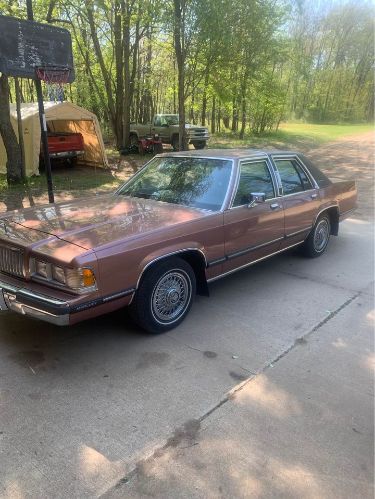
1990 Mercury Grand Marquis
 Dealer
United States
Dealer
United States
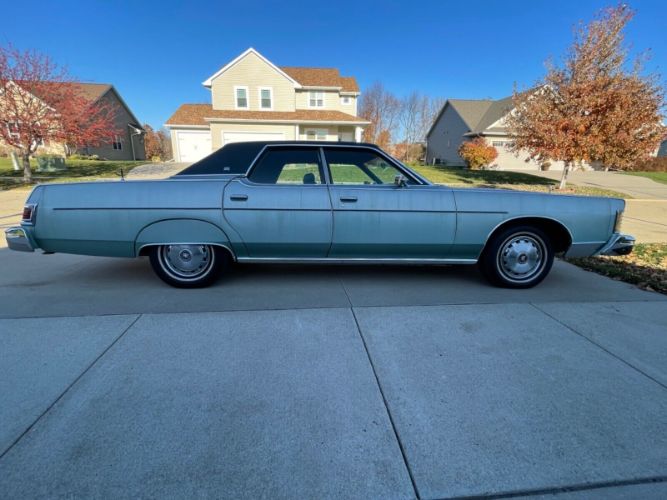
1978 Mercury Grand Marquis
What to Look For
Body style verification is the first stop. Verify the body style code on the firewall dataplate. The Grand Marquis was offered as four-door sedan, two-door coupe (1975-1979), and station wagon (Colony Park, 1979-1991). Each body style has different value trajectories.Engine identification is straightforward. The 5th digit of the VIN identifies the engine. Cross-reference with block casting numbers. The 460 V8 (1975-1978), 351W V8 (1979-1991), 5.0L V8 (limited years), and 4.6L Modular V8 (1992-2011) all have specific casting numbers and identifying features.
For 1992-2011 cars with the 4.6L Modular V8, verify recent timing chain tensioner service history. The timing chain tensioner failure is a known weak point — repair is $1,500-$3,000 if caught early, much more if engine damage occurs.
For 1996-2001 cars, verify the intake manifold has been replaced or upgraded. The plastic intake manifold on these cars is prone to cracking — Ford issued a service bulletin and many cars have had aluminum aftermarket intakes installed.
Body inspection is the second non-negotiable. The Panther platform is body-on-frame. Probe the perimeter frame at body mount points. Body mount cushions collapse over time. Inspect rocker panels, rear quarter panels, and floor pans. Run a strong magnet over suspect areas.
Test all power options. Heavily-optioned Grand Marquis cars have extensive electrical systems that require expensive specialist repair when components fail. Verify power windows, power seats, climate control, and AM/FM stereo all function correctly before purchase.
For convertible Grand Marquis cars (rare; only certain years), test top operation through full open and close cycle.
Document the car. Photograph every panel, every chassis number stamping, every interior detail, every engine bay component, and every identifying tag.
Pre-Purchase Checklist
-
Verify body style code on dataplate
Grand Marquis was four-door sedan and station wagon (later years sedan only). Verify configuration. -
Cross-reference VIN engine code
460 V8 (1975-1978), 351W (1979-1991), 5.0L (limited years), 4.6L Modular V8 (1991-2011) each have specific casting numbers. -
Inspect body-on-frame chassis at body mounts
Panther platform is body-on-frame. Body mount cushions collapse over time. -
Check rocker panels and rear quarters
Standard rust zones. Magnet test for filler. -
For 1975-1978 cars with 460 V8, verify engine
460 V8 was the largest American passenger-car V8 of its era. Replacement engines reduce value. -
For 1992+ cars with 4.6L Modular V8, check timing chain
4.6L Modular V8 timing chain tensioners commonly fail. Verify recent service history. -
Test all power options
Power windows, seats, climate. Heavily-optioned cars require expensive specialist repair when systems fail. -
Check power steering and suspension condition
Air suspension on some variants commonly fails. Replacement is expensive. -
Examine vinyl roof condition (1975-1991 cars)
Vinyl roofs commonly degrade. Replacement is $2,500-$5,000. -
Compression test all eight cylinders
Should read 145-180 PSI uniformly across V8s.
Common Issues
Grand Marquis rust patterns vary by generation. The 1975-1978 first-generation cars rust at the lower rear quarters, rocker panels, lower fenders, trunk pan, and cowl seam. The 1979-2011 Panther-platform cars rust at the rocker panels, rear wheel arches, lower quarter panels, and rear shock towers. Vinyl roofs (common on 1979-1991 cars) commonly delaminate and trap water that rots the underlying steel.Mechanically, the 460 V8 (1975-1978) is bulletproof when maintained. The 351W V8 (1979-1991) is similarly durable. The 4.6L Modular V8 (1992-2011) is one of the most reliable American V8 engines ever produced — commonly exceeding 250,000 miles with proper service. Common 4.6L issues include timing chain tensioner failures (a known issue on 1992-2002 cars), spark plug ejection on aluminum heads (1992-2002 cars require careful spark plug torque), and intake manifold cracking (1996-2001 cars used a plastic intake manifold prone to cracking).
The C6 (1975-1986) and AOD/4R75W (1980-2011) automatic transmissions are durable. Common issues include leaky transmission seals on neglected cars and worn front pump seals.
Electrical issues are extensive on heavily-optioned Grand Marquis cars. Power windows, power seats, climate control, and AM/FM stereo were standard equipment. Failed systems require expensive specialist repair. The dashboard climate control panel commonly fails — replacement requires specialist work.
For 1979-1991 cars with vinyl roofs, the vinyl commonly degrades and traps water. Verify the underlying steel has not rotted. Vinyl roof replacement is $2,500-$5,000.
For 4.6L Modular V8 cars, verify recent timing chain tensioner service. Failed tensioners can cause engine damage if not addressed promptly.
More Grand Marquis for sale
 Dealer
United States
Dealer
United States
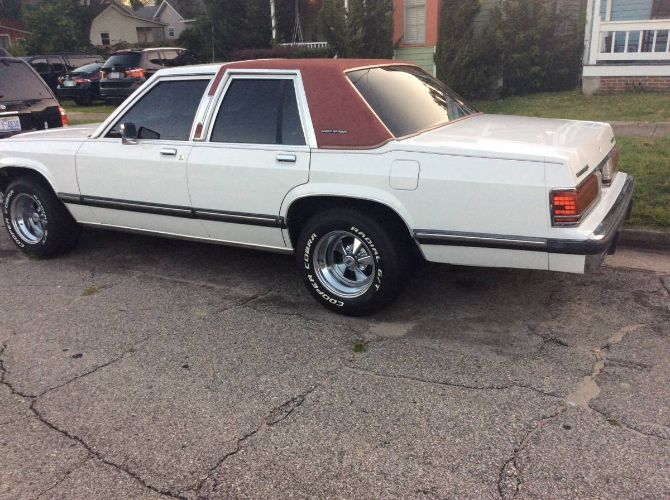
1989 Mercury Grand Marquis
 Dealer
United States
Dealer
United States
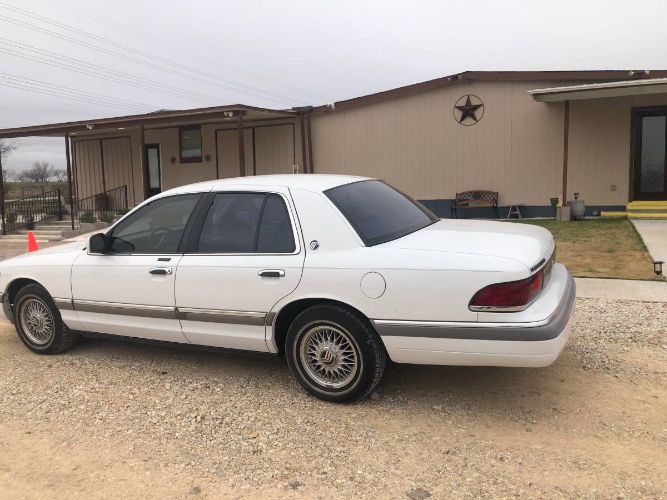
1992 Mercury Grand Marquis
Pricing Guide
1975-1978 first-generation Grand Marquis: driver-quality cars run $12,000-$28,000. The 1976-1978 Brougham trim (with luxury equipment) commands $14,000-$32,000. Documented original-paint, low-mileage cars: $22,000-$45,000+.1979-1991 Panther-platform Grand Marquis: driver-quality cars run $7,000-$18,000. The 1979-1985 cars (with full chrome trim and woodgrain interior) are most desirable. Documented original-paint cars: $14,000-$28,000.
1979-1991 Mercury Colony Park station wagon (Grand Marquis-derived): driver-quality cars run $10,000-$22,000. Documented original cars with all-original trim: $18,000-$32,000.
1992-1997 Panther-platform Grand Marquis (first-generation 4.6L Modular V8): driver-quality cars run $6,000-$15,000.
1998-2002 Panther-platform Grand Marquis: driver-quality cars run $5,000-$14,000.
2003-2011 Panther-platform Grand Marquis: driver-quality cars run $5,000-$15,000. The 2007-2011 final-generation cars are increasingly collected as the Panther platform was discontinued.
Documented low-mileage cars (under 80,000 miles) command 25-40% premium across all eras.
Project Grand Marquis cars start around $1,500-$5,000 across most years. Stripped roller candidates: $500-$2,500.
Fun Facts
The Mercury Grand Marquis ran on the Ford Panther platform for thirty-three model years (1979-2011), making the Panther one of the longest-running American passenger-car platforms ever produced. The Panther was originally engineered as a robust body-on-frame chassis that could handle police, taxi, and limousine duty as well as luxury passenger transport. The same platform produced the Ford Crown Victoria (sold to police departments and taxi fleets in massive volume), the Lincoln Town Car (the dominant American limousine for three decades), and the Mercury Grand Marquis. Discontinued in 2011, the Panther platform now has a strong enthusiast following.The 460 V8 in the 1975-1978 Grand Marquis was one of the largest American passenger-car V8s of its era — 7.5 liters of displacement producing 197-202 horsepower (significantly under-rated by Ford to manage emissions concerns). Actual dyno output was approximately 230 hp. The 460 V8 was discontinued in passenger cars after 1978 due to fuel economy regulations but continued in trucks (E-Series, F-Series) through 1996. The 460 V8 commonly exceeded 250,000 miles in service.
The Crown Victoria Police Interceptor on the Panther platform became the dominant American police car for over thirty years (1979-2011). Police Interceptors with the 4.6L Modular V8 commonly exceeded 300,000 miles in fleet service before being retired. The discontinuation of Panther platform production in 2011 forced police departments to migrate to the Ford Police Interceptor sedan (Taurus-based) and Police Interceptor Utility (Explorer-based) — controversial decisions that some agencies still resist.
Frequently Asked Questions
Ready to find your Grand Marquis?
Browse 6+ active Mercury Grand Marquis listings on Classic Cars Arena.
View Listings →