
MG TD Buyer's Guide
The MG TD introduced a generation of American buyers to the British sports car experience — a small, nimble, beautifully proportioned two-seater that proved driving pleasure had nothing to do with horsepower and everything to do with balance, response, and character.

Emily Chen here. The MG TD has a specific place in automotive history that gets overlooked in the modern muscle-and-performance conversation: it was the car that created the American sports car market. Returning US servicemen who had driven MGs in postwar Europe came home wanting the same experience. The TD, exported to America in large numbers from 1949 to 1953, gave them that experience at a price that was, for the era, surprisingly accessible.
The TD is not a fast car. In a straight line, it will lose to almost anything. But "fast" was never the point — the point was the experience of piloting a responsive, tactile machine on a twisting road, where the mechanical directness and the low weight create a connection to the driving experience that no modern car replicates. This is the core of why sports cars exist, and the TD communicates it more purely than almost any car built in the past 50 years.
The TD in MG's Model History
The TD followed the TC (1945–1949) in MG's M-type series and was itself succeeded by the TF (1953–1955). Within this T-series lineage, the TD represents the most available and most practical of the three cars. The TC is rarer and more historically significant (it was the first MG exported to America in significant numbers); the TF has a more refined appearance with headlights faired into the front fenders. The TD is the middle child — not the rarest, not the most stylish, but often the best buy for the enthusiast who wants to actually use the car.
MG built approximately 29,664 TDs from 1949 to 1953, of which around 23,488 were exported — and the US received the lion's share. This means a substantial survivor pool exists, and finding a TD is possible in a way that finding a TC or a pre-war MG is not. Prices have risen substantially over the past decade, but the TD remains more accessible than its rarer siblings.
The XPAG Engine
The TD used MG's XPAG 1250cc (1.25-liter) inline-four cylinder engine producing 54 horsepower in standard tune. In the context of a car weighing just over 1,900 lbs, this is adequate motivation — 0-60 mph in around 18 seconds isn't quick by any standard, but the engine's responsiveness, its willingness to rev freely, and the sound it makes at the top of each gear create a sensory experience that a faster car might not. The XPAG was also tunable: MG released an official competition kit that boosted output to 64 hp, and specialists have since developed more significant performance upgrades.
The engine's fundamental nature is worth understanding: it's a robust, conventional design that rewards regular valve adjustments, good oil management, and attention to the cooling system. These aren't demanding tasks, but they're more frequent than a modern car requires — expect valve adjustment every 5,000–6,000 miles and a genuine commitment to regular maintenance.
The TD's Technical Advancement Over the TC
The TD introduced a significant technical advance over the TC it replaced: independent front suspension using double wishbones, replacing the TC's rigid beam front axle. This was a genuine improvement in handling quality — the TD corners more precisely, rides with less harshness over rough surfaces, and tracks more confidently at speed than the older car. The chassis was also new, with a wider track and a lower overall height that improved stability.
The steering is rack-and-pinion — lightweight, direct, and communicative. Combined with the independent front suspension, the TD's handling feel is more like a go-kart than a 1950s car, and it's this quality that defines the driving experience. Buyers who expect a vintage touring car are surprised by the TD's liveliness; those who understand the heritage arrive prepared to appreciate it.
Left-Hand or Right-Hand Drive?
Most TDs in America are left-hand drive — MG produced LHD examples specifically for the American market. RHD examples exist and were sold to other markets, but American-market cars should be LHD. A claimed original American-market TD in RHD is worth investigating — it may be a British-market car that was imported later.
Browse MG TD listings
 Dealer
 United States
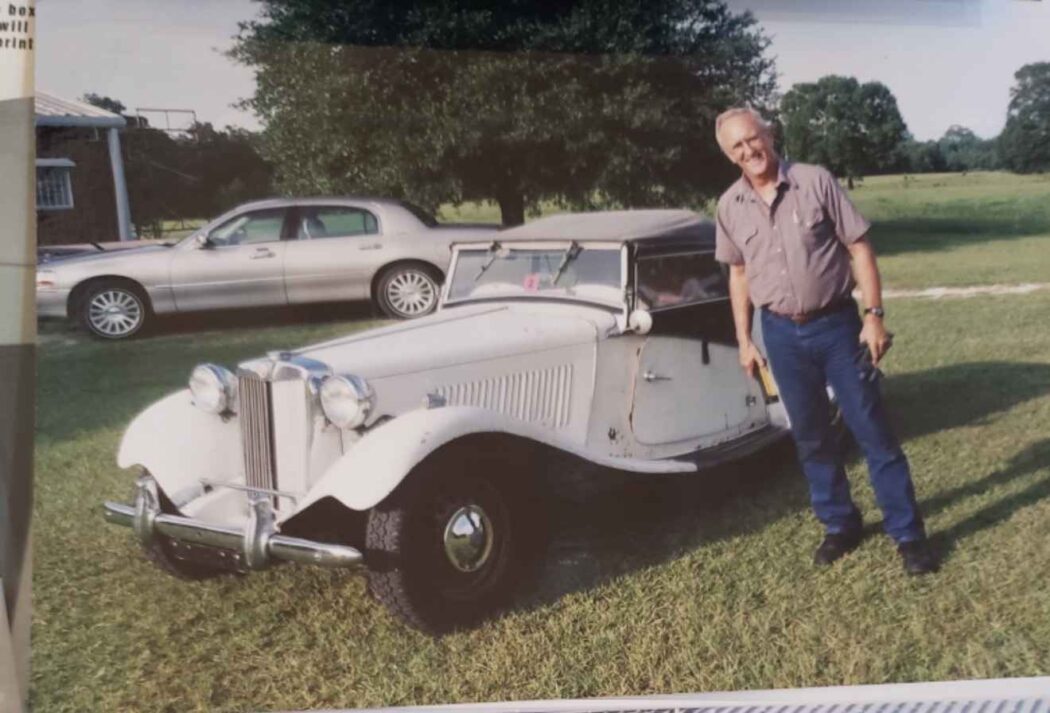
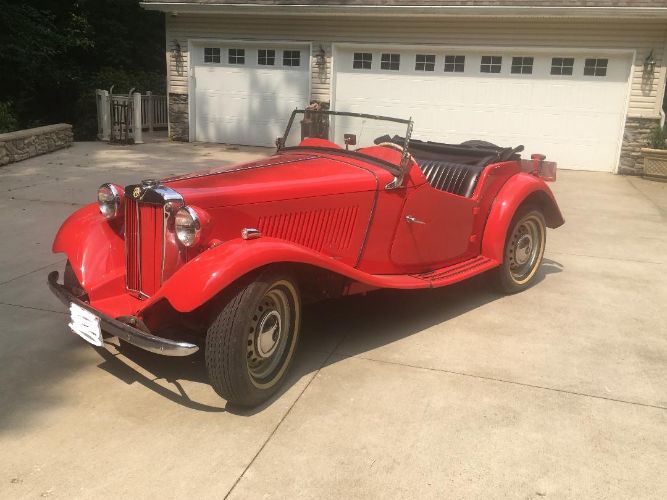
1952 MG TD
What to Look For
Inspect the wooden body frame — the TD's body is mounted on a wood framing structure that rots when water intrudes. Check door alignment and body panel gaps carefully; misalignment often indicates deteriorated wood framing. Probe the sill areas for rust in the metal components. Verify the XPAG engine runs without excessive smoke or oil consumption — blue smoke indicates valve stem seal wear. Check the rack-and-pinion steering for play and the front wishbone joints for wear. Confirm the car is left-hand drive if purchasing as an American-market example.Pre-Purchase Checklist
-
Wood Frame Condition
Check door and body panel alignment — misalignment indicates rotted wood framing, the TD's most expensive repair. -
Sill Metal Rust
Probe the metal sill sections carefully — rust hides where metal meets wood framing. -
XPAG Engine Smoke Test
Cold start and warm idle — check for blue smoke indicating valve seal wear. -
Valve Adjustment Record
Verify recent valve adjustment — every 5,000–6,000 miles is the standard interval. -
Front Suspension
Grab each front wheel and check for play at the wishbone pivots and steering joints. -
Steering Rack
Check steering for play and binding — worn rack is a common issue. -
Electrical System
Test all lights and the horn — Lucas electrics age poorly and complete function is a maintenance indicator. -
LHD Verification
Confirm left-hand drive on American-market cars — RHD imports require investigation. -
Parts Documentation
Any available service records, receipts, or history documentation adds significant value.
Common Issues
Wooden body frame rot in doors and sills — the most expensive repair when severe. Sill metal rust where it meets the wood framing. XPAG engine oil consumption from worn valve stem seals — manageable with regular valve adjustments. Worn front wishbone pivot points and bushings. Rack-and-pinion steering wear. Electrical system issues from Lucas components of the era ("Prince of Darkness" electrical is a British car tradition). Correct replacement parts quality varies by supplier.More TD for sale
 Dealer
United States
Dealer
United States
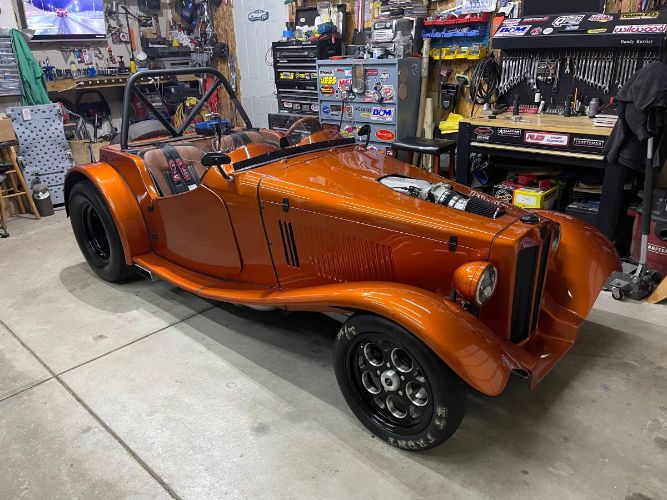
1953 MG TD
 Dealer
United States
Dealer
United States
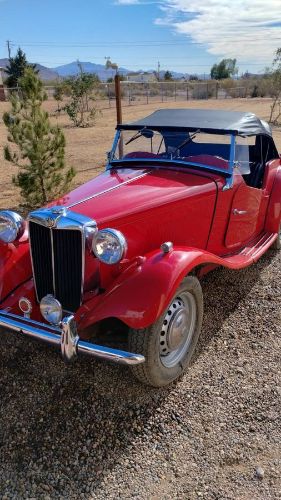
1951 MG TD
Pricing Guide
Driver-condition TD: $15,000–$28,000. Well-maintained, fully sorted TD: $25,000–$40,000. Concours quality: $40,000–$60,000+. Competition-spec TDs with original MG factory competition equipment: $50,000–$80,000. RHD imports from the British market: typically 10–15% below equivalent LHD American-spec cars.Fun Facts
The MG TD is credited by many historians as the single car most responsible for creating the American sports car market — the returning servicemen who drove it in Europe demanded it at home, and the resulting sales volume proved that Americans would pay premium prices for a driving experience rather than just transportation. The TD's success convinced MG's parent British Motor Corporation to export aggressively to the US, establishing the relationship between British sports cars and American buyers that defined a generation of enthusiasts. General Motors cited the TD's American success as one of the reasons it commissioned the Corvette project.Frequently Asked Questions