
Classic Plymouth Valiant Buyer's Guide
Expert buyer's guide to the Plymouth Valiant 1960–1976. Slant Six durability, fender tag decoding, A-body rust inspection, Scamp and Duster variants, and current market pricing.

The Plymouth Valiant was Chrysler's compact answer to the Falcon and Corvair — and it turned out to be the most durable of the three. Powered by the legendary Slant Six engine, the Valiant earned a reputation for reliability that bordered on the monotonous. These engines simply did not die. Today the Valiant is one of the most accessible classic Mopars on the market: inexpensive to buy, cheap to run, with a passionate community behind it. The Signet, Scamp, and Duster variants add variety; the V8-swapped cars offer real performance. What you need to watch for are the unibody rust patterns specific to the A-body Chrysler platform — because this is where Valiants die.
History & Generations
The Valiant launched as a stand-alone brand for 1960 before being absorbed into the Plymouth lineup for 1961. It introduced American buyers to the Chrysler A-body unibody platform and the innovative 225 cubic-inch Slant Six — an engine so well-engineered that it remained in production until 1987. Three distinct styling generations carried the Valiant through sixteen model years.
First Generation (1960–1962)
The original Valiant had controversial styling with sculptural bodywork that divided opinion. These are quirky, affordable, and increasingly sought by collectors who appreciate their unique design. The 170 cubic-inch Slant Six was the base engine; the larger 225 was the upgrade. Manual transmission cars are the enthusiast choice.
Second Generation (1963–1966)
A cleaner redesign brought conventional styling and improved packaging. The Signet hardtop was the upscale trim. The 273 cubic-inch V8 became available, opening the door to genuine performance. These are the most practical classic Valiants for daily driving.
Third Generation (1967–1976)
The final generation added the Scamp hardtop (1971–1976) and shared its platform with the enormously popular Duster coupe. The 340 V8 option transformed the Duster into a legitimate muscle car. Base Valiants remained workhorses through the end of production in 1976.
Years to Look For
- 1960–1962: First-gen styling curiosity — affordable and distinctive. The 170 Slant Six cars are pure and inexpensive.
- 1963–1966: The balanced generation — clean styling, good parts availability, V8 option available from 1964.
- 1967–1970: The performance transition years. 273 and 318 V8s make these capable drivers.
- 1971–1976 Scamp: The hardtop Valiant. More desirable than the two-door sedan. Clean survivors are scarce.
What to Look For In Person
The Chrysler A-body has predictable rust patterns. The torsion bar crossmember — the main front structural member — is the first thing I check on any Mopar unibody. Get under the car and look at the K-frame and the lower torque boxes. A rotted K-frame is a major undertaking. Next, the floor pans: probe at the driver's footwell, the transmission tunnel, and the rear seat area. Rear quarter and wheel well rust is common but cosmetically repairable. Trunk floor and spare tire well rot is universal on unprotected cars.
| Engine | Displacement | Years Available | Notes |
|---|---|---|---|
| Slant Six | 170 cu in | 1960–1966 | Base engine, extremely reliable |
| Slant Six | 225 cu in | 1960–1976 | Standard in most years, the definitive Slant Six |
| LA V8 | 273 cu in | 1964–1969 | First Valiant V8 option |
| LA V8 | 318 cu in | 1968–1976 | Practical V8, good parts availability |
"The Valiant might be the most sensible classic Mopar you can buy. The Slant Six is basically indestructible if it has oil and coolant in it. The platform is well-understood. Parts are available. The rust patterns are predictable. The only thing that kills these cars is neglect — and you can see neglect coming if you know where to look."
— Mike Sullivan
Market Outlook
Base Valiant four-door sedans: $4,000–$10,000. Two-door coupes and Signet hardtops: $8,000–$18,000. Clean Scamp hardtops: $12,000–$22,000. V8-equipped cars add a modest premium. Fully restored first-gen examples with original drivetrain: $15,000–$28,000. The Valiant is one of the most accessible Mopar classics — prices remain reasonable while Barracudas and Darts have climbed significantly.
Browse Plymouth Valiant listings
 Dealer
 United States
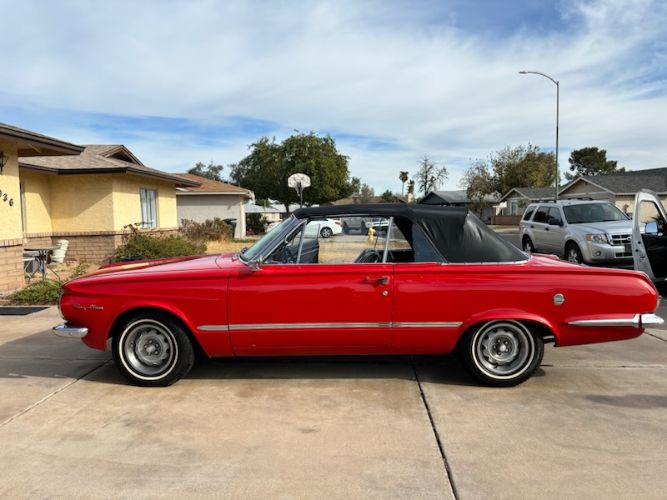
1964 Plymouth Valiant
 Dealer
United States
Dealer
United States
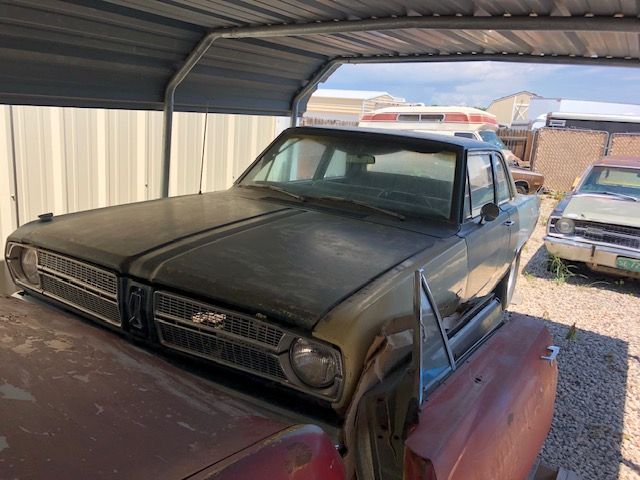
1967 Plymouth Valiant
What to Look For
Decode the fender tag on the inner front fender to confirm original build specification. Inspect the torsion bar crossmember (K-frame) and lower torque boxes from underneath — structural rust here is a serious problem unique to the Chrysler unibody. Probe the driver-side floor pan from underneath. Check the rear quarter wheel wells and lower quarter panels with a magnet for filler. Inspect the trunk floor and spare tire well for rust-through. On Slant Six cars, check the intake manifold gasket area for coolant leaks. Pull the dipstick and check for milky oil (coolant in oil). Look for cracked or missing torsion bar adjusters at the front crossmember.Pre-Purchase Checklist
-
Fender Tag Decode
Locate and photograph the fender tag on the inner front fender. It lists the complete original build specification — body code, engine, transmission, color. -
K-Frame Inspection
Get underneath and inspect the torsion bar crossmember and lower K-frame for rust. Structural rot here is a serious and expensive repair. -
Lower Torque Box Rust
Check the lower torque boxes where the floor meets the front frame rails. Chrysler unibody rot at the torque boxes is common and requires welding. -
Floor Pan Probe
Probe the driver-side floor pan from underneath with a screwdriver. Heat and condensation cause floor rot at the driver footwell first. -
Rear Quarter Check
Run a magnet along the lower rear quarters and wheel well lips. Filler is non-magnetic. Rust here is cosmetic but needs addressing. -
Trunk Floor
Pull up the trunk mat and inspect the trunk floor and spare tire well for rust-through or prior patch work. -
Intake Manifold Gasket
On Slant Six cars, check for coolant staining around the intake manifold. Check the oil dipstick for milky residue indicating coolant intrusion. -
Engine Idle Quality
A healthy 225 Slant Six idles smoothly and quietly. Rough idle or vacuum leaks at the manifold are common on older gaskets. -
Torsion Bar Adjusters
Check torsion bar adjustment bolts at the front crossmember for corrosion and seizure. Seized adjusters complicate alignment work. -
Scamp Hardtop Seals
On Scamp hardtops, check the B-pillar area and rear window seals for water intrusion damage to the interior and floor.
Common Issues
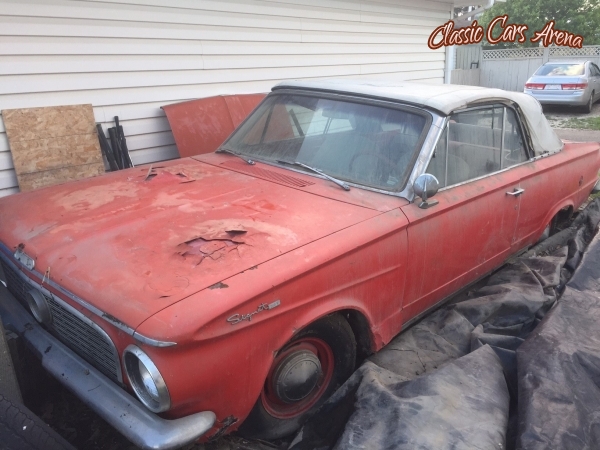
Torsion bar K-frame rust is the most serious structural issue — a badly rotted K-frame requires replacement or major welding and is a four-figure repair. Floor pan rust from driver-side heat and condensation is universal on unprotected cars. Rear quarter and wheel well rust is common. Chrysler A-body lower torque box rot (where the floor pan meets the front frame rails) requires professional welding to repair properly. Slant Six intake manifold gasket failures cause coolant leaks and vacuum leaks — budget $300–$600 for a proper manifold reseal. Torsion bar adjustment bolts corrode — seized adjusters complicate front end alignment work.More Valiant for sale

 Dealer
United States
Dealer
United States
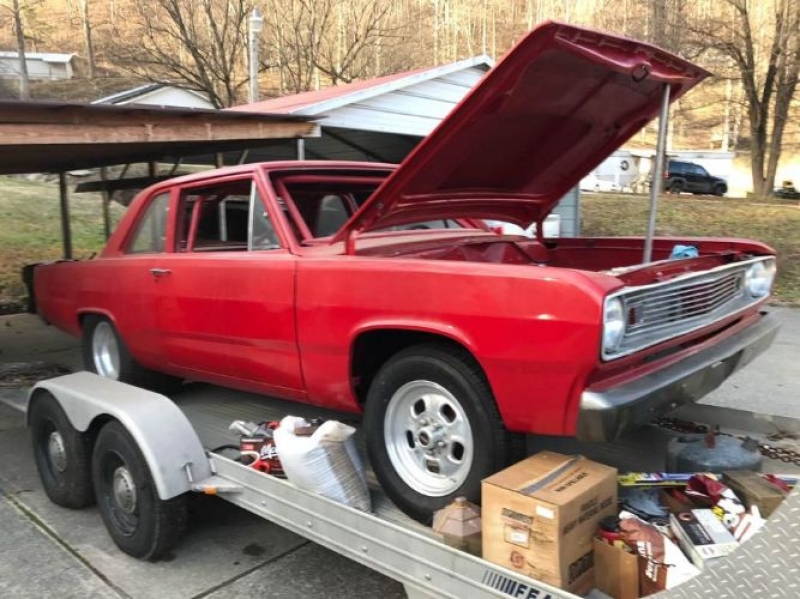
1969 Plymouth Valiant
Pricing Guide
Four-door Slant Six driver: $4,000–$10,000. Two-door coupe Slant Six: $7,000–$15,000. Signet and Scamp hardtops: $12,000–$22,000. V8-equipped two-door: $12,000–$20,000. Show-quality restored Scamp: $20,000–$32,000. First-gen 1960–1962 original condition: $12,000–$22,000. Values remain modest compared to Barracudas and Darts — the Valiant is the budget entry point into the Chrysler A-body collector market.Fun Facts
The Valiant was the first unibody compact sold by any of the Big Three American manufacturers. It debuted at the British International Motor Show at Earls Court, London, in October 1959. The 225 Slant Six was known as the "leaning tower of power" and powered millions of American vehicles from 1960 through 1987. Chrysler taxicabs running the 225 Slant Six routinely exceeded 300,000 miles in fleet service.Frequently Asked Questions
Ready to find your Valiant?
Browse 6+ active Plymouth Valiant listings on Classic Cars Arena.
View Listings →