
What are the Alfa Romeo twin-cam engine families explained?

Approached the Alfa Romeo engine catalog with an engineer's eye many years ago, and what struck me first was how deliberately Alfa developed these engines for motorsport application before adapting them to road use — the inverse of almost every other manufacturer's development trajectory.
The Alfa Romeo Nord Engine (1.3L–2.0L, 1962–1994)
The Nord family is what most collectors mean when they say "Alfa twin-cam." Introduced with the Giulia sedan in 1962, it ran with continuous refinement for 32 years. Key displacements and applications:
- 1,290cc: Giulia 1300 TI, GT Junior, Spider 1300 — 89 hp
- 1,570cc: Giulia TI, GT, Spider Veloce — 92–128 hp depending on specification
- 1,779cc: 1750 GTV, 1750 Spider Veloce — 118 hp standard
- 1,962cc: 2000 GTV, 2000 Spider — 130–150 hp
Construction and Character
The Nord uses an aluminum cylinder head on a cast-iron block. The hemispherical combustion chambers are a direct motorsport influence — Alfa's Grand Prix and sports-racing engines of the 1930s and 1950s used similar architectures. Twin carburetors (Dell'Orto or Weber DCOE depending on specification and market) are the defining induction setup. The cam system is belt-driven in later years (chain-driven on early Nord). Maximum output is at relatively high RPM — the engine's character lives in the 4,000–7,000 rpm range where the twin-cam breathing really opens up.
Early Giulietta Four-Cylinder (1954–1965)
The Giulietta engine that preceded the Nord used a slightly different architecture but shares the same DOHC philosophy. The Giulietta Sprint Veloce used a 1,290cc version producing 90 hp — competitive with anything in the European sports car market of the mid-1950s at that displacement. These engines are now primarily of interest to marque historians and Giulietta specialists.
What This Means for Buyers
The 1,750cc and 2,000cc Nord variants offer the best power-to-parts-availability ratio for practical ownership. Weber DCOE-equipped cars are preferable over Spica-injected US-market variants unless the injection system is known-serviced. Both displacements share the same basic architecture — a Nord specialist can service either one, which simplifies ownership considerably.
Browse current listings
 Dealer
 United States
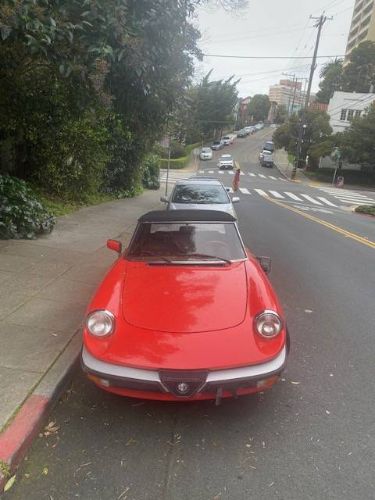
1984 Alfa Romeo Spider
 Dealer
United States
Dealer
United States
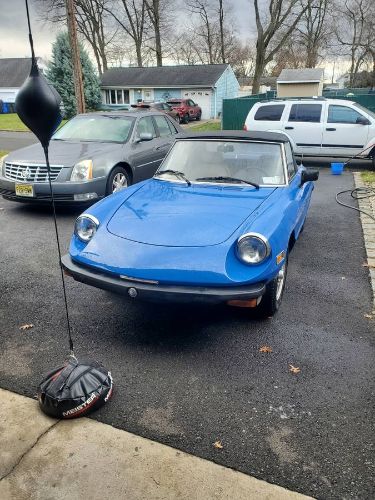
1979 Alfa Romeo Spider
 Dealer
United States
Dealer
United States
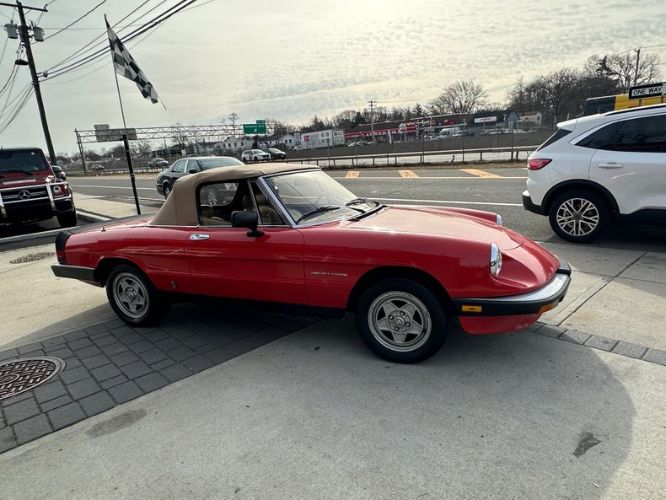
1983 Alfa Romeo Spider
 Dealer
United States
Dealer
United States
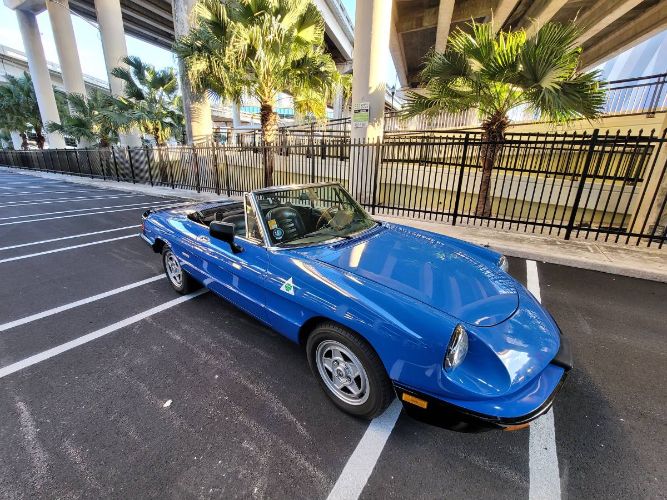
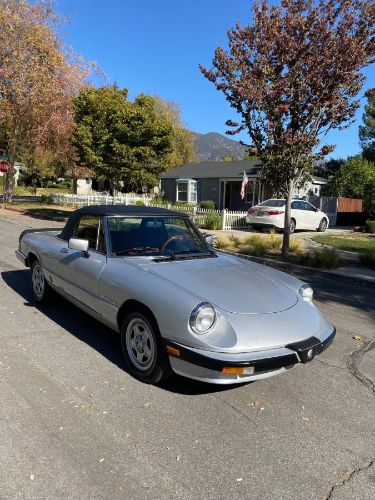
1986 Alfa Romeo Spider
 Dealer
United States
Dealer
United States
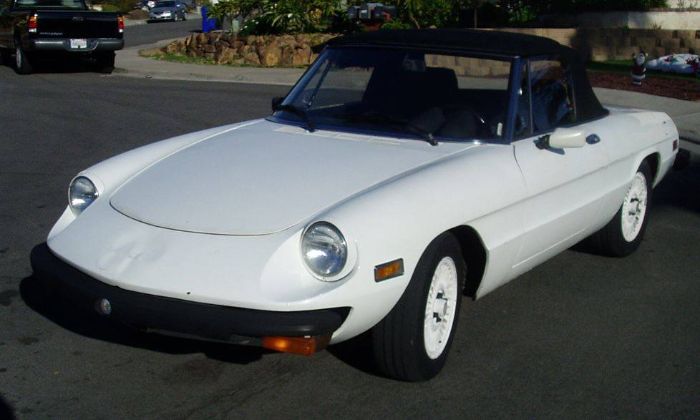
1977 Alfa Romeo Spider
 Dealer
United States
Dealer
United States