
What is the difference between the AMC 390 and 401 engines?

In my shop, the most common AMC engine question is whether the 390 or 401 is the better choice for a build. The answer depends on what you're building for — and understanding the actual engineering differences between these engines cuts through a lot of myths that circulate in the AMC community.
The AMC Generation II Big-Block Architecture
AMC's Gen II V8 was introduced in 1966 at 290 cubic inches, with the 390 arriving for 1968, and the family remained in production through 1979 with the 401. The block architecture is shared — same bore spacing, same main bearing diameter, same external dimensions. What changes between the 390 and 401:
| Spec | AMC 390 | AMC 401 |
|---|---|---|
| Cubic inches | 390 | 401 |
| Bore × Stroke | 4.165" × 3.574" | 4.165" × 3.680" |
| Compression (peak yr) | 10.2:1 (1969) | 9.5:1 (1971) → 8.5:1 (1972+) |
| Peak rated HP | 325 hp (1969 4-bbl) | 330 hp (1971), declining with emissions |
| Years in production | 1968–1970 | 1971–1979 |
| Primary applications | Javelin AMX, SC/Rambler | Javelin, Ambassador, truck, Jeep |
The 390 — High-Compression Performance
The 390 in the 1969–1970 Javelin AMX was AMC's direct response to the Big Three muscle car wars. At 10.2:1 compression with a four-barrel carburetor, it produced genuine factory muscle car performance — 0–60 in under 6 seconds in a correctly optioned Javelin. The 390's cylinder head used an open-chamber design that benefited from the era's high-octane fuel availability. The 390 in the 1969 SC/Rambler (Hurst/AMC collaboration) is the most collectible application — the loud color schemes and "Scrambler" branding disguised a genuinely quick car.
The 401 — The Durable Street Engine
The 401 arrived in 1971 as emissions regulations began compressing compression ratios across the industry. The longer stroke (adding 11 cubic inches to the 390's displacement) was combined with a revised combustion chamber that worked efficiently at lower compression. By 1972, net horsepower ratings applied — the 401's 255 net hp rating compared unfavorably to earlier gross ratings but reflected real street-fuel output. The 401 compensated with increased torque at lower RPM — better for the increasingly automatic-transmission-heavy buyer of the early 1970s. The 401 in AMC Jeep applications is particularly well-documented for durability.
Which to Choose
For concours-correct restoration of a 1969–1970 Javelin AMX, the 390 is non-negotiable — it is the correct engine. For a driver-quality build where performance and reliability matter more than originality, the 401 with a period-correct performance carburetor setup delivers more torque, runs on modern pump premium, and has better parts availability through AMC specialist suppliers like Clifford Performance and Rambler Ranch.
"Both engines are underappreciated — AMC muscle doesn't get the same recognition as Chevy, Ford, or Mopar, but the 390 Javelin AMX was a genuine factory hot rod that competed on equal terms. The authentication is simpler than people think."
— Mike Sullivan
Browse current listings
 Dealer
 United States
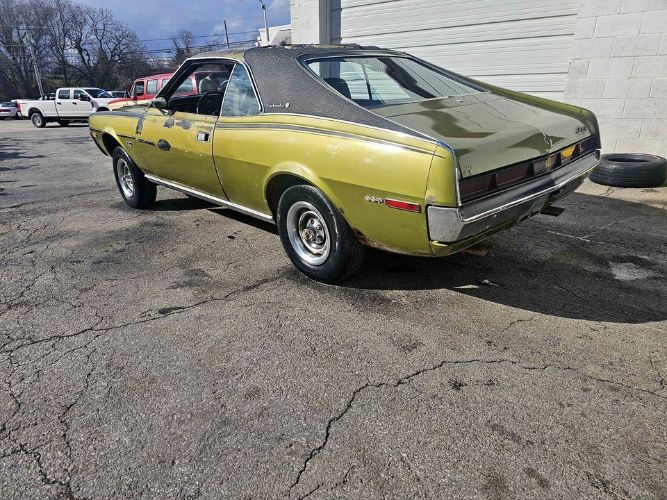
1968 AMC Javelin
 Dealer
United States
Dealer
United States
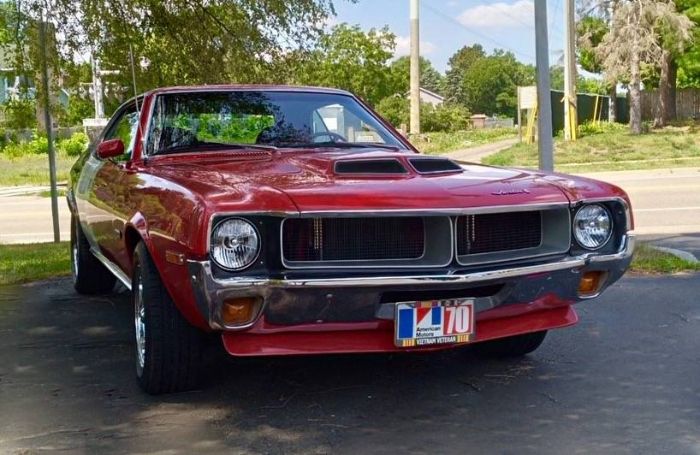
1970 AMC Javelin
 Dealer
United States
Dealer
United States
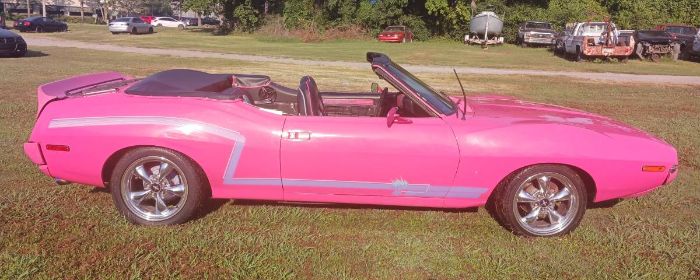
1970 AMC Javelin
 Dealer
United States
Dealer
United States
1971 AMC Javelin
 Dealer
United States
Dealer
United States