
Ferrari Dino 246 GT vs Porsche 911 S — 1960s Sports Car Icons
<p>The Ferrari Dino 246 GT (1969) and the Porsche 911 S (1967–1973) are the two most significant European sports cars of their era for buyers in the $150,000–$300,000 range — mid-decade expressions of what an engineer-focused sports car manufacturer could produce when uncompromised by commercial pressure. The Dino uses a mid-mounted DOHC V6 in a Scaglietti body; the 911 S uses a rear-mounted air-cooled flat-six in the body Ferdinand Piëch and his team refined across twenty years. Both reward precision driving over brute force. Both have appreciated consistently for a decade. The choice between them comes down to whether you prefer the driving instrument centered around you or the driving instrument that places the engine behind you — a philosophical distinction with real consequences at the limit.</p>
Specs side-by-side
| Spec | Ferrari Dino | Porsche 911 |
|---|---|---|
| Engine position | Mid-mounted, transverse | Rear-mounted, longitudinal |
| Engine | 2.4L DOHC 65° V6 | 2.0–2.4L air-cooled flat-six |
| Power (EU spec) | 195 hp @ 7,600 rpm | 180–190 hp (S spec, varies by year) |
| Production (total) | ~2,487 GT + ~1,274 GTS (3,761 total) | ~5,000+ (911 S all years) |
| 2026 value range | $195,000–$320,000 (GT coupe) | $100,000–$200,000 (911 S) |
| Body by | Scaglietti (Pininfarina design) | Porsche in-house (Komenda/Piëch) |
| Years produced | 1969–1974 | 1967–1973 (911 S designation) |
The case for Ferrari Dino
The Dino 246 GT's case begins with the engine position. Mid-mounting the 65-degree DOHC V6 behind the driver and ahead of the rear axle creates a near-neutral weight distribution that the rear-engine 911 cannot replicate. The car steers with a precision that reflects this geometry: inputs produce immediate, proportional responses without the pendulum effect that characterizes the early 911 at the limit of adhesion. The five-speed transaxle communicates through the gearshift in a way that only mid-engine layouts can achieve. Pininfarina's body remains one of the most studied designs in automotive history — the proportions have not dated in fifty years. Values at $195,000–$320,000 for a well-documented coupe represent genuine Ferrari mid-engine content at prices that the later 308 cannot approach in comparable condition. The Dino is the car for the driver who prioritizes the connection between input and response.
The case for Porsche 911
The Porsche 911 S's case is its driving character — an argument built over fifty years of track use and road experience. The air-cooled flat-six in S specification (180–190 hp depending on year, 2.0–2.4 litres across the S production run) is the engine that defined what a sports car engine should feel like: a narrow power band that rewards commitment, a mechanical sound that communicates engine state without gauges, and a response to throttle inputs that no water-cooled successor has fully replicated. The rear-engine weight distribution requires more of the driver at the limit — the 911's tendency to oversteer when the rear breaks away demands anticipation and correction that the mid-engine Dino does not. This demand is exactly what many drivers prefer: the 911 rewards mastery in a way the more forgiving Dino does not. Values at $100,000–$200,000 for a sound 1967–1973 911 S represent access to an engineering tradition with no parallel in automotive history.
Verdict
These cars answer different questions about what a sports car should be. The Dino 246 GT is the more technically advanced car — mid-engine layout, superior weight distribution, sharper limit handling — and the more forgiving car to drive at nine-tenths of its capability. The 911 S is the more demanding car, the more characterful engine, and the car with the deeper enthusiast tradition behind it. At comparable condition and documentation levels, the Dino trades at a premium of 20–40% over the 911 S — the Ferrari name and the mid-engine novelty command it. The correct buying decision depends on which driving experience you are actually seeking. If you want to explore the limit safely, buy the Dino. If you want to earn the car's approval, buy the 911 S.
Recent Porsche 911 listings
 Dealer
 United States
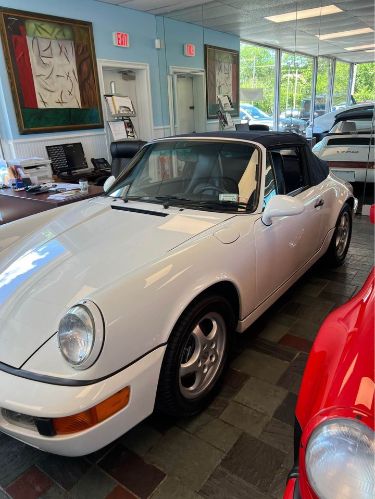
1993 Porsche 911
 Dealer
United States
Dealer
United States
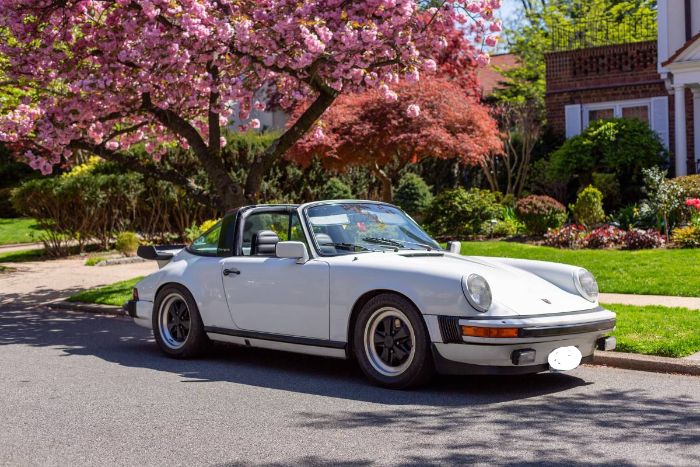
1982 Porsche 911
 Dealer
United States
Dealer
United States
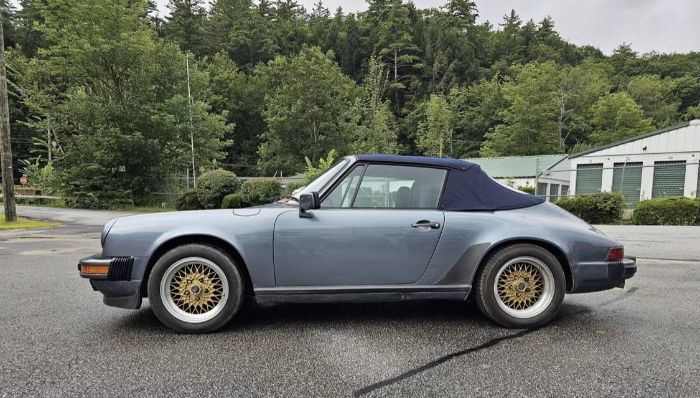
1983 Porsche 911
 Dealer
United States
Dealer
United States