
Packard Caribbean vs Lincoln Capri — American Luxury Coachwork Icons
<p>The Packard Caribbean (1953–1956) and the Lincoln Capri (1952–1955) were introduced within the same season, at the same GM Motorama where the Cadillac Eldorado also debuted, as competing visions of American luxury at its most aspirational. The Caribbean was Packard's final great statement: a limited-production convertible built by the Mitchell-Bentley Corporation with coachbuilt tradition behind it. The Capri was Lincoln's entry into the luxury convertible market — a more accessible price point but with genuine style and the mechanical backing of Ford Motor Company's most advanced engineering. Both are overlooked in 2026 relative to the Cadillac Eldorado that dominated the show, and both are better values as a result.</p>
Specs side-by-side
| Spec | Lincoln Capri | Packard Caribbean |
|---|---|---|
| Production years | 1952–1955 | 1953–1956 |
| Engine (1953/1952) | 317 ci Lincoln V8 | 327 ci straight-eight |
| Body builder | Ford Motor Company (production) | Mitchell-Bentley (coachbuilt) |
| Total production | ~4,000 est. (convertibles) | ~1,900 (all years) |
| Rarest year | 1952 (first year) | 1954 (~400 built) |
| 2026 value range | $45,000–$85,000 | $90,000–$380,000 |
The case for Lincoln Capri
The Lincoln Capri makes its case through clean design, mainstream parts accessibility, and a broader ownership infrastructure than the Packard can offer. The Lincoln Capri (1952–1955) was styled with the influence of John Reinhart and the Lincoln design studio — a lower, more European profile than the era's typical American convertible, with full-width rear styling that anticipated the 1956 Continental Mark II's elegance. The 317-cubic-inch Lincoln V8 is mechanically well-supported by Ford specialist shops; Capri parts availability through the Lincoln-Mercury Club is reasonable for a car of this vintage. Values at $45,000–$85,000 for well-maintained examples are consistently below the Caribbean's, making the Capri the more accessible entry into first-rank American luxury convertibles of the early 1950s. The Capri is the choice for the collector who wants period-correct luxury open-air motoring at a price that permits regular use rather than museum storage.
The case for Packard Caribbean
The Packard Caribbean makes its case through historical significance, coachbuilt construction, and the pathos of being a great marque's last serious act. The Caribbean was built by the Mitchell-Bentley Corporation on a modified Packard chassis — not a production-line car with a convertible option, but a hand-assembled luxury convertible in the tradition of the pre-war custom body houses that Packard had patronized since 1915. The 1953 Caribbean at $5,210 was more expensive than the Cadillac Eldorado at introduction — positioning Packard at the very apex of American production car pricing. The straight-eight engine in the 1953 and 1954 cars is the final expression of Packard's signature engine architecture; the transition to V8 in 1955 marked the beginning of the marque's decline. Among the marque registries, the 1953 and 1956 Caribbeans are the most documented and most valued — the 1954 being the rarest year with about 400 produced. For the collector who values historical significance over mainstream recognition, the Caribbean is the more important car.
Verdict
From a concours judging perspective, the Packard Caribbean is the historically superior automobile — more historically significant, rarer, and the last expression of a coachbuilding tradition that the Caribbean's maker was uniquely positioned to embody. The Lincoln Capri is the more practical classic for regular use and a more accessible entry into the category. Both cars are undervalued relative to the Cadillac Eldorado of the same period, which benefits from GM's marketing reach and broader collector awareness. For the discriminating buyer who values historical narrative over mainstream recognition, acquiring either — and particularly a Caribbean — before the broader market recognizes the gap is the correct strategic choice in the current moment.
Recent Lincoln Capri listings
 Dealer
 United States
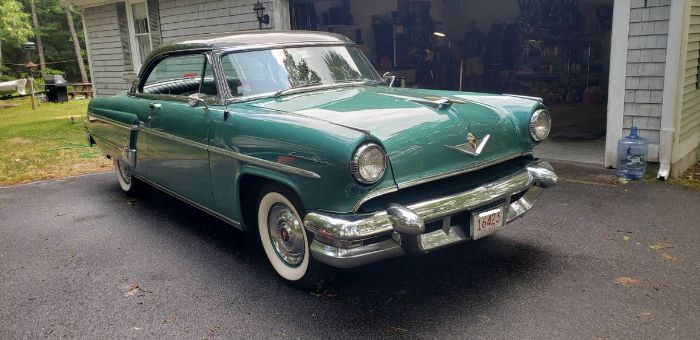
1954 Lincoln Capri
 Dealer
United States
Dealer
United States
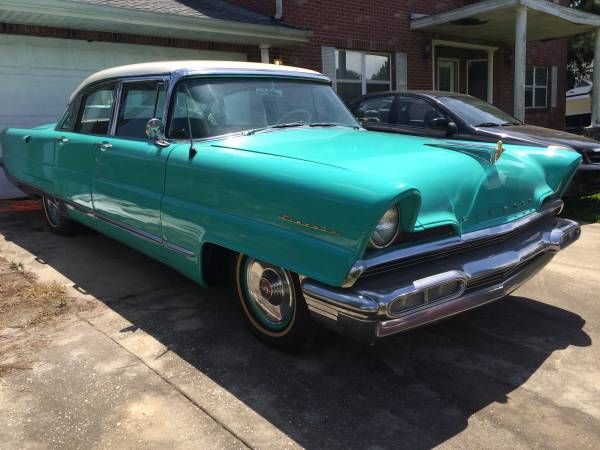
1956 Lincoln Capri
 Dealer
United States
Dealer
United States
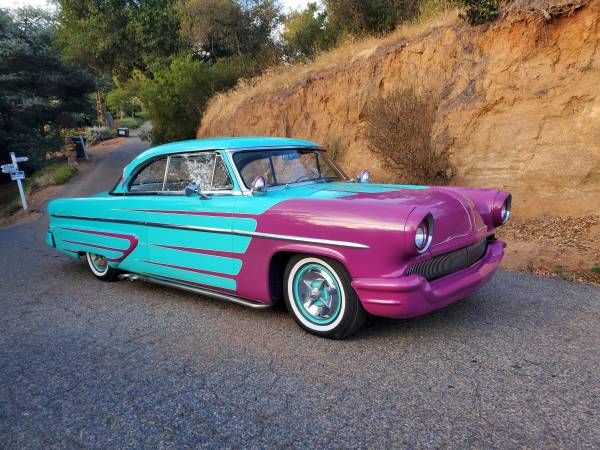
1955 Lincoln Capri
 Dealer
United States
Dealer
United States