A Nose Like No Other: Bill Mitchell's Vision for the 1963 Sting Ray
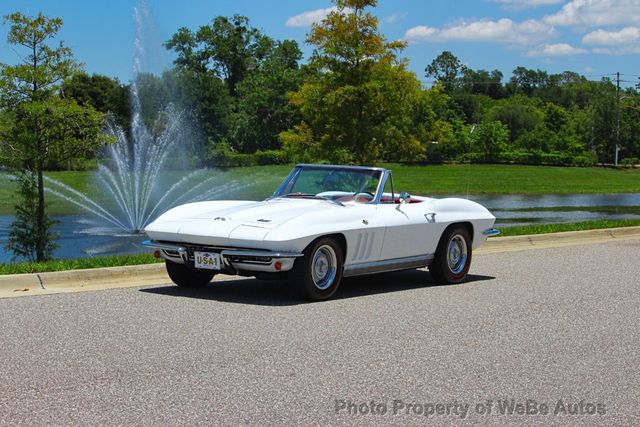
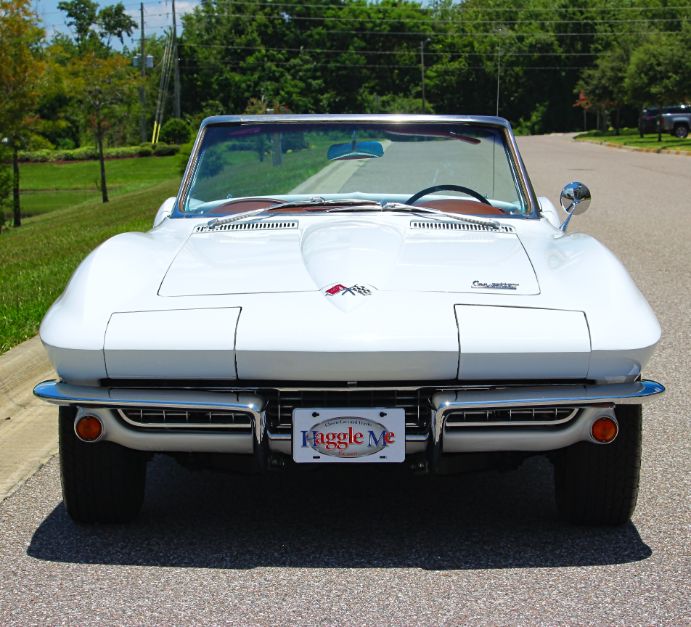
In the early 1960s, Bill Mitchell ran General Motors Design with the conviction of a man who believed cars were sculpture first and transportation second. When his team began shaping what would become the 1963 Corvette Sting Ray, Mitchell wanted a nose so clean, so uninterrupted, that it would look unlike anything on an American road. The problem was headlights. Federal law required them. Physics required them to be visible. And Mitchell, according to colleagues who worked alongside him at the Design Staff, could not tolerate the way exposed headlights broke the long, aggressive line he was chasing.
His solution — rotating headlight pods that hid behind flush body panels when not in use — was not entirely original as a concept. European coachbuilders had experimented with concealed lighting for decades. But the specific mechanism Mitchell's engineers devised, the way it functioned, and the aesthetic statement it made on the C2 Corvette transformed a practical problem into one of the most recognizable design signatures in American automotive history.
The Engineering Behind the Rotation
The mechanism Mitchell's team settled on was fundamentally different from the pop-up headlight systems that would later proliferate across the industry. Where pop-up units — as seen on the Lotus Elan or the early Lamborghini Miura — lifted vertically from a recess in the hood or fender, the Corvette's headlights rotated. Each pair of lamps was housed in a pod that sat flush with the body when closed. When activated, an electric motor turned the pod roughly 180 degrees around a horizontal axis, exposing the lights and positioning them for use. Close the circuit and the motor reversed, returning the pods to their hidden position and restoring the uninterrupted nose that Mitchell had insisted upon.
This rotational approach had aesthetic advantages over vertical pop-ups. The closed position left no visible seam line cutting across the front of the car at headlight height — the pods simply became part of the body surface. The transition from closed to open was also visually dramatic in a way that a simple rising panel could not match.
But the mechanism introduced engineering complexity that the development team had to solve before the car could be sold to the public. The primary concern was safety. A headlight system that failed to open at speed, at night, would leave the driver effectively blind. The engineers addressed this with a vacuum-actuated backup system. If the electrical circuit powering the motors failed, the driver could manually trigger a vacuum mechanism that would force the headlight pods open. The lights might not close again until the electrical fault was repaired, but they would be exposed and functional — the minimum acceptable outcome for nighttime driving safety.
The two-system approach added weight and complexity to an area of the car where every gram mattered, but it satisfied both the engineering team's safety requirements and the federal regulations that governed motor vehicle lighting at the time. It also set a precedent: every subsequent generation of Corvette that used hidden headlights inherited some version of this dual-actuation philosophy.
"The cleanliness of that nose was not an accident. Every line was fought for. The headlights were the hardest part — you had to have them, but you couldn't let them own the front of the car."
— Design Staff accounts, as recalled by Corvette historians documenting the C2 development process
Rotation Versus Pop-Up: A Different Philosophy
To understand what made the Corvette's rotating system distinctive, it helps to compare it to the pop-up approach that other manufacturers favored during the same era. The pop-up headlight, which became almost a shorthand for "sports car" styling through the 1970s and 1980s, worked by raising a panel or the light assembly itself vertically from a recess. Ferrari, Porsche, Mazda, and dozens of others used this system because it was mechanically simpler, lighter, and easier to waterproof.
The rotating pod was harder to seal. Water and road debris could work their way into the pivot mechanism. The motors were exposed to more stress over a longer range of motion. And the alignment between the closed pod and the surrounding body panel was more difficult to maintain across manufacturing tolerances and years of thermal cycling.
What the rotation offered that a vertical pop-up could not was a completely smooth closed surface. A pop-up system, even when executed well, left a visible panel gap and often a slight step where the hinged cover met the body. The Corvette's rotating pod eliminated that gap by being part of the body surface itself — the pod did not open so much as it turned away, revealing what was behind it.
This distinction mattered enormously to Mitchell's vision for the C2 Corvette Sting Ray. The car's design language depended on tension — surfaces that looked like they were pulled tight over an athletic form. A panel gap across the nose would have released that tension. The rotating pod preserved it.
Reliability, Reputation, and the Long C2-C3 Arc
The 1963 Corvette launched to considerable public enthusiasm, and the hidden headlights were among the features most frequently cited in period road tests and enthusiast coverage. But as the cars aged through the 1960s and into the 1970s — and as the C3 generation carried the same basic mechanism forward from 1968 through 1982 — the system's reputation became more complicated.
The electric motors were reliable enough when new and well-maintained. The vacuum backup system added a layer of redundancy that genuinely helped owners whose cars developed electrical gremlins. But the pivot seals and the mechanical linkages were sensitive to neglect. Cars that sat outdoors, accumulated road salt, or went extended periods without maintenance could develop pods that rotated slowly, refused to open fully, or seized in one position. A stuck headlight pod on a C3 Corvette — the nose of which was even more dramatic and visually dependent on the hidden lights than the C2's — was both a safety problem and a cosmetic catastrophe.
The C3's extended production run meant that GM's engineers periodically revised the headlight actuation system to address accumulated service feedback. Motor specifications changed, vacuum line routing was adjusted, and the manual override mechanism was refined. None of these changes were dramatic enough to make headlines, but they reflected the ongoing engineering conversation that the hidden headlight system demanded throughout its production life.
By the time the C4 arrived in 1984, the rotating pod had given way to a fixed pop-up system — still hidden, still dramatic when deployed, but mechanically simpler. Then the C5, launched in 1997, returned to rotating pods with the benefit of thirty additional years of materials science and motor technology. The result was a mechanism that was notably more reliable than its predecessors while preserving the clean nose that Mitchell had originally demanded.
What the Hidden Headlights Meant for the Corvette's Visual Identity
The deeper significance of the 1963 decision is not mechanical — it is visual and cultural. The hidden headlight became the nose of the Corvette in a way that no other single design element has before or since. Across the C2, C3, and C5 generations, the smooth front face of the car, unmarked by any visible lighting hardware, communicated a specific idea about what the Corvette was: a purpose-built object, stripped of decorative accommodation, showing nothing it did not need to show.
This was a meaningful statement in an era when American car design often ran in the opposite direction — when chrome bezels, quad headlight arrays, and elaborate grille treatments signaled status through addition. The Corvette's hidden headlights communicated status through subtraction. The car was confident enough in its form to refuse the visual noise that other manufacturers used to attract attention.
The 1963 split-window coupe remains the most collectible expression of this philosophy, combining the hidden headlights with the equally controversial divided rear window that Mitchell championed over engineering objections about rearward visibility. Together, the two features defined a car whose design coherence was more important to its creator than any individual practical consideration.
Mitchell's influence on the Corvette did not end with the C2. The design language he established — taut surfaces, functional hiding, drama through restraint — continued to inform the car through subsequent chief designers. When the C5's program team chose to return to rotating headlights after the C4's pop-up interlude, they were consciously reconnecting with Mitchell's original assertion: that the Corvette's nose should be read as a statement, not just a front fascia.
The Mako Shark show cars that Mitchell used to develop the C2's design direction made the hidden headlight a centerpiece of the concept. The production car honored that intent with unusual fidelity. In an industry where the distance between a show car and its production version was typically measured in compromises, the 1963 Corvette's headlight treatment made it from the studio to the showroom almost intact — a testament to how seriously the design team, and ultimately GM's leadership, took Mitchell's conviction that the clean nose was not a luxury but a requirement.
That conviction, expressed in rotating pods and vacuum backup systems and carefully fitted body panels, is why the 1963 Corvette looks the way it does fifty years later — like a car that has nothing to apologize for and nothing to prove.
Sources and notes
- National Corvette Museum, Bowling Green, KY — primary institutional archive for Corvette design and engineering documentation
- Hemmings Motor News — 1963 Corvette Sting Ray — period production history and technical overview of C2 engineering
- MotorTrend — Complete History of the Chevrolet Corvette — generation-by-generation design and engineering chronicle
- Car and Driver — Corvette History — editorial history covering design philosophy from C1 through modern generations
- CorvetteForum — C2 Corvette 1963–1967 History — enthusiast community documentation of C2 development, specifications, and production changes