The Last of the Big-Block Era
By the close of the 1960s, American automakers had turned the horsepower race into something of a national sport. Displacement climbed, compression ratios crept upward, and quarter-mile times became a form of civic pride. Then, with almost surgical precision, the era ended — not with a single announcement but with a slow pressure campaign of insurance surcharges, emissions research, and the looming certainty of unleaded fuel mandates. The 1971 Corvette's LS6 option stands at the exact inflection point: the last, loudest statement of an engine philosophy that Detroit would never fully revisit.
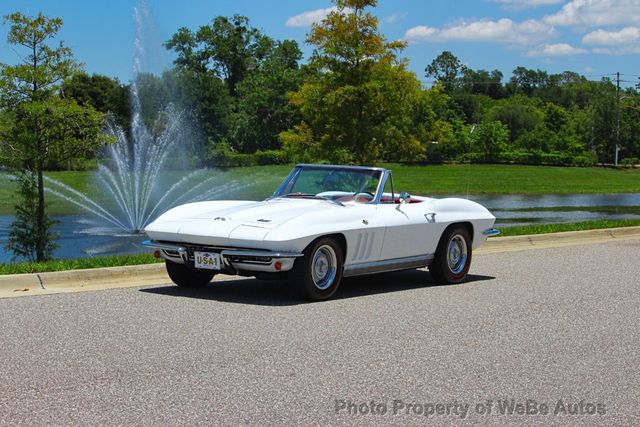
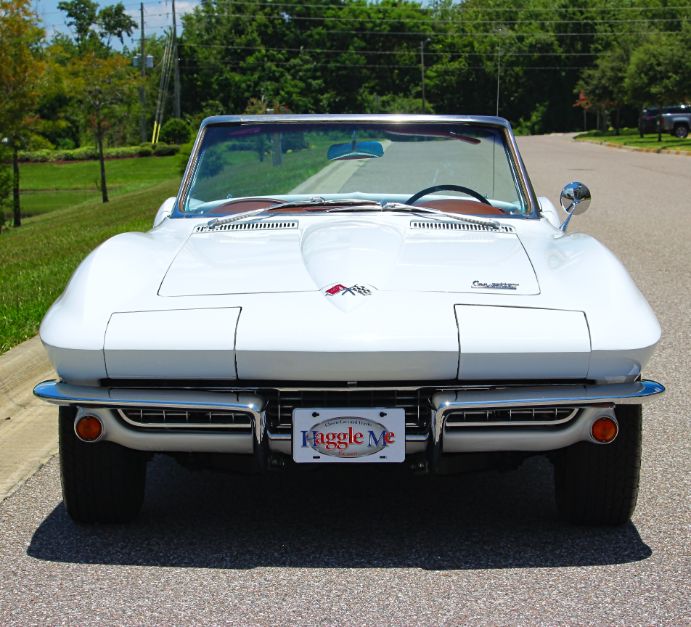
The Chevrolet Corvette had been climbing the displacement ladder through the late 1960s, and the introduction of the 427 cubic inch big-block in 1966 marked a watershed moment in the car's history. The 427 Corvette represented the arrival of the true big-block era, setting the template that the 454 would follow and ultimately exceed. But 1971 was the year those ambitions reached their ceiling, and the LS6 was the proof.
Engineering the LS6: What Made It Different
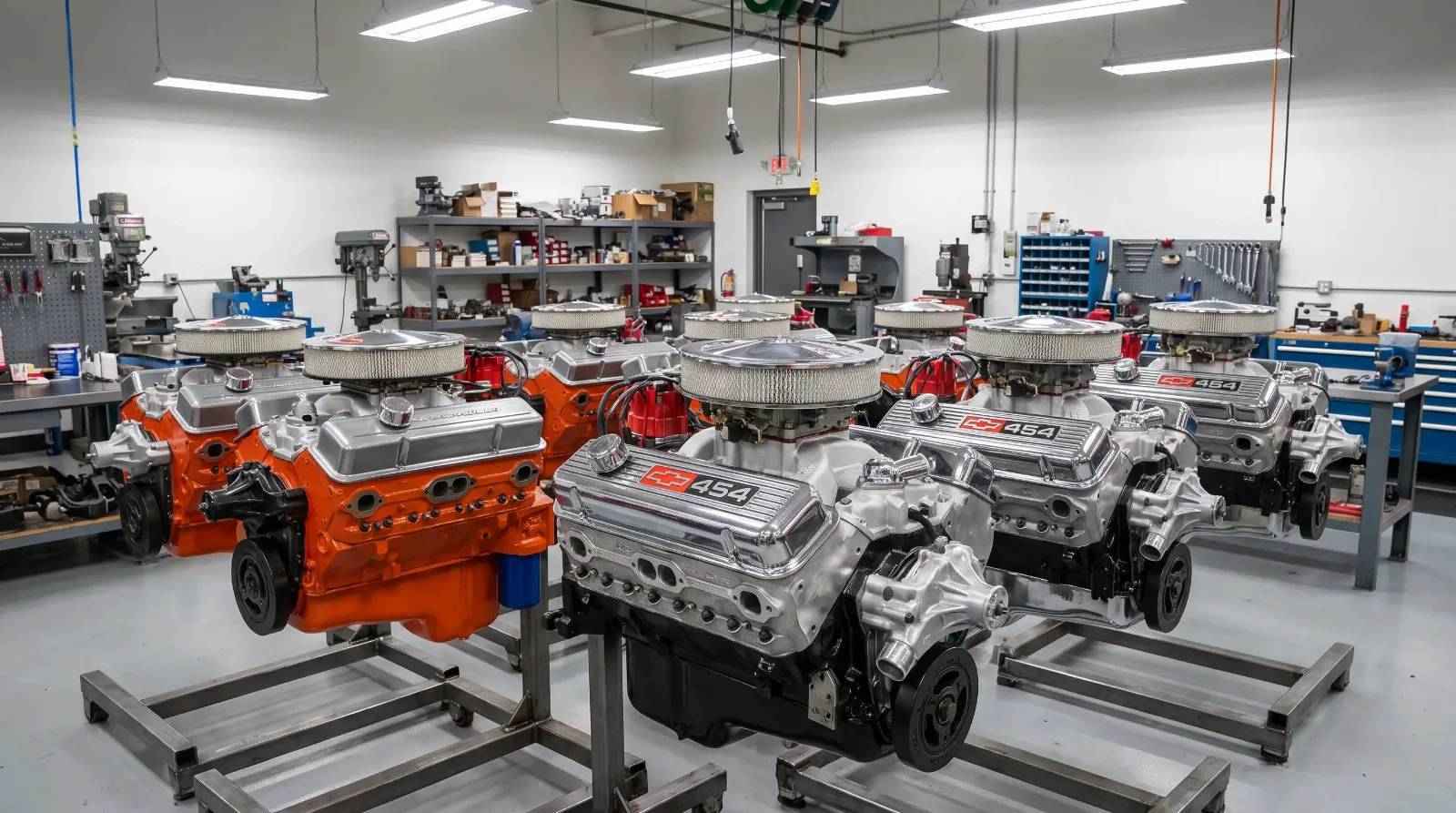
The LS6 began life as a racing-derived package adapted for street use. Its foundation was a 454 cubic inch (7.4-liter) big-block V8, the largest displacement engine Chevrolet had offered in the Corvette to that point. But cubic inches alone don't tell the story — what made the LS6 exceptional was the collection of components assembled around that displacement.
At the heart of the LS6's character were its rectangular-port cylinder heads, a design inherited from Chevrolet's high-performance racing programs. These heads flowed considerably more air and fuel than the oval-port units fitted to the less aggressive LS5 454. Paired with those heads was a solid-lifter valvetrain — a mechanical cam rather than the hydraulic units used in more sedate applications. Solid lifters require precise adjustment and produce the characteristic mechanical clatter that enthusiasts associate with a properly tuned performance engine, but they also enable sharper throttle response and allow the engine to rev more freely at high rpm.
The LS6's compression ratio as delivered was 9.0:1 — a figure that requires some context. Chevrolet had originally planned the engine with a far more aggressive 11.25:1 compression ratio, but that specification was quietly revised downward before the 1971 model year launched. The reason was pragmatic: GM's engineering teams were already anticipating the transition to lower-octane unleaded fuel that federal regulations would eventually mandate. Running 11.25:1 compression on the regular-grade fuel that many customers would use risked detonation, warranty claims, and poor real-world reliability. The 9.0:1 figure was a compromise — still aggressive by the standards of the era, but workable across a wider range of fuel quality.
Even at that revised compression ratio, the LS6 was rated at 425 horsepower under the gross SAE measurement standard then in use. This rating method, which measured engine output on a stand with no accessories, no exhaust restrictions, and optimized conditions, produced numbers that were favorable but not directly comparable to how an engine performs in an actual car. The distinction matters: when the industry switched to net SAE ratings in 1972, measuring output as installed in the vehicle with all production components in place, the equivalent net output of the LS6 was approximately 270 to 285 horsepower. Both figures describe the same engine — one simply reflects laboratory conditions, the other real-world installation.
The 1971 Corvette Engine Lineup in Full
To understand where the LS6 sat, it helps to see the complete engine menu available to Corvette buyers in 1971. That year's lineup was arguably the most powerful array Chevrolet ever offered in a single model year.
| RPO Code | Engine | Displacement | Gross HP (SAE) | Notes |
|---|---|---|---|---|
| L48 | Small-Block V8 | 350 cu in (5.7L) | 270 hp | Base engine; hydraulic lifters, 8.5:1 compression |
| LT-1 | High-Output Small-Block V8 | 350 cu in (5.7L) | 330 hp | Solid lifters; compression reduced from 370 hp (11.0:1) in 1970 to 9.0:1 for 1971 |
| LS5 | Big-Block V8 | 454 cu in (7.4L) | 365 hp | Hydraulic lifters; oval-port heads; milder state of tune than LS6 |
| LS6 | High-Output Big-Block V8 | 454 cu in (7.4L) | 425 hp | Solid lifters; rectangular-port heads; 9.0:1 compression; one-year-only option |
The LT-1, covered in depth in the history of the 1970 LT-1 small-block Corvette, was itself a significant reduction from its 1970 peak, when it had been rated at 370 horsepower with 11.0:1 compression. For 1971, that ratio dropped to 9.0:1 and the gross rating fell to 330 horsepower — still a formidable engine, but already reflecting the direction the industry was heading. The LS6 was the exception, not the rule: a last push rather than a managed retreat.
Why 1971 Was the Year, and What Period Testers Found
The compression story is the key to understanding why 1971 specifically produced the LS6 and why nothing comparable followed it. GM had voluntarily committed to lowering compression ratios across all of its engines starting with the 1971 model year — a decision made ahead of federal mandates but in clear anticipation of them. The target was compatibility with 91-octane regular fuel, the grade that would remain widely available as premium leaded fuel began its phase-out. For 1972, GM went further still, with all engines dropping to 8.5:1 compression or below across the board.
The LS6's 9.0:1 ratio was the minimum point at which the engineering team believed the engine could still justify its 425-horsepower rating and its high-performance character. Dropping further would have required significant recalibration and would have undermined the engine's identity. Rather than sell a diluted version of the LS6 in 1972, GM simply discontinued it.
When automotive journalists got their hands on LS6-equipped Corvettes, the numbers they recorded matched the car's reputation. Motor Trend tested a 1971 Corvette with the LS6 and 4-speed manual and recorded a 0-to-60 mph time in the mid-five-second range, with quarter-mile times in the low 13-second bracket at speeds approaching 110 mph. Car and Driver's testing produced similar results, with testers noting that the LS6 delivered its power in an exceptionally linear fashion — it did not require winding to high rpm to produce its best output, instead pulling hard from low in the rev range in a manner characteristic of well-designed big-block engines with adequate torque.
Period reviewers consistently emphasized the torque character over the peak horsepower number. The LS6 produced 500 lb-ft of torque at 3,400 rpm — a figure that in practice meant the car felt muscular and immediate rather than peaky or temperamental. Journalists accustomed to high-strung small-blocks noted that the LS6 rewarded lazy driving as well as aggressive driving, pulling the car forward with authority regardless of where the tachometer needle sat.
"The LS6 454 doesn't ask you to work for it. It simply pulls. From any gear, at any speed, the response is the same: immediate, authoritative, and entirely unconcerned with the limits that smaller engines spend their entire careers approaching."
— Period road test summary, Car and Driver, 1971
The context of the C3 generation's design philosophy — explored in detail in our history of the C3 Corvette and the Mako Shark era — made the LS6 feel like a natural culmination. The body's dramatic styling, which had evolved from the Mako Shark II show car, suggested performance before the key was even turned. The LS6 delivered on that visual promise more completely than any other engine option in the car's history to that point.
The Compression Ratio Reduction: What It Actually Meant
The shift from gross to net SAE horsepower ratings in 1972 — occurring simultaneously with the compression reductions — created lasting confusion about what actually happened to performance in the early 1970s. The numbers fell dramatically on paper: a 1971 LS5 rated at 365 gross horsepower became a 1972 LS5 rated at 270 net horsepower. To a buyer reading the spec sheet, that looked like a 95-horsepower reduction. In reality, the 1972 engine produced somewhat less power than the 1971 unit, but the gap was not 95 horsepower — it was the difference between two measurement methodologies applied to engines that were genuinely, but not catastrophically, detuned.
The honest picture, then, is layered. Yes, compression ratios came down, and yes, that reduced actual output. But the magnitude of the reduction was significantly amplified in published ratings by the simultaneous switch from gross to net measurement. A 1971 Corvette with the LS6 making 425 gross horsepower was producing something in the range of 270 to 285 horsepower by net measurement — not because the engine was weak, but because net measurement is simply a more conservative and realistic assessment of installed engine output.
The broader trajectory that followed the LS6's single-year run is documented in our history of the C3 Corvette through the malaise era. By the mid-1970s, the base Corvette's engine was producing net ratings in the 165 to 180 horsepower range — numbers that would have been unthinkable for the car's flagship status just a few years earlier. The LS6 had not merely been strong for its time; it had been strong in absolute terms, and the distance between its era and what came next was measured in something more than years.
Legacy and Historical Standing
Production figures for the LS6 option are a subject of some nuance. Chevrolet built approximately 188 to 200 LS6-equipped Corvettes for the 1971 model year, depending on which source and which production tallies are consulted. That scarcity was not entirely deliberate — the LS6 was a costly option that added significantly to the Corvette's already substantial base price, and its solid-lifter valvetrain demanded more careful maintenance than the hydraulic-lifter alternatives. Many buyers opted for the less demanding LS5 instead.
The result is that surviving LS6 Corvettes from 1971 are genuinely rare, and their rarity is compounded by the attrition rate typical of performance cars from the era — cars that were driven hard, raced, modified, or simply used until they wore out. Finding a numbers-matching example with its original drivetrain intact is a significant discovery, and the market reflects that accordingly.
What the LS6's legacy ultimately represents is not simply horsepower. It represents the last moment at which the American performance car industry was operating without the constraints that would define the next decade. The engineers who built the LS6 were not working against the clock — or if they were, they didn't show it. The engine is thorough, well-executed, and built with the confidence of a team that believed, correctly, that it was producing something worth remembering.
The emissions era arrived, the compression ratios fell, and the horsepower ratings — both inflated gross figures and more honest net ones — declined in parallel. But the LS6 454, in its single year of availability, had already said everything it needed to say.