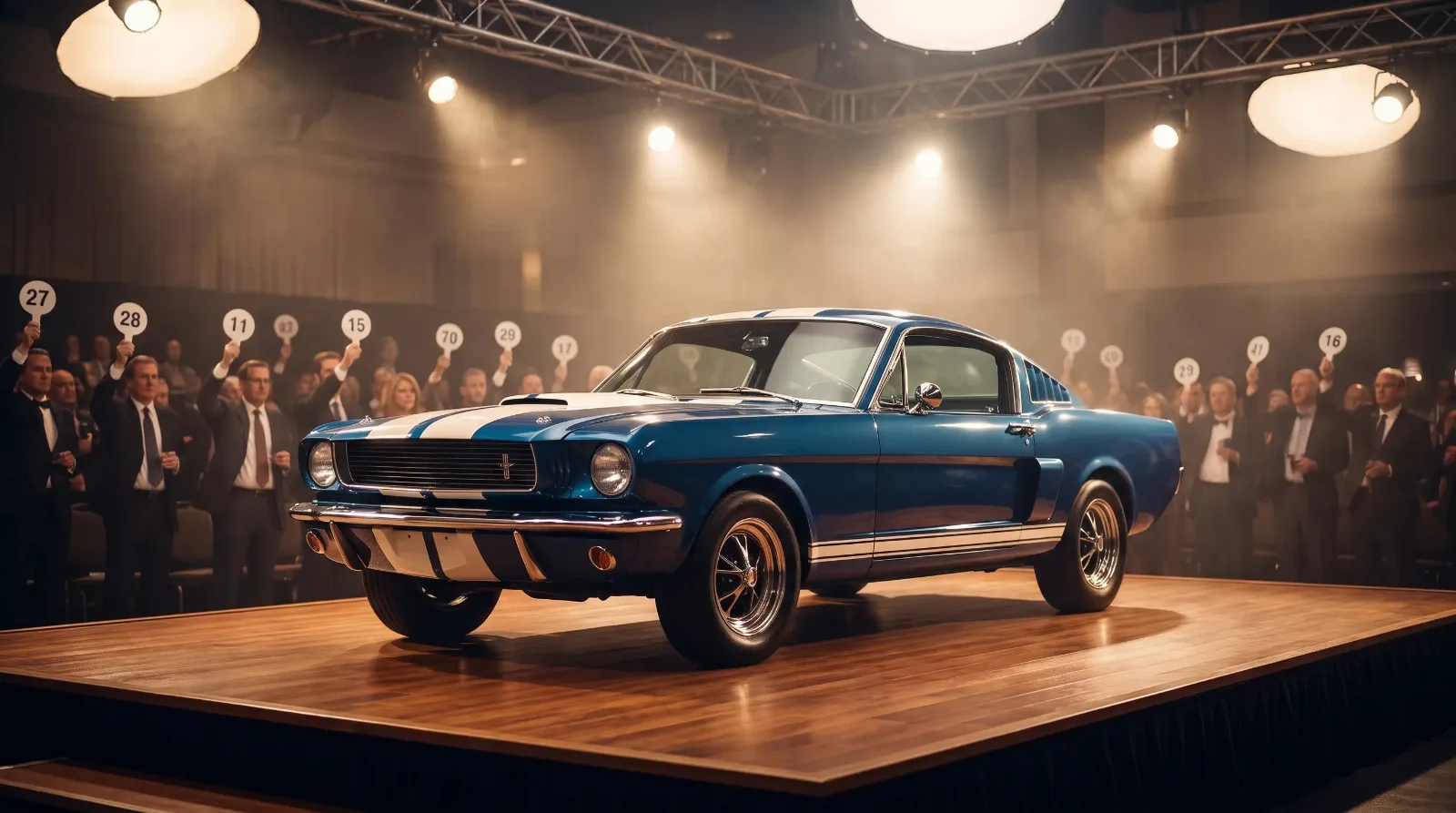
Why some Mustangs are worth millions
Most Mustangs depreciated for years before collectors recognized their significance. The cars that defied that pattern share a short list of traits: extremely low production numbers, documented racing provenance, or a singular moment in popular culture that locked a specific car into history. When those factors converge, the results at auction can be startling. Understanding what drove the most expensive mustang sold results at recent auctions requires looking at each car on its own terms, because no single formula explains them all.
For context on how the Mustang grew from a budget pony car into a collector's obsession, Classic Cars Arena's Mustang origins coverage traces the full arc from introduction through the golden muscle-car era.
The 1968 Bullitt GT: cinema's most famous Mustang
Of all the cars to emerge from a Steve McQueen film, one Highland Green fastback became an object of genuine obsession for half a century. Two 1968 Mustang GT390 Fastbacks were prepared for the production of "Bullitt," and one of them surfaced in private hands years after the film wrapped. That car hammered at $3.4 million at Mecum's Kissimmee, Florida auction on January 10, 2020, with the all-in figure reaching approximately $3.74 million once the buyer's premium was added. The winning bidder's identity was not publicly disclosed. At the time it was the most valuable Mustang ever sold at public auction.
What justified the number was not simply the movie connection. The car retained its original Highland Green paint, its original 390 cubic-inch FE-series big-block, and a documented chain of custody traceable back to the production company. Factory-correct Mustangs from 1968 are not rare in themselves; tens of thousands were built. This one happened to appear in a chase sequence watched by millions, driven by a man whose taste in automobiles was regarded as nearly infallible. Provenance at that level is essentially impossible to replicate.
The 1967 Shelby GT500 Super Snake and the GT350R: one-offs and competition cars
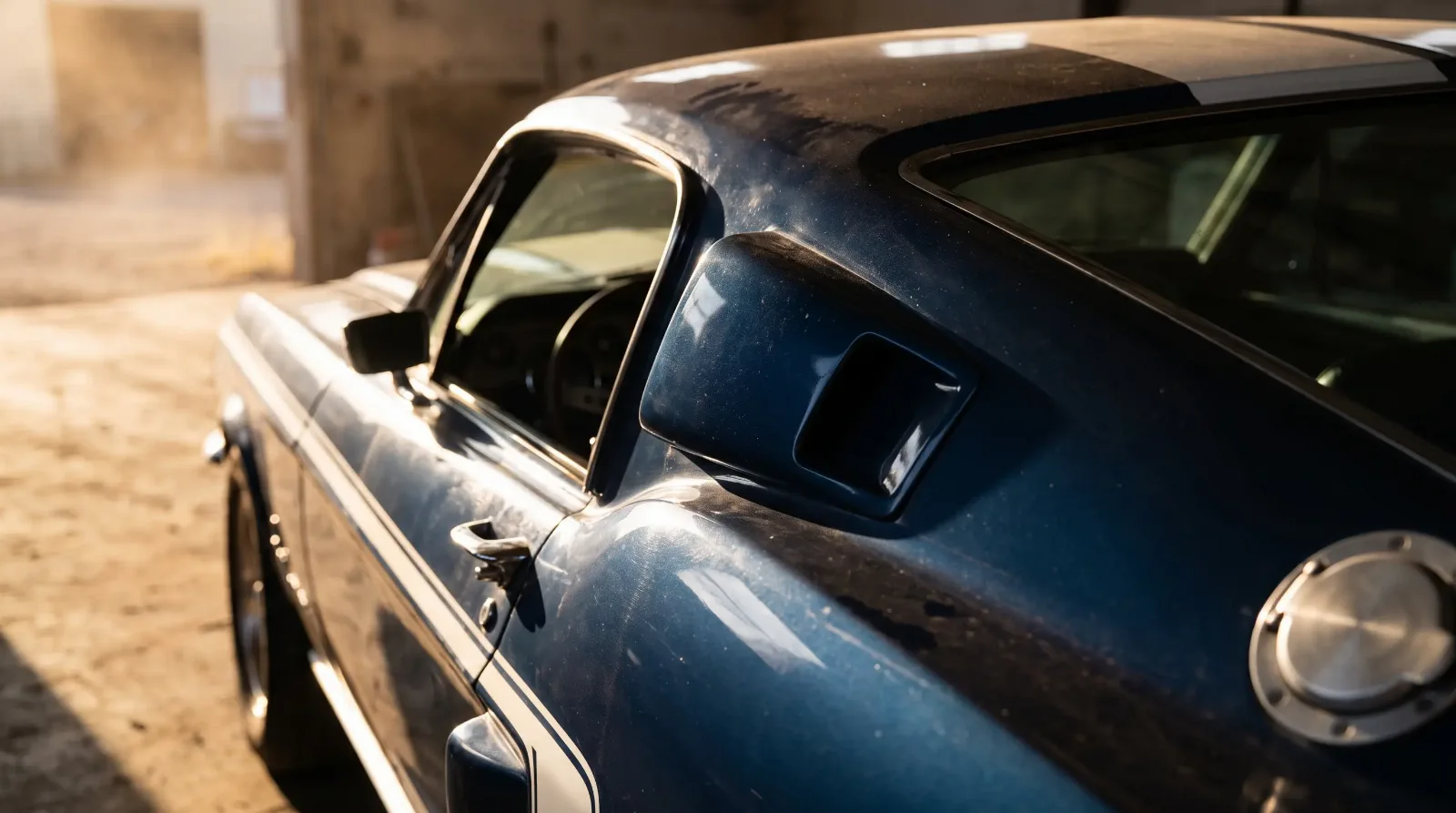
Carroll Shelby built exactly one GT500 Super Snake in 1967, intended as a high-speed tire-testing vehicle for Goodyear. The car was fitted with a 427 lightweight side-oiler engine essentially the same aluminum-headed unit that powered Ford's Le Mans-winning GT40, conservatively estimated at around 520 horsepower in this application making it one of the most powerful street-registered Mustangs of the era. Because it is genuinely one of one, market comparables do not exist in the traditional sense. The car changed hands at a Mecum auction in 2013 for approximately $1.3 million, then returned to Mecum's Kissimmee sale in January 2019 where it brought roughly $2.2 million, a result widely reported at the time as a record for any Mustang sold at public auction.
In a different category but at similarly rarefied prices sit the 1965 Shelby GT350R competition cars. Shelby American built roughly 34 customer "R" cars for the SCCA B-Production season, alongside a small number of team and prototype examples. The shop stripped out the rear seat, sound deadening, and every gram of excess weight, then added a fiberglass front apron, a trunk-mounted fuel cell, and Koni competition shocks. The 289 High Performance V8 was tuned to roughly 350 horsepower in race trim, and the cars dominated B-Production in 1965 with Ken Miles and others at the wheel. Values for documented competition GT350Rs reach well into seven figures: the original prototype (SFM5R002), the "Flying Mustang" tested by Ken Miles, sold for approximately $3.85 million at Mecum's Indianapolis sale in 2020, while a customer R-model brought around $2.75 million at a more recent Mecum auction.
"Provenance documentation is everything in this market. A car with a Shelby letter, original title, and a clear build record will always outrun a better-looking car with a story that cannot be verified."
— David Mercer
Boss 429 and other factory low-production specials
Not every high-value Mustang was built by Shelby. Ford's own low-volume factory programs produced cars that now rank among the most sought-after in the lineup. The Boss 429, built across 1969 and 1970 in very small numbers, 859 cars in 1969 and 499 in 1970, for a total of just 1,358, was homologated for NASCAR and required Ford to install the 429 cubic-inch engine into a body it was never designed to accept. Kar Kraft, a Michigan contractor, performed the conversion, relocating the front suspension and fabricating new shock towers to make room for the wide-block engine.
Top-condition Boss 429s with original engines, matching-numbers documentation, and strong provenance have repeatedly sold at Mecum and Barrett-Jackson in the $400,000 to $500,000 range in recent years, with individual examples crossing the half-million mark; lesser cars and projects trade well below that. The 1970 Boss 302, the Trans-Am homologation special built in larger numbers, trades at lower but still meaningful premiums over standard Mustangs of the era.
The table below summarizes the most notable historical auction results across all four categories. All figures are approximate and reflect results at the time of sale; market values shift, and any buyer or seller should verify current comparables independently.
| Car | Approx. auction result | Sale year | Why it commands a premium |
|---|---|---|---|
| 1968 Mustang GT390 "Bullitt" hero car | ~$3.74M (all-in; $3.4M hammer) | 2020 (Mecum Kissimmee) | Cinema provenance, original drivetrain, documented chain of custody |
| 1967 Shelby GT500 Super Snake (one-of-one) | ~$2.2M (also ~$1.3M in 2013) | 2019 (Mecum Kissimmee) | One-of-one, personal Shelby involvement, Goodyear tire-test history |
| 1965 Shelby GT350R prototype (SFM5R002, Ken Miles) | ~$3.85M (customer R-models ~$2.75M) | 2020 (Mecum Indianapolis) | Factory competition build, SCCA race history, original body |
| 1969/1970 Boss 429 (top examples) | ~$400K–$500K range | Recent years (Mecum, Barrett-Jackson) | NASCAR homologation engine, low survival rate, matching numbers |
What separates a museum piece from an expensive used car
The factors that lift a Mustang from collectible to record-setter follow a consistent pattern. Originality matters more than condition in most cases: an unrestored car with honest wear and original paint will often outperform a perfectly restored example at auction, because restorers inevitably make choices that differ from the factory. Numbers-matching documentation, meaning the VIN-stamped engine block corresponds to the car's original paperwork, is essentially non-negotiable at the top of the market.
Provenance adds a multiplier that cannot be engineered after the fact. A car photographed with Carroll Shelby, raced by a documented driver, or tied to a specific cultural moment carries a story that serious buyers are willing to pay for. That story must be verifiable through period documents, not dealer claims. The major auction houses have learned to scrutinize paperwork carefully, because the sums involved are large enough to attract fabricated histories.
Production rarity sets the floor. A car built in roughly three dozen copies starts with a structural advantage over one built in 36,000. But rarity alone has never been sufficient: there are low-production Mustangs from the late 1970s that still trade at modest prices because collector interest has simply not followed. The cars that break records combine small numbers with a reason to care, and that reason is almost always tied to racing history, documented ownership, or a cultural moment that remains vivid decades later. For anyone looking to explore the broader market, collectible classic Mustangs span every price point from driver-grade examples to concours survivors.
Sources and notes
All prices in this article are approximate and reflect specific historical auction results at the time of sale, not current market values. Collector-car values move continuously, and even a documented sale reflects one car, one bidder pool, and one moment; comparable cars can sell for materially more or less. Anyone buying or selling should verify current comparables with the auction houses and independent valuation sources directly.
- ClassicCars.com Journal — "Bullitt hammers for $3.4MM at Mecum Kissimmee" (2020)
- Hagerty Media — "$2.2M 1967 Shelby GT500 Super Snake is most-expensive Mustang ever sold at auction"
- duPont REGISTRY News — "Ken Miles' Prototype GT350-R Sells for a Record $3.85 Million" (Mecum Indy)
- Wikipedia — Shelby Mustang (GT350R production and competition specifications)
- Wikipedia — Boss 429 Mustang (production totals: 859 in 1969, 499 in 1970)
- Classic.com — Ford Mustang Boss 429 auction market data