A Shape That Time Could Not Dilute
There is a useful test for a car's collectible durability: show a photograph to someone who has never set foot in an auction tent, never read a marque history, never argued over carburetor jetting at a swap meet. If they can tell — without prompting — that the car in the frame is a sports car, and if their reaction carries at least some trace of desire, the car has passed. The Chevrolet Corvette of 1963 to 1967, known universally as the C2 or Sting Ray generation, passes this test with an ease that very few American cars can match. That legibility, that immediate communicative power, is not a cosmetic accident. It is the deepest reason the C2 has become one of the most consistently valued collector cars of the postwar era — and understanding why it endures requires looking at the full arc of its history, its market performance through cycles of boom and correction, and the internal hierarchy that organizes collector desire within the generation itself.
Why the C2 Became a Cultural Artifact
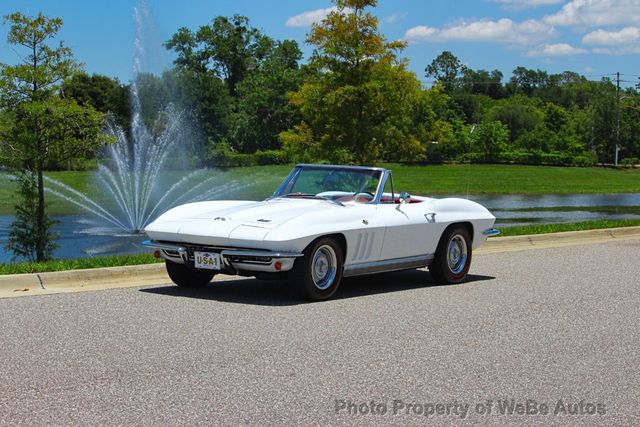
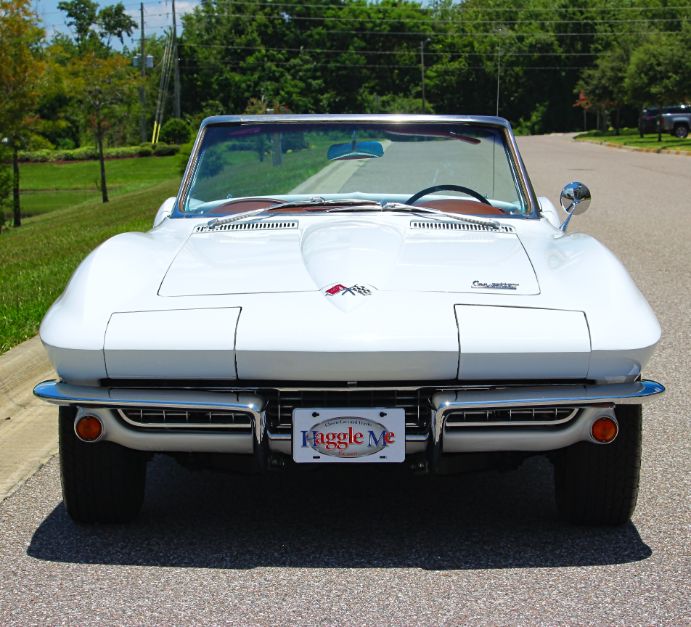
The C2 Corvette Sting Ray arrived at a singular convergence of circumstance. American industrial design in the early 1960s was, for a narrow window, genuinely world-class. The aerospace age had infected the styling studios of Detroit with organic, swept forms — not the chrome-heavy excess of the late 1950s, but something more purposeful and muscular. Bill Mitchell's team produced a body that managed to be dramatic without being theatrical, aggressive without being crude. The long hood, the tapered tail, the haunched rear fenders reading as barely-contained power — these proportions have not dated because they were never truly of their moment. They expressed something more permanent: the visual grammar of speed itself.
The five-year span of the C2 (1963 through 1967) is short enough that collectors can hold the entire generation in their heads as a coherent set, with a clear beginning, a clear end, and a well-understood internal ranking. This is not nothing. Generations that sprawl across a decade or more fragment collector attention and dilute rarity premiums. The C2's brevity is part of its market strength.
"The cars that sustain value across market cycles are almost always the ones that required no education to appreciate. You either felt it when you first saw the C2, or you were never going to feel it at all. That immediate reaction — that's what the collector market is ultimately pricing."
— Period accounts from marque historians, summarized
The 1963 Split-Window and the Logic of the One-Year Icon
Within the C2 generation, no single car occupies a more precise position in collector mythology than the 1963 coupe with the divided rear window. The distinctive spine that bisected the backlight was reportedly opposed almost from its inception by Zora Arkus-Duntov, the engineer who more than anyone else had shaped the Corvette's performance identity. His objection was practical — the pillar created a significant blind spot — and he pressed for its removal with characteristic bluntness. By 1964, it was gone. The result was that the 1963 coupe became, instantly and irrevocably, a one-year-only artifact.
The collector market's response to one-year-only features is well-documented across marque histories: value concentrates precisely where production was interrupted or altered. The split window is almost a textbook case. A clean 1963 coupe commands a premium over its 1964 counterpart even when all other specifications are equal, because the visual centerpiece — the feature that makes the car immediately identifiable — was never repeated. Scarcity created by a design decision reversed under pressure is, from a collector-market standpoint, nearly ideal: the reason for the rarity is a story, and stories compound value over time.
Alongside the styling question sits the Z06 option of 1963, a factory racing preparation package that represented Chevrolet's most serious competition intentions for the model year. Period accounts suggest production numbers were extremely small — a consequence of both the package's complexity and a mid-year corporate decision that curtailed factory racing involvement. The Z06's rarity has translated into some of the highest per-car values within the entire C2 spectrum, occupying a tier where provenance documentation and matching-numbers authentication become paramount.
The Hierarchy: How the Market Organizes Desire
One of the most telling signs of a mature, durable collector market is the existence of an internally coherent value hierarchy — a structure that most serious participants can articulate, and that auction results tend to confirm year after year. The C2 market has exactly this quality.
| Tier | Car | Why It Commands the Premium |
|---|---|---|
| 1 (Highest) | 1963 Split-Window Coupe (Z06 or high-optioned) | One-year-only styling icon; Z06 factory racing package; exceptional rarity |
| 2 | 1967 L88 427 | Rarest high-performance engine of the generation; roots in pure competition |
| 3 | 1967 (all variants) | Widely regarded as the cleanest, most resolved C2 design; final-year collector premium |
| 4 | 1963–1966 convertibles (top-spec engines) | Broad appeal; strong demand from both drivers and show collectors |
| 5 | Mid-spec 1964–1966 coupes and convertibles | Entry point for the generation; most accessible price tier |
The 1967 model year deserves particular attention because its primacy among knowledgeable collectors rests on an aesthetic judgment that has proven remarkably stable over time. The 1965 and 1966 cars gained egg-crate grilles, side vents, and other decorative elements that, depending on perspective, enriched or complicated the original 1963 vision. By 1967, the design team had resolved the tension: the side exhausts, the five-spoke wheels, the cleaner hood line produced what period accounts and subsequent critical consensus have called the most integrated expression of the Sting Ray shape. In collector markets, the car that most clearly represents what a generation was trying to say tends to hold its value most reliably — and on those terms, the 1967 has a strong claim.
The L88 427 sits in a category almost apart from the normal C2 hierarchy. Available from 1967 onward (though its fullest expression in the C2 belongs to the final year), the L88 was a barely-disguised racing engine — factory-rated at 430 horsepower in what period sources suggest was a deliberate understatement intended to discourage ordinary buyers. The cars that left dealers with the L88 were almost invariably destined for competition, which means survival rates are low and documentation chains are complex. When an authenticated example appears at a major auction, it tends to attract a level of bidding that transcends the normal C2 conversation entirely.
Performance Through Market Cycles
Collector car markets are not immune to broader economic conditions. The corrections of the early 1990s, the post-2008 contraction, and the volatility introduced by pandemic-era liquidity all moved prices for American classics. What is notable about the C2's record — and what distinguishes a genuinely blue-chip car from a speculative trend — is the relative compression of its downside in weak markets compared to the breadth of its recovery in strong ones.
Hagerty, Barrett-Jackson, and Mecum have consistently reported strong C2 demand across market cycles, with top-specification cars in particular showing resilience that mid-tier American muscle from the same era has not always matched. The pattern reflects something structural: the C2 draws from multiple buyer pools simultaneously. There are the traditional American muscle and Corvette collectors. There are buyers who came of age in the 1960s for whom the car carries biographical weight. And there is a younger generation of collectors who have discovered the C2 through design history — through its place in the broader Corvette story as the generation that proved America could build a sports car of genuine aesthetic ambition. A car that draws across generational cohorts has a built-in succession of buyers, which is perhaps the most reliable insurance against lasting market weakness.
What the C2 Reveals About Lasting Collectibility
The C2's history in the market offers a readable lesson about which cars become lasting objects of desire rather than temporary trends. The cars that fade — the one-year wonders of the auction circuit that spike and retreat — tend to share certain qualities: they were valued primarily for statistical rarity rather than intrinsic excellence, or they appealed to a single demographic cohort without the ability to recruit successors, or their designs required historical context to appreciate.
The C2 inverts all three of these vulnerabilities. Its rarity is meaningful rather than arbitrary — the Z06, the split window, the L88 are rare because they represented the outer edge of what the factory was willing to do, not because of a production accounting accident. Its design communicates without a course in marque history. And its appeal has demonstrably passed across generations, carried not by nostalgia alone but by the visual evidence that the shape still works — that a 1963 Sting Ray parked on a contemporary street still stops people who have never heard the name Zora Arkus-Duntov.
That, in the end, is what separates the blue-chip collectible from the temporary phenomenon. Not the rarity statistics. Not the auction records. But the fact that fifty years later, a passing stranger still turns their head.
Sources and notes
- Hagerty C2 Corvette Market Report — ongoing valuation and auction trend data for the 1963–1967 generation
- National Corvette Museum — C2 Generation History — factory production records and option documentation for the Sting Ray era
- Barrett-Jackson — C2 Corvette Collectibility — auction house perspective on C2 demand and pricing hierarchy across sale cycles
- Hemmings — The 1963 Corvette Z06: The First Factory Racer — period sourcing and production history of the Z06 option package
- Automobile Magazine — 1967 Corvette Sting Ray History — design analysis and critical history of the final C2 model year