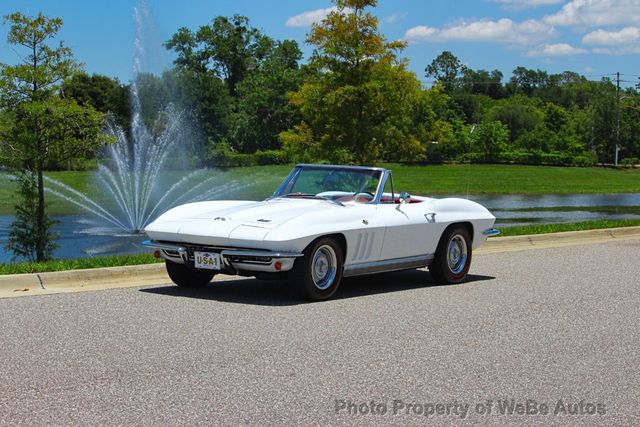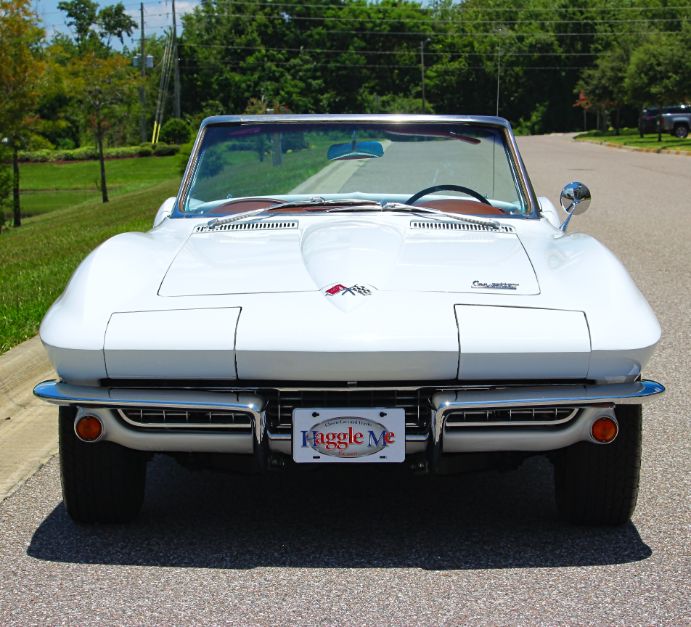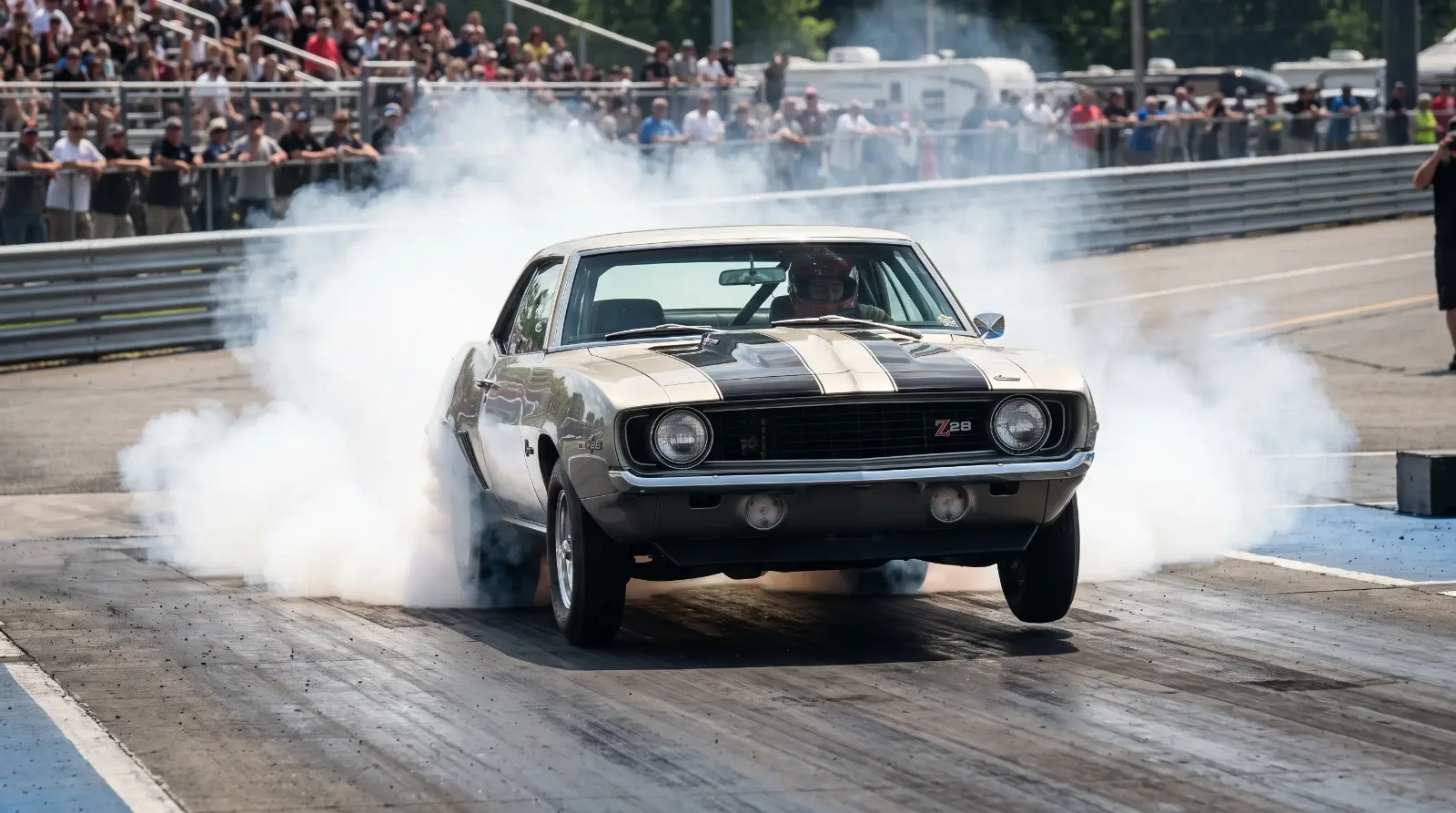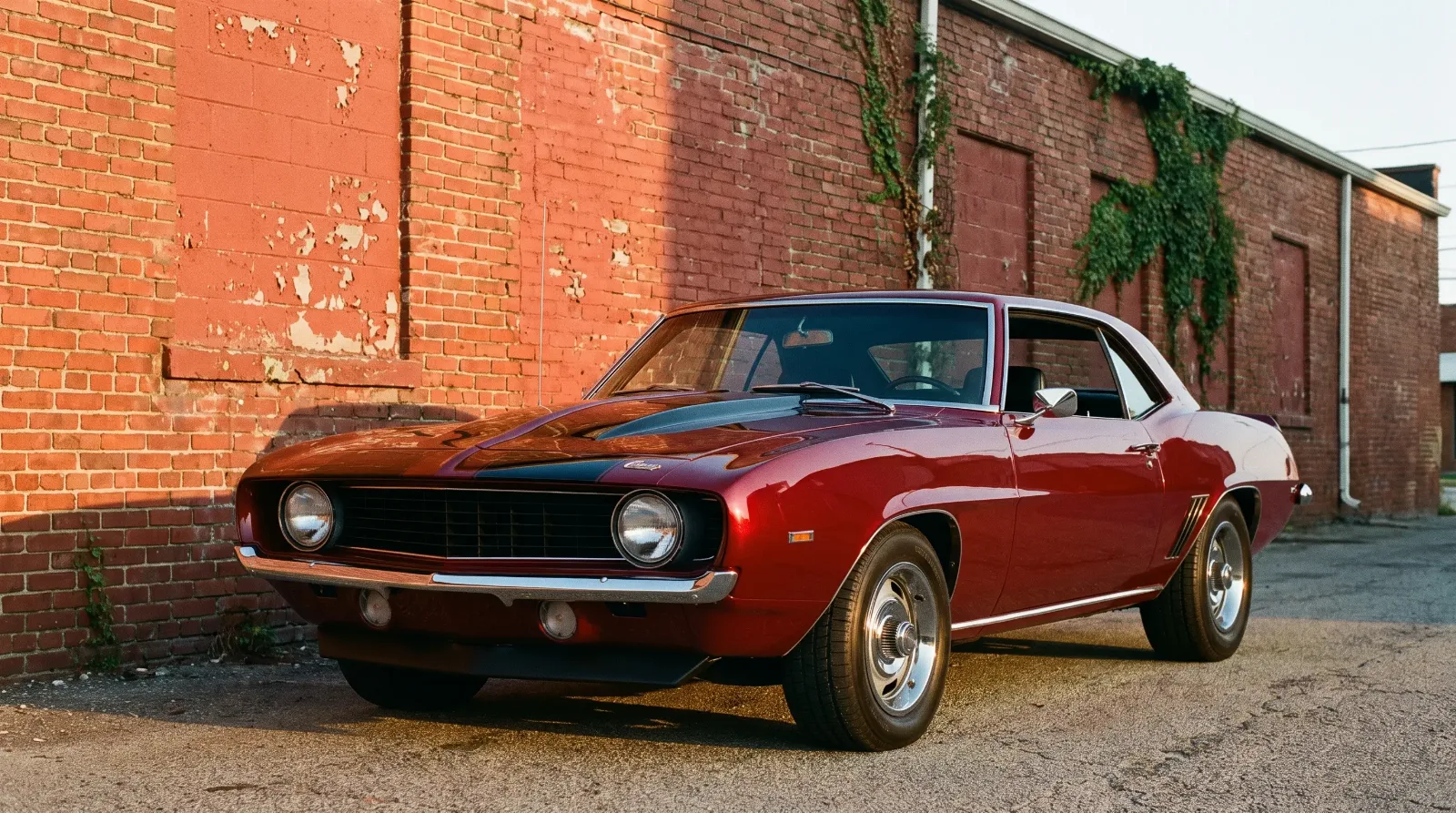

The small-block that defined the C2
The 327 cubic inch small-block is not the engine most people picture when they think of the Corvette. That mental image tends to involve a 427 under an open hood scoop, or the Mark IV big-block shaking the body on a drag strip somewhere in 1967. But from 1963 through 1967, the 327 was the engine that made the C2 Sting Ray what it was: a genuine sports car, not just a straight-line machine. It covered a power range from a tractable 250 horsepower to a fuel-injected 375 horsepower, and in doing so it told the story of how Chevrolet's engineers thought about extracting performance from a relatively modest displacement.
The title's nod to "tri-power" — the three-two-barrel setup used on contemporary Pontiac GTO engines — is an allusion to the era rather than a literal specification. Corvette's own multi-carb performance came via a different route: the dual four-barrel arrangement that sat at the mid-tier of the 327 option ladder. It's worth being clear about that distinction up front, because the period nomenclature can get muddled. The Corvette 327 never ran triple two-barrels. What it ran was a spectrum of induction systems, from a single Carter AFB to the Rochester Ramjet fuel injection that made the top-spec engine genuinely exotic by the standards of 1963.
Where the 327 came from
To understand the 327, you have to go back to 1955 and the 265 cubic inch small-block that launched Chevrolet's modern V8 era. The 265 used a 3.75-inch bore and a 3.00-inch stroke — a relatively oversquare configuration that favored high-rpm breathing. When Chevrolet expanded the family to 283 cubic inches in 1957, they widened the bore to 3.875 inches while keeping the same 3.00-inch stroke. That was the engine that introduced Rochester fuel injection to the Corvette in 1957, producing one horsepower per cubic inch in its top configuration — a benchmark that mattered to engineers and the automotive press alike.
The jump to 327 cubic inches came in 1962, and this time the engineers changed both dimensions. Bore went to 4.00 inches — a full quarter-inch wider than the original 265 — while stroke grew from 3.00 to 3.25 inches. That longer stroke gave the 327 more torque at lower rpm than the 283, which is part of why the base 250 hp version felt more capable in real-world driving than its power number suggested. The longer stroke also contributed to the 327's reputation as an engine that pulled cleanly from low speeds, a characteristic that would matter for the street-driven Corvettes most buyers were actually putting miles on.
The architecture that made the 265 successful carried over intact: five main bearings, hydraulic or solid lifters depending on the application, and a valvetrain designed to rev. The small-block's fundamental advantage — light weight relative to its output — was preserved and amplified in the 327 form. Period road tests consistently noted that the 327-powered Sting Ray handled and stopped like a sports car in a way that the later big-block cars often didn't, because the engine didn't load the front of the chassis the same way a 396 or 427 did.
The option ladder: 250 horsepower to 375
For 1963, Chevrolet offered the 327 in four distinct states of tune. The base engine produced 250 horsepower with a single four-barrel carburetor and hydraulic lifters — enough to move the Sting Ray briskly, but configured for durability and ease of ownership. Most buyers who wanted a Corvette for weekend drives and the occasional highway run ordered something in this neighborhood. Period accounts describe the base 327 as smooth and willing, if not exciting in the way the top-spec engines were.
The L75 option at 300 horsepower used a Carter AFB four-barrel and hydraulic lifters. This was the most common performance option, offering a meaningful bump over the base engine without the maintenance demands of solid lifters or the complexity of the fuel injection system. Chevrolet sold a lot of L75 cars, and today they represent the more attainable end of the C2 small-block spectrum.
Above that sat a 340 horsepower option using dual Carter AFB four-barrel carburetors — this was the C2's answer to the era's appetite for multi-carburetor induction. Two four-barrel carbs on a 327 looks purposeful and performs accordingly, and the dual-quad setup delivered the kind of induction sound that drew attention at fuel stops. It was the performance choice for buyers who wanted something tangible under the hood without committing to the complexity and cost of fuel injection. Period specifications list this as the L76 designation in some model years, though the exact RPO assignments shifted slightly across the 1963 through 1965 span.
At 360 horsepower, Chevrolet offered the first tier of Rochester Ramjet fuel injection on hydraulic lifters. And at the top, the 375 horsepower L84 ran the same injection system with solid lifters and higher compression. This was the engine that Corvette advertising led with, and for good reason: in 1963, a production car with 375 horsepower from 327 cubic inches was genuinely unusual. The fuel injection system contributed both to peak output and to the throttle response that road testers described as immediate in a way that carbureted engines couldn't quite match.
| Year(s) | RPO | HP (period specs) | Induction | Lifters | Notes |
|---|---|---|---|---|---|
| 1963–65 | (base) | 250 | Single 4-bbl | Hydraulic | Entry C2 engine, most tractable |
| 1963–65 | L75 | 300 | Single 4-bbl (Carter AFB) | Hydraulic | Most commonly ordered option |
| 1963–65 | L76 | 340 | Dual 4-bbl (2x Carter AFB) | Hydraulic | Dual-quad mid-range; RPO designation varied by year |
| 1963–65 | L84 | 360 | Rochester Ramjet FI | Hydraulic | Lower fuelie specification |
| 1963–65 | L84 | 375 | Rochester Ramjet FI | Solid | Top fuelie; discontinued after 1965 |
| 1965–67 | L79 | 350 | Single 4-bbl (Holley) | Solid | High-compression driver's engine; widely regarded as the sweet spot |
| 1966–67 | L75 | 300 | Single 4-bbl | Hydraulic | Continued as base small-block after fuelie discontinued |
The fuel injection problem
The Rochester Ramjet system was not simple. It was a continuous-flow port injection design that metered fuel through a central control unit calibrated to match a specific engine combination. In the hands of an experienced tuner who understood the system, it produced excellent results. In the hands of a dealer service department that had never been trained on it — which described most Chevrolet dealers in 1963 — it was a problem waiting to happen.
Period accounts from Corvette owners and automotive press of the era describe a system that was sensitive to calibration drift, difficult to diagnose when it went wrong, and nearly impossible to have serviced outside of a handful of specialty shops. The injection unit itself was reportedly expensive to repair when components failed, and the complexity of the system gave buyers pause even when it was working correctly. A fuel injection Corvette in 1963 added roughly $430 to the sticker price — a significant premium that buyers were increasingly unwilling to pay when the results in everyday use were less than reliable.
"The fuelie numbers were real — 375 horsepower from 327 cubic inches was something in 1963. But you have to separate the peak-output story from the ownership story. These systems needed attention that most dealers couldn't give them, and the cars that got neglected developed habits that made people doubt the whole concept. When the 396 arrived offering more power with a carburetor, the case for fuel injection got harder to make."
— Tom Ramirez
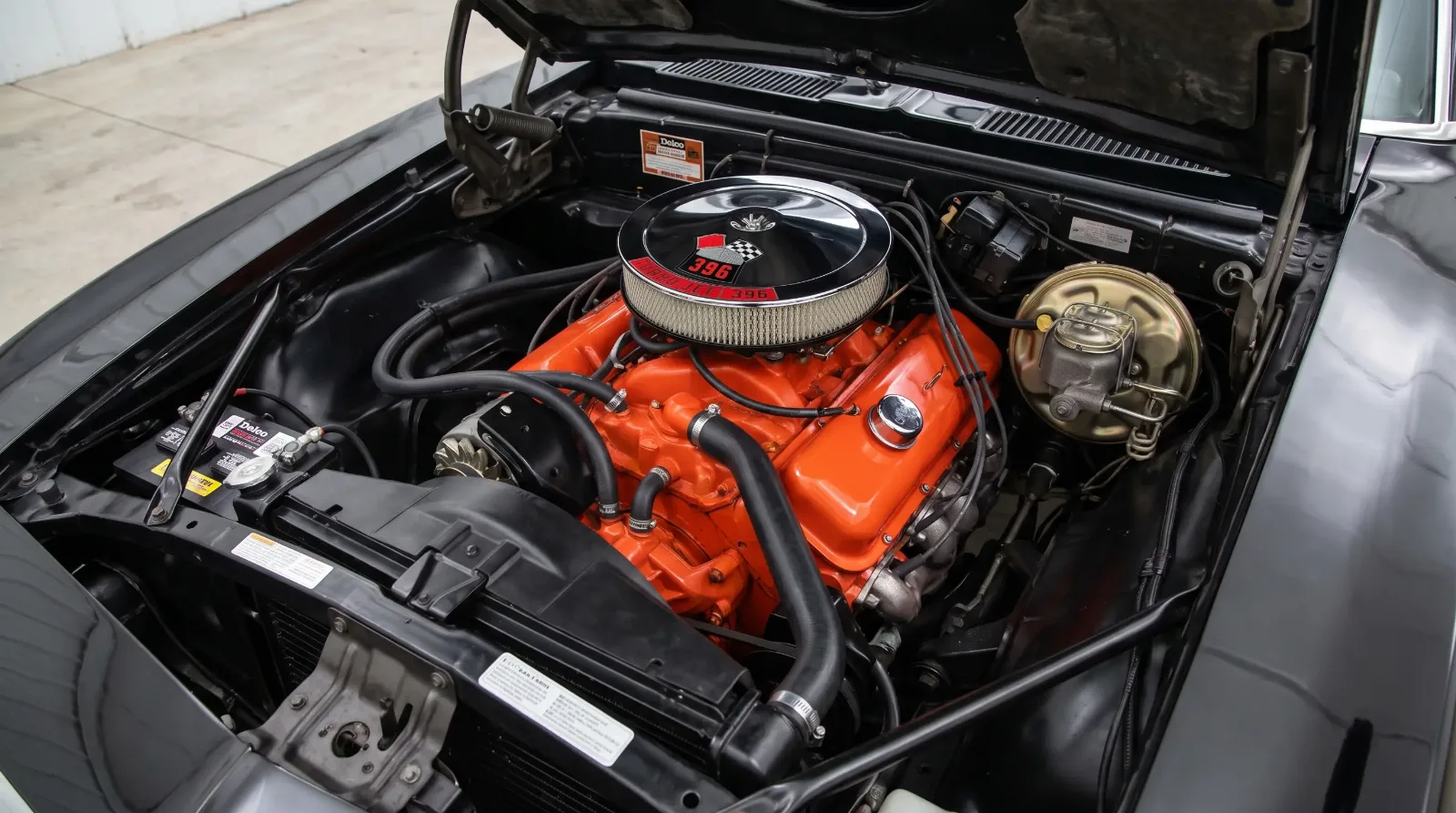
The 396 big-block arrived for 1965 in the L78 configuration producing 425 horsepower. That single development changed the calculus for the fuel-injected 327 completely. If the point of the L84 fuelie was to sit at the top of the Corvette performance hierarchy, the 396 displaced it immediately and with fewer maintenance complications. After 1965, Chevrolet discontinued the Rochester Ramjet option entirely. The fuel injection story that began with the 1957 Corvette closed with the 1965 model year, not to return until the 1982 Cross-Fire injection system — a different technology in a different era.
The L79: the driver's 327
If the fuelie 327 was the specification sheet hero of the C2 era, the L79 introduced for 1965 was the engine that enthusiasts came to regard as the better real-world choice. At 350 horsepower from a single Holley four-barrel carburetor, solid lifters, and a reported 11.0:1 compression ratio, the L79 gave up 25 horsepower to the top fuelie on paper while delivering an engine that was more tractable on the street, simpler to maintain, and reportedly stronger at the track when driven hard over a full day.
The solid lifter valvetrain gave the L79 a harder edge than the hydraulic-lifter engines. It required periodic adjustment — something the hydraulic setups eliminated entirely — but in return it held valve timing more precisely at high rpm, and the engine could be pushed harder without the valvetrain becoming the limiting factor. The compression ratio demanded premium fuel, which was available in 1965 in a way it wouldn't be a decade later, and the combination of high compression and solid lifters gave the L79 a character that drivers found rewarding in a way that the tamer 300 hp option wasn't.
Period road tests of L79-equipped cars consistently produced 0 to 60 times in the low six-second range, with quarter-mile times around 14 seconds in standard trim. Those numbers aren't dramatically different from what the fuelie cars produced, and they came with a carburetor that any competent mechanic could service. The L79 continued into 1966 and 1967 as the top small-block option after the fuelie's discontinuation, and by those years it was sharing the option sheet with the 427 big-block.
The 327 and the big-block years: 1966 to 1967
The 427 arrived for 1966, and with it the C2 acquired a split personality. The big-block cars — especially the L72 with 425 horsepower — were what the automotive press wrote about and what appeared in the advertisements. They were fast in an uncomplicated, immediate way, and they sold to buyers who wanted the biggest number available. The handling compromises that came with the heavier nose weren't necessarily concerns for that buyer.
The 327, in this context, became the driver's choice by default. Enthusiasts who had read the road tests and understood what the C2 chassis was capable of with proper weight balance tended toward the small-block, and the L79 in particular. The 1967 Sting Ray, widely regarded as the most refined C2, could be ordered with the L79 327 in a configuration that most serious drivers found more satisfying than the big-block alternatives — not because the 327 was faster, but because the car felt more like the sports car it was designed to be.
This tension between displacement and driver involvement is not unique to the Corvette, but it's unusually well-documented in the C2 case because the option sheet made the choice explicit. You could order a 300 hp small-block or a 425 hp big-block, and the difference in how the car drove wasn't just about straight-line speed. The small-block C2 was lighter at the front, turned in more crisply, and gave the driver more information through the steering. That's a real difference, and it's why the 327-powered C2 has its own constituency among collectors who understand what the car was built to do.
For a full picture of the Corvette's place in American sports car history, the Classic Chevrolet Corvette story covers the arc from 1953 through the modern era with the kind of context that single-generation articles can't provide.
Why the 327 matters
The story of the C2 327 is, at its core, the story of an engineering team that understood compression ratios, camshaft profiles, and induction systems well enough to get dramatically different results from the same basic architecture. From 250 to 375 horsepower out of the same 327 cubic inches, the same bore and stroke, the same block casting: that's not a trivial achievement, and it reflects a depth of development that Chevrolet was investing in performance in the early 1960s that hadn't been there a decade earlier.
The fuel injection system's failure as a product — its reliability problems, its service complexity, its inability to survive the arrival of the big-block — doesn't diminish what the engineers achieved with it technically. The Rochester Ramjet produced real numbers and real performance. It just turned out that real performance was also available from simpler systems, and that the market would take simpler systems every time if the performance gap was close enough. The L79 proved that point definitively.
What's left, for anyone interested in the C2 small-block today, is a range of options that represents one of the most thoroughly developed engines of its era. The base 250 hp car drove well. The L75 at 300 horsepower drove better and lasted. The dual-quad 340 hp engine offered performance you could hear and feel. The fuelie cars produced genuine excitement when they were running correctly. And the L79, sitting between all of them, made the case that sophistication and simplicity weren't necessarily in opposition.
Sources and notes
- National Corvette Restorers Society (NCRS) — Primary documentation authority for Corvette production records, option codes, and authentication standards across all generations.
- National Corvette Museum, Bowling Green — Factory records, historical exhibits, and archival materials covering C2 production 1963–1967.
- Hemmings Motor News — C2 Corvette coverage — Period road tests and contemporary market assessments of C2 small-block configurations.
- Motor Trend historical archives — Original 1963–1967 road tests of Corvette models with period performance data and specification listings.
- Bloomington Gold Corvette — Judging standards and authentication documentation for C2-era option verification including fuelie and L79 configurations.