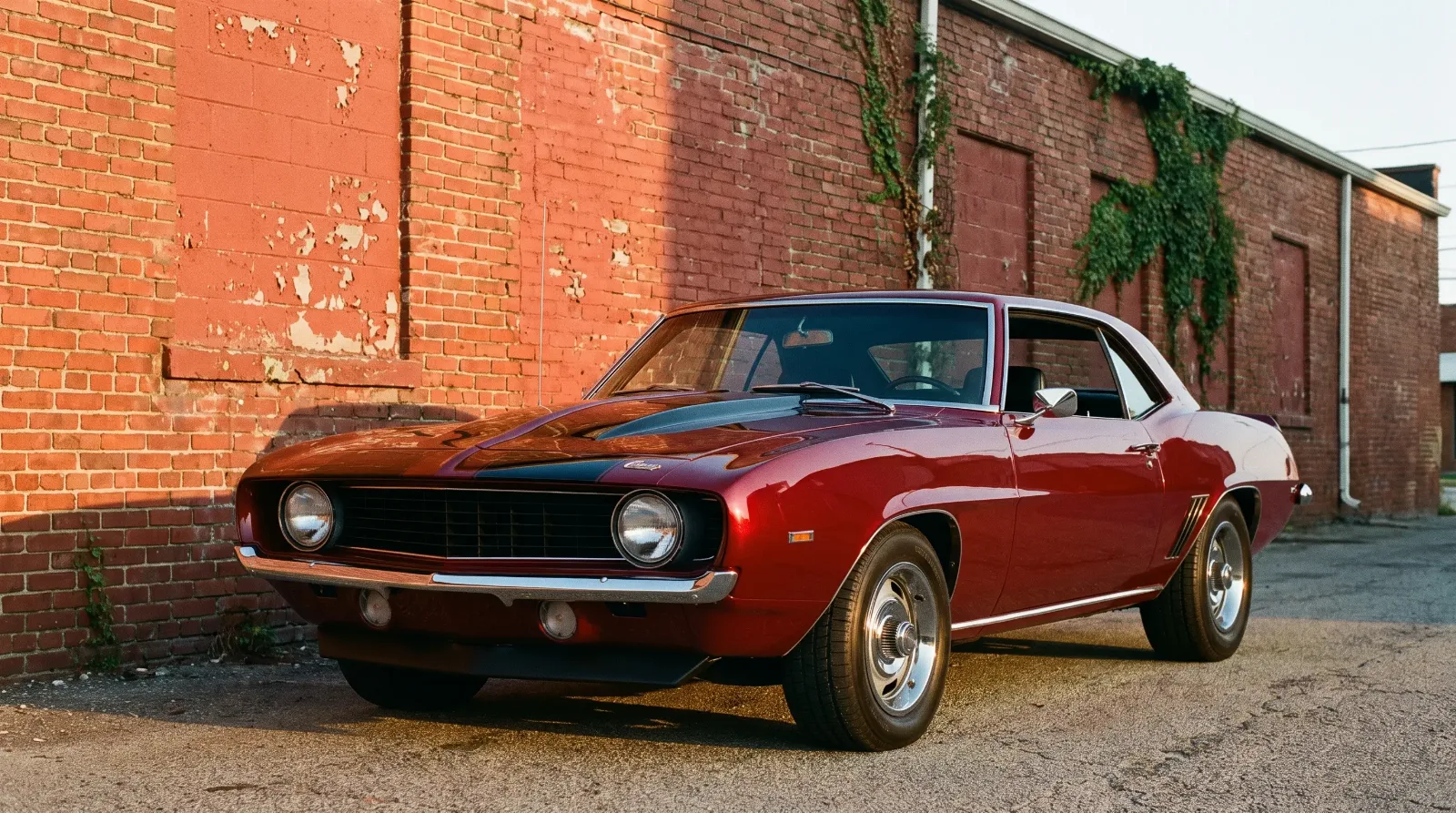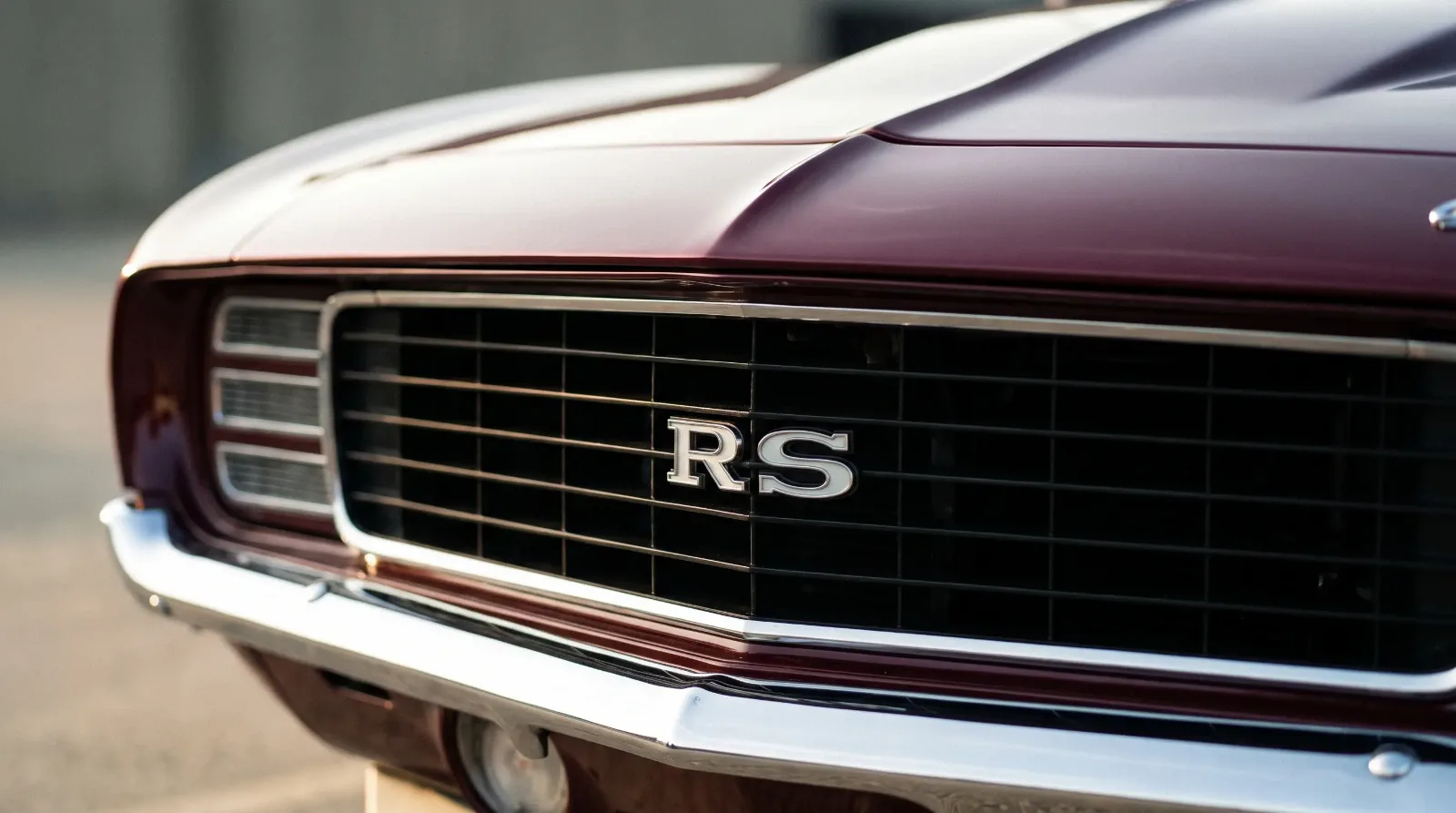
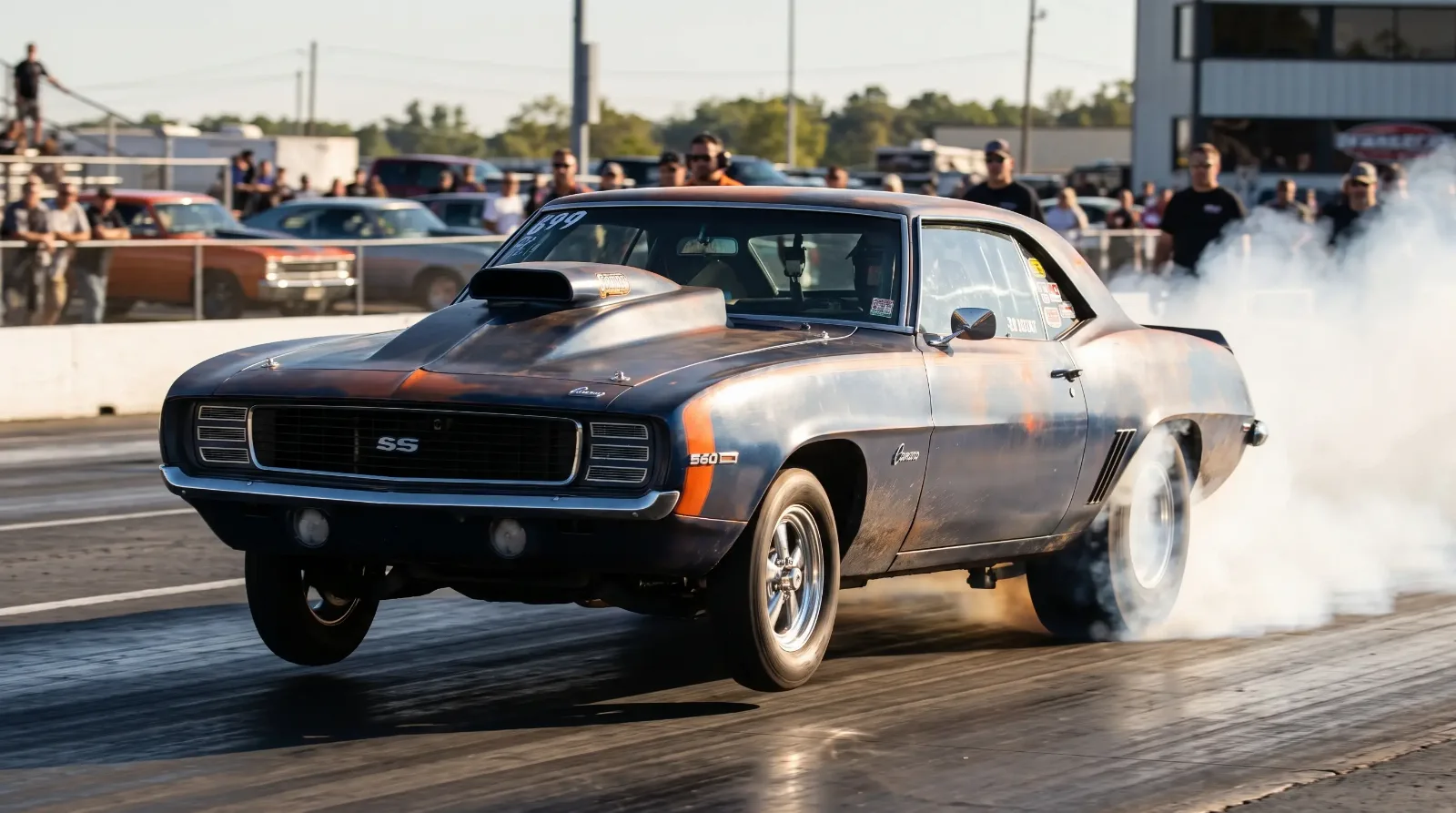
There is a particular kind of car that gets built not because the marketing department wants it, but because racers demand it and a few people inside the factory find a way to make it happen. The 1969 COPO Camaro is that car. It arrived without fanfare, without a brochure entry, and without any pretense of being a street machine first. It was built to run. Everything that followed in the Camaro's long drag racing history traces back to that decision.
For anyone who wants the full arc of the model's competition career, the Camaro racing history covers everything from Trans-Am to NASCAR. This article focuses specifically on the quarter-mile and the cars built to dominate it.
How the COPO program worked
In 1969, Chevrolet's General Manager had a standing policy against factory involvement in racing above 400 cubic inches. It was a corporate position, part of an industry-wide agreement reached in the early 1960s to stay out of organized motorsport promotion. The Central Office Production Order system, known as COPO, was designed for fleet and commercial vehicle customization. A dealer could use a COPO number to order police interceptor packages, taxi specifications, that sort of thing. It was not intended for performance cars.
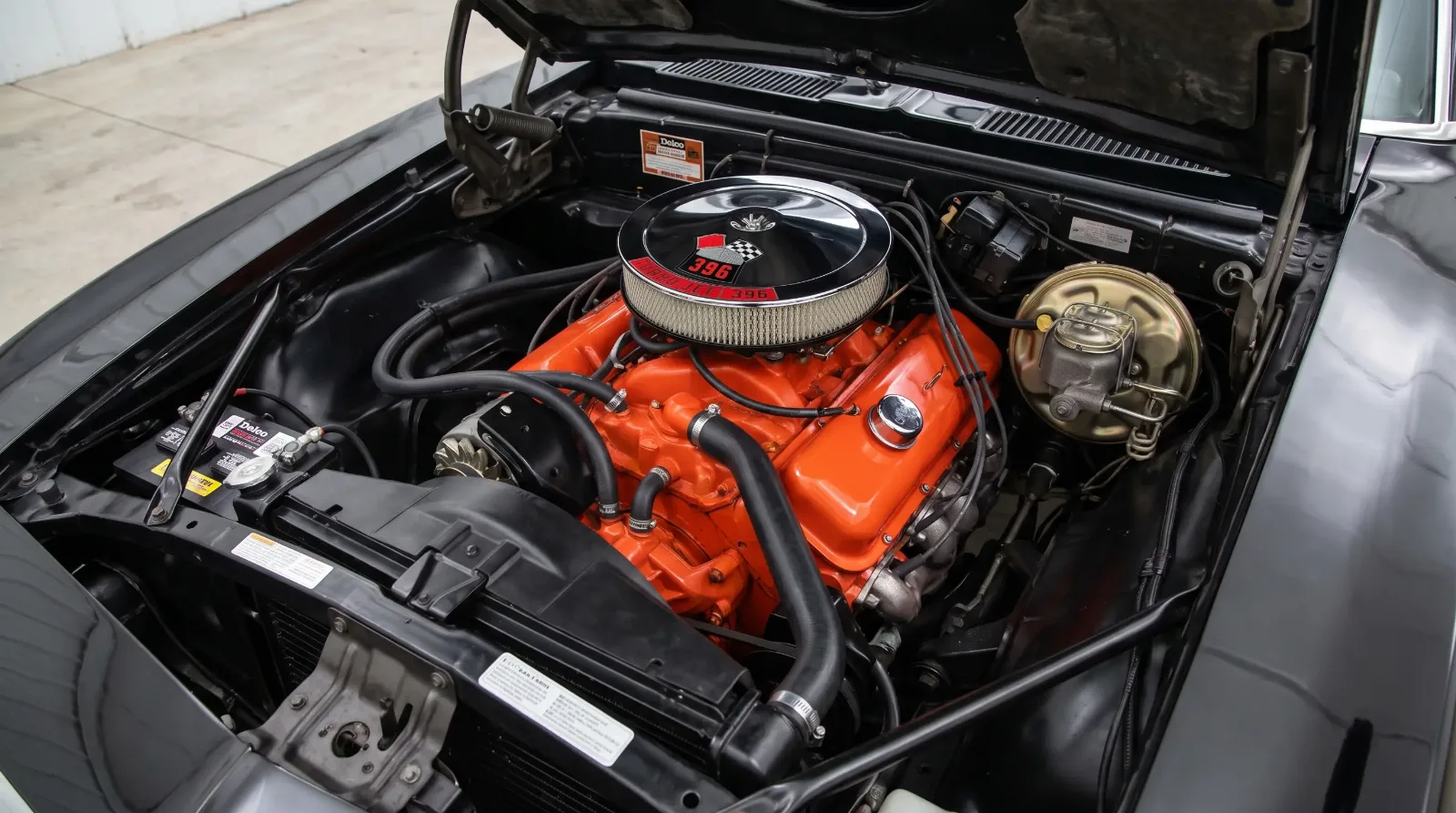
Vince Piggins, a Chevrolet product performance promoter, saw an opening. Working with dealer Fred Gibb of La Harpe, Illinois, and engine builder Dick Harrell, they used the COPO system to order Camaros with drivetrains that never appeared in any public option list. COPO 9561 brought the iron-block L72 427, rated at 425 hp. COPO 9560 went further: the aluminum-block ZL1, also rated at 427 cubic inches and also listed at 430 hp, though that figure was widely understood to be conservative. The ZL1 engine alone cost more than the base Camaro. Chevrolet built 69 ZL1 Camaros in 1969.
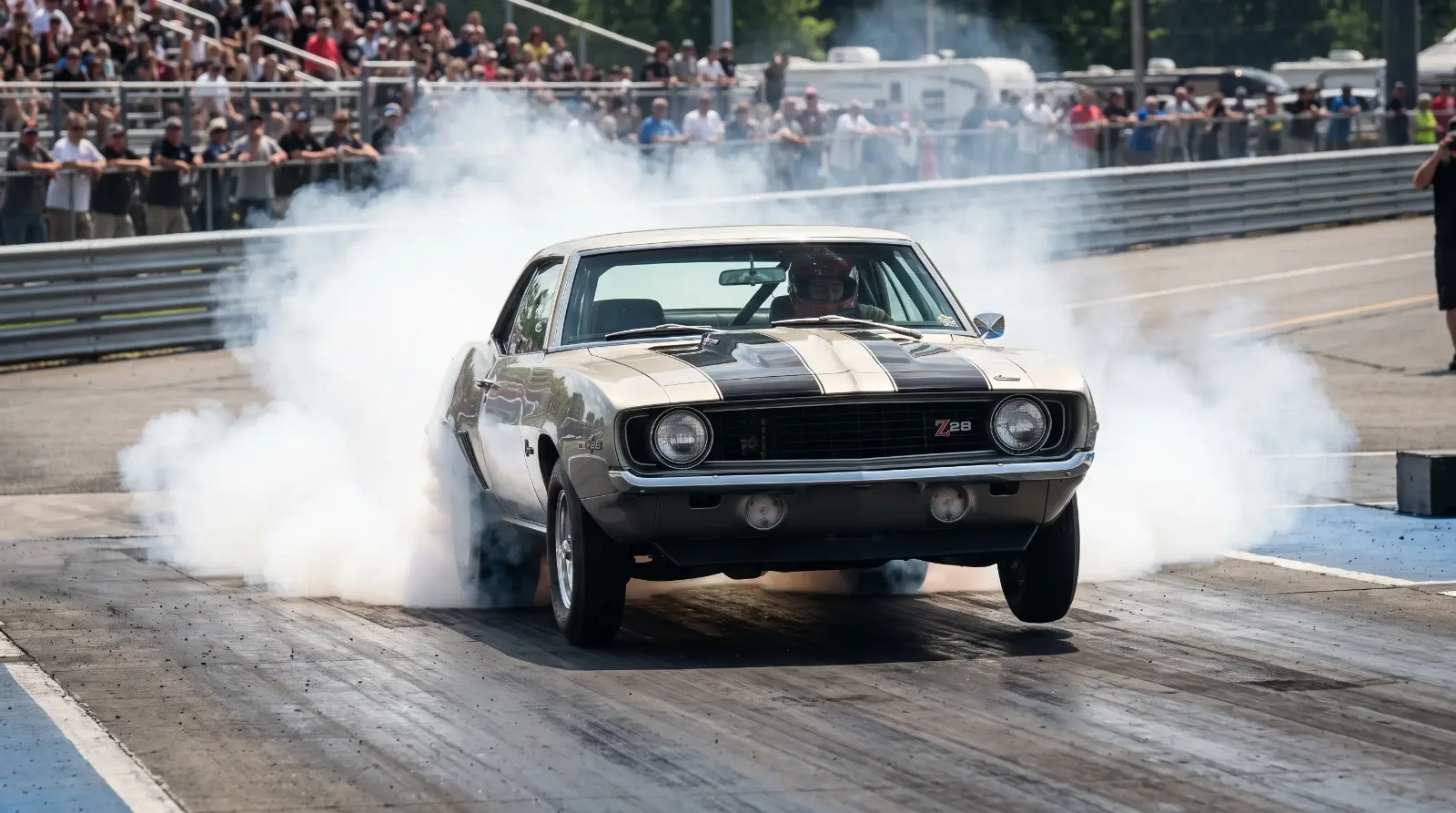
The result was a car that weighed less than competing muscle cars because the all-aluminum ZL1 engine was significantly lighter than a comparable iron-block unit. On the strip, that matters as much as peak horsepower. The cars ran in the mid-11s in factory trim, which at the time put them among the quickest production-based vehicles in the country.
Super Stock and the class structure
NHRA Super Stock classification in 1969 sorted cars by power-to-weight ratio into lettered classes, from A/Stock through to the lighter categories. The COPO cars, depending on exact configuration and weight, competed primarily in A/Stock and A/Stock Automatic. The point was not just to win individual races but to establish a competitive record that would sell cars and validate the Chevrolet nameplate in organized drag racing without triggering the corporate policy that prohibited direct factory sponsorship.
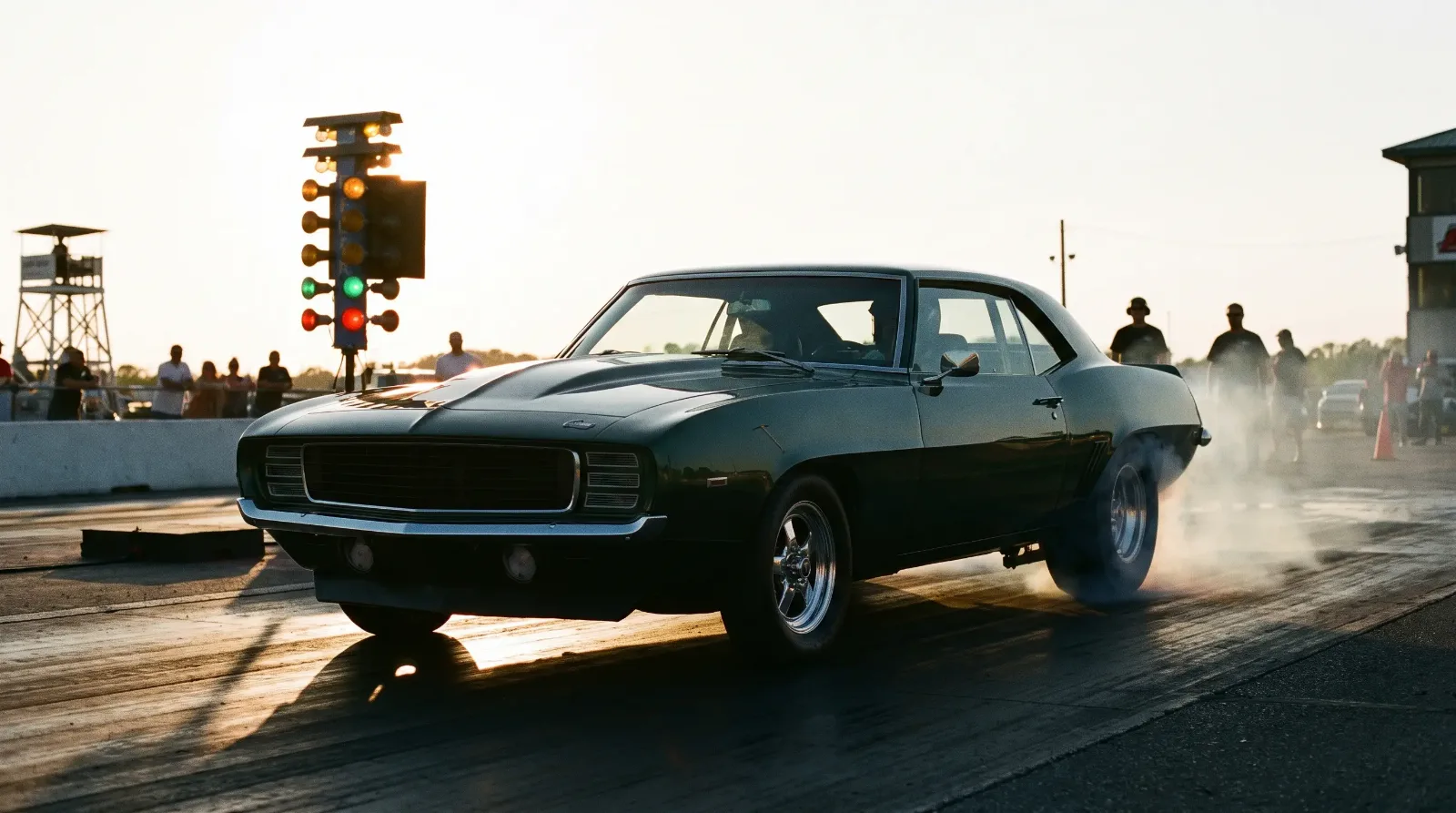
Fred Gibb's dealership campaigned COPO cars extensively, and other dealers followed. The cars found their way to regional strips across the country, running under private ownership but with factory-supplied parts support moving through the back channels that existed between Chevrolet's performance staff and the racing community. It was an open secret. The sanctioning bodies eventually tightened eligibility rules to account for cars that arrived from the factory with race-ready drivetrains, but for a few seasons the COPO Camaros had a clear advantage in their classes.
Keep going in this series with the Penske Trans-Am cars.
The full story of the COPO and ZL1 cars goes deeper into the option codes, engine specifications, and what separates a genuine COPO from a cloned example, which is relevant for anyone buying rather than just reading about these cars.
| Configuration | Engine | Rated output | Block material | Units built (1969) |
|---|---|---|---|---|
| COPO 9561 | L72 427 V8 | 425 hp | Iron | 1,015 |
| COPO 9560 | ZL1 427 V8 | 430 hp (est.) | All aluminum | 69 |
| Z/28 (standard) | 302 V8 (DZ) | 290 hp | Iron | 20,302 |
The strip legacy through the 1970s and beyond
The first-generation Camaro's drag racing moment was brief in calendar terms but long in consequence. When the second generation arrived in 1970, the muscle car era was already contracting. Insurance costs, emissions regulations, and the fuel crisis that followed in 1973 reshaped what the American car market would support. The Camaro continued to sell, but the factory performance hardware pulled back sharply. The Z/28 disappeared from the lineup between 1975 and 1977 and returned with a 185 hp engine that would have been unremarkable even in a compact car ten years earlier.
On the strip, privateer racers kept first-generation cars competitive well into the late 1970s and through the 1980s by running heavily modified examples in bracket racing and Super Stock classes. The COPO cars specifically became sought after as donor platforms because of their reinforced chassis and factory-documented performance credentials. A documented COPO with its original drivetrain was already worth more than a standard Camaro by the mid-1970s. By the mid-1980s, the separation between a ZL1 car and everything else was significant and growing.
"The COPO story is one of those cases where the rules said one thing and the people who cared about winning found another way. They used a fleet ordering system to build race cars. It was audacious, it worked, and sixty years later those 69 cars are the most documented and scrutinized Camaros that ever left the factory."
— Patrick Walsh
The modern COPO program
Chevrolet revived the COPO name for the 2012 model year, producing a limited run of factory race cars built specifically for NHRA Stock Eliminator and Super Stock competition. Unlike the original program, the modern COPO Camaro is sold openly through Chevrolet Performance dealers, with a declared production limit each year and a range of engine options that buyers select to target specific NHRA classes.
The modern program has offered several engine configurations depending on the model year, including naturally aspirated big-blocks and supercharged small-blocks. Chevrolet Performance has also offered a crate-engine version of the ZL1 designation in updated form, though the modern application differs considerably from the 1969 original in construction and application. Production has varied by year; Chevrolet has typically announced limits in the 50 to 69 unit range for certain configurations, a deliberate nod to the original ZL1 production run.
NHRA Stock Eliminator and Super Stock remain the primary sanctioned classes for these cars, and the modern COPO Camaro has been competitive in both since its introduction. The class structure has evolved since 1969, but the fundamental approach is the same: build a car within the factory-production rules that is as fast as the rules allow, and run it through the traps with a driver who knows how to use what the chassis gives them.
Why the Camaro's drag legacy holds
The Camaro was not the only pony car to find success at the strip. The Mustang had its own drag racing history, and the Challenger and Barracuda carried Mopar's performance program into some of the same classes. What the Camaro brought that was distinct was the COPO mechanism itself. No other manufacturer used a commercial ordering channel to deliver factory race cars to the public in quite the same way, and the documentation trail that process created has made the surviving COPO cars among the most authenticated examples in the muscle car world.
The modern program reinforces that identity deliberately. Chevrolet did not have to name the car COPO. They chose to, because the name carries specific meaning to the drag racing community: it means a factory car built for the quarter-mile, with paperwork to prove it. That lineage from 1969 to the present is unusual in American automotive history, and it is why the camaro drag racing story is still being written rather than simply archived.
Sources and notes
Production figures, engine specifications, codes, and dates in this article are cross-referenced from established Camaro references, period documentation, and owner registries. Where sources differ, the most commonly cited value is used. Cost figures are indicative and vary by supplier, region, and condition.