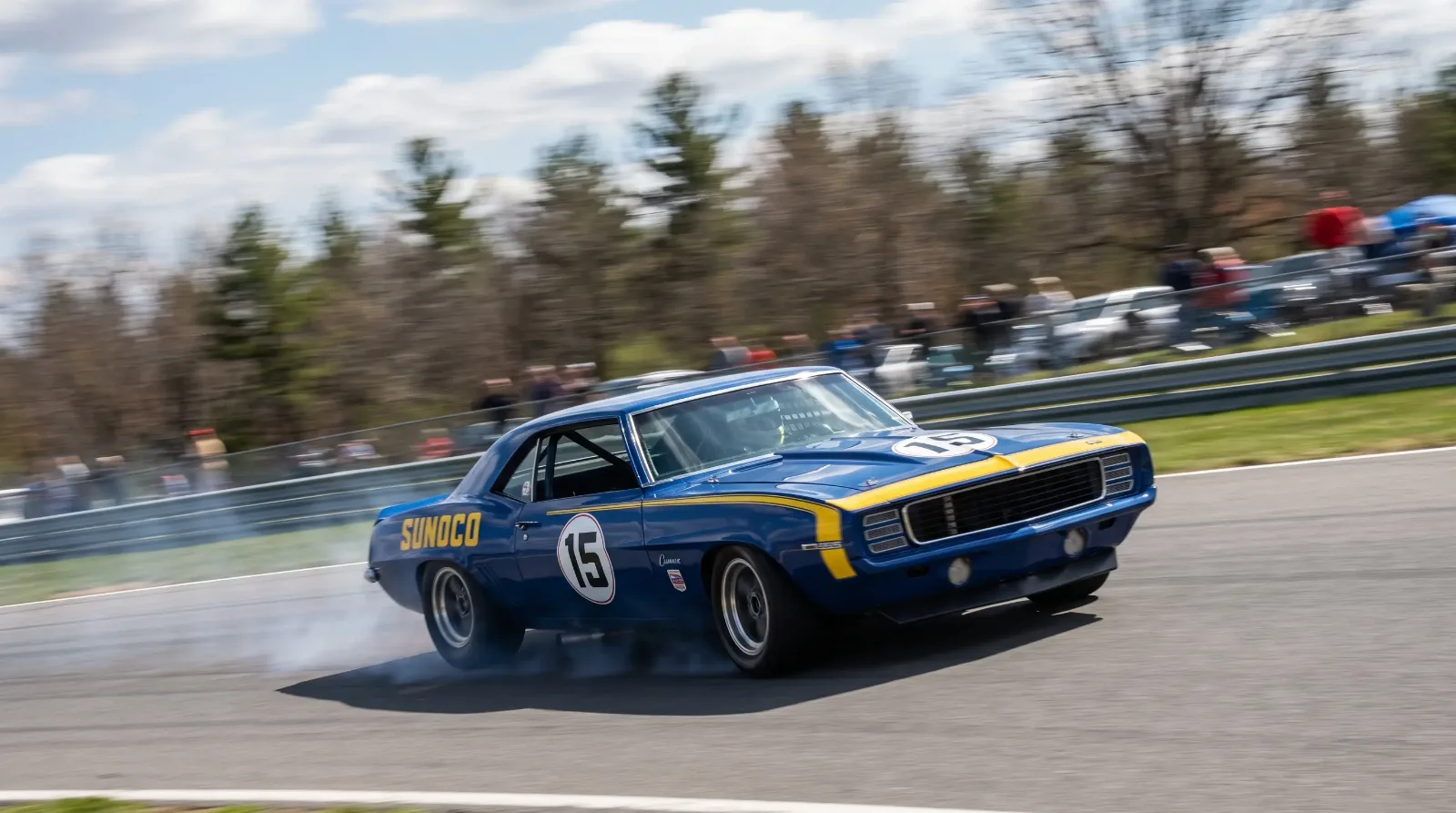

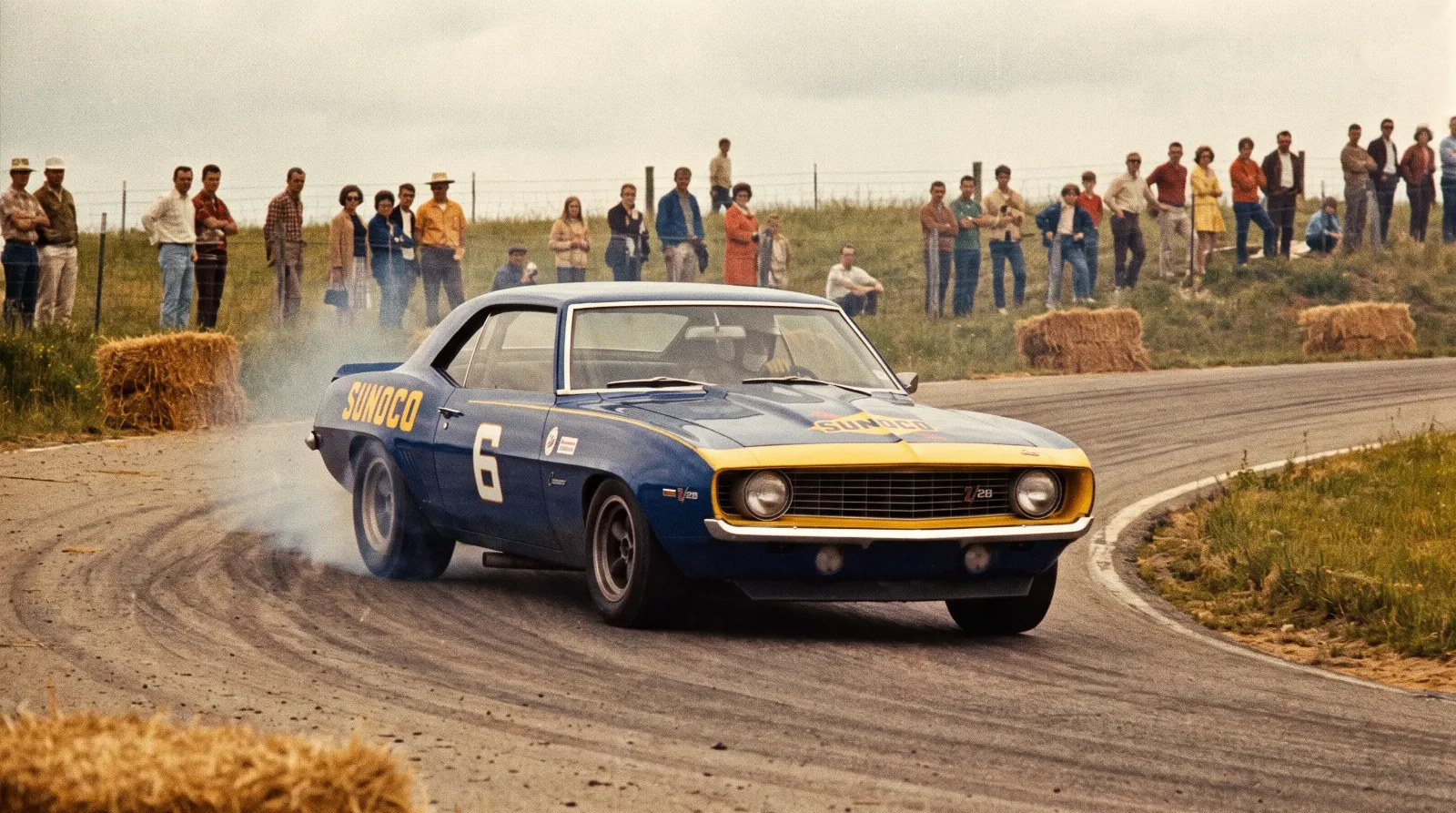
There is a photograph from the 1968 Trans-Am season that tells you most of what you need to know about the Sunoco Camaro program. Mark Donohue is standing beside the car with a clipboard, not a helmet. He is working. That was the Penske operation in a sentence: other teams went racing, Penske's team solved problems.
The story of Roger Penske, Mark Donohue, and the Sunoco-sponsored Z/28 is one of those episodes in American motorsport where the right people found the right car at exactly the right moment. To understand it fully, it helps to read the Camaro racing history from the beginning, because the Z/28 that Penske received was itself the product of a clever piece of rules engineering by Chevrolet. What Penske's team did with that car is the subject here.
How the Z/28 arrived at Penske's door
The Sports Car Club of America's Trans-American Sedan Championship had a simple engine rule: no more than 305 cubic inches. In 1966, when Chevrolet decided the Camaro needed a racing program to compete with Ford's established Mustang effort, nothing in their lineup fit that box. The answer came from product promotion engineer Vince Piggins, who combined a 327 block with a 283 crankshaft to arrive at a 302.4 cubic inch displacement. The resulting engine, fitted with a solid-lifter camshaft, a large Holley carburetor, and an aluminum intake manifold, was factory-rated at 290 horsepower, a figure that most engineers at the time understood was conservative.
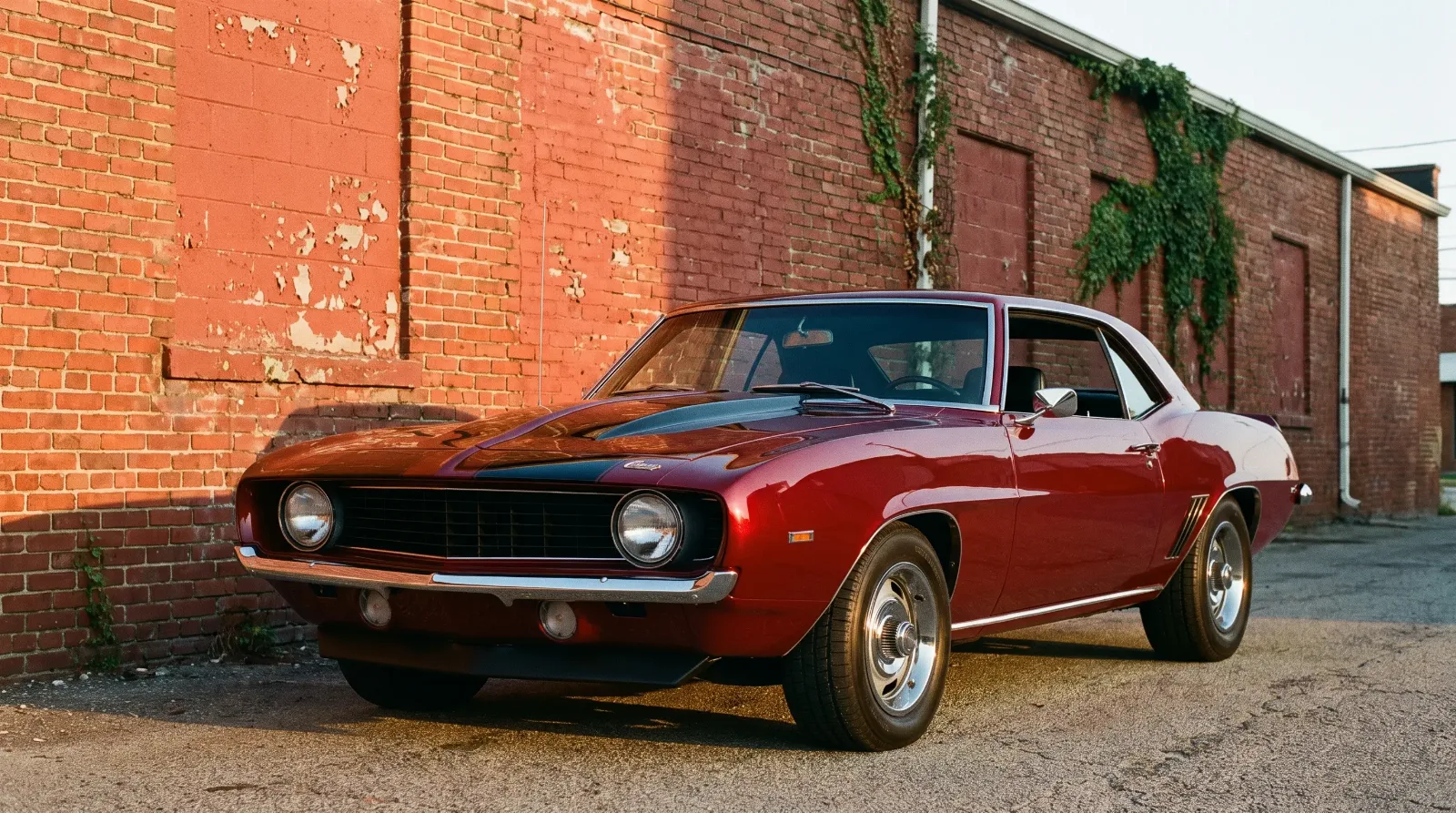
The package was offered as Regular Production Option Z/28 for the 1967 model year. Chevrolet built approximately 602 of them that first season. They came with front disc brakes, a close-ratio four-speed Muncie gearbox, and a pair of broad racing stripes. These were homologation specials, built because the rulebook required street versions to exist. Roger Penske looked at the car and saw something the rulebook had not intended: a lightweight, high-revving platform that a disciplined team could develop into a genuine championship contender.
The Sunoco program: how Penske and Donohue worked
Roger Penske had already established himself as a methodical team owner before the Trans-Am effort began. He ran his operation like a manufacturing business: schedules, documentation, clear accountability. Mark Donohue was a perfect match for that approach. A Princeton-educated engineer who had come to racing through amateur sports car events, Donohue treated every lap as a data point. He kept notes. He correlated setup changes with lap times. He was willing to say, out loud, that a car was not working and then explain precisely why.
The engines in the Sunoco Camaros were prepared by Traco Engineering, the California shop run by Jim Travers and Frank Coon that had built racing engines for various Chevrolet-backed efforts throughout the 1960s. Traco's 302s were substantially more powerful than the street Z/28 units, with output figures in the 400-plus horsepower range. But the engine was only part of what Penske's team brought to the cars.
The preparation philosophy extended to everything. Suspension geometry was analyzed and adjusted. Brake bias was tuned for specific tracks. The team arrived at each round with cars that had been thought about, not just assembled. In an era when many Trans-Am teams were running on instinct and experience, Penske was running on data. It showed in the results.
"What made the Sunoco operation different was not just the money or the talent, though both were there. It was the method. Donohue approached a race car the way a good engineer approaches any problem: gather information, form a hypothesis, test it, repeat. Most of his competitors were guessing. He was not."
— Patrick Walsh
The 1968 and 1969 Trans-Am seasons
The 1968 Trans-Am season ran to thirteen rounds across circuits including Sebring, Lime Rock, Bryar, and Riverside. The Trans-Am series did not award an official drivers' championship until 1972, but Donohue dominated the season with ten wins, and Chevrolet took the manufacturers title for that year. The competition was genuine. Ford's effort with the Mustang was serious, and the Dodge Challenger program would grow more capable over time. Winning required real pace, not just preparation advantage.
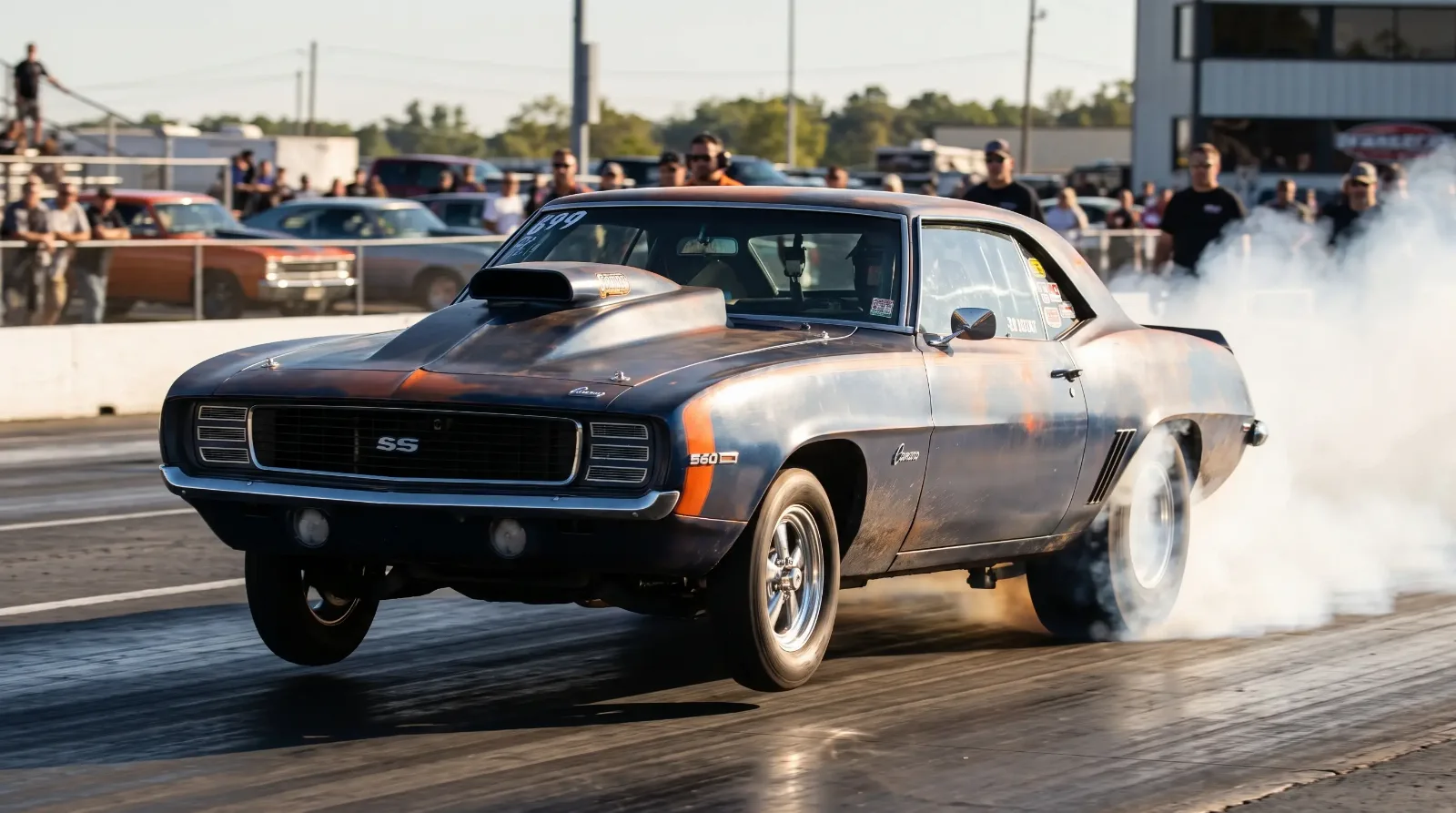
More in this Camaro series: read about Camaro drag racing.
The 1969 season brought more of the same. Donohue and Penske successfully defended the championship. The Sunoco Camaros were refined further based on what the 1968 campaign had revealed. By this point Donohue knew the car's behavior intimately, knew where it was strong and where it needed management, and could communicate that knowledge to Penske's mechanics in terms that translated directly into setup changes.
| Season | Championship result | Driver | Car |
|---|---|---|---|
| 1968 Trans-Am | Drivers and manufacturers champion | Mark Donohue | Sunoco Camaro Z/28 |
| 1969 Trans-Am | Championship defended | Mark Donohue | Sunoco Camaro Z/28 |
The significance of back-to-back championships was not lost on Chevrolet. The Trans-Am series had become genuinely popular with enthusiasts, and the connection between what Penske's cars did on Sunday and what dealers sold on Monday was exactly the kind of association the factory wanted. If you were buying a Z/28 in 1969, you were buying the championship-winning platform. The street car's production numbers reflected it: Chevrolet built 20,302 Z/28s for 1969, up sharply from 7,199 in 1968.
The acid-dipped cars and the engineering behind the wins
The lightweighting of Penske's Camaros went beyond removing sound deadening and replacing glass with perspex, which every serious Trans-Am team did. The acid-dipping process involved immersing the bare body shells in a chemical bath that thinned the sheet metal uniformly across non-structural surfaces, removing weight from panels that did not carry load. The cars then had ballast added back to reach the minimum weight limit, but the ballast could be positioned specifically for handling balance rather than sitting wherever the factory had placed the metal.
Combined with Donohue's methodical approach to suspension tuning, this gave the Sunoco cars a handling advantage that was not simply about horsepower. Trans-Am racing on road courses rewards balance and consistency as much as peak power. A car that handles predictably allows the driver to push harder through a full race distance. Donohue understood this in a formal sense, and the results bore it out over two full seasons of competition.
There were also aerodynamic improvements. Front spoilers reduced lift, improving high-speed stability. The combination of reduced unsprung weight, repositioned ballast, and aerodynamic work produced a car that was genuinely faster in corners than its rivals, not just quicker in a straight line.
The legacy of the Penske Camaro years
Mark Donohue died in 1975 following an accident at the Austrian Grand Prix, which cut short a career that had by then extended well beyond Trans-Am into Formula 1 and the Penske-AMC Matador effort. His contribution to the Camaro's racing reputation was substantial enough that it still shapes how collectors talk about the car five decades later.
Roger Penske went on to build one of the most successful organizations in American motorsport, but the Trans-Am years with the Sunoco Camaro were where many of the operational disciplines that defined his later teams were first applied at that level. The attention to preparation, the use of engineer-driver feedback loops, the willingness to do work that competitors were not doing, all of it was present in the 1968 and 1969 Camaro program.
For the Camaro itself, the Penske championships provided something a factory press release could not manufacture: a genuine racing record built in direct competition with serious opposition. The Z/28 was not fast because Chevrolet said it was fast. It was fast because it won races, and it won races because people who knew what they were doing prepared it properly and drove it intelligently.
Collectors who want to understand what they are looking at when a 1968 or 1969 Z/28 rolls into view should start with the Trans-Am record. These were not luxury performance cars or boulevard cruisers wearing racing stripes. They were homologation vehicles, built to satisfy a rulebook requirement, refined by a championship-winning racing effort, and sold to a public that understood the difference. That context does not make every street Z/28 a race car. But it explains why the street car existed in the form it did, and why it handled the way it did, and why Penske wanted one in the first place.
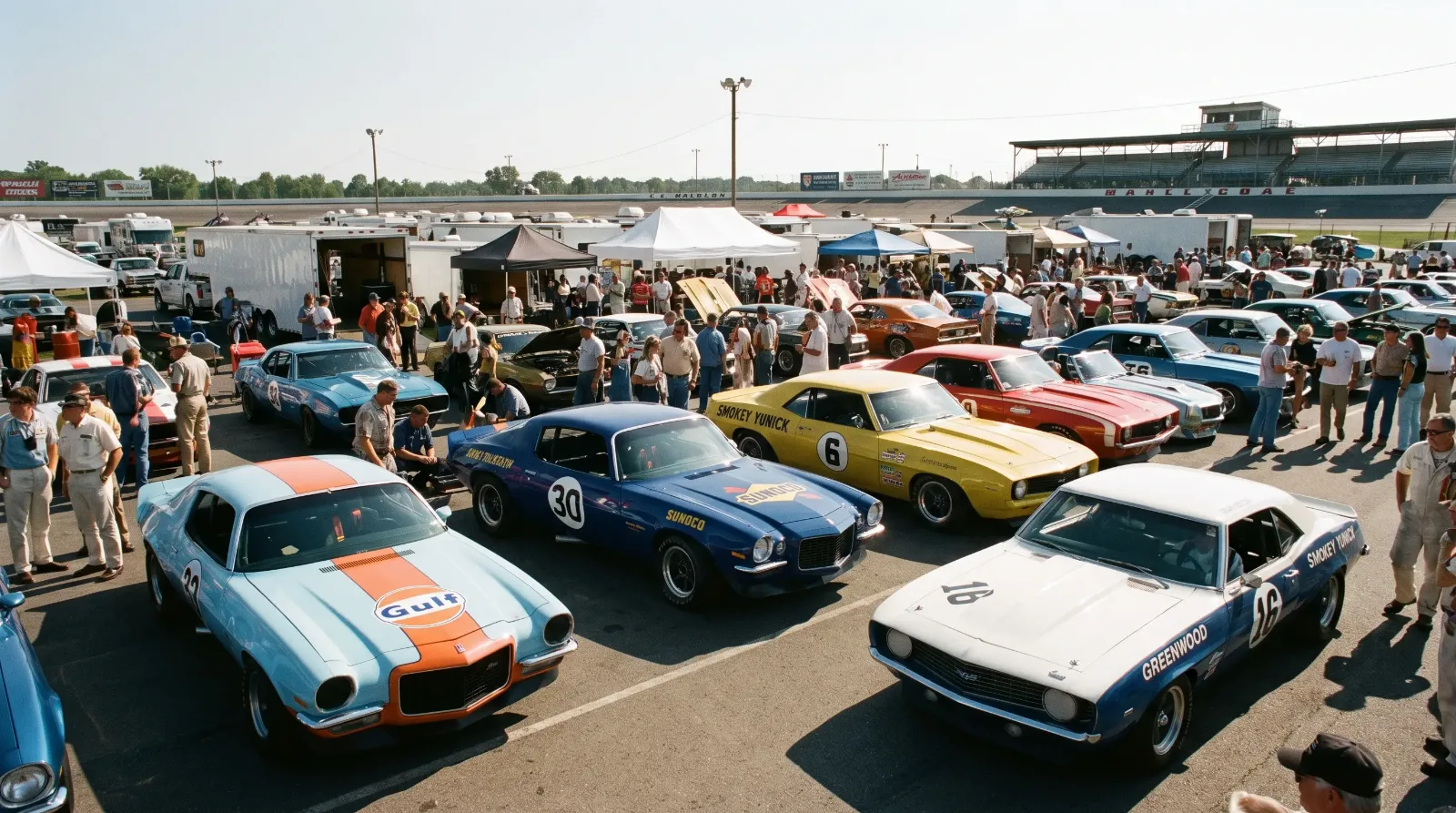
Anyone looking at Trans-Am bred Z/28s for sale today is shopping in a market that has absorbed and priced all of this history. The 1968 and 1969 cars carry a premium over equivalent first-generation Camaros precisely because the Penske record is real. That premium is justified by something that happened on actual racetracks, and understanding the Sunoco program is the only way to understand why.
Sources and notes
Production figures, engine specifications, codes, and dates in this article are cross-referenced from established Camaro references, period documentation, and owner registries. Where sources differ, the most commonly cited value is used. Cost figures are indicative and vary by supplier, region, and condition.