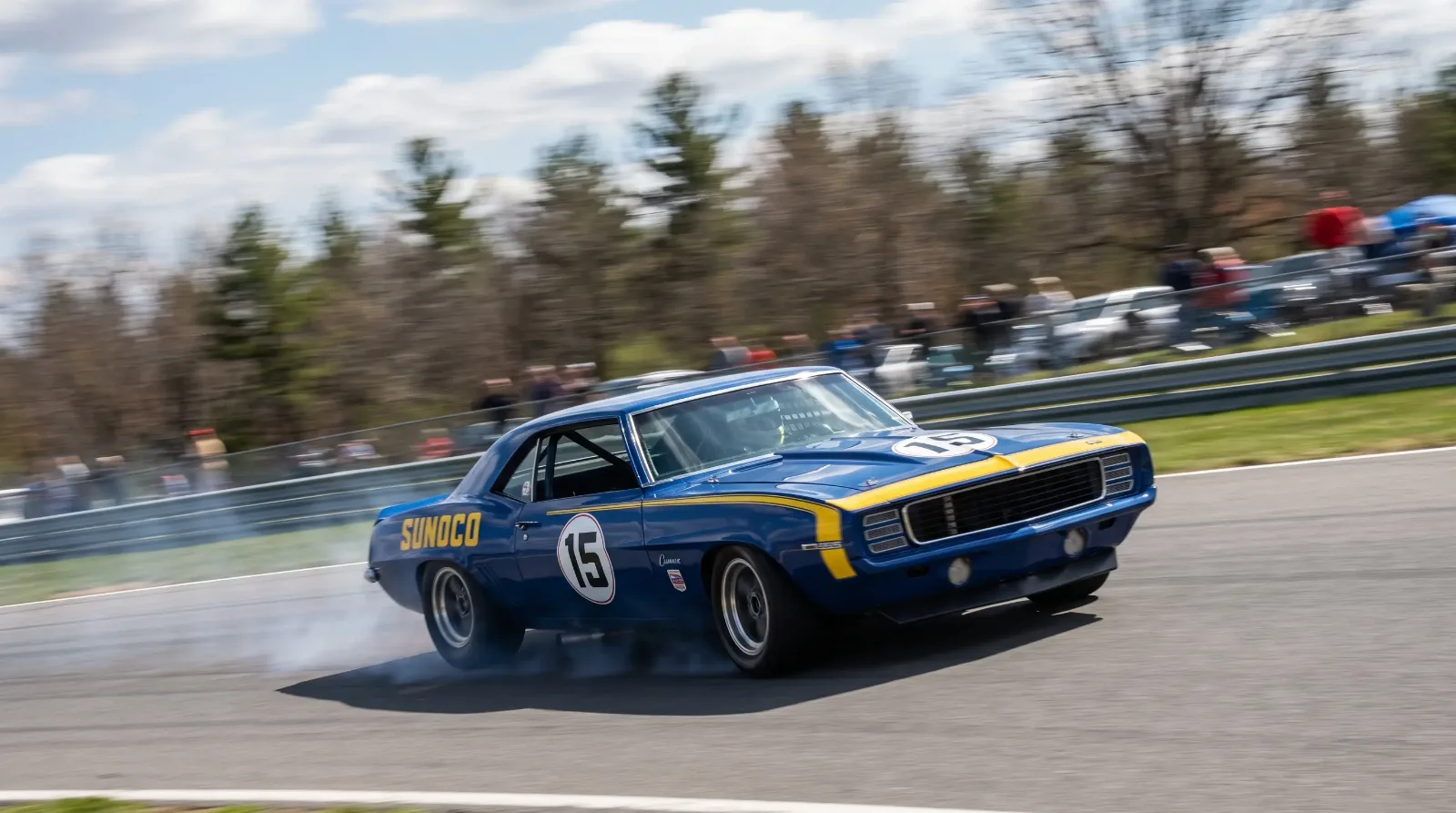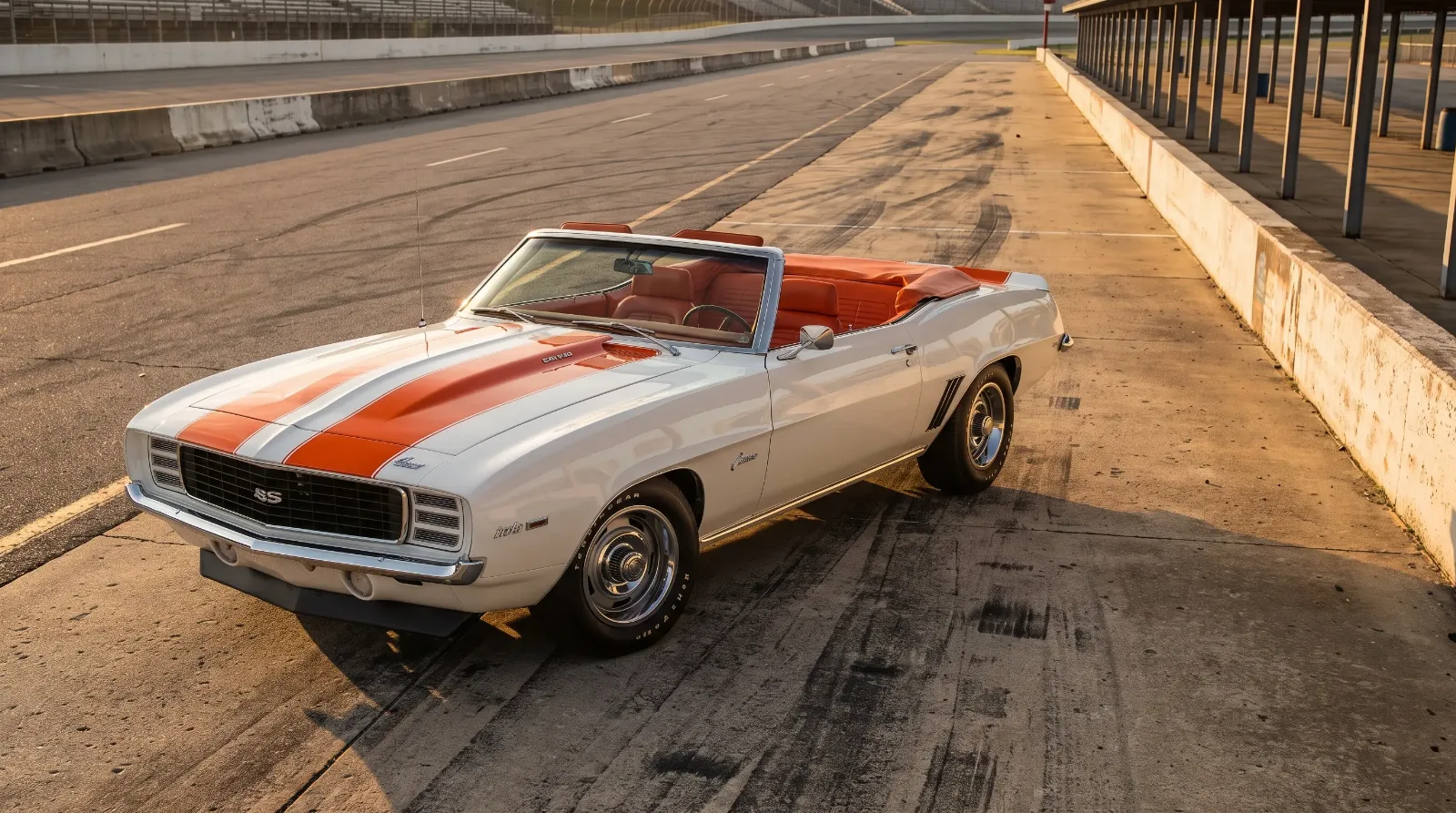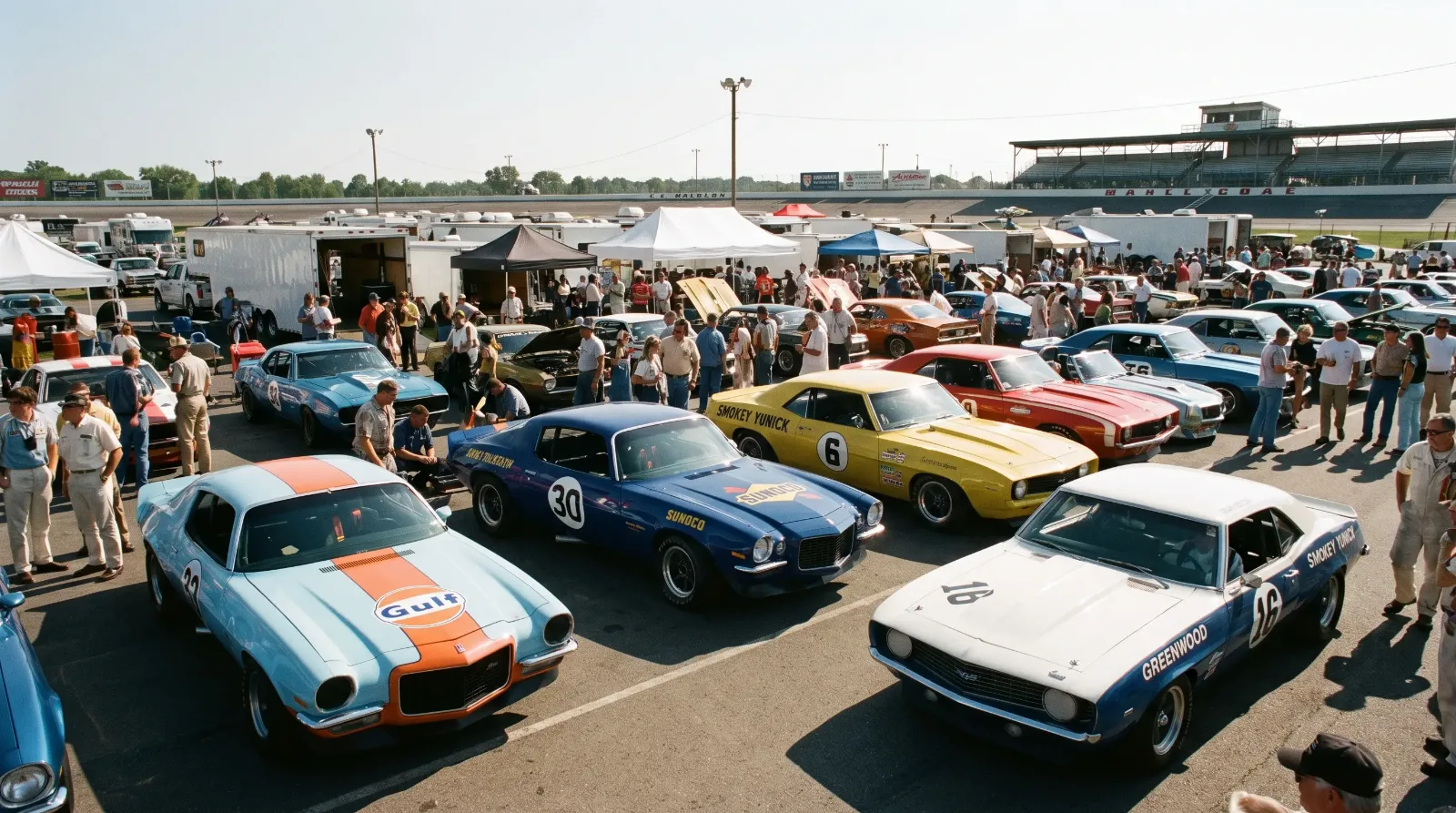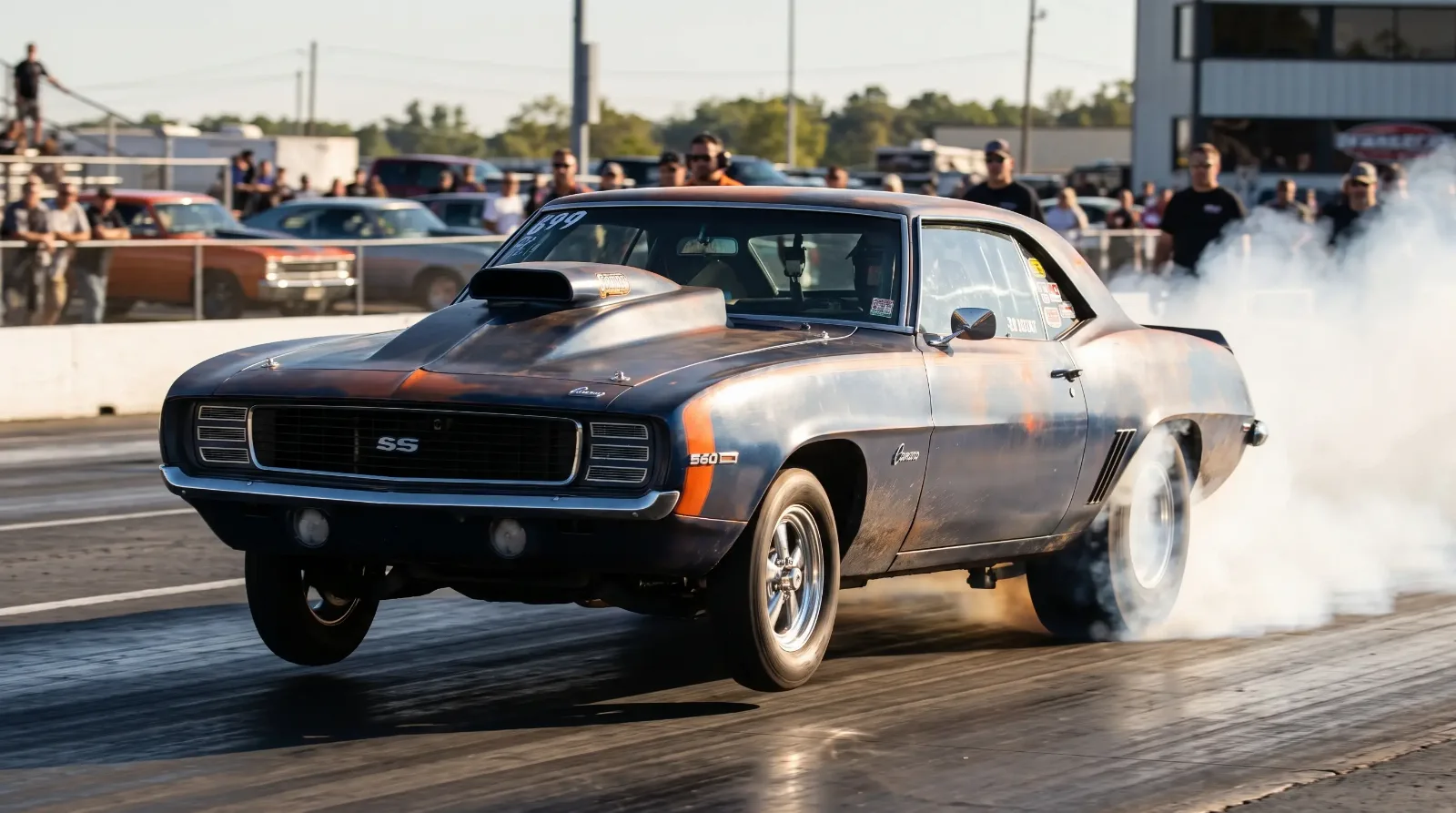
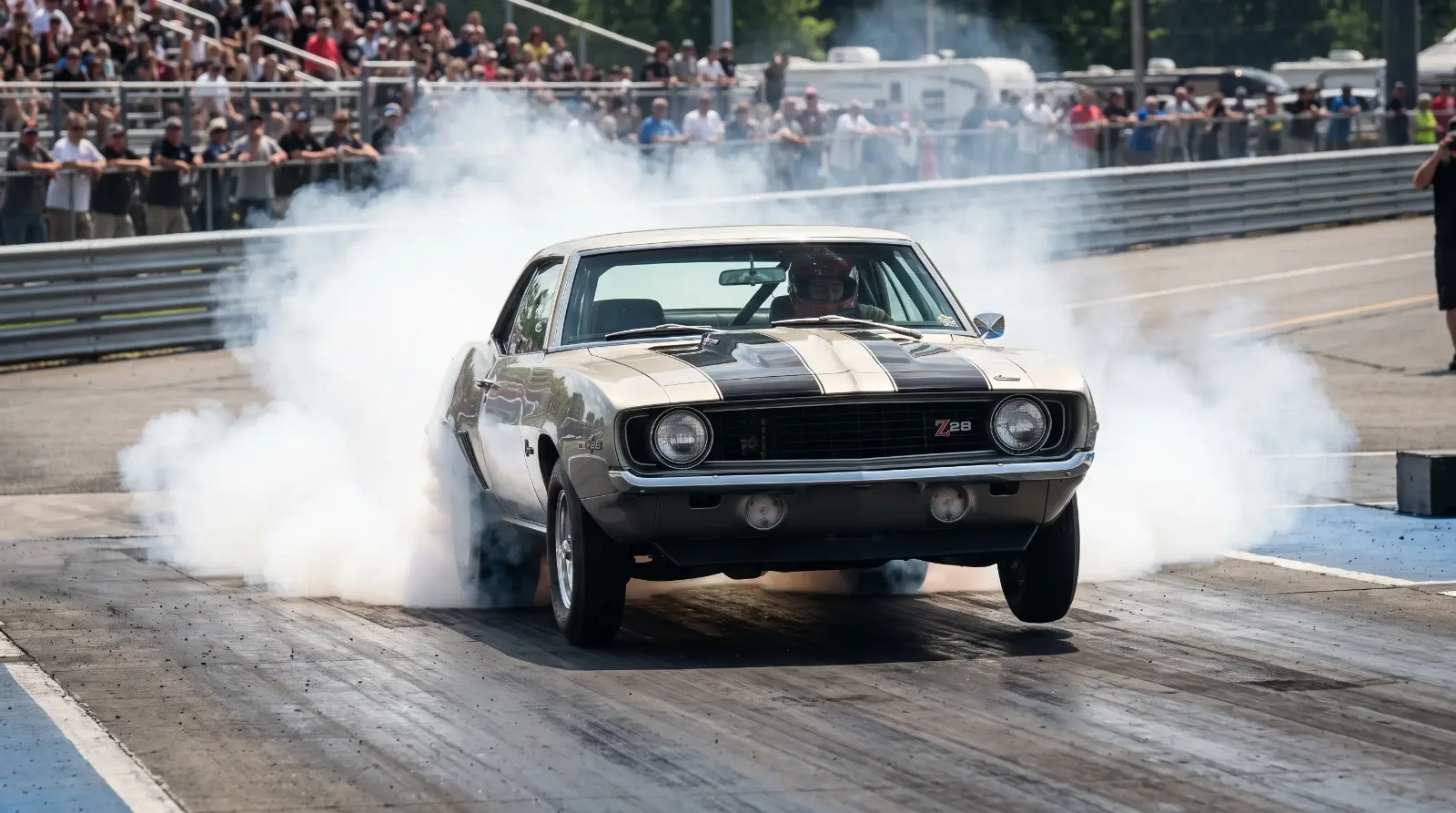
While the Trans-Am series and the Indianapolis 500 gave the Camaro its road racing identity, another form of motorsport was building an equally strong claim on the car's competition heritage. The drag strip, specifically the NHRA's Pro Stock class, became home to some of the most technically sophisticated Camaro-based race cars ever built, and the connection between Pro Stock competition and the street car's performance reputation shaped how a generation of enthusiasts understood what a Camaro was supposed to be.
Pro Stock as a class was created to provide a form of drag racing that maintained a visible connection to production vehicles. The cars had to carry recognisable body panels, retain a broadly production-based silhouette, and use naturally aspirated engines within a defined displacement framework. Within those parameters, however, the level of engineering sophistication was extreme. Pro Stock Camaros of the peak years represented the absolute limit of what could be achieved with naturally aspirated internal combustion in a nominally street-based package.
The class rules and what they meant for the Camaro
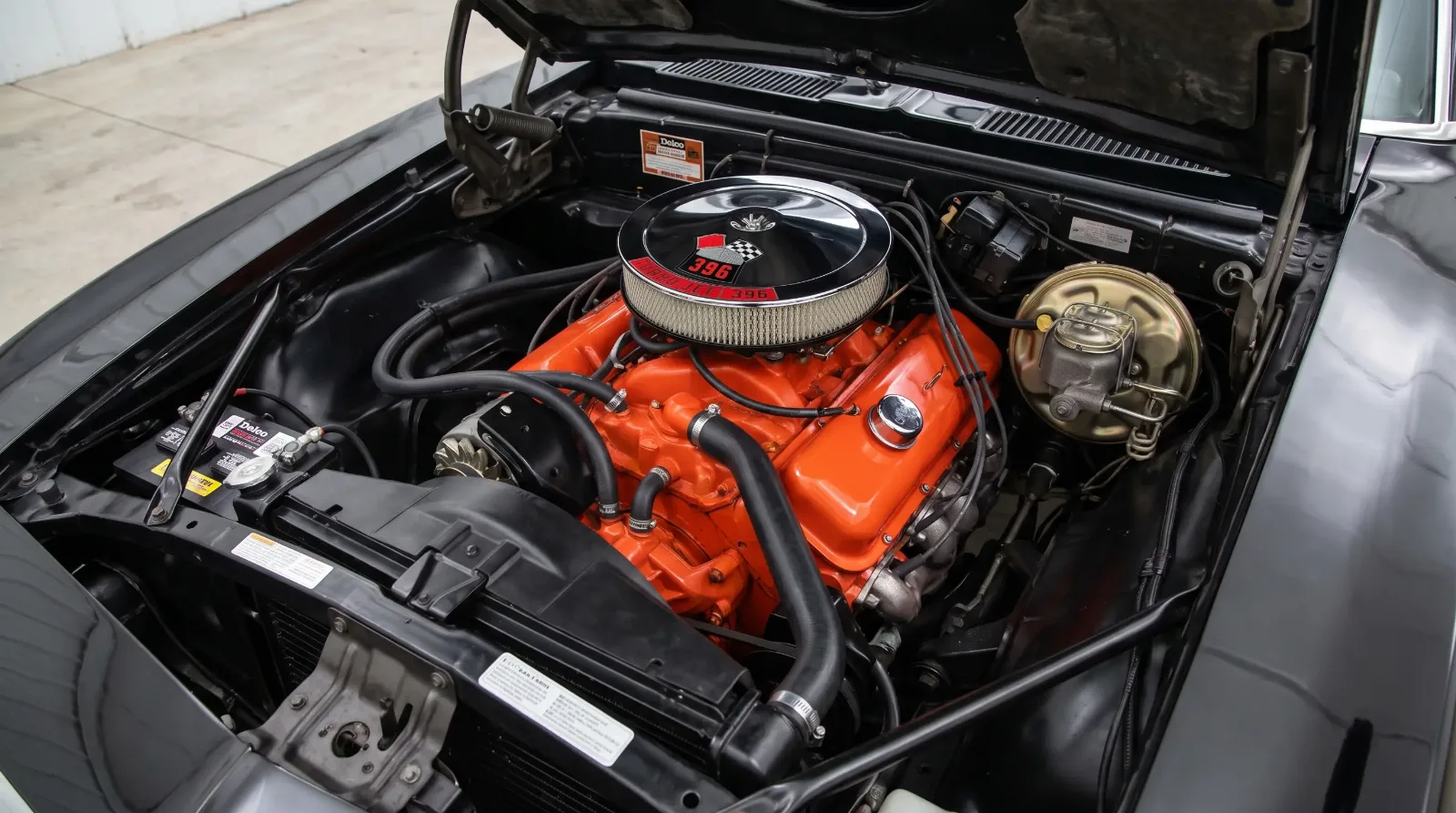
The Camaro's suitability for Pro Stock derived partly from its proportions and partly from the engine options that Chevrolet made available. The car's short wheelbase and relatively low kerb weight compared to larger American vehicles gave it a favourable power-to-weight starting point. The availability of the big-block engine family, and later purpose-built racing blocks developed from Chevrolet architecture, gave Pro Stock teams the displacement they needed to compete at the front of the field.
NHRA Pro Stock rules evolved continuously through the late 1960s and into the 1970s as teams found ways to extract more performance from their packages. Engine displacement limits, carburetor restrictions, and minimum weight rules were all adjusted as the class developed. Teams running Camaros navigated these rule changes with varying degrees of success, and the cars that won national events during the competitive peak of Pro Stock's first decade were as sophisticated as any racing machine in American motorsport at the time. NHRA launched the Pro Stock class for the 1970 season, and the very first Pro Stock final, at the 1970 Winternationals in Pomona, was won by Bill "Grumpy" Jenkins driving a Camaro.
Key drivers and teams
The history of Pro Stock Camaro racing includes a roster of drivers whose names remain significant in drag racing circles. The class attracted technically-minded racers who understood that Pro Stock success required engineering attention alongside driving skill. Teams that combined professional engine building operations with capable driving talent were consistently the most competitive, and several Camaro-based teams developed reputations for excellence in engine preparation that carried beyond the drag racing community into the broader performance parts market.
The relationship between successful Pro Stock competition and aftermarket parts sales was direct and commercially important. Engine builders who won with their Camaro Pro Stock programme could point to those results when marketing cylinder heads, camshafts, and intake manifolds to street performance enthusiasts. The drag strip credibility translated directly into catalogue sales, creating a business model that sustained the professional Pro Stock effort while also funding continued development. Bill Jenkins, whose "Grumpy's Toy" Camaros were central to the class's early years, was among the engine builders whose competition success translated directly into a thriving performance-parts business.
"Pro Stock was a parts race dressed up as a driver's race. The teams that won built their own engines, understood every variable, and kept their technical knowledge as close to the vest as they could manage. The Camaro body was the billboard; the real competition was in the engine programme."
— Patrick Walsh
The Camaro body's aerodynamic advantages
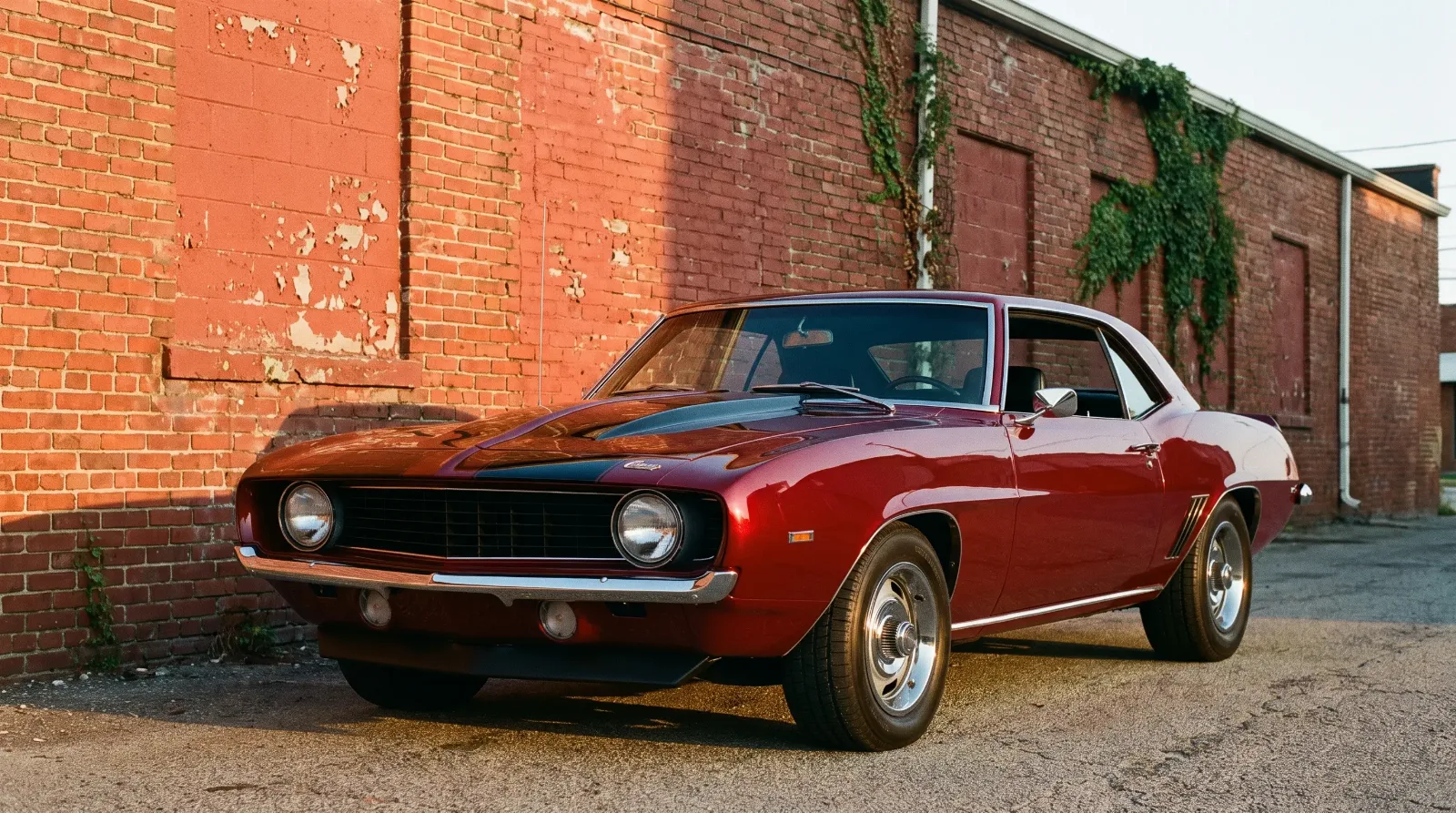
Drag racing aerodynamics are often dismissed as irrelevant at the relatively modest speeds of a quarter mile compared to road racing, but Pro Stock runs reveal that body shape matters even in a straight line. The Camaro's fastback roofline and relatively clean front end created aerodynamic characteristics that teams learned to exploit. Minor modifications within the silhouette rules could affect frontal area, lift characteristics, and even engine cooling efficiency, all of which had measurable effects on elapsed times at the level of precision where Pro Stock championships are decided.
The Camaro's visual presence on the drag strip was also a factor in the car's popularity with both teams and spectators. A Camaro Pro Stock car at full power, launching hard from the line, was a recognisable spectacle that connected the race action to the street cars that spectators drove. This connection between race car and street car was central to what made Pro Stock compelling as a spectator class, and the Camaro carried it effectively.
The broader impact on Camaro performance culture
Pro Stock racing's influence on Camaro performance culture operated on multiple levels. At the highest level, it pushed the engineering limits of what the car's architecture could achieve. At the grassroots level, it inspired a generation of amateur drag racers who built Camaro-based competition cars for local and regional events, drawing on the same basic platform and engine family but at budgets accessible to private individuals. The Camaro became one of the foundational vehicles of American bracket racing as a result, present at drag strips in enormous numbers across every region of the country.
The full story of the Camaro as a performance machine, from road racing to drag racing, is traced in the Chevrolet Camaro's complete history. The drag racing chapter is one part of a competition heritage that spans multiple disciplines and multiple decades. For context on how the Camaro's racing image was projected through its visual identity, the Camaro motorsport overview connects the different threads. The visual dimension of the Camaro's racing identity comes into focus in the next article, which covers famous classic Camaro race liveries across both road racing and drag racing contexts.
| Class element | Pro Stock requirement |
|---|---|
| Body silhouette | Must match production car dimensions |
| Engine induction | Naturally aspirated only |
| Body materials | Lightweight panels permitted within silhouette rules |
| Minimum weight | Set by weight-to-displacement ratio (e.g. 7 lb per cu in at the 1970 launch) |
| Transmission | Driver-shifted manual gearboxes used in the early era |
Sources and notes
Production figures, engine specifications, codes, and dates in this article are cross-referenced from established Camaro references, period documentation, and owner registries. Where sources differ, the most commonly cited value is used. Cost figures are indicative and vary by supplier, region, and condition.