A race livery is not simply paint and graphics applied to a car. It is a visual language that communicates the car's identity, its sponsor relationships, and its place within a particular team's history. For the Camaro, which competed across multiple forms of motorsport from the late 1960s onward, race liveries accumulated into a visual record of the car's competition story that is as rich as any American vehicle's.
The most immediately recognisable Camaro race liveries come from the Trans-Am era, when the Penske operation and other leading teams developed graphic identities that were photographed extensively and reproduced in the motorsport press. But the drag racing Camaros, the endurance racing entries, and the later IMSA and road racing programmes all contributed their own visual language to the broader picture of what a racing Camaro looked like across different competitive contexts.
The Penske Trans-Am schemes
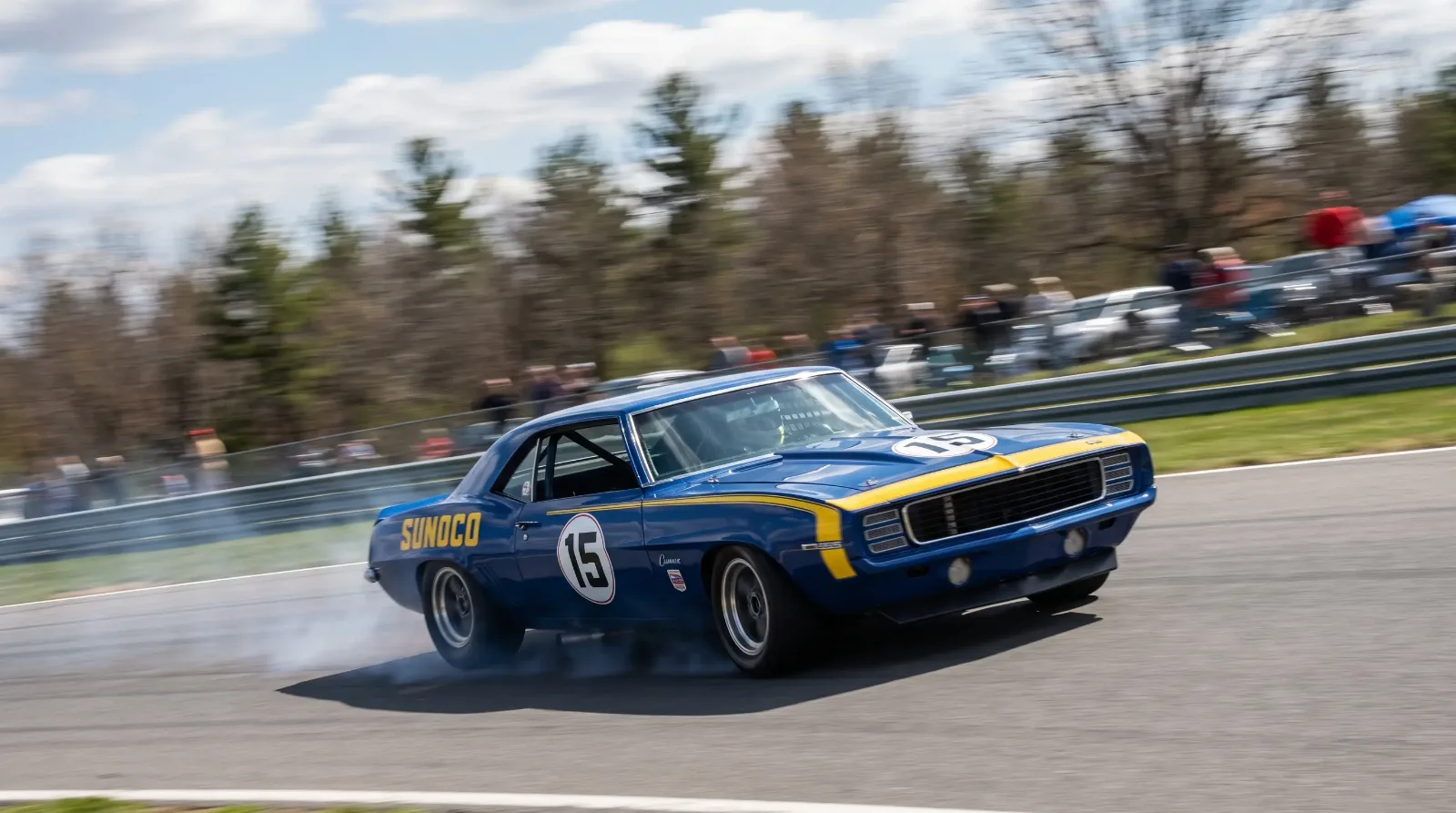
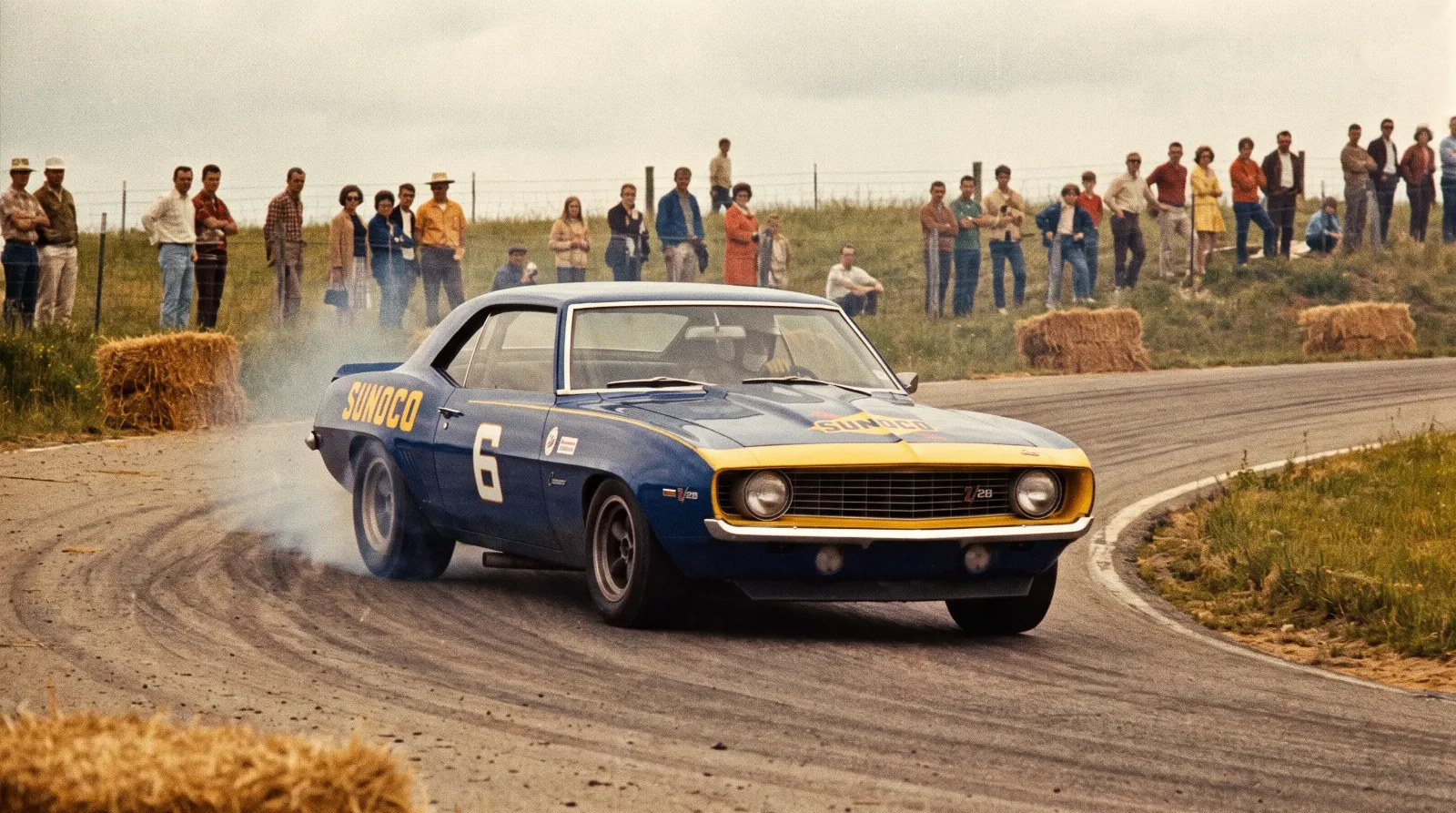
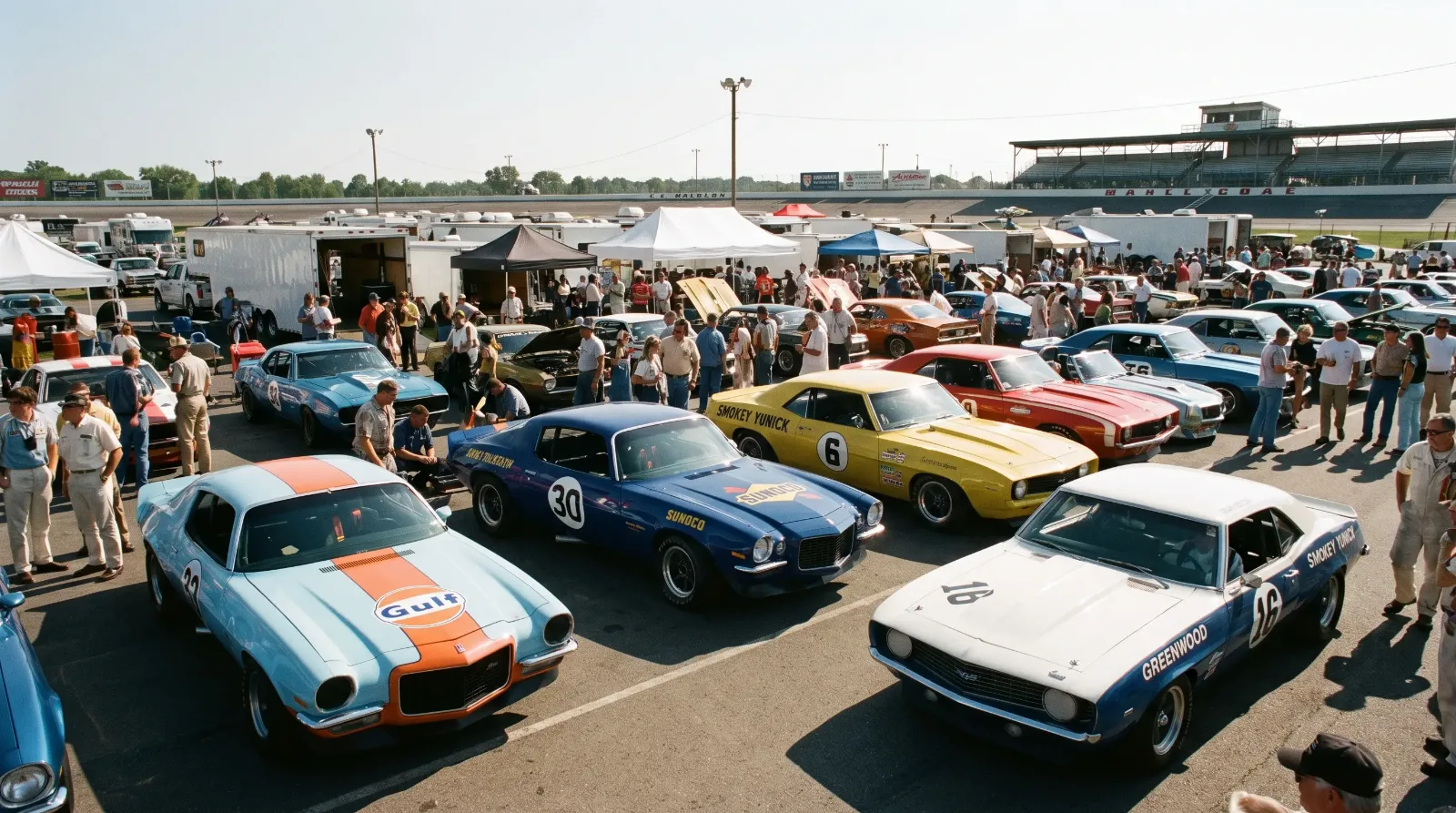
The Roger Penske Camaro Trans-Am cars of 1968 and 1969 are among the most studied racing liveries in American motorsport. The cars carried a combination of sponsor identification and team graphics within the constraints of the period, when tobacco and oil company sponsorship was establishing the visual vocabulary that would define professional motorsport through the following decades. The Penske Camaros' appearance communicated professionalism and seriousness in a way that distinguished the operation from less well-resourced competitors. The team's cars, run under Sunoco sponsorship in their distinctive dark blue with gold accents and Mark Donohue's familiar race numbers, became among the most recognisable liveries of the Trans-Am era.
Mark Donohue's race number and the specific colour combinations used by the Penske team in those seasons have been reproduced on scale models, die-cast replicas, and tribute paint schemes for decades, a measure of how deeply those liveries embedded themselves in the consciousness of the enthusiast community. The cars' appearance was part of what made the Penske operation's success legible as a story rather than simply a list of results.
Pro Stock and drag racing visual identities
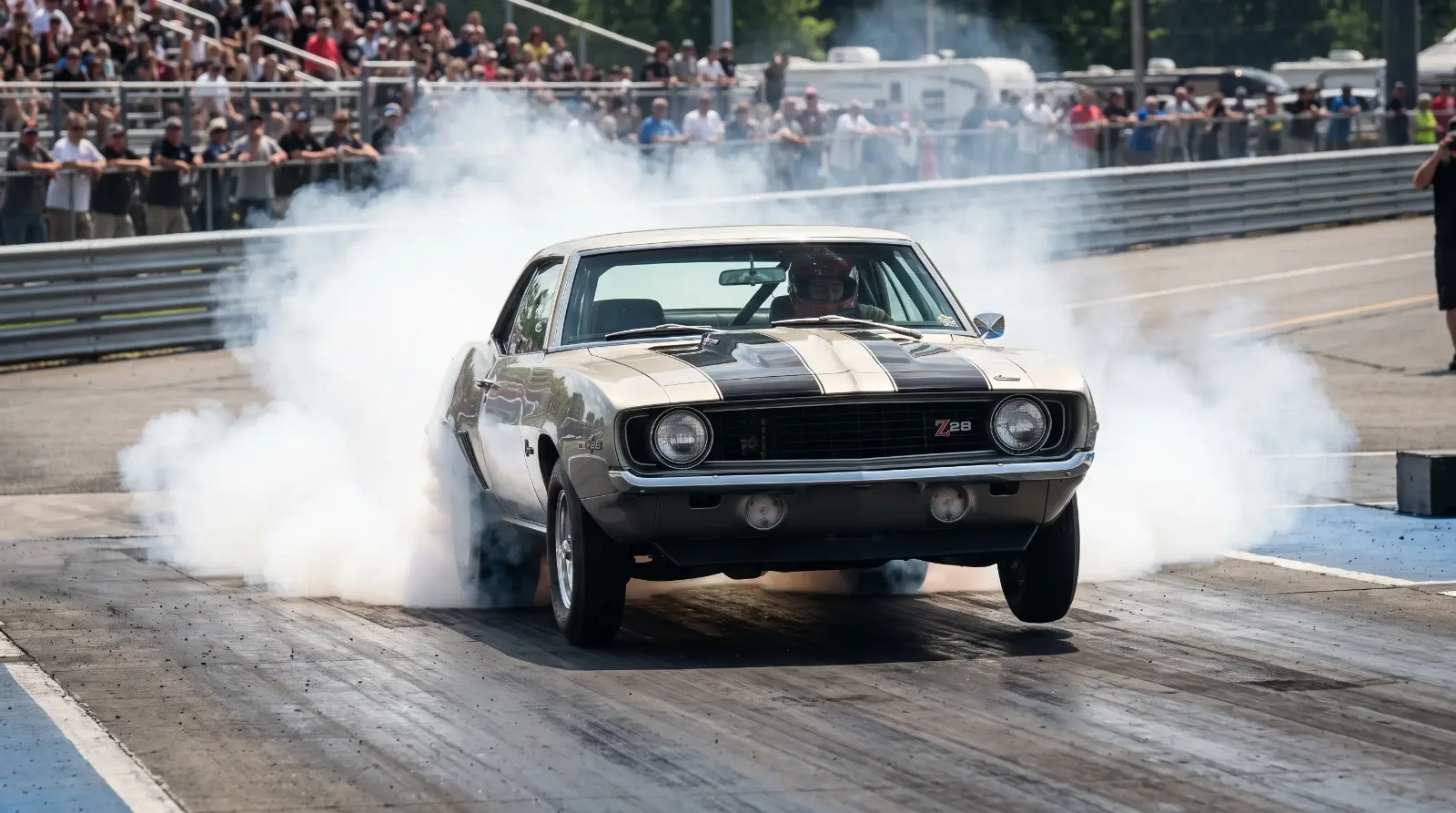
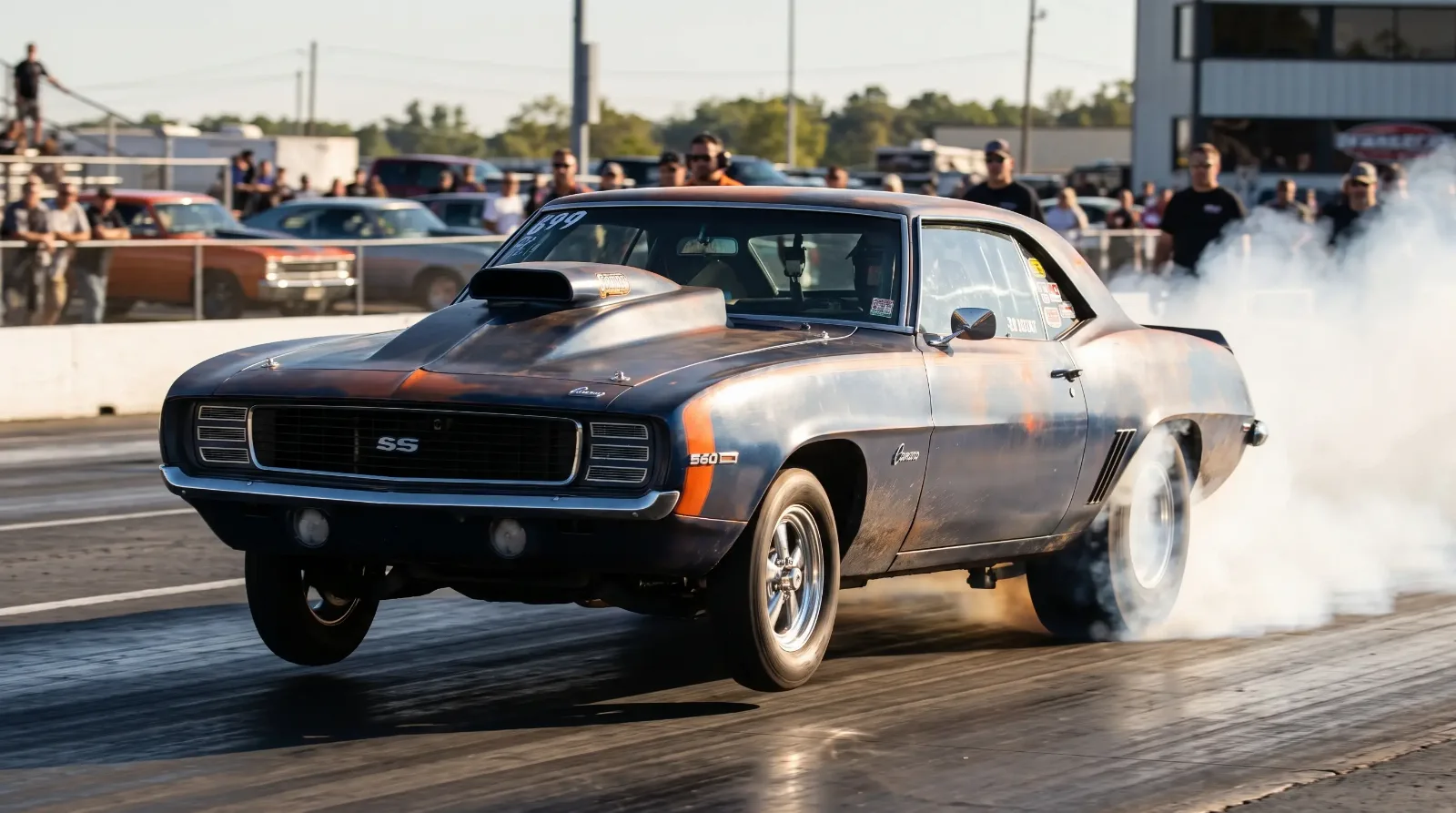
Drag racing liveries operated by different rules than road racing schemes. The sponsor relationships that funded Pro Stock programmes in the 1970s and beyond tended toward parts manufacturers, speed shops, and performance equipment companies whose branding spoke directly to the technical audience that followed the class. A Pro Stock Camaro in full livery was a mobile advertisement for the engine builder, the tire supplier, and the carburetor manufacturer whose products were contributing to the car's elapsed times.
The visual language of Pro Stock liveries tended toward bold typography and high-contrast colour combinations that read clearly in the brief moments that spectators had to observe a car making a pass. The Camaro body's flat surfaces and distinctive profile created good billboard space for sponsor graphics, and teams learned to use the car's proportions effectively in their livery designs. Some of the most visually striking American drag racing liveries of the 1970s and 1980s were applied to Camaro Pro Stock bodies.
"The graphics on a racing Camaro told you everything about where the money came from and what the car was built to do. A clean, professional livery meant a serious programme. The cars that showed up with hand-painted numbers and mismatched numbers were the ones the front runners did not worry about."
— Patrick Walsh
Endurance racing and IMSA appearances
Beyond Trans-Am and drag racing, Camaros appeared in various forms of endurance and GT racing under liveries that reflected the specific sponsorship and team contexts of those programmes. The IMSA series, which provided a competitive home for GT-class vehicles from the 1970s onward, hosted Camaro-based entries whose liveries often blended European racing graphic conventions with American sponsor branding. These cars are less frequently cited than the Trans-Am era machines but represent a genuine extension of the Camaro's competition history into different visual territories.
The endurance racing liveries tended toward more complex graphic arrangements than the Trans-Am cars, partly because the cars ran for longer periods and the additional sponsor exposure justified more detailed graphic packages. Number placements, sponsor logos at different scales, and driver name panels all contributed to liveries that rewarded closer examination rather than relying purely on immediate visual impact.
Tribute and continuation liveries
The significance of classic Camaro race liveries has generated a sustained market for tribute reproductions. Restoration specialists who build race-specification replicas of famous Trans-Am or Pro Stock Camaros treat the livery as an integral part of the authenticity of the project, researching paint formulas, graphic dimensions, and placement details with the same rigour applied to mechanical specification. The result is that several famous Camaro racing liveries exist today in multiple forms: the original surviving race cars, documented restorations, and purpose-built tributes.
For collectors and enthusiasts, understanding the visual history of Camaro racing liveries is part of understanding the car's total identity. A Camaro's racing heritage is not only about lap times and championship standings. It is also about the visual presence that made those results visible to audiences who experienced the cars through photography, television coverage, and direct observation at circuits and drag strips across America.
The full context of the Camaro's competition story, from its Trans-Am origins to its drag racing programmes, is covered in the Camaro motorsport history section. The racing liveries are the visual face of that history, and understanding them deepens the understanding of what the car represented in competition. The Camaro's story continues with its Trans-Am beginnings, examined in detail in the article on how the Z/28 was born to race, which returns us to where the competition heritage began.
| Era | Series | Notable Livery Characteristics |
|---|---|---|
| 1968-1969 | Trans-Am | Penske/Sunoco blue and gold, Donohue race numbers |
| 1970s | NHRA Pro Stock | Bold sponsor typography, high-contrast colour |
| 1970s-80s | IMSA GT | Multi-sponsor arrangements, varied team graphics |
| Modern | Tribute/restoration | Documented replicas of historic schemes |
Sources and notes
Production figures, engine specifications, codes, and dates in this article are cross-referenced from established Camaro references, period documentation, and owner registries. Where sources differ, the most commonly cited value is used. Cost figures are indicative and vary by supplier, region, and condition.