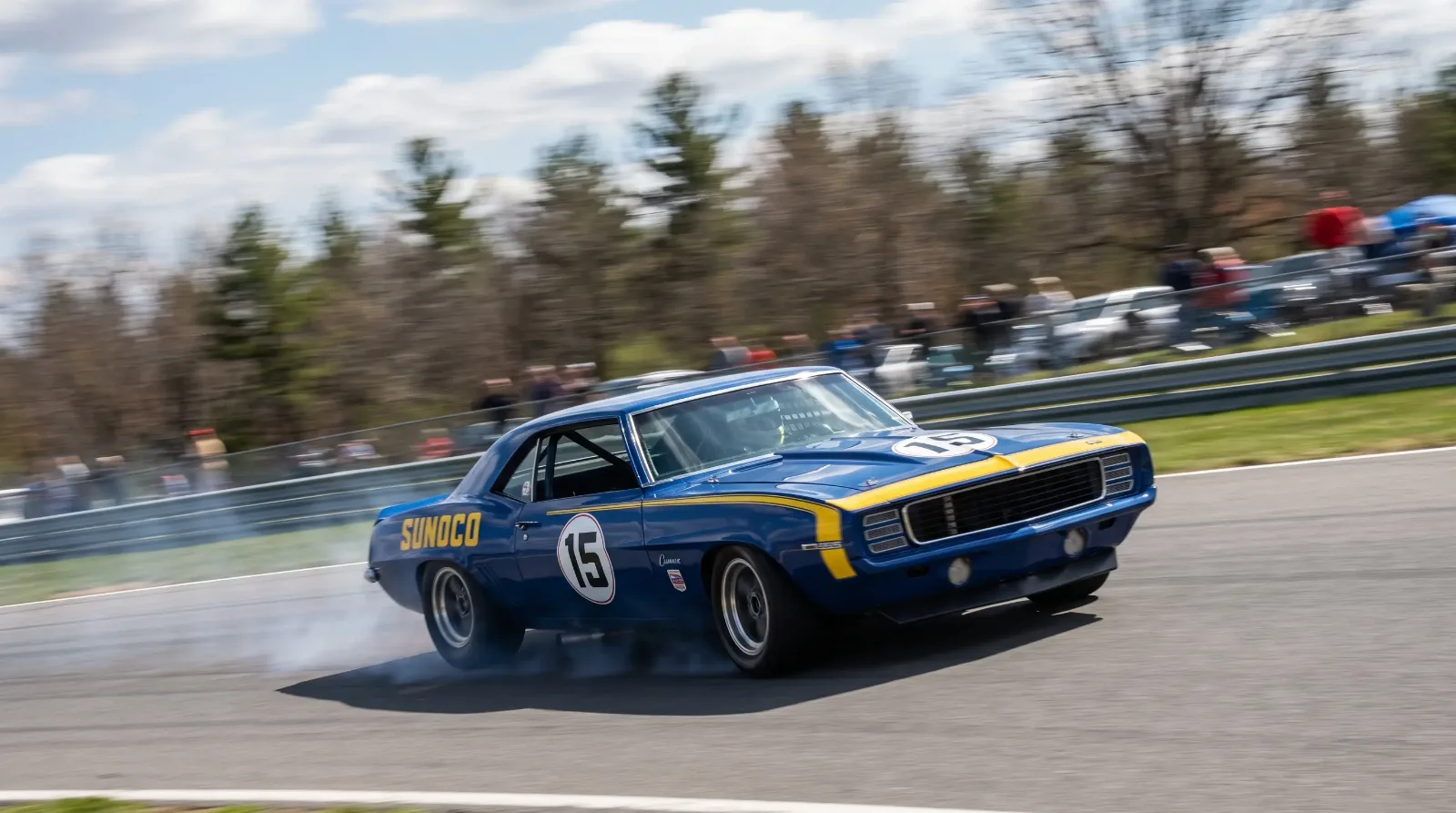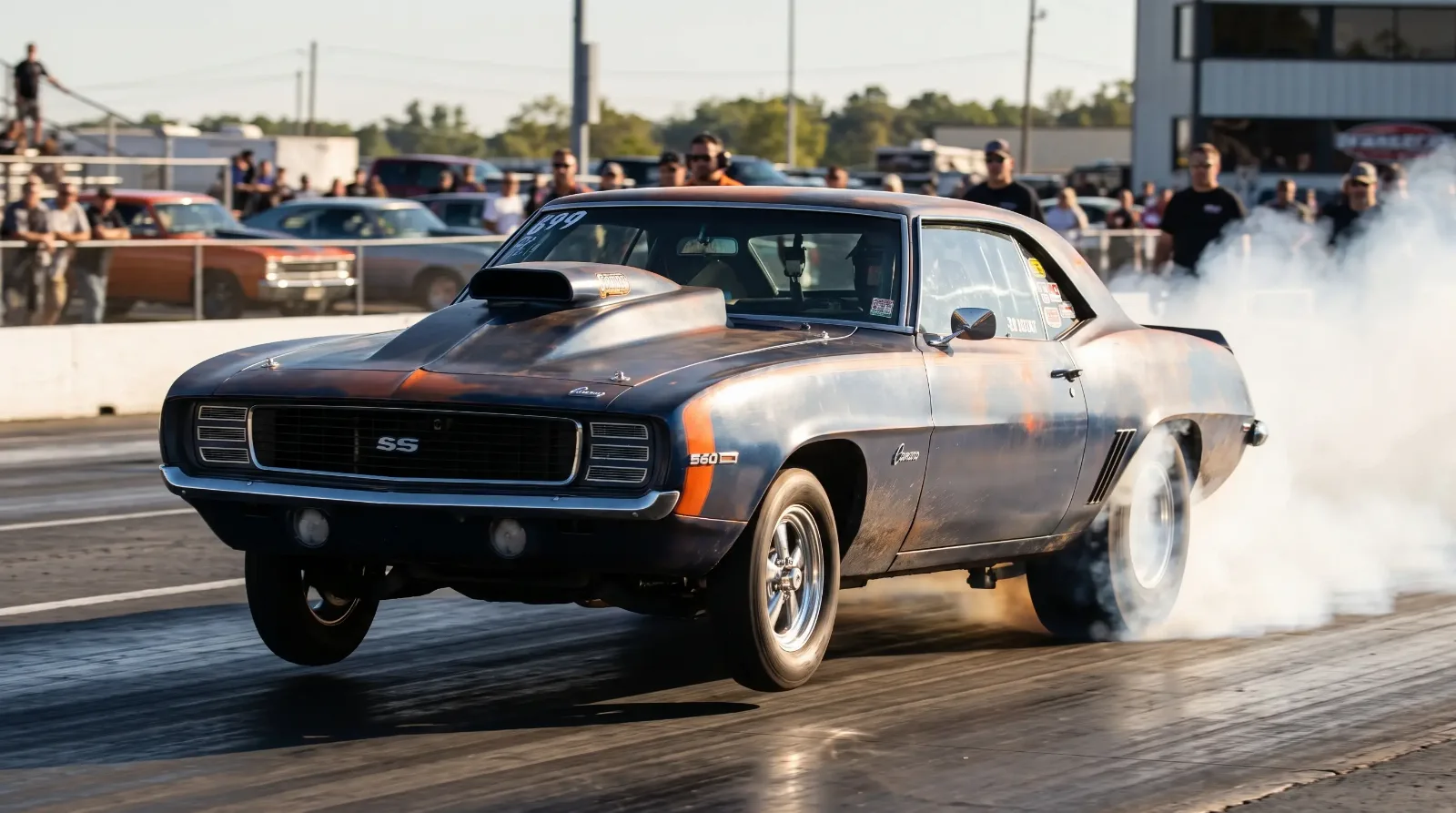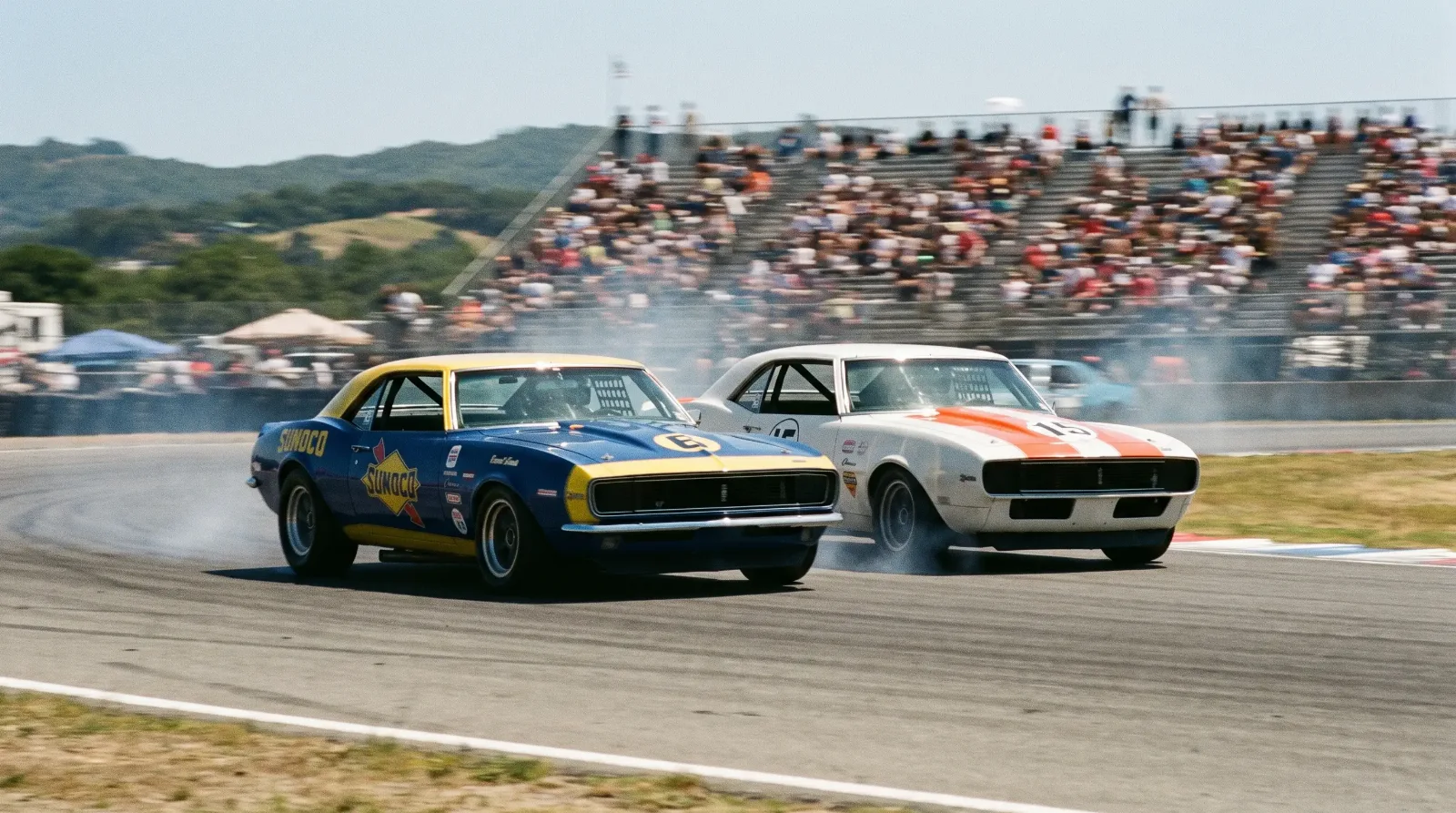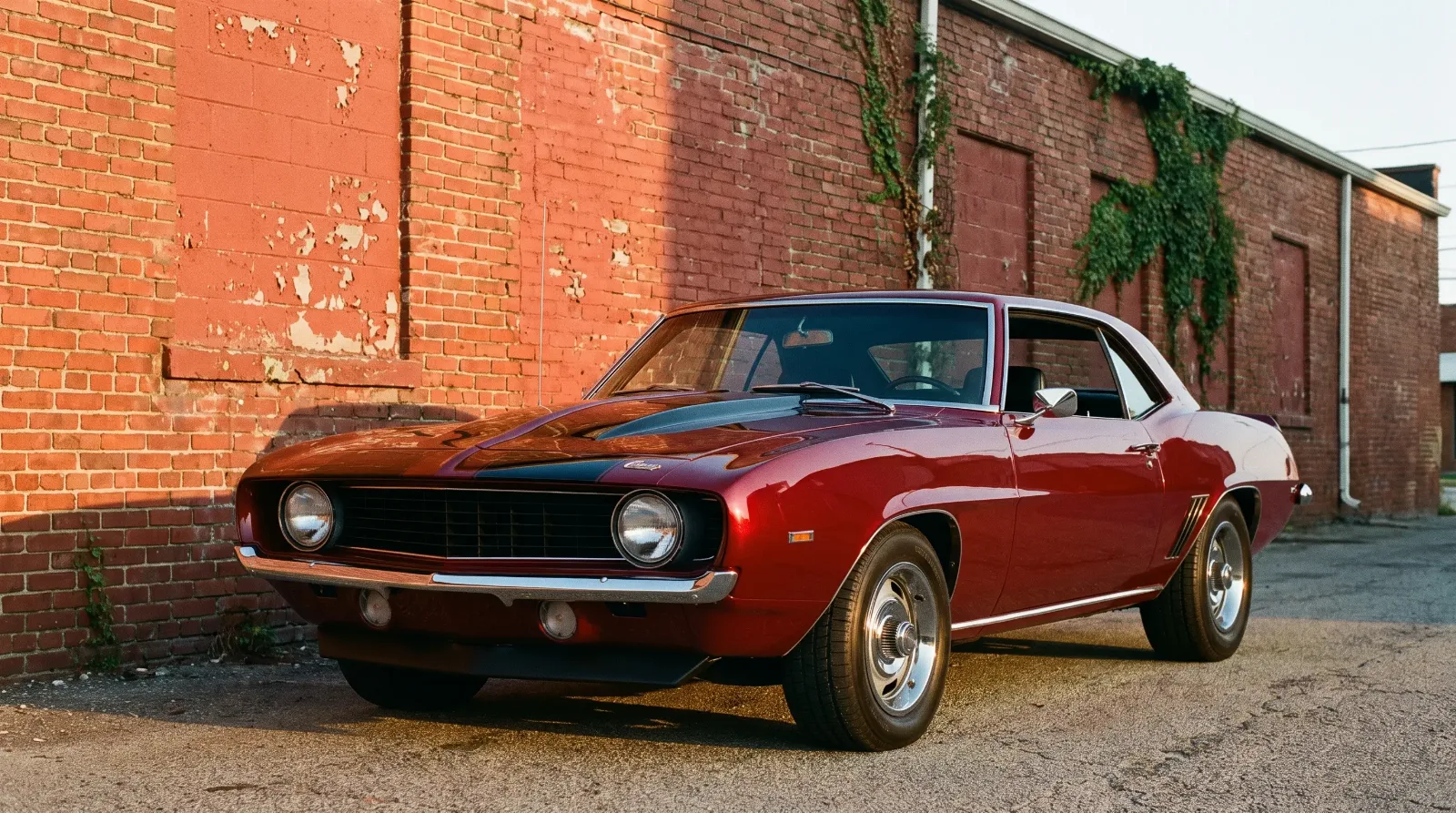

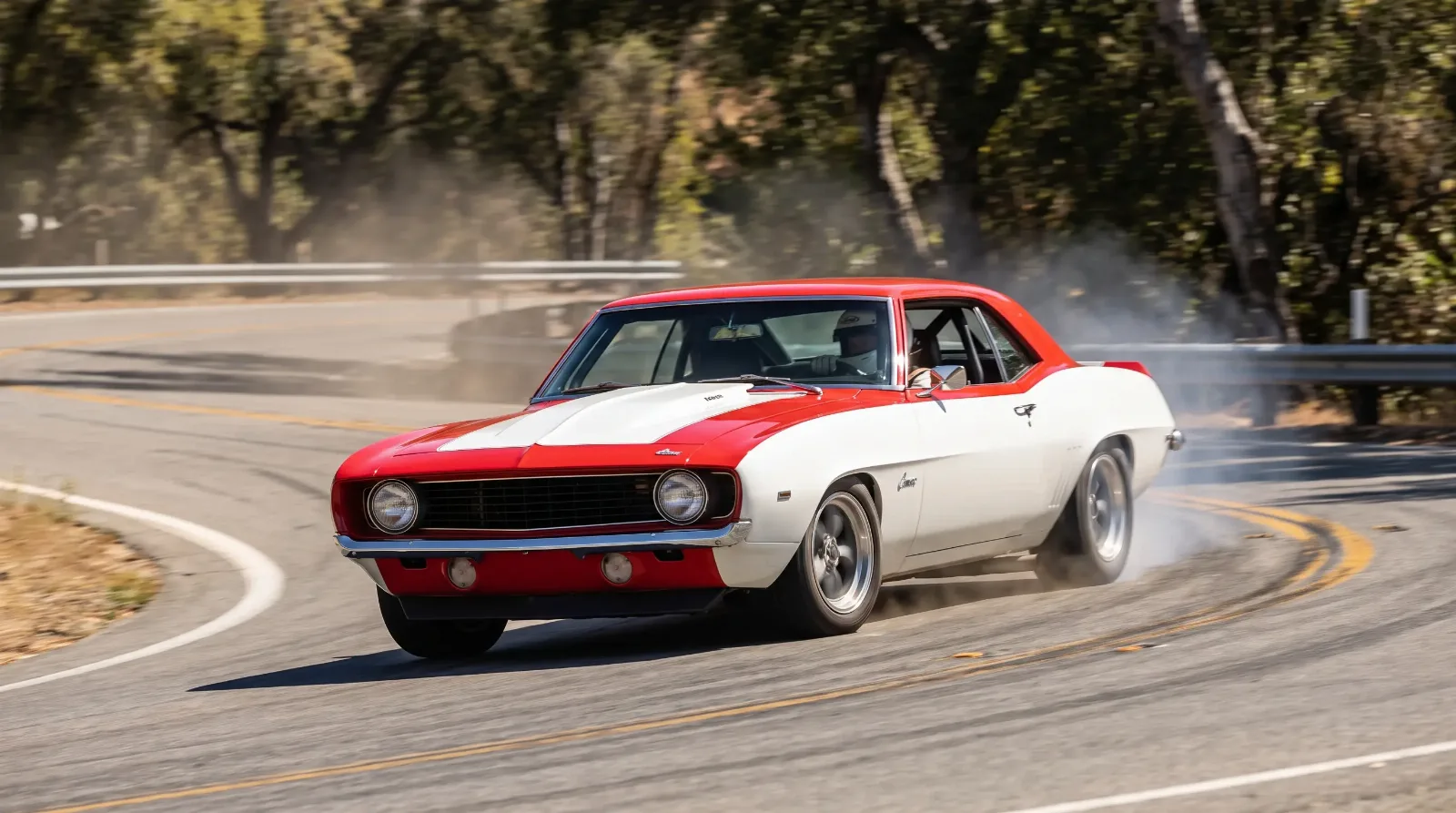
In 1966, Chevrolet faced a problem that no amount of marketing could solve. Ford's Mustang had captured the imagination of a generation, and on SCCA Trans-Am circuits across America, the pony car war was about to be fought in earnest. The answer from Chevrolet's engineers was not a compromise. It was the Z/28, a purpose-built racing machine wearing street clothes, and it changed the Camaro story permanently.
To understand the Z/28, you have to understand the rules it was built around. The SCCA's Trans-American Sedan Championship, launched in 1966, demanded displacement limits: no engine over 305 cubic inches in the under-2-litre class. Chevrolet's standard small-blocks were too large. The solution was to mate a 327 block with a 283 crankshaft, producing a 302-cubic-inch engine that sat just inside the limit. That engine, paired with a close-ratio four-speed gearbox and a set of serious suspension upgrades, became the heart of the Z/28.
Homologation and the factory racing effort
Chevrolet needed to sell a minimum number of street Z/28s to qualify the model for SCCA competition, a process called homologation. The production version gained front disc brakes, a higher-compression cylinder head, and a distinctive dual-stripe appearance package, but these were secondary to the engineering underneath. Racers who read the option codes understood immediately what Chevrolet had done.
The factory racing effort was never entirely official, a consequence of the Automobile Manufacturers Association's 1957 gentleman's agreement discouraging direct factory involvement in motorsport. Chevrolet supported teams and supplied parts through a network of regional distributors and dealers, maintaining what insiders called "back-door" involvement. Roger Penske was among the team owners who benefited from this arrangement, though the exact nature and extent of factory support varied year to year. Penske entered Trans-Am with a Camaro Z/28 for the 1967 season, with Mark Donohue driving, and the relationship between his team and Chevrolet's racing organisation grew closer as the programme developed.
The Z/28's first season on track
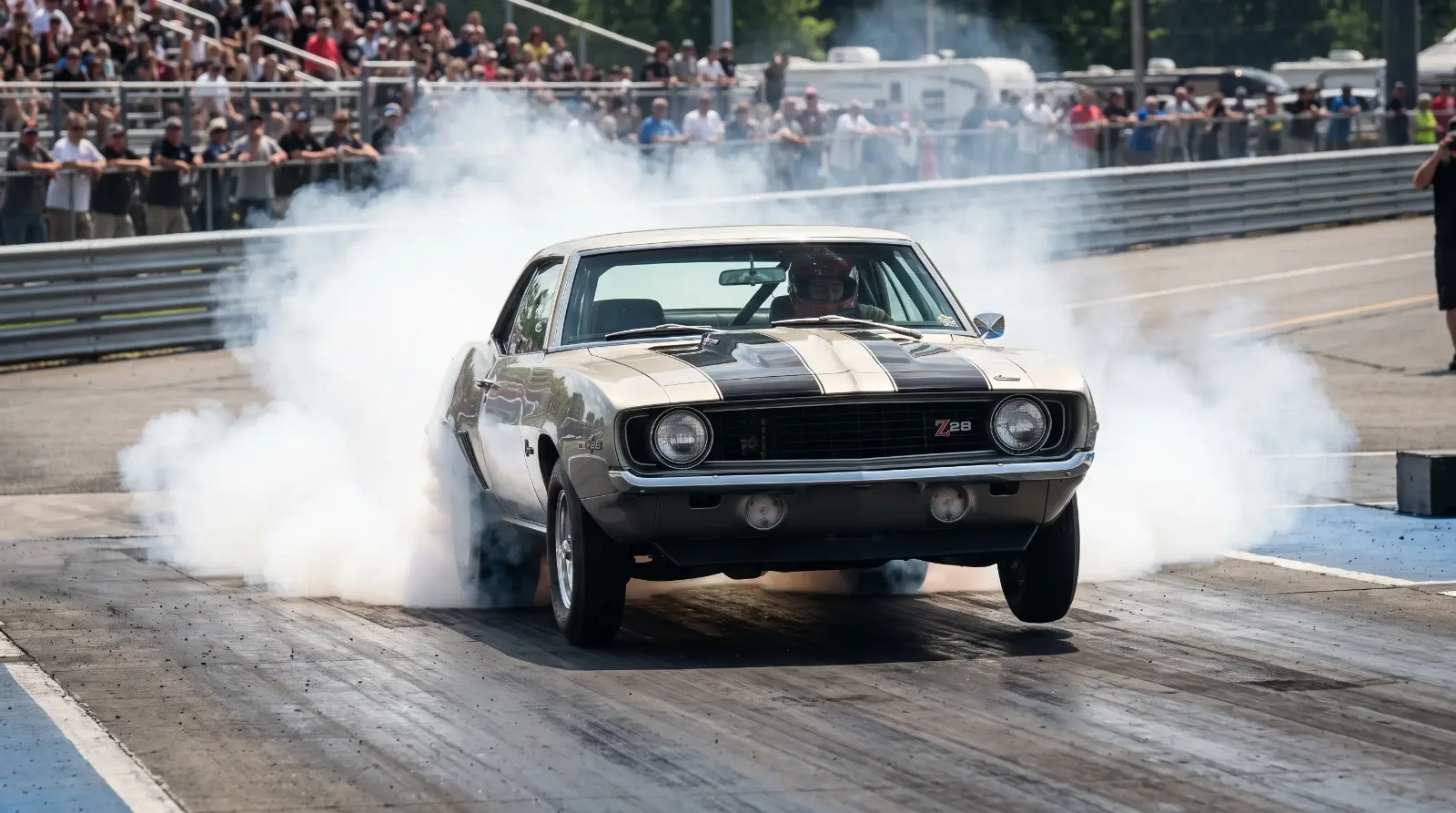
The 1967 Trans-Am season was effectively a learning year for the Z/28. While Ford's Mustang, campaigned by various teams including the formidable Shelby American operation, took the manufacturer's title, Camaro teams were gathering data. The 302 engine produced strong mid-range power and proved durable enough for the two-hour-plus race distances that Trans-Am demanded. Handling was the main challenge: the early Camaros carried their weight differently from the Mustang, requiring chassis setup solutions that engineers worked through during the season.
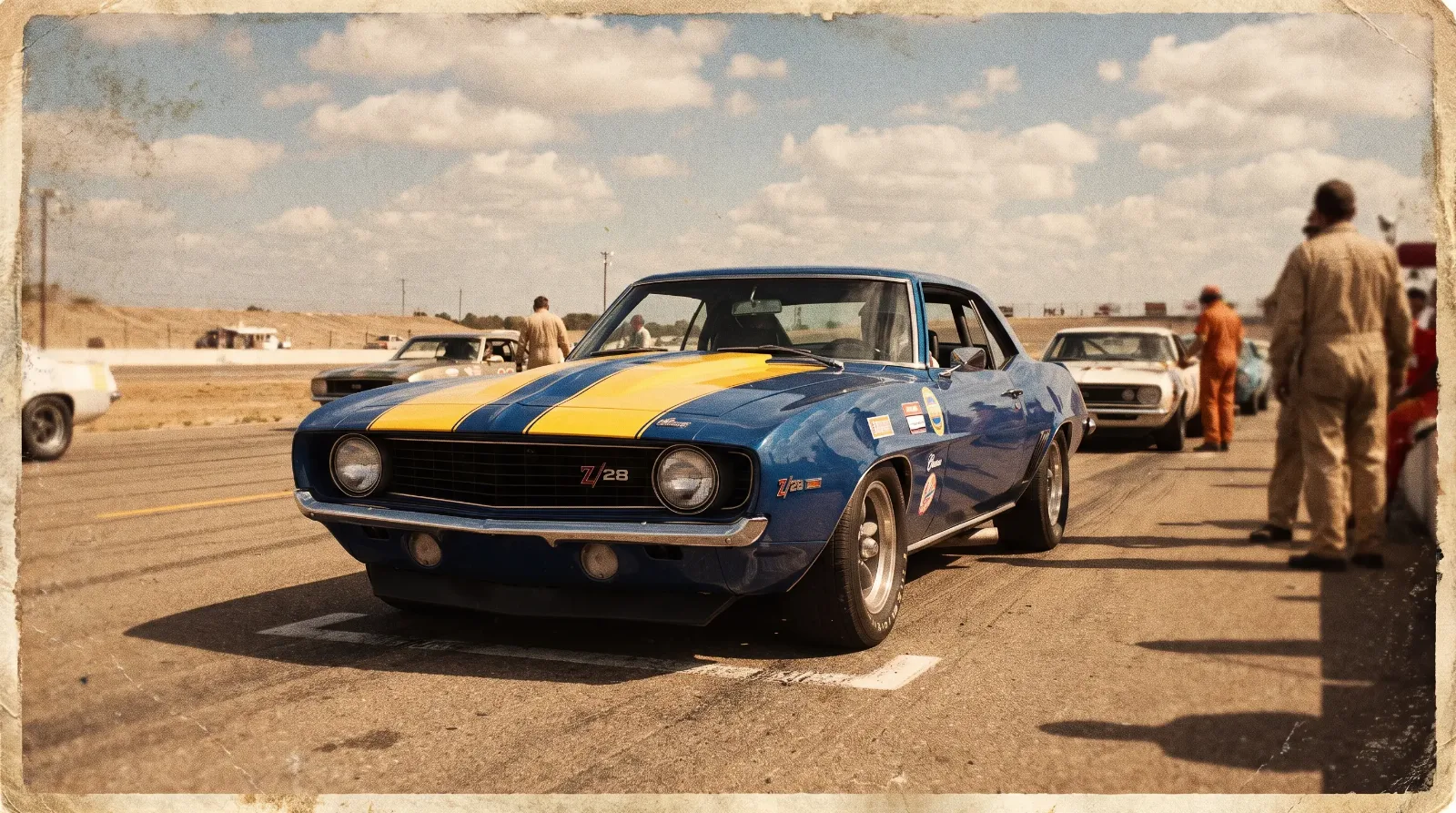
"The Z/28 was not a car you drove casually. It demanded respect from the first corner and rewarded precision. Every rough edge you felt on the street was exactly what made it work on a road course."
— Patrick Walsh
Driver feedback during 1967 pointed to a need for better tire compounds and revised suspension geometry. Goodyear's racing tire development was closely tied to the Trans-Am effort, and by the end of the season the Z/28 had proven that it could lap competitive times. What it had not yet done was win consistently. That would change in 1968.
Why the Z/28 matters beyond the race track
The significance of the Z/28's Trans-Am origin goes beyond race results. Chevrolet had demonstrated a commitment to genuine performance engineering at a time when muscle cars were often simply large engines dropped into standard bodies. The Z/28's 302 produced its power through breathing and precision rather than displacement, a philosophy that influenced how Chevrolet approached performance for years afterward.
Street buyers responded. Although the Z/28 was not marketed aggressively, word spread through enthusiast circles and dealership networks. Production numbers climbed steadily as the car's racing reputation grew. The connection between track performance and showroom desirability was direct and measurable, something Chevrolet's product planners noted carefully. You can explore the full arc of the Chevrolet Camaro's history to see how this racing foundation shaped every generation that followed.
The beginning of a rivalry that defined an era
The Trans-Am series gave American motorsport something it had rarely seen before: a genuine, sustained battle between two evenly matched manufacturers fighting for the same trophy across a full season of road racing. Ford versus Chevrolet, Mustang versus Camaro, blue oval versus bowtie. The technical rules kept the cars close enough that driver skill and team preparation could decide the outcome. That combination produced racing that captured a mainstream audience beyond the usual hard-core motorsport community.
For more on how the racing heritage of the Camaro connects to its broader competition story, the Camaro motorsport history section covers the full picture. And if you want to follow the championship battle year by year, the next article covers the 1968-69 Trans-Am championship Camaros in detail, where the results finally matched the promise.
| Specification | 1967 Z/28 (Street) |
|---|---|
| Engine | 302 cu in (4.9L) V8 |
| Compression ratio | 11.0:1 |
| Transmission | Muncie M21 close-ratio 4-speed |
| Brakes (front) | Disc (standard with Z/28) |
| Production (1967) | 602 units |
| SCCA class | Trans-Am Over 2.0-Litre (5.0L / 305 cu in limit) |
Sources and notes
Production figures, engine specifications, codes, and dates in this article are cross-referenced from established Camaro references, period documentation, and owner registries. Where sources differ, the most commonly cited value is used. Cost figures are indicative and vary by supplier, region, and condition.