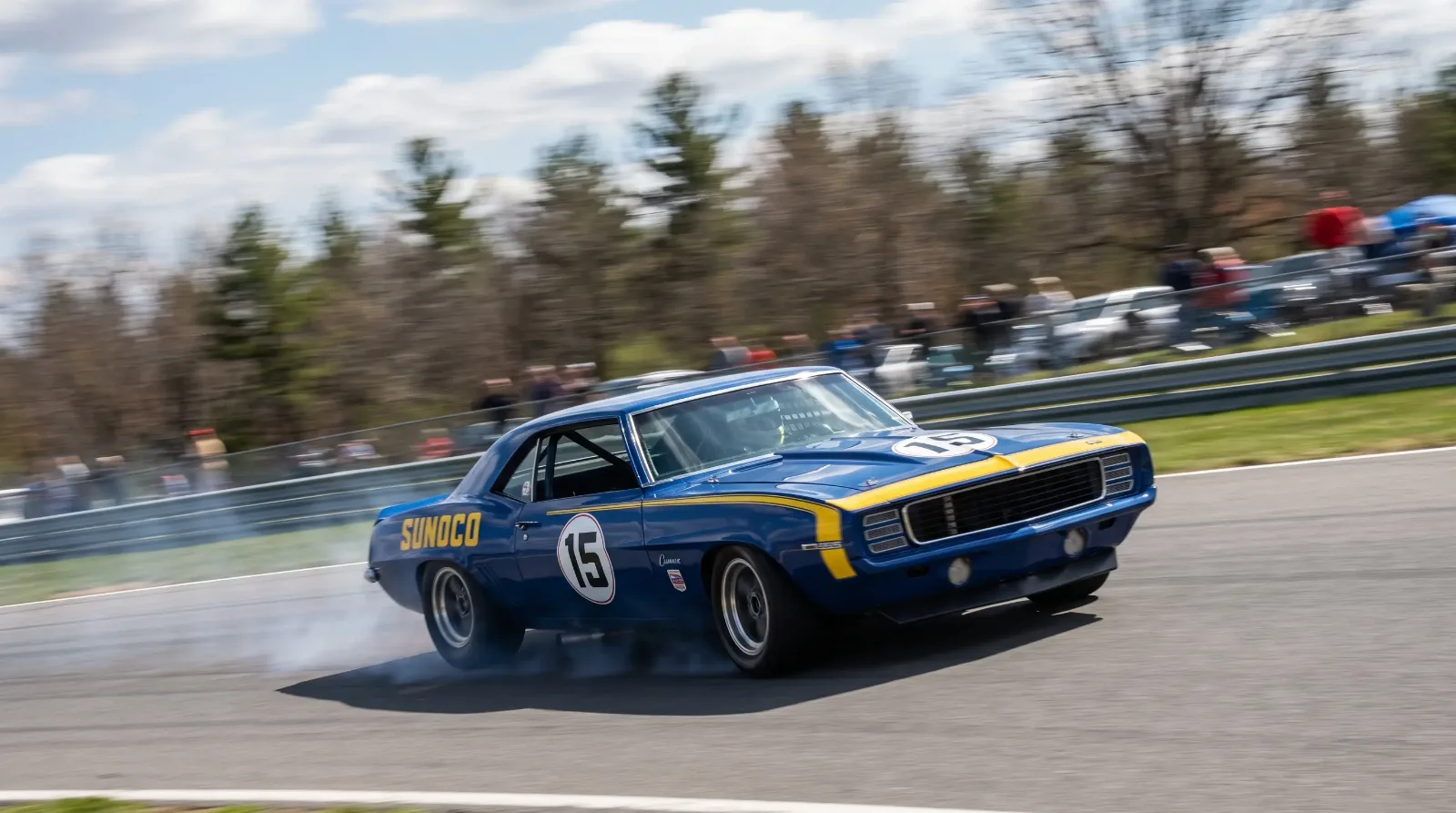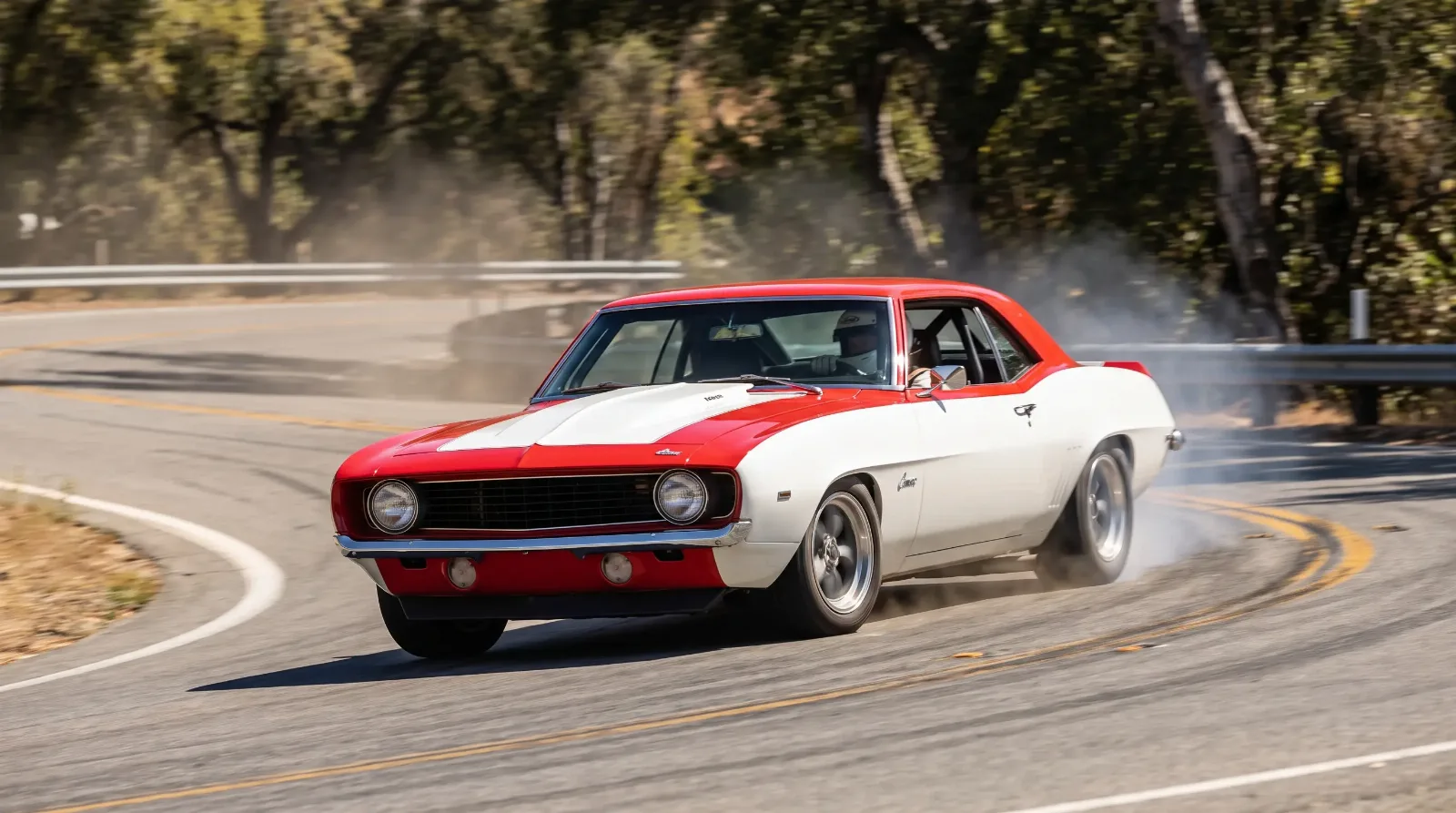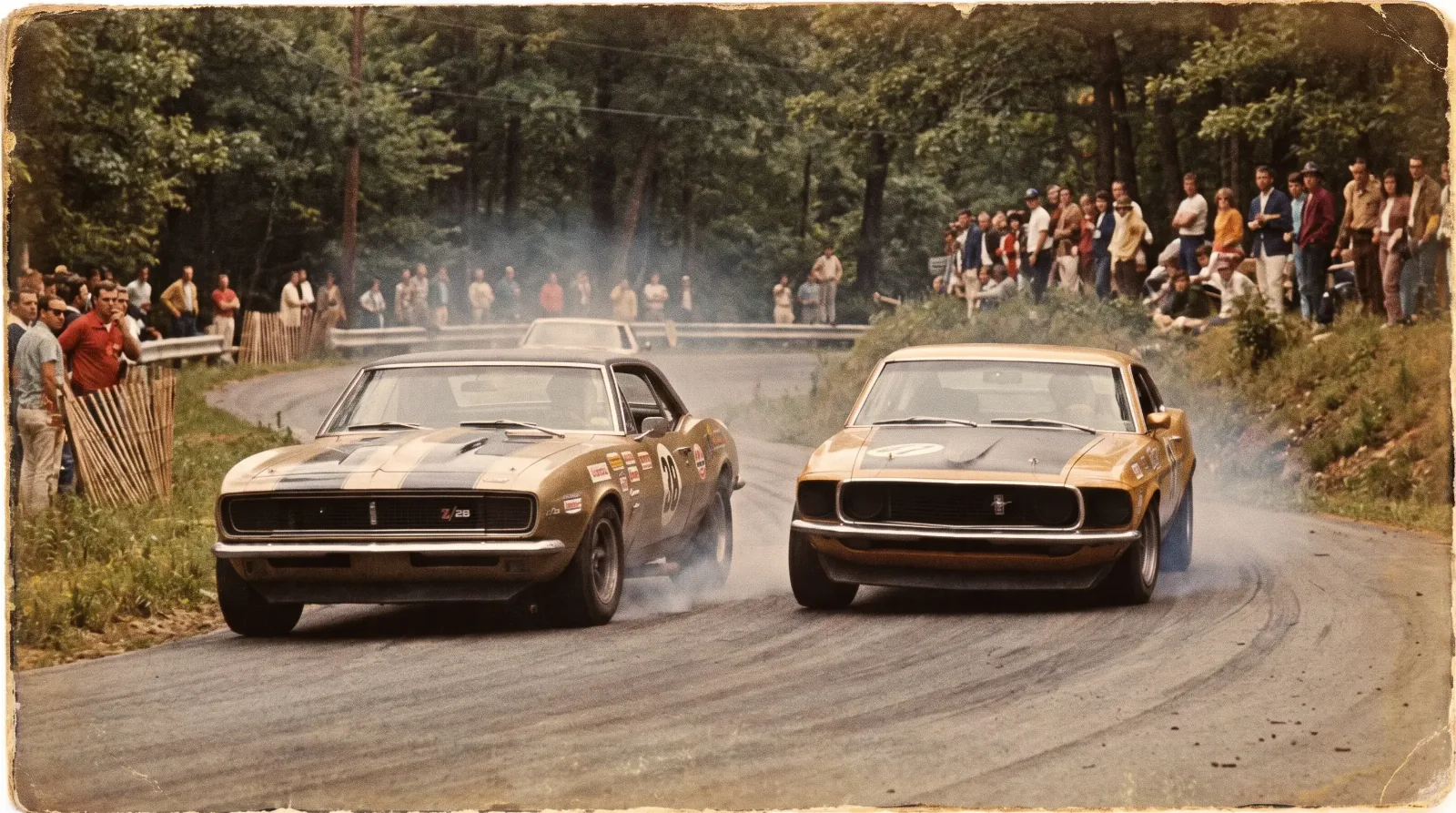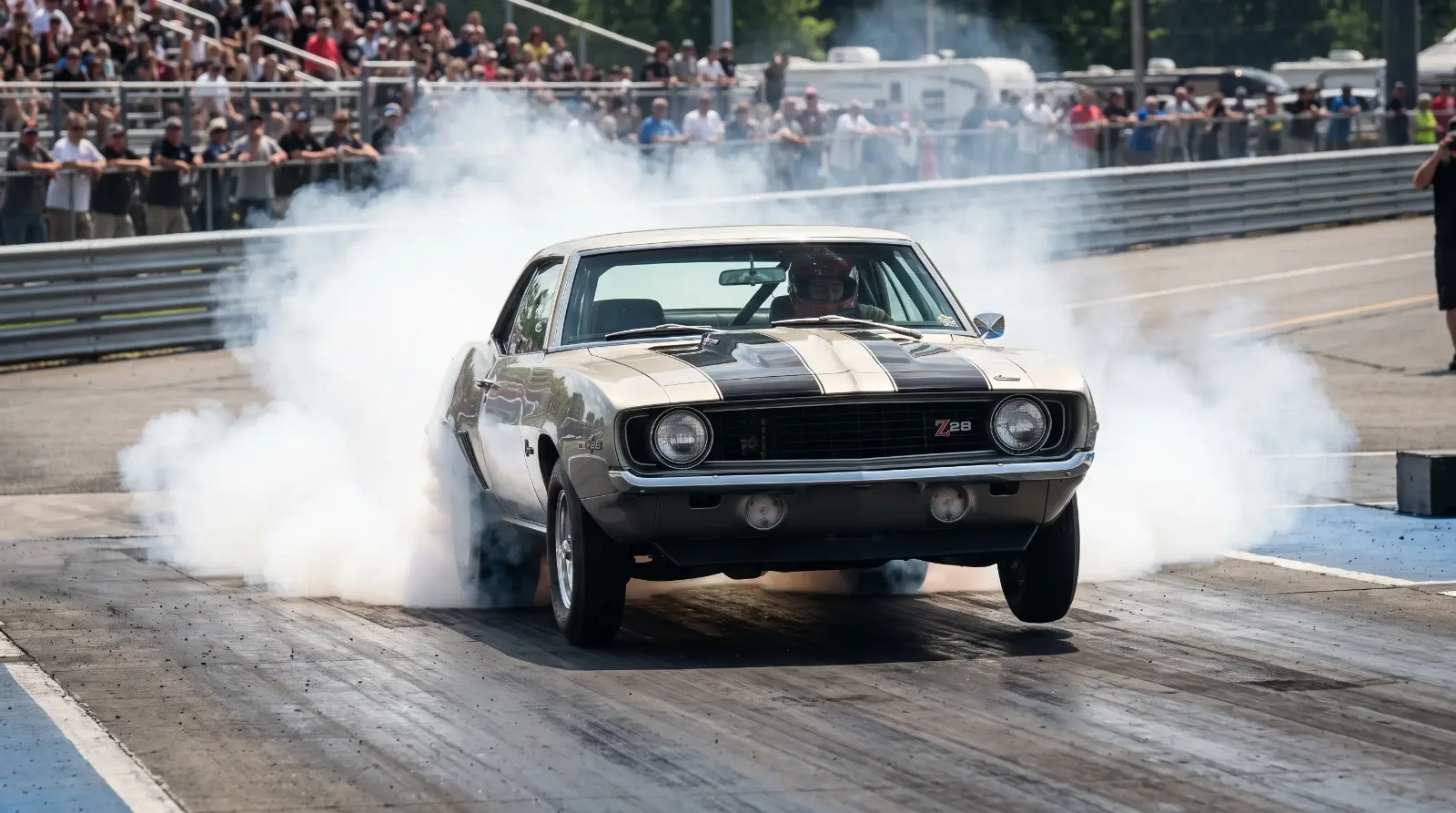

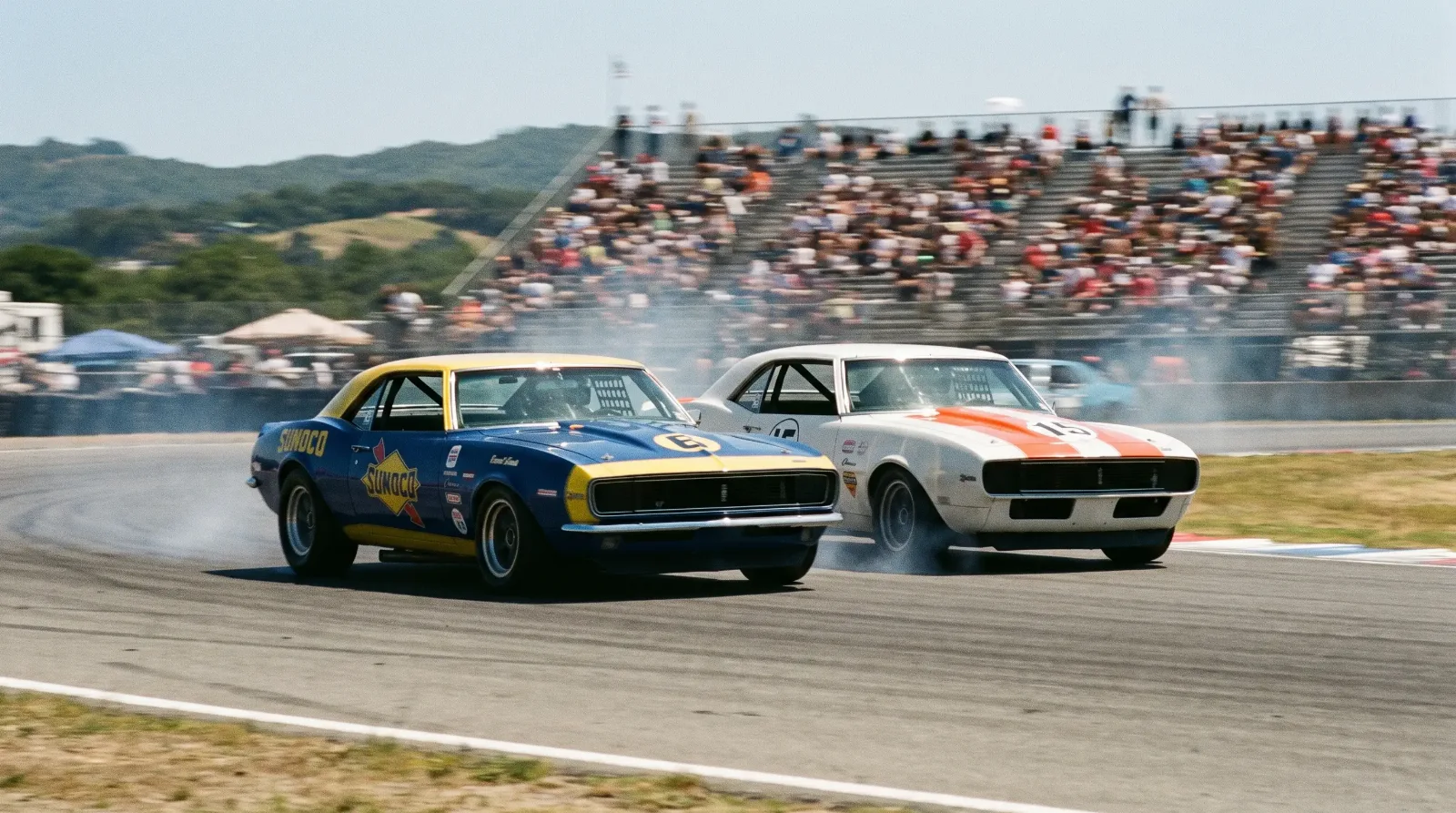
By 1968 the Z/28 had completed its education. The lessons of the 1967 season, absorbing tire data, chassis adjustments, and the rhythm of Trans-Am race distances, had been processed by Chevrolet's engineers and the teams running the car. What emerged for 1968 was a significantly more refined package, and the results on track reflected it with a directness that left no room for debate.
The Roger Penske operation, with Mark Donohue driving, became the most visible and successful Z/28 campaign of the era. Penske's methodical preparation approach and Donohue's technical precision as a driver-engineer made them a formidable combination. The 1968 season saw Donohue and the Penske Z/28 dominate the Trans-Am series, winning 10 of the 13 races and clinching Chevrolet's first Trans-Am manufacturer's championship, establishing a benchmark for professional road racing team management in North America.
What made the 1968 Z/28 faster
The core of the 1968 race car remained the 302-cubic-inch engine, but the state of tune had advanced considerably. Cylinder head work, carburetion development, and improved valve timing contributed to more usable power across the rev range. Goodyear's dedicated Trans-Am tire compounds, developed partly through feedback from the 1967 season, gave the cars significantly better cornering capability. Suspension geometry revisions, some implemented at the team level and some filtering back from Chevrolet's engineering resources, reduced the understeer that had been a characteristic of the early Camaros in racing trim.
The result was a car that could consistently post lap times competitive with the best Mustang teams, whose operation was also improving rapidly. Ford had their own factory-backed effort through Shelby American and other contractors, and the technical development race between the two manufacturers ran in parallel with the on-track competition throughout both seasons.
The 1969 season: pressure at its highest
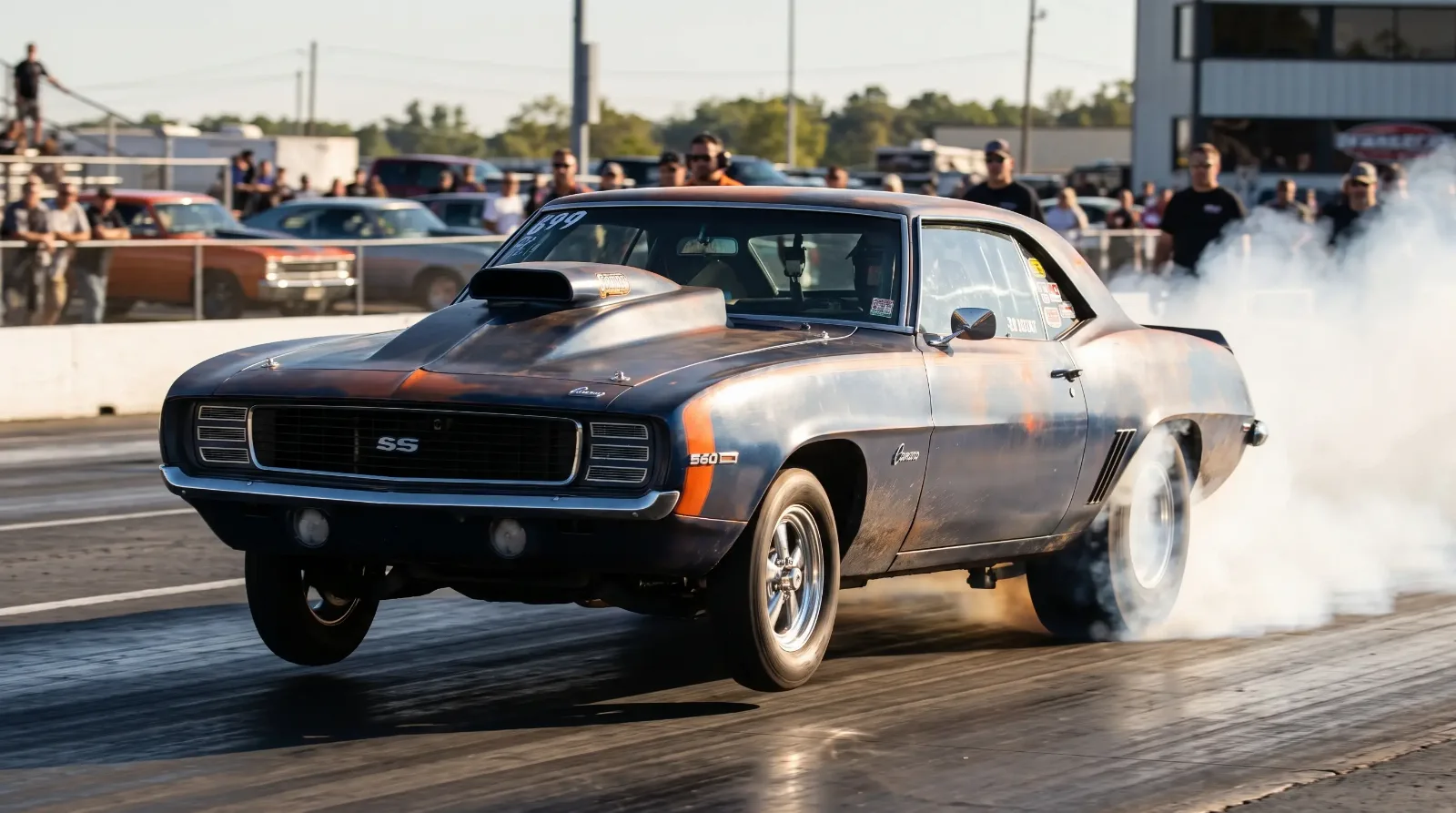
The 1969 Trans-Am season represented the peak of the first-generation Camaro's factory racing programme. Both Ford and Chevrolet were fully committed, the grid was competitive from front to back, and the individual races drew crowds and press coverage that made Trans-Am a genuine national motorsport story. Donohue and Penske continued their programme, and the Camaro went on to take the 1969 Trans-Am manufacturer's championship, with the Z/28 winning eight races to the Boss 302 Mustang's four, a result that was the focus of intense effort across the entire organisation.
"Every race result in 1969 went into a file. Every lap time, every pit stop duration, every tire wear reading. The preparation standard Penske set in Trans-Am became the template for professional American road racing for a decade."
— Tom Ramirez
The Mustang teams, running Boss 302-powered cars in 1969, raised their own level of preparation substantially. Ford's new Boss 302 engine was a purpose-designed road racing unit that addressed some of the limitations their 1967-68 cars had carried. The competition between the Boss 302 Mustang and the Z/28 Camaro in 1969 was fierce: the Mustang won four of the first five races before the Camaro reeled off a string of victories to take eight wins for the season and a second consecutive manufacturer's title for Chevrolet.
Factory support and the back-door policy
Throughout 1968 and 1969, Chevrolet's support for Trans-Am Camaro teams operated through channels that maintained the appearance of independence while providing real technical and material assistance. Parts development, engineering consultation, and access to prototype components flowed from Chevrolet's internal racing operation to the leading teams. This system was understood by everyone involved, including the competition, and it was essentially mirrored by Ford's own support structure.
The practical effect was that the top Trans-Am Camaro teams had access to resources substantially beyond what a purely independent privateer could command. Penske's organisation combined this factory backing with an exceptionally high standard of team execution, creating an operation whose methods influenced professional racing team management well beyond the Trans-Am series itself.
Legacy of the championship seasons
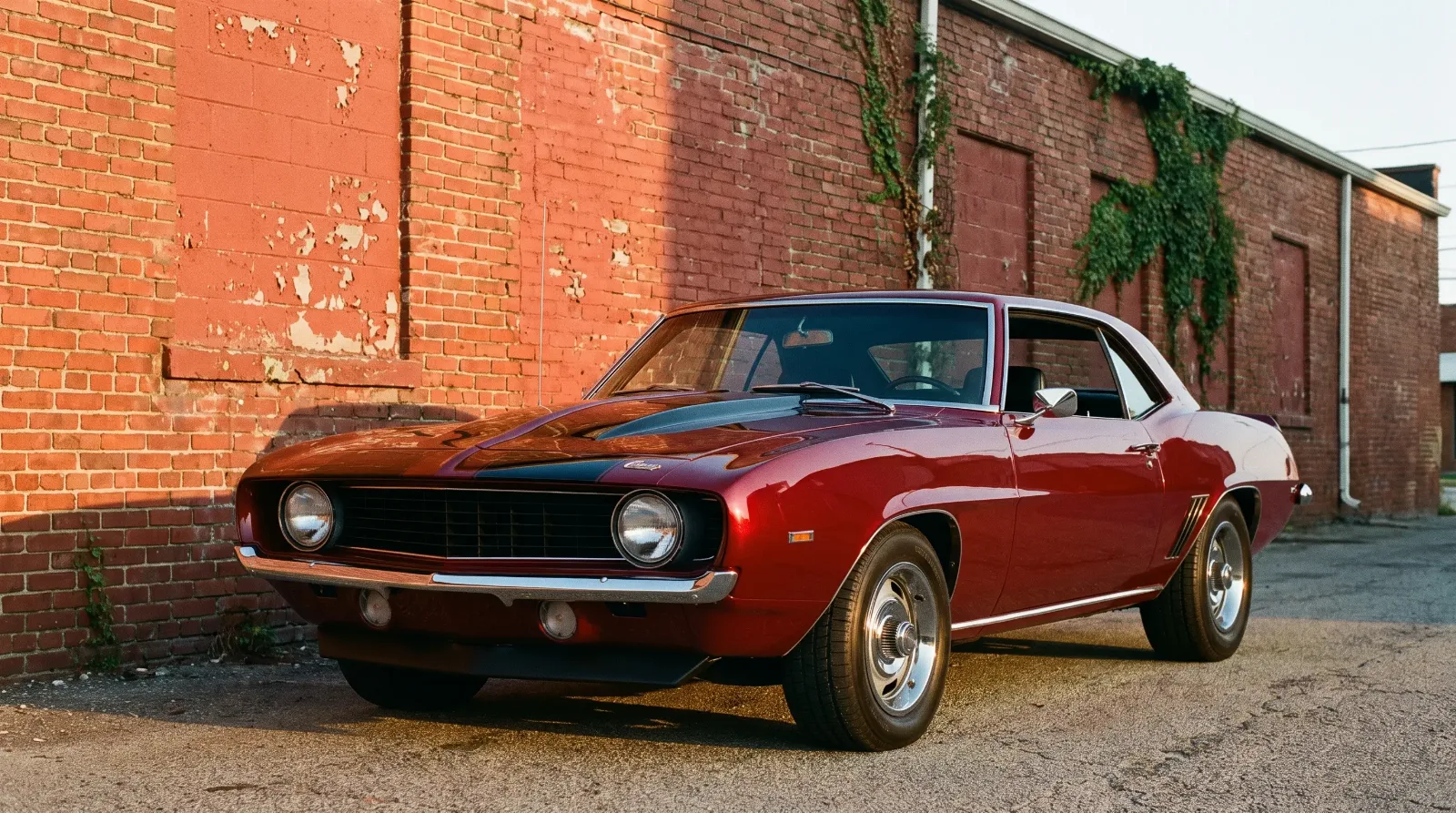
The 1968 and 1969 Trans-Am seasons cemented the Camaro's identity as a genuine racing car rather than a street machine that happened to compete. The Z/28, which had been a carefully coded option package in 1967, became one of the best-known performance designations in the American market by the end of 1969. Dealership demand for the street version tracked the racing success closely, demonstrating the direct commercial value of the Trans-Am programme to Chevrolet's product planners.
The broader context of the Camaro's racing heritage is covered in the Camaro motorsport history overview, which traces the car's competition story from its first season through the muscle car era. For the next chapter in the Camaro's track story, the rivalry between Camaro and Mustang extended well beyond the Trans-Am series. The full dimensions of that competition are detailed in the article covering Camaro versus Mustang on the SCCA track.
| Season | Key Team | Driver | Championship Result |
|---|---|---|---|
| 1967 | Various | Jerry Titus (Ford) | Ford takes manufacturer title |
| 1968 | Penske Racing | Mark Donohue | Chevrolet champion (10 of 13 wins) |
| 1969 | Penske Racing | Mark Donohue | Chevrolet champion (8 wins to Ford's 4) |
Sources and notes
Production figures, engine specifications, codes, and dates in this article are cross-referenced from established Camaro references, period documentation, and owner registries. Where sources differ, the most commonly cited value is used. Cost figures are indicative and vary by supplier, region, and condition.