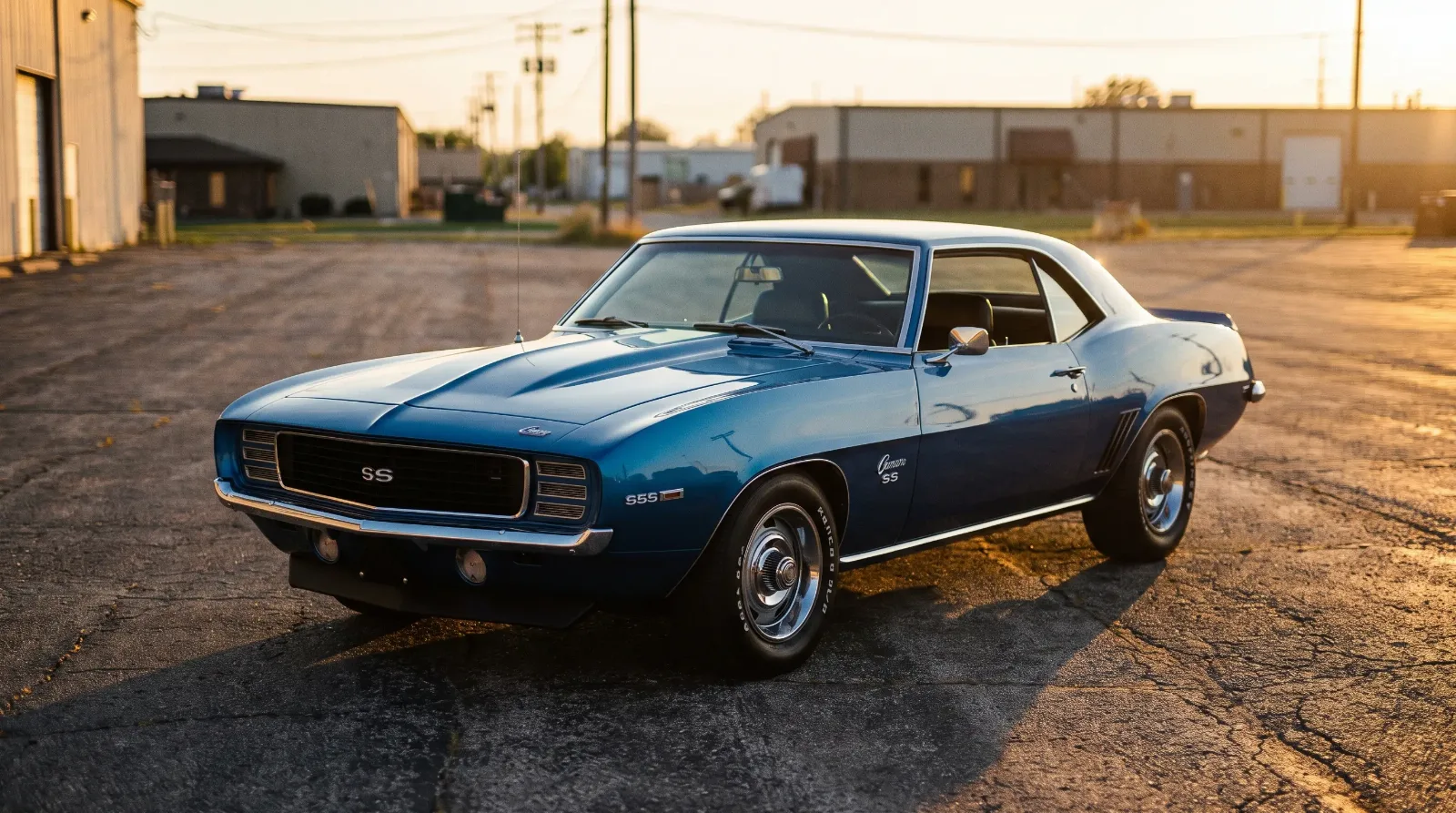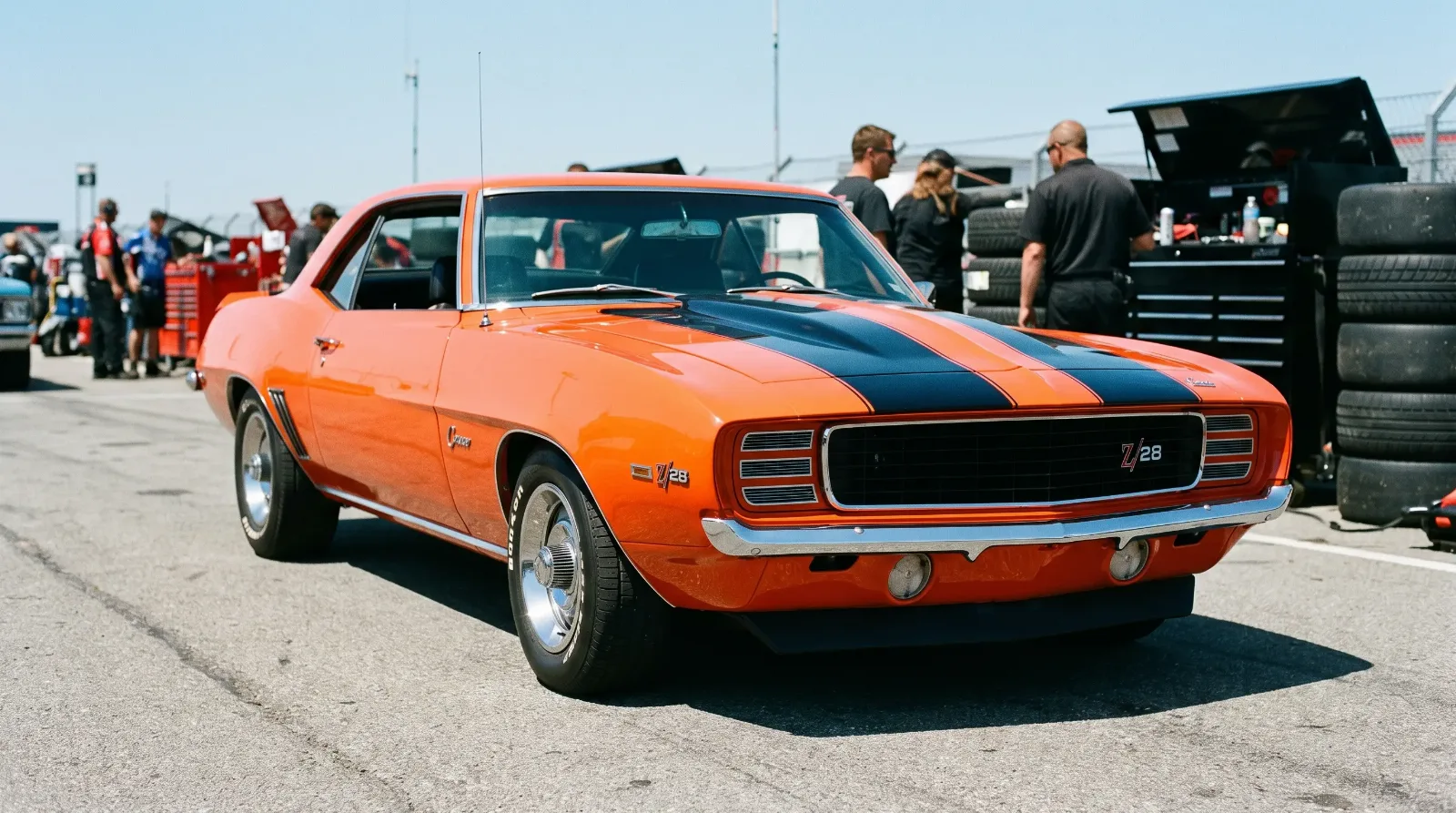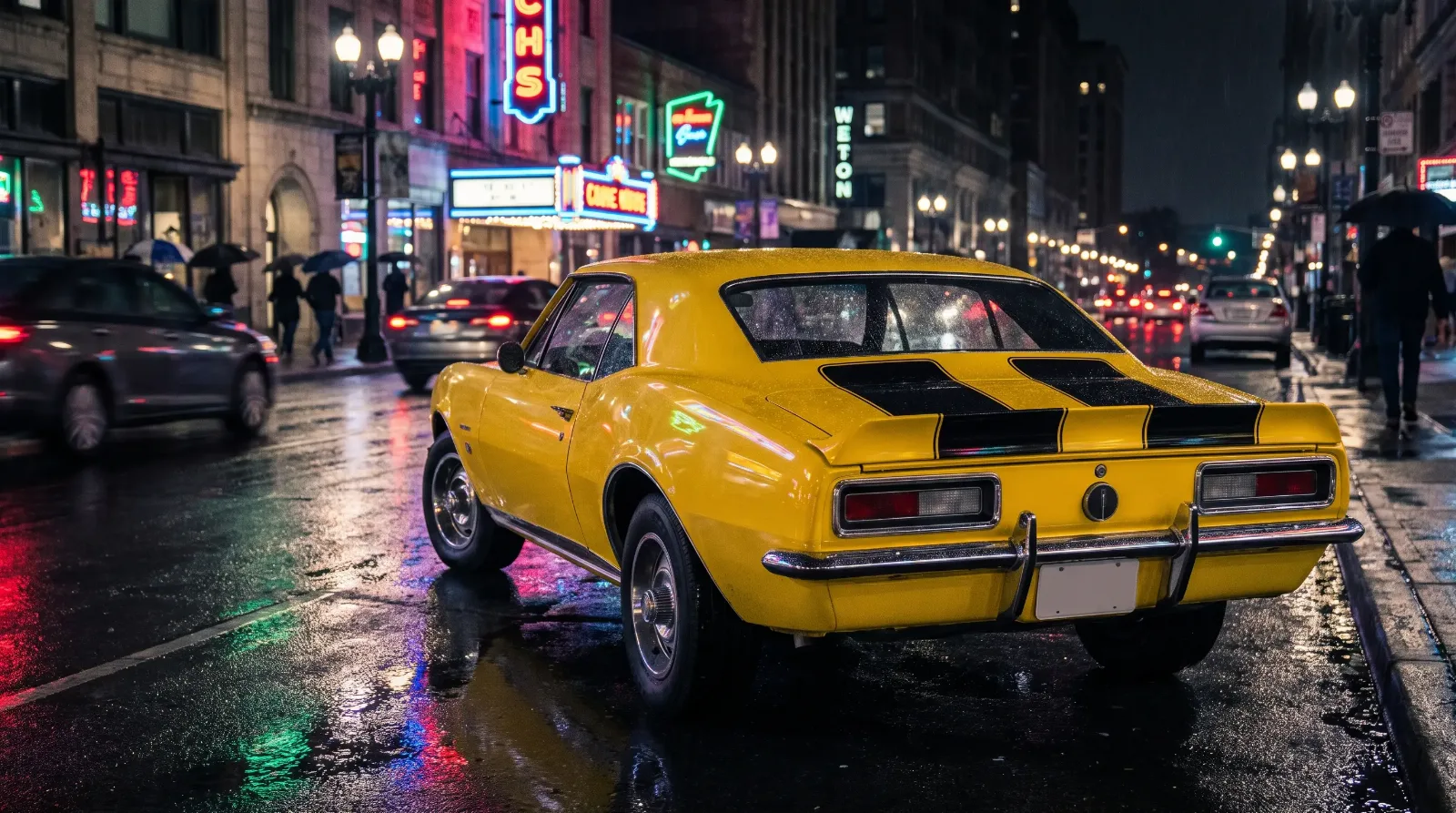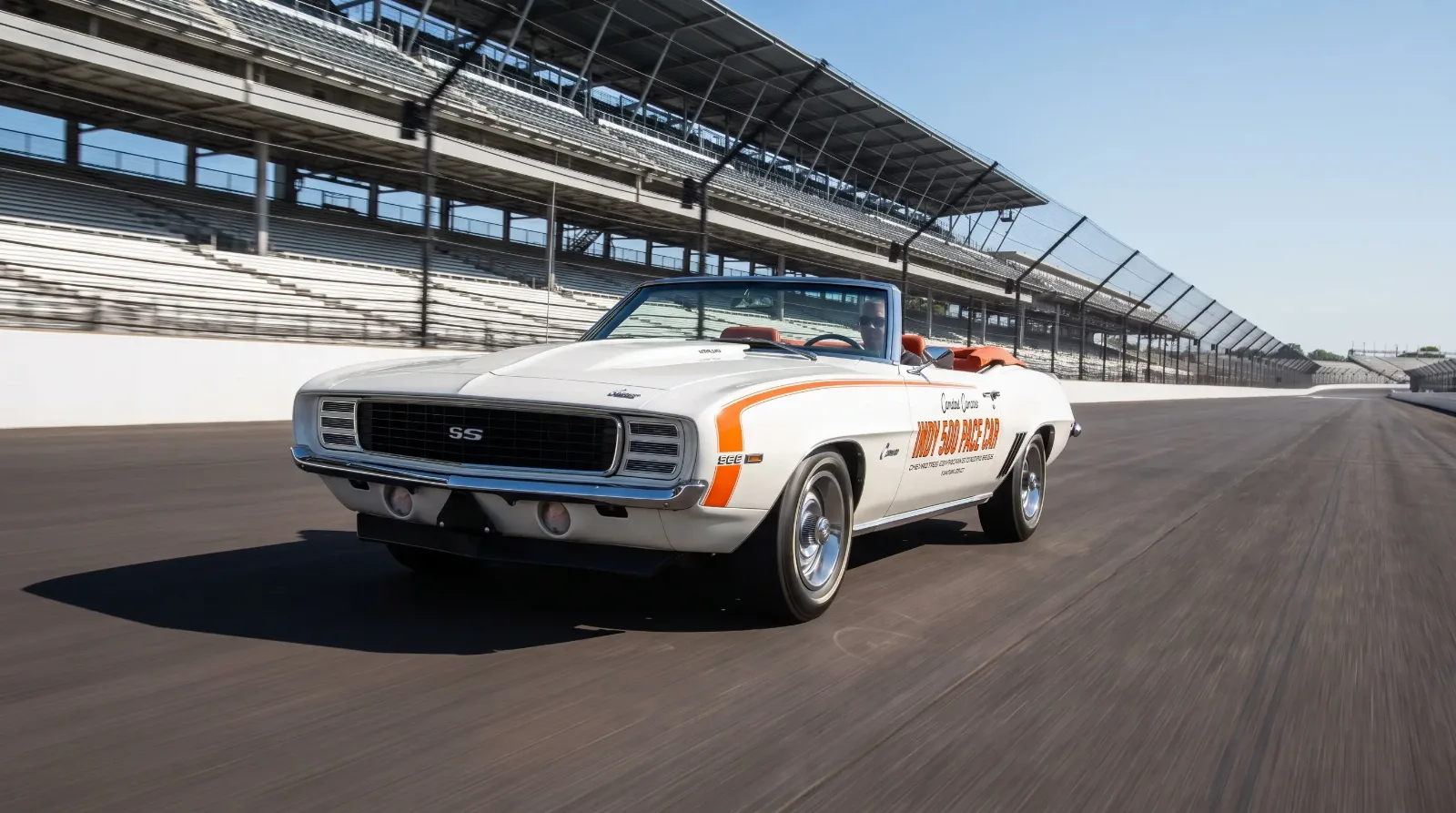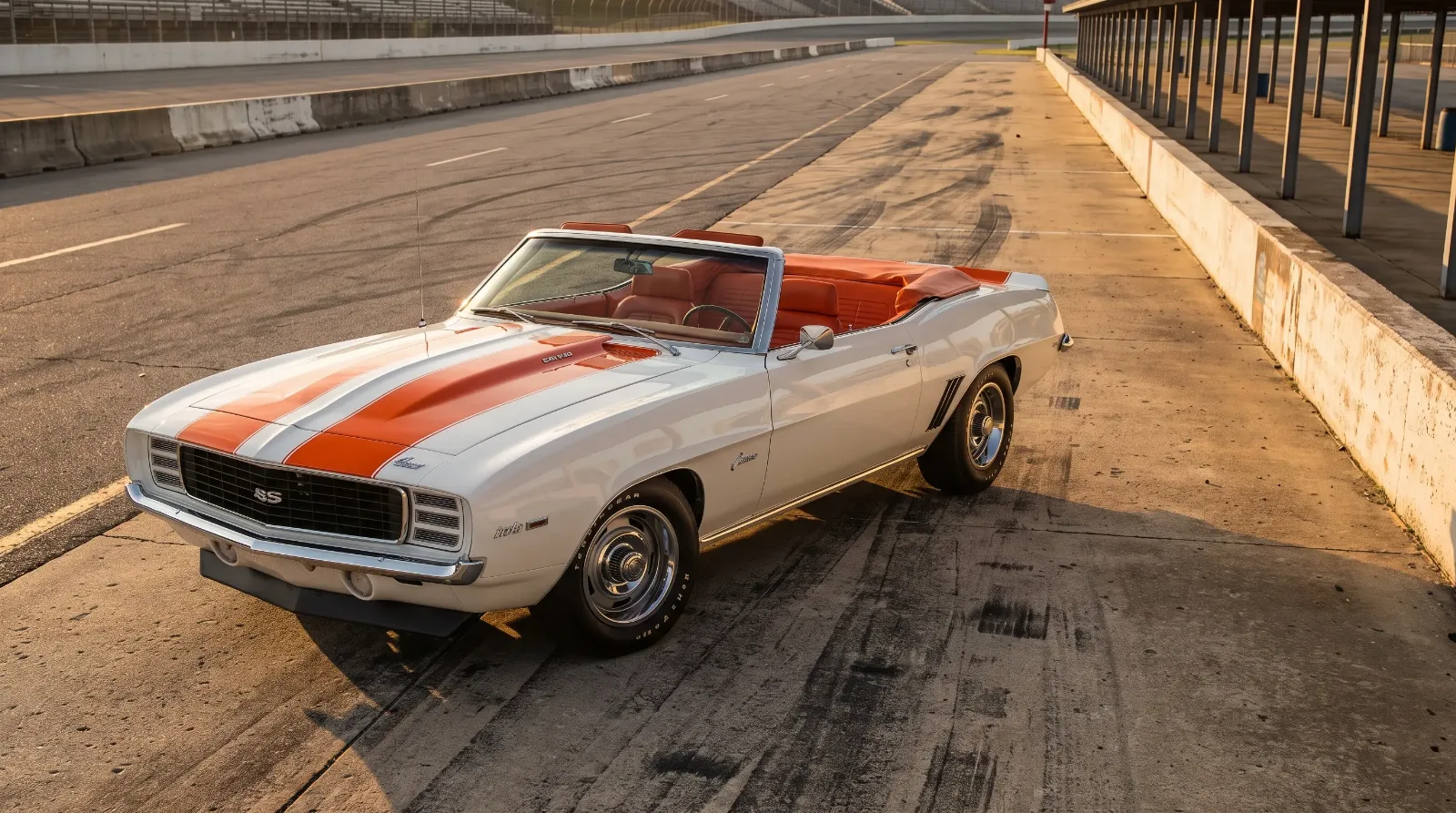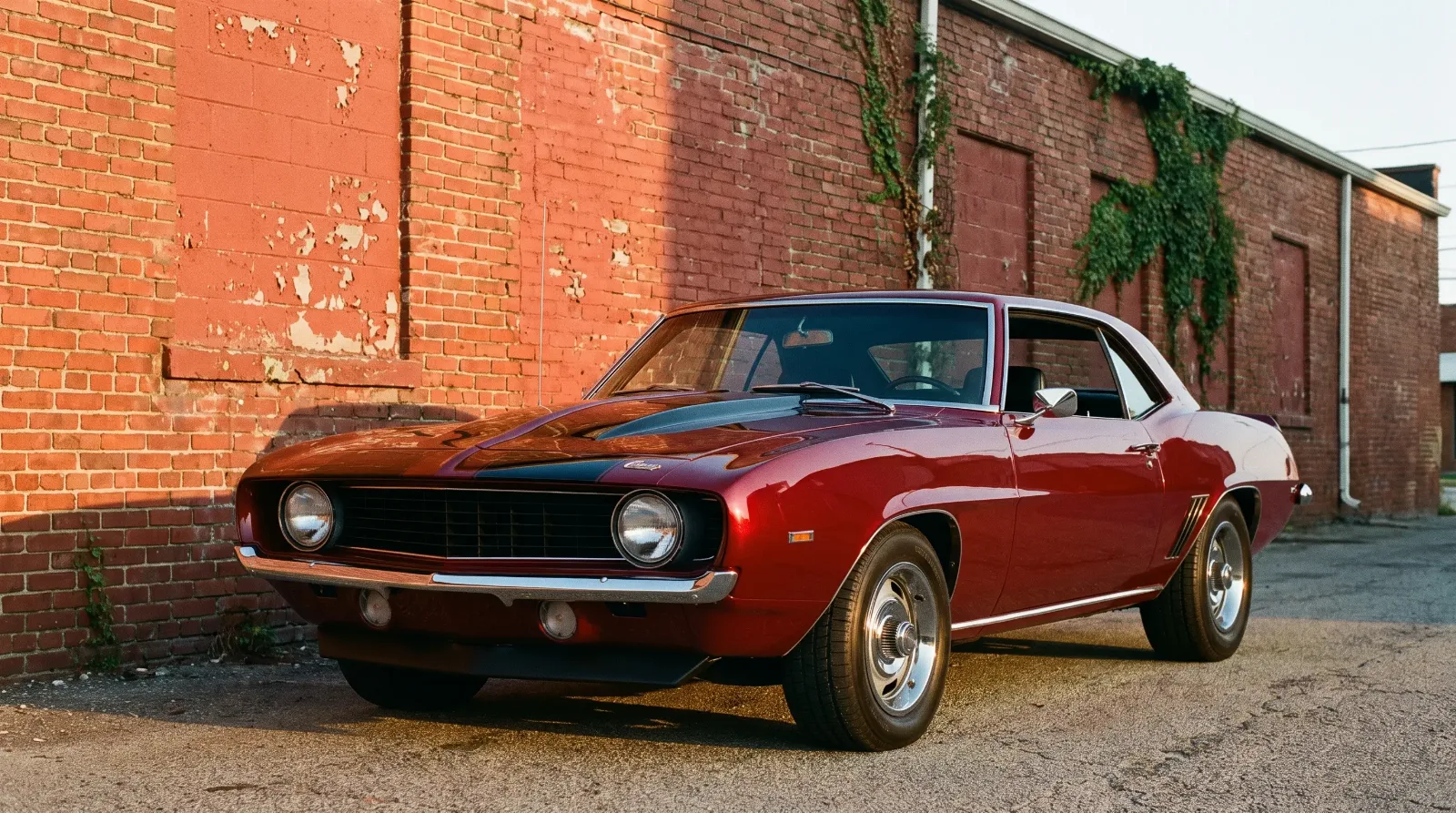

There is a version of the Camaro story that starts on a showroom floor in the fall of 1966, with a buyer choosing options from a window sticker. That story is real and worth telling. But there is another version that starts on a road course, with a stopwatch and a rulebook, and that one explains why the street car turned out the way it did. Racing did not just accompany the Camaro's early years. It built the car. If you want to understand what you are looking at when a Z/28 rolls past, you need to know the track first.
For the complete story, the racing chapter is not a sidelight. It is the engine room. The decisions made at the track in 1967 and 1968 rippled through every production choice Chevrolet engineers made for the next decade.
Why the Trans-Am series created the Z/28
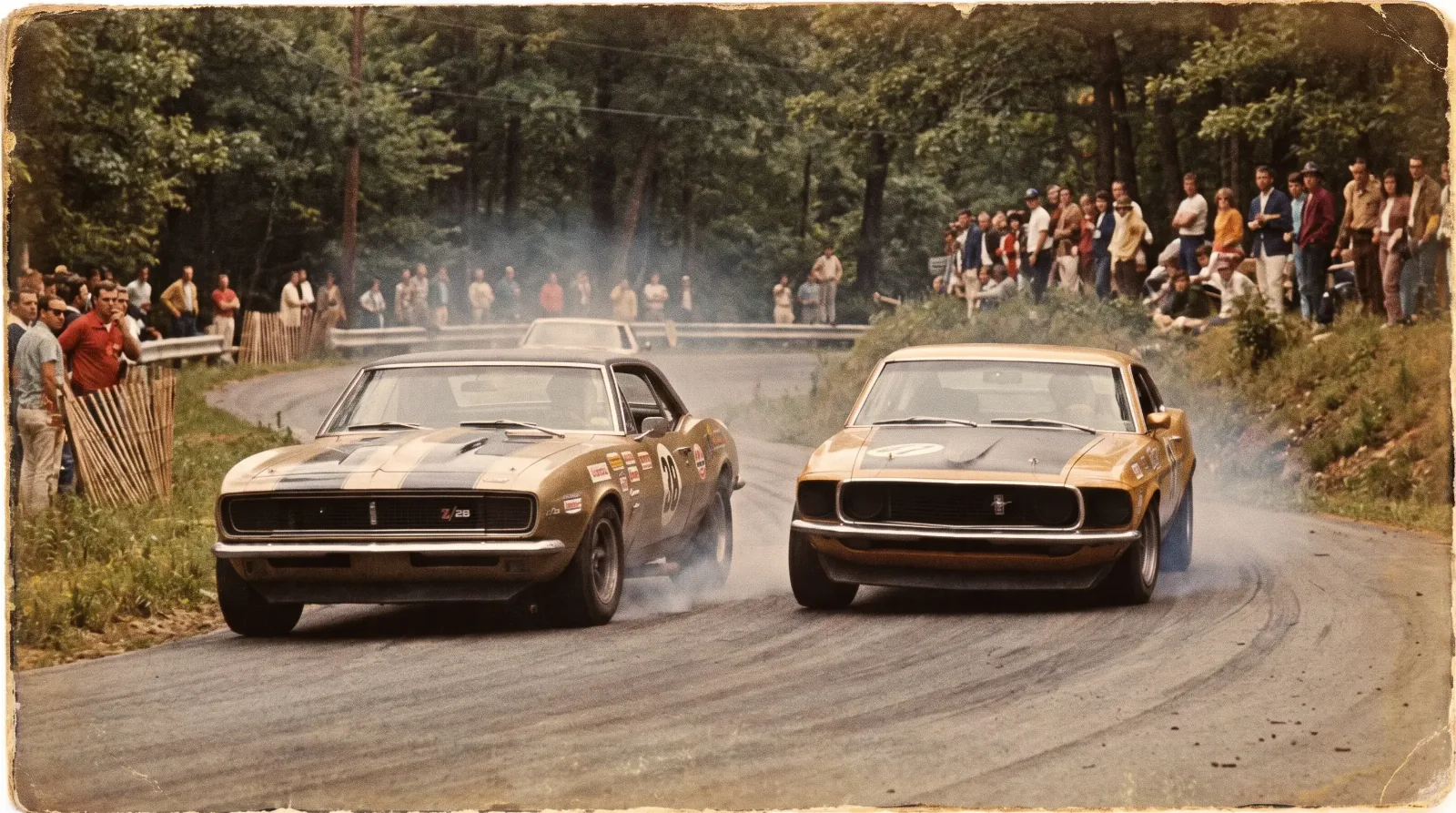
The Sports Car Club of America launched the Trans-American Sedan Championship in 1966, and the rules were specific in ways that mattered enormously. Engines had to displace no more than 305 cubic inches. Homologation required manufacturers to build a minimum number of street cars with the same configuration. Ford had the Mustang, well established and already racing. Chevrolet had a new pony car and a problem: nothing in the Camaro's engine lineup fit inside the 305-inch limit.
The solution came from Vince Piggins, a Chevrolet product promotion engineer who understood both racing rules and what the factory could actually build. His team took a 327 small-block block and fitted it with a 283 crankshaft, arriving at a 302.4 cubic inch displacement that sat comfortably under the cap. To feed it, they used a high-revving solid-lifter camshaft and a large Holley carburetor on an aluminum intake. The result made around 290 horsepower at the crank by factory rating, though the actual output was almost certainly higher.
The Z/28 option package went on sale for the 1967 model year at a price of around $358 over a base Camaro Sport Coupe. Chevrolet built approximately 602 of them that first year. The car came with front disc brakes, a close-ratio four-speed gearbox, and a pair of black racing stripes that announced its purpose clearly enough. These were homologation cars. They existed because the rulebook said they had to, and they were sold to the public because that was the condition.
The Penske and Donohue years
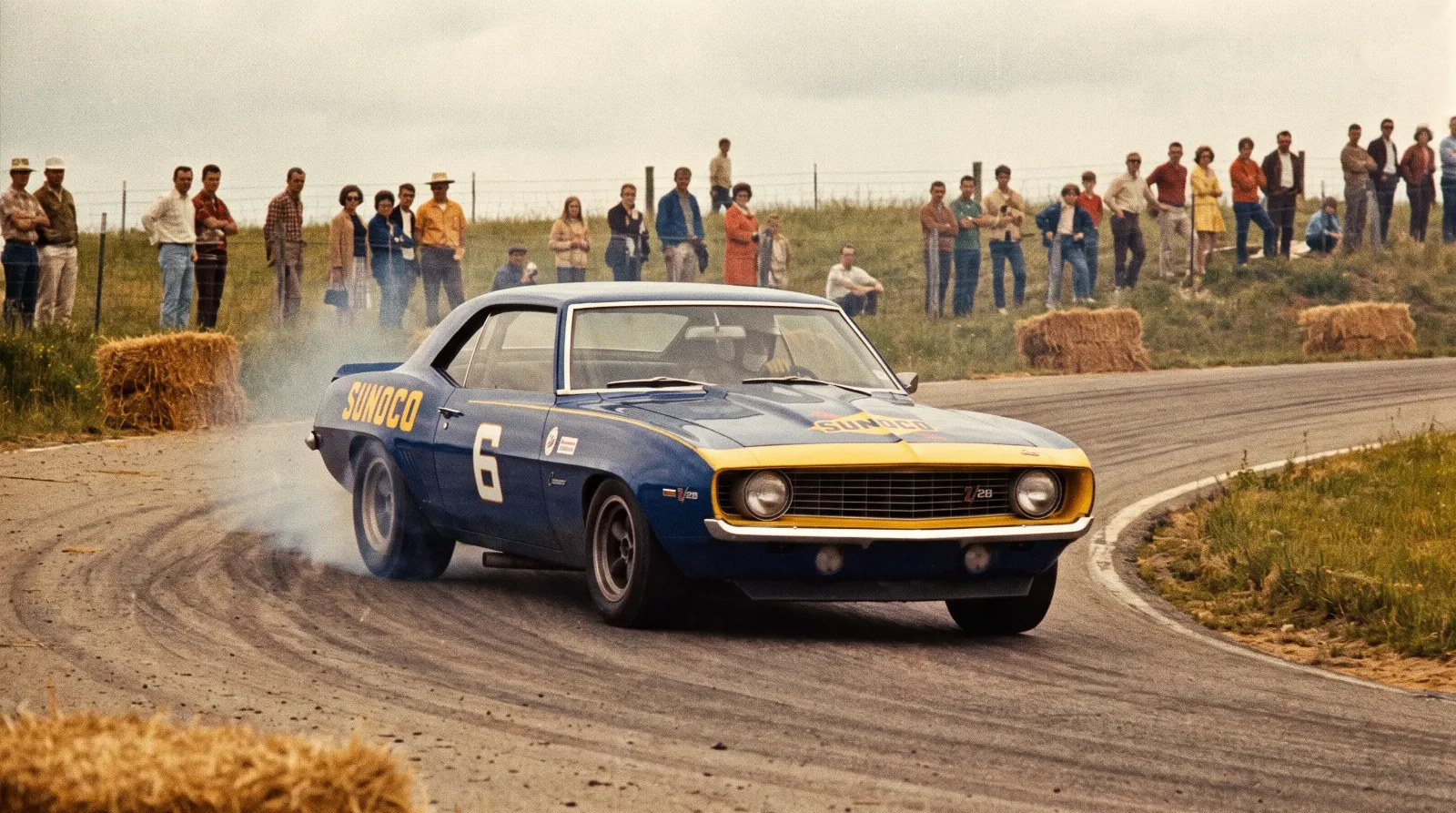
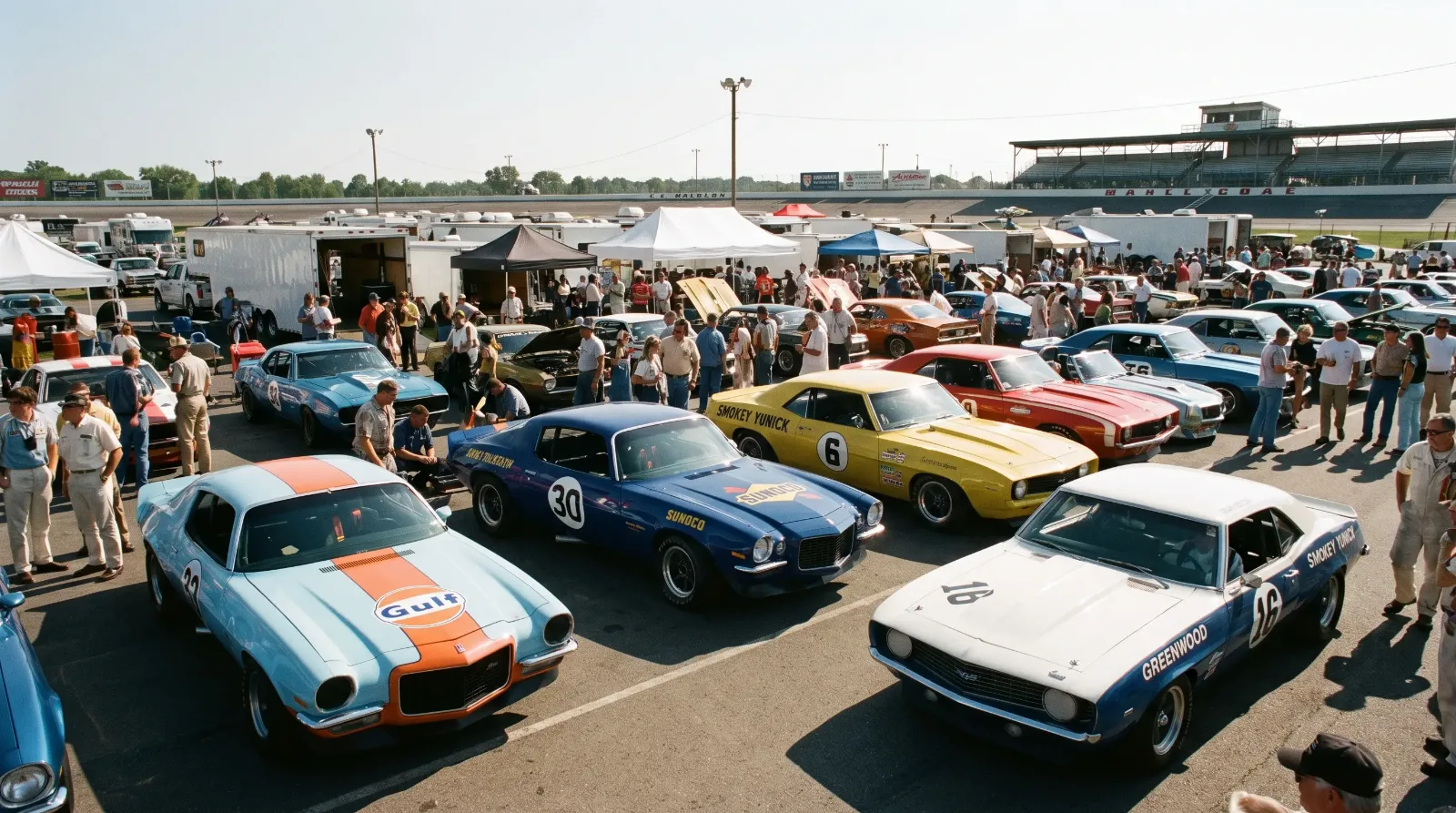
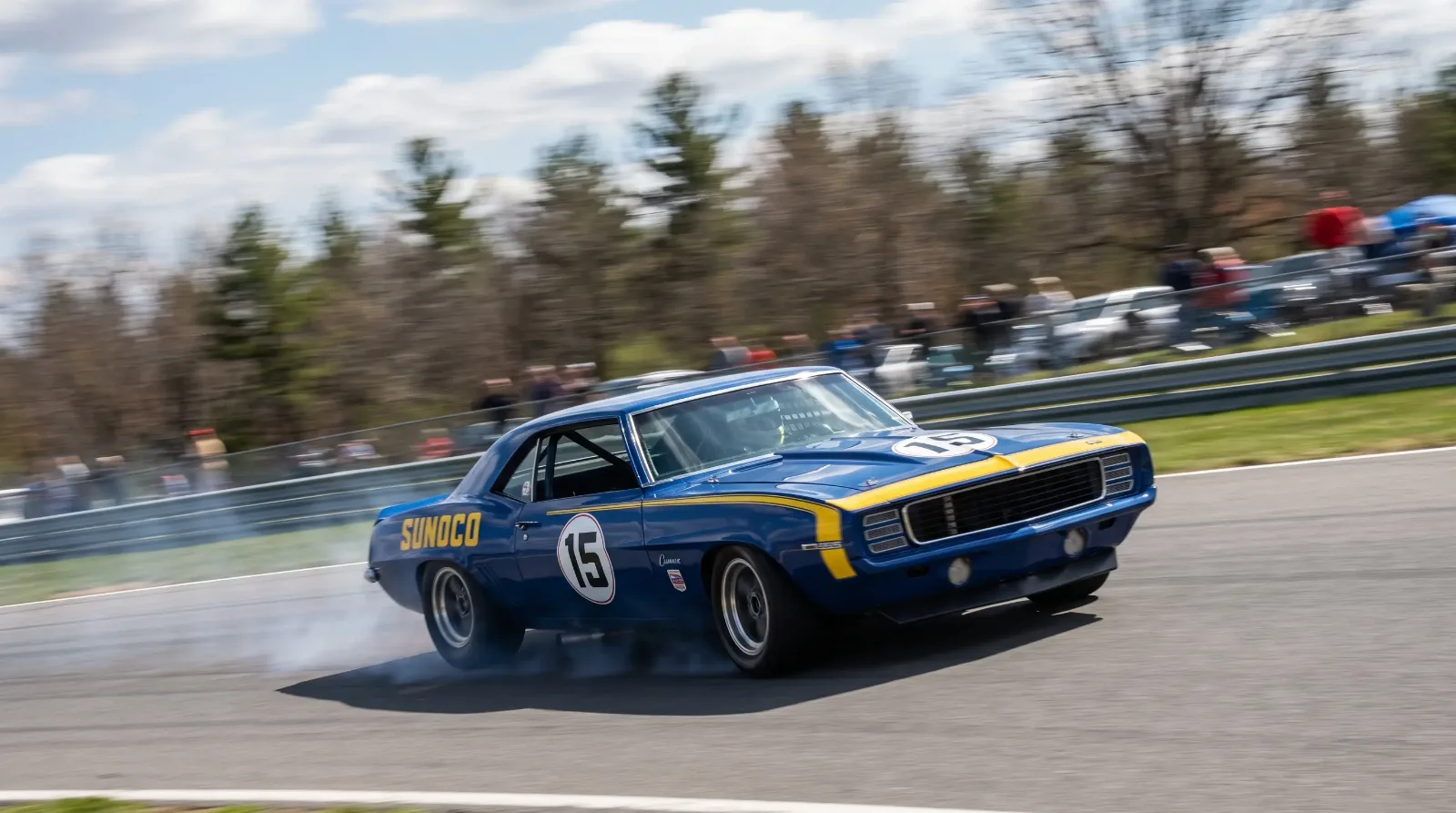
Roger Penske was already building a reputation in 1967 as a team owner who prepared cars more thoroughly than anyone else in the paddock. When Chevrolet wanted a serious Trans-Am campaign, Penske was the call. His driver was Mark Donohue, a Princeton-educated engineer who treated racing as a technical problem to be solved rather than a performance to be given.
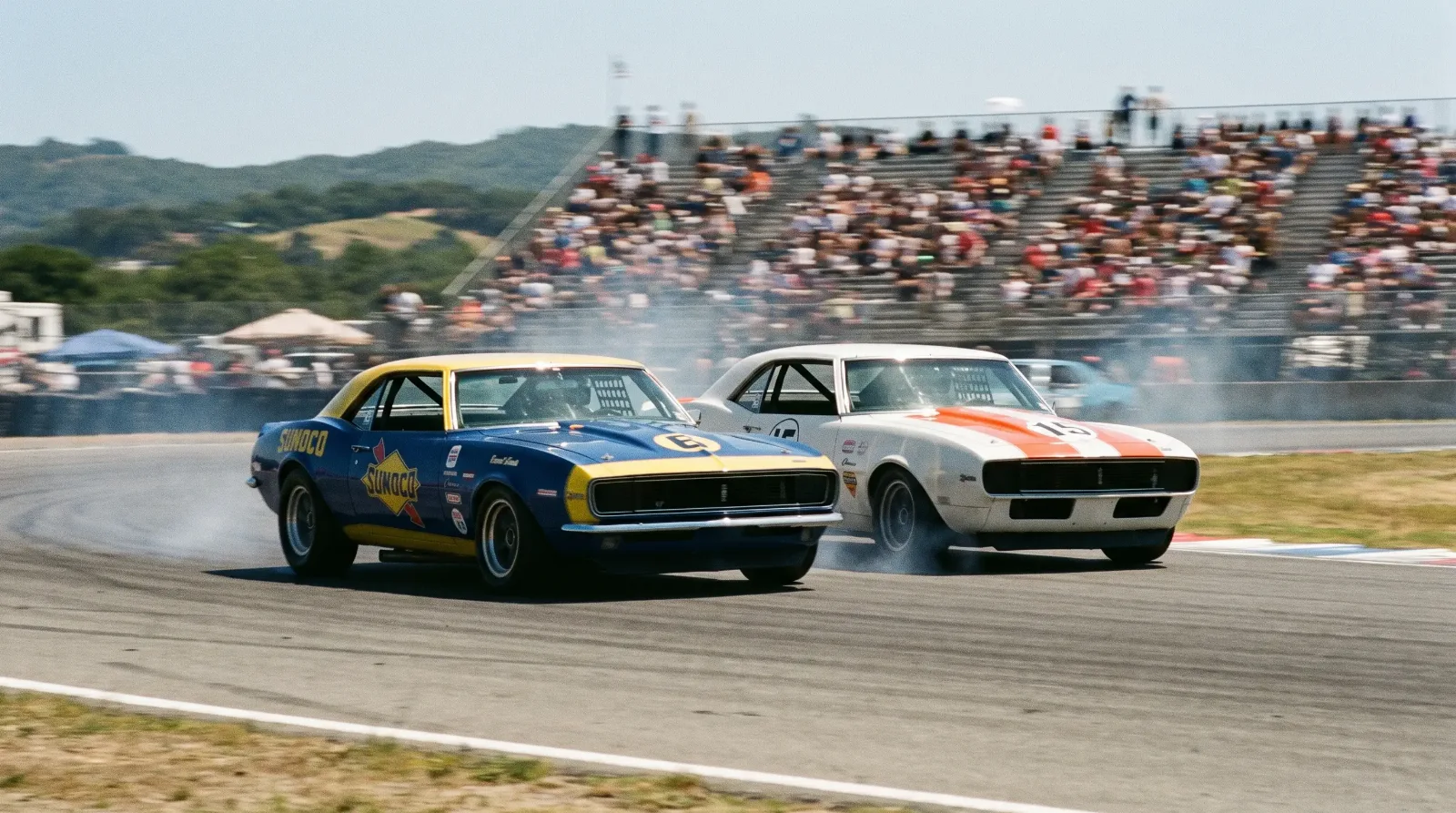
The Sunoco Camaros that Penske ran were something different from what competitors were fielding. Donohue worked directly on setup and development, logging data and correlating it with lap times in ways that were unusual for the era. The cars were prepared to a standard that showed on the results sheets. Donohue and the Sunoco team won the Trans-Am championship in 1968, and they backed it up in 1969. The Camaro's competition record in those two seasons was dominant enough that it reshaped how Chevrolet thought about what the car could do.
Donohue's feedback to the factory was not just about wins. He identified specific handling problems, specific weaknesses in the suspension geometry, specific places where the production car's compromises were costing lap time. Some of what he learned worked its way back into development decisions for the street car. That is how racing programs are supposed to work, and it rarely works as cleanly as it did with Penske and Chevrolet in those two seasons.
"What Penske and Donohue built with those Sunoco cars was not just a racing effort. It was a proof-of-concept that the Camaro could be a serious platform, and that proof mattered inside Chevrolet as much as it did on the scoreboard."
— Patrick Walsh
Racing configurations: what the track cars actually used
| Series / application | Engine | Displacement | Period |
|---|---|---|---|
| Trans-Am (homologation) | Small-block 302 (Z/28) | 302 cu in | 1967-1969 |
| Trans-Am (Penske/Donohue) | Modified 302, Traco-prepared | 302 cu in | 1968-1969 |
| NHRA drag racing (COPO 9561) | 427 L72 V8 | 427 cu in | 1969 |
| NHRA drag racing (ZL1) | 427 aluminum all-alloy V8 | 427 cu in | 1969 |
COPO, the ZL1 and drag racing
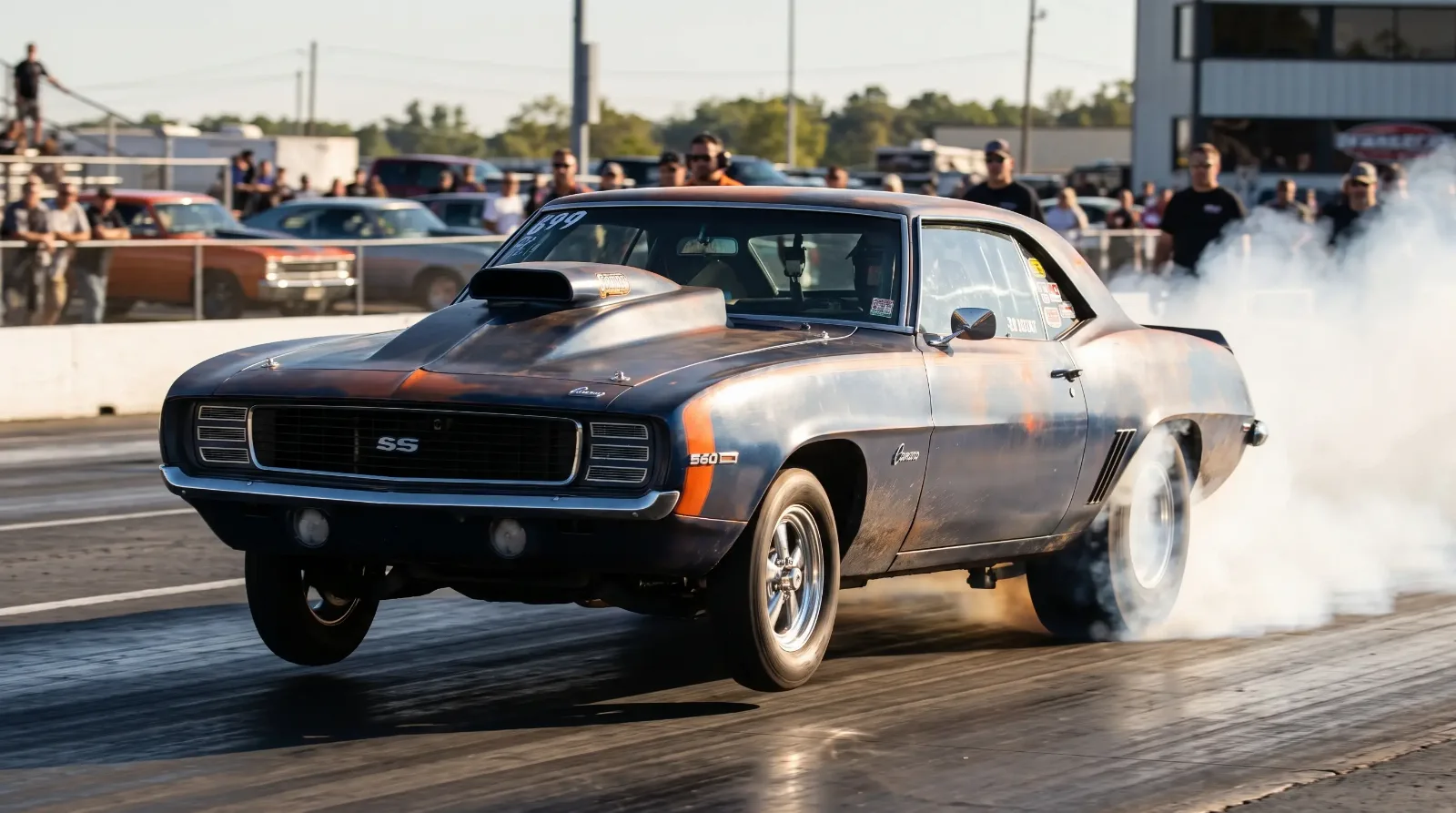
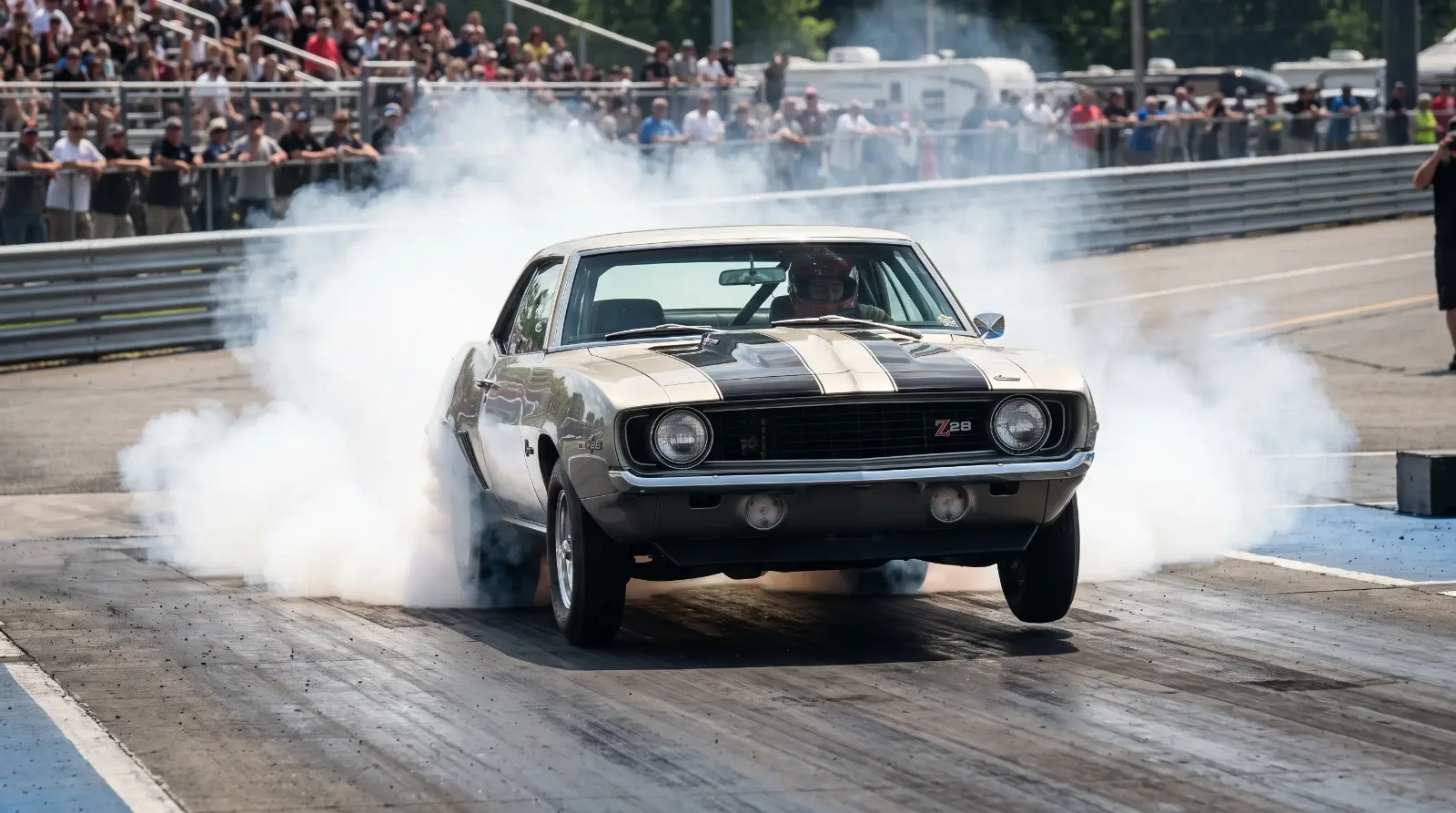
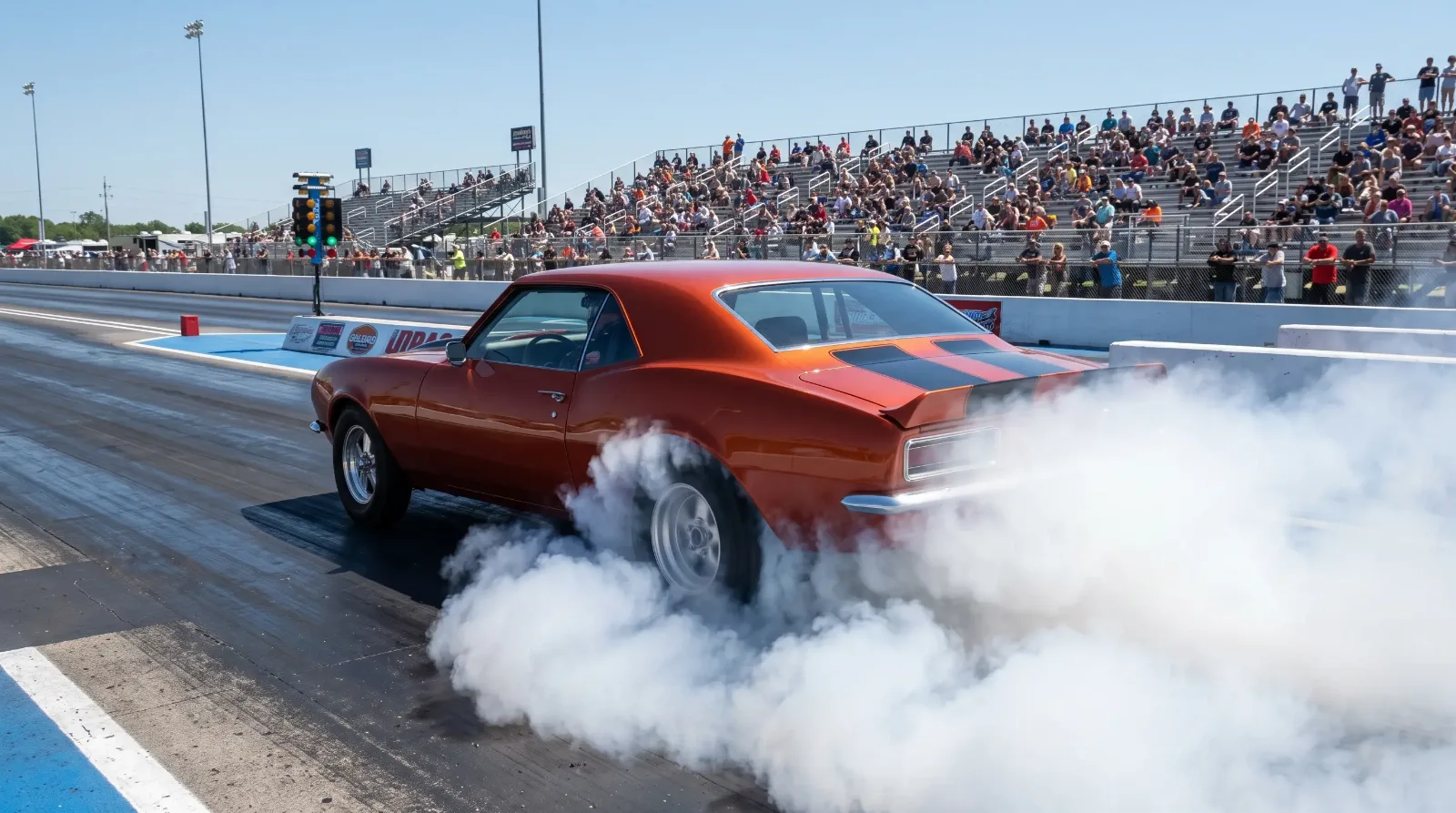
While the Trans-Am campaign was running on road courses, another part of the Camaro's racing history was playing out at the drag strip, and it used an entirely different workaround. General Motors had a corporate policy prohibiting its divisions from participating officially in drag racing or from selling cars with engines larger than 400 cubic inches in intermediate-sized vehicles. The Central Office Production Order, or COPO, system existed as an ordering mechanism for fleet and special vehicles. Some Chevrolet dealers discovered it could also be used to spec cars that the official option sheet would not allow.
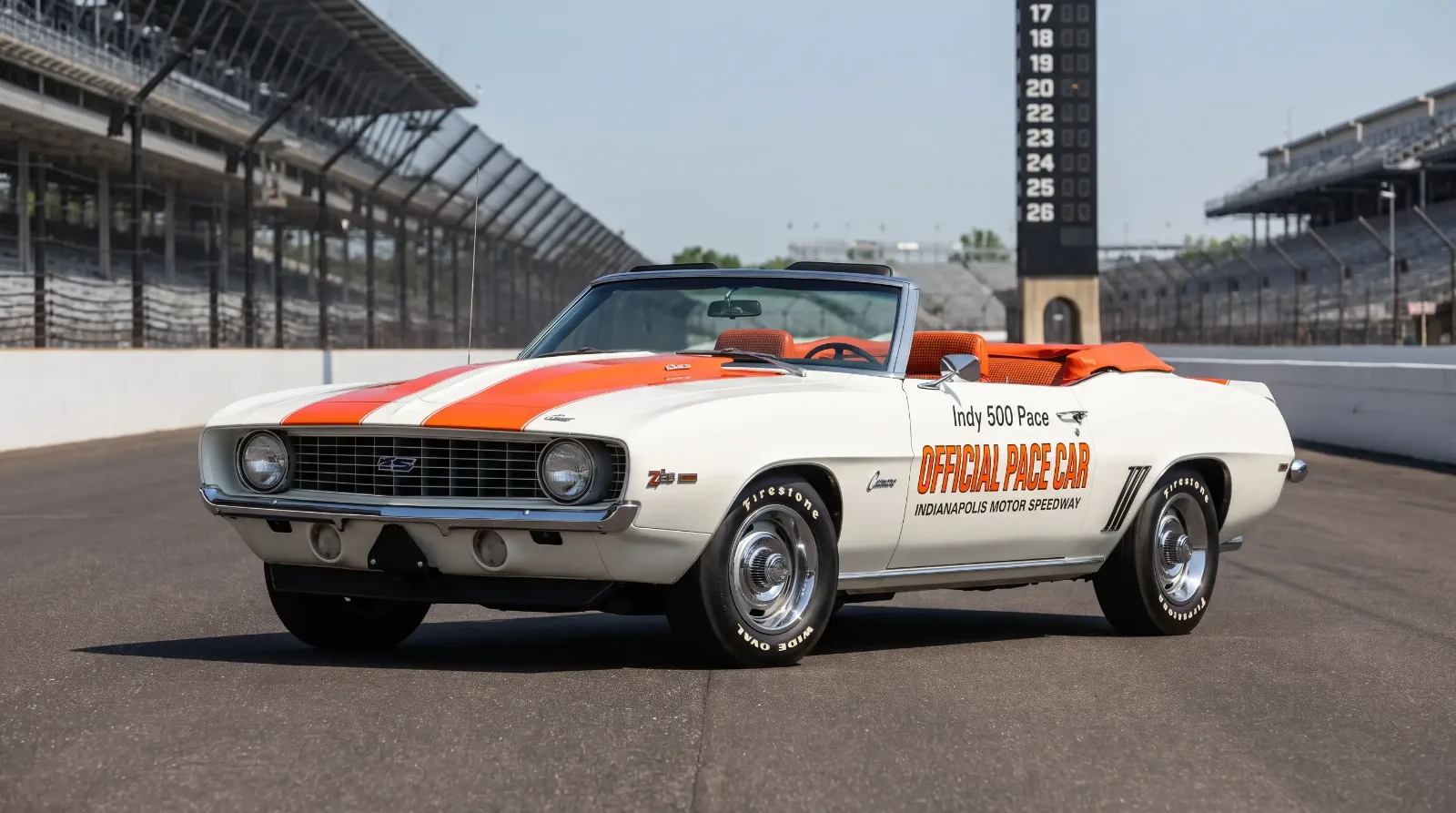
Don Yenko in Pennsylvania and Fred Gibb in Illinois were among the dealers who worked the COPO system to put big-block engines into 1969 Camaros. COPO 9561 brought the 427 cubic inch L72 V8, rated at 425 horsepower, into the Camaro body. Approximately 1,015 of these were built. They were heavy, they were fast in a straight line, and they were not subtle about either quality.
The ZL1 took it further. This version used a 427 with an all-aluminum block and heads, developed originally for Can-Am racing. The weight savings over the iron L72 were substantial, around 100 pounds by most estimates. The factory rating was 430 horsepower, a number that everyone involved understood was not accurate in any meaningful sense. Approximately 69 ZL1 Camaros were built in 1969, most of them ordered by Fred Gibb's dealership. The price was steep, over $7,200 for a base Camaro when optioned with the ZL1 package, which meant many sat on dealer lots before being retailed at discounts.
How racing shaped the street cars
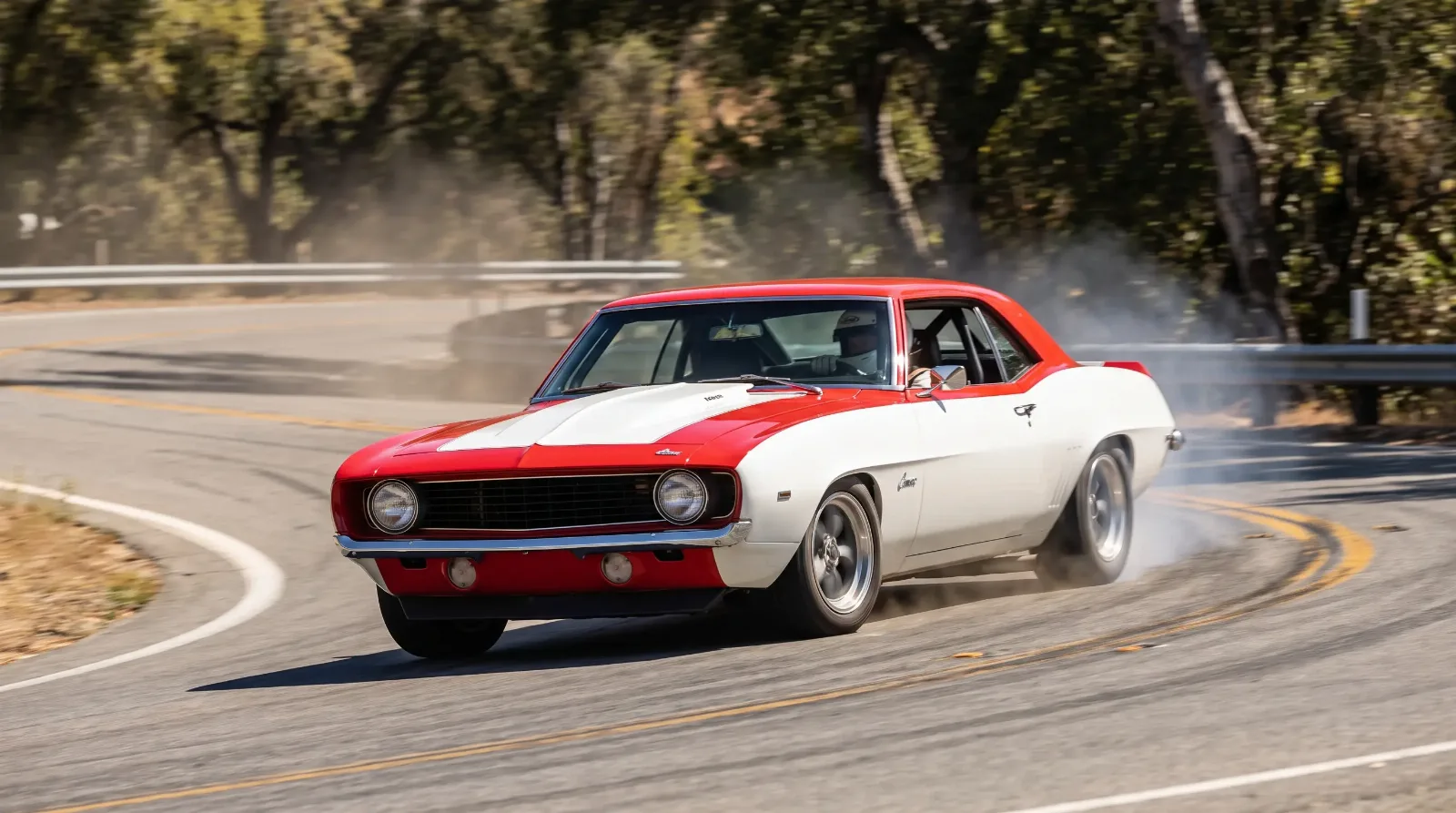
The connection between the track program and what Chevrolet sold in showrooms was not incidental. The Z/28's solid-lifter 302 was a direct product of the homologation requirement. The front disc brakes that came with it were there because the car needed to stop on a road course, not because Chevrolet thought every Camaro buyer needed them. The heavy-duty suspension components, the quick-ratio steering, the close-ratio gearbox options: all of these traced back to what the racing program demanded.
By the 1969 model year, the Z/28 had found a buyer base that went beyond pure track use. Chevrolet built 20,302 of them that year, up from the 7,199 built in 1968. The car had developed a reputation that the street buyers wanted to be associated with. If you were buying a performance Camaro in 1969, the Z/28 was the answer to a specific question: what does Chevrolet race?
The relationship between the road course car and the street car continued into the second generation. The 1970 LT-1 small-block carried forward the high-winding character of the 302, adapted to new emissions realities. The Z/28 nameplate survived and carried racing credibility even as the engine specifications changed around it. That credibility was not invented by marketing. It came from lap times.
Buyers looking at Trans-Am bred Z/28s for sale today are not just buying a fast old car. They are buying a car whose existence was justified by a racing rulebook, whose specifications were shaped by competitive need, and whose reputation was built by men like Donohue who actually went out and proved the thing could win.
The legacy: what the racing record means now
The Camaro's Trans-Am years occupy a specific and defensible place in American racing history. This was not a factory effort in the sense of unlimited budget and official backing. It was a partnership between a manufacturer, a team owner, and a driver who happened to be exactly right for each other at exactly the right moment. The rules created the Z/28. The Z/28 gave Penske and Donohue a platform. The championships gave Chevrolet a story. And the story sold cars.
That loop, from track to street and back, is what makes the early Camaro interesting as more than a muscle car. Plenty of performance cars from that era were fast. Fewer of them were fast because someone at a racetrack figured out exactly what the car needed and then went back to the factory and asked for it. The Z/28's 302 was not the most powerful engine Chevrolet offered. It was the right engine for what the car was supposed to do, and that distinction matters.
For collectors and enthusiasts, understanding the racing backstory changes how you look at these cars. A numbers-matching 1968 Z/28 is not just a collector piece. It is a homologation artifact, a car that existed because a rulebook required it and because someone decided to do the job properly. The same is true of the COPO cars: they were created by people who understood the system well enough to use it, and they produced a result that the factory's own product planners would not have approved through normal channels.
The articles that matter most in the Camaro's early history are not the ones about styling decisions or sales charts. They are the ones about the 1968 Trans-Am season, about Donohue's setup notes, about the night someone at a dealership figured out that COPO 9560 was possible. That is where the car's character was decided. For a deeper look at how these homologation cars fit into the broader performance story, read about the Z/28 homologation cars and what made them different from everything else Chevrolet built that decade.
Sources and notes
Production figures, engine specifications, codes, and dates in this article are cross-referenced from established Camaro references, period documentation, and owner registries. Where sources differ, the most commonly cited value is used. Cost figures are indicative and vary by supplier, region, and condition.