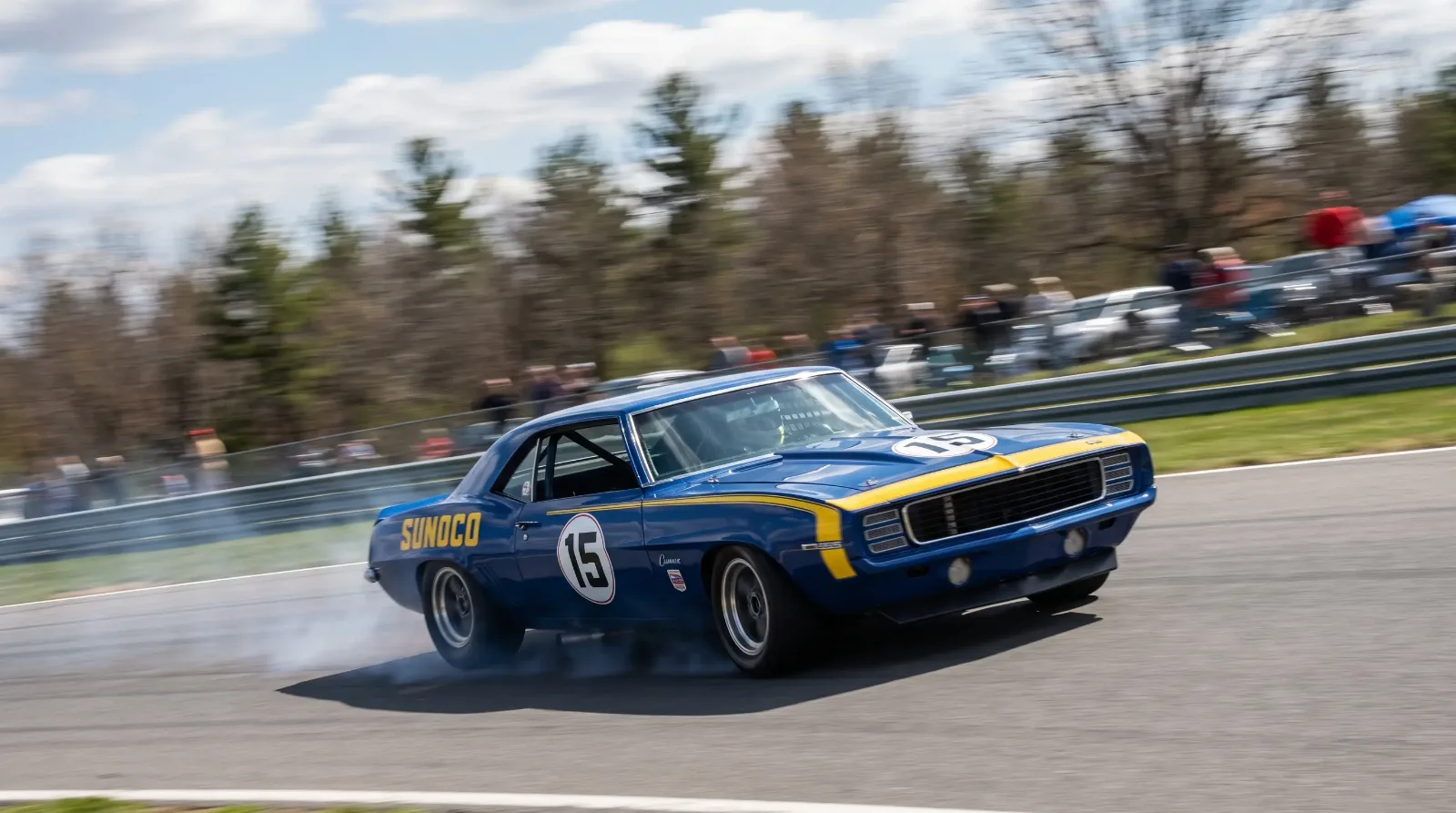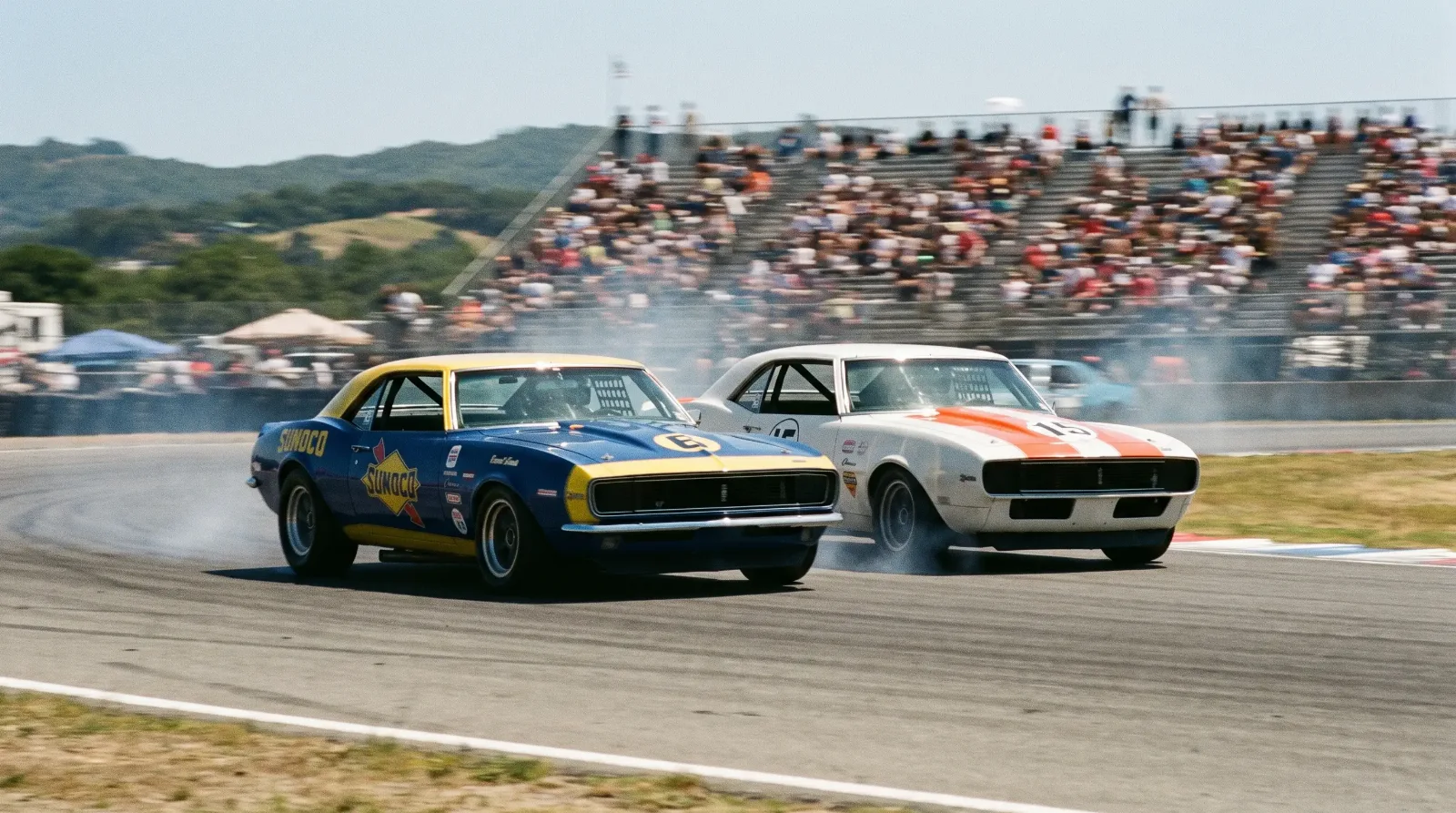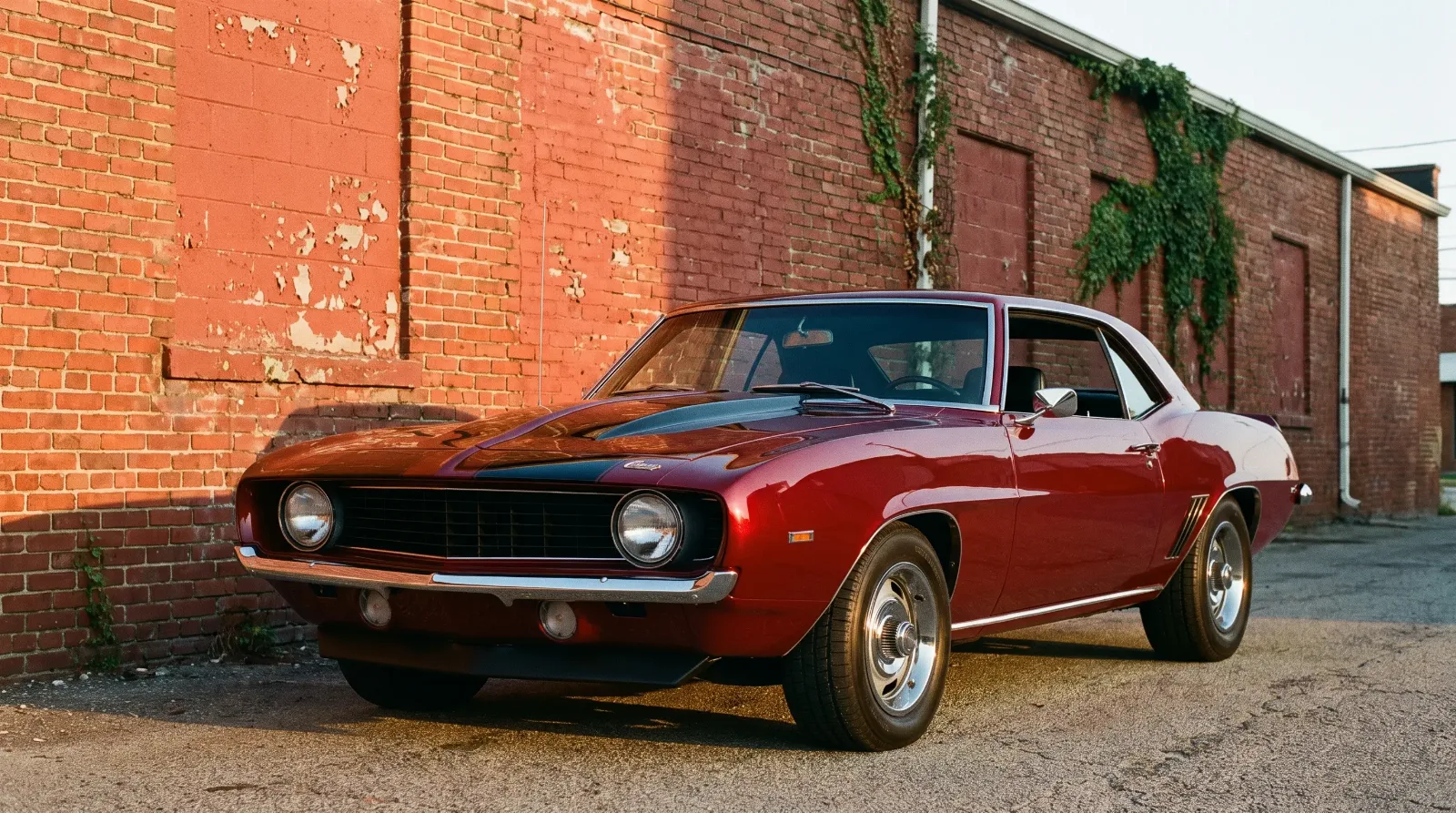
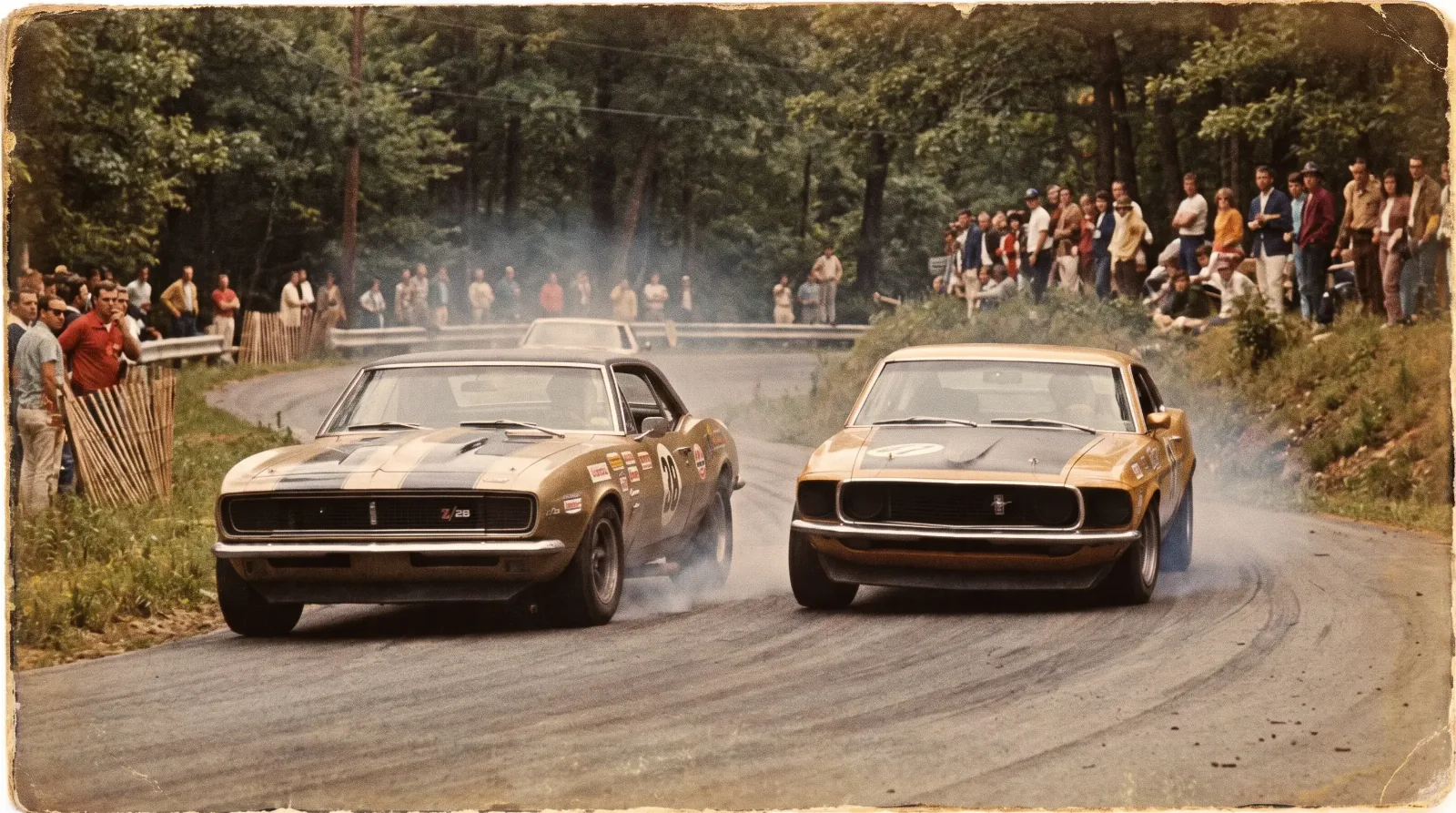
No rivalry in American motorsport history was built on quite the same foundation as Camaro versus Mustang in the SCCA Trans-Am series. Both cars were pony cars, both were sold through massive dealer networks to a mass-market audience, and both had manufacturers willing to pour engineering resources into competition success because the connection between race results and showroom traffic was measurable and direct. The Trans-Am series, running from 1966 through the early 1970s, provided the arena where this rivalry played out most intensely.
The rules of the game were tight. Displacement limits, production requirements, and a silhouette formula that kept the cars looking recognisably like what buyers could walk into a dealership and purchase: these constraints meant the Camaro versus Mustang battle on track was always close. Neither side could simply outspend the other into a dominant technical advantage. Every point of performance had to be fought for through preparation, driver quality, and engineering ingenuity.
How each car approached the challenge differently
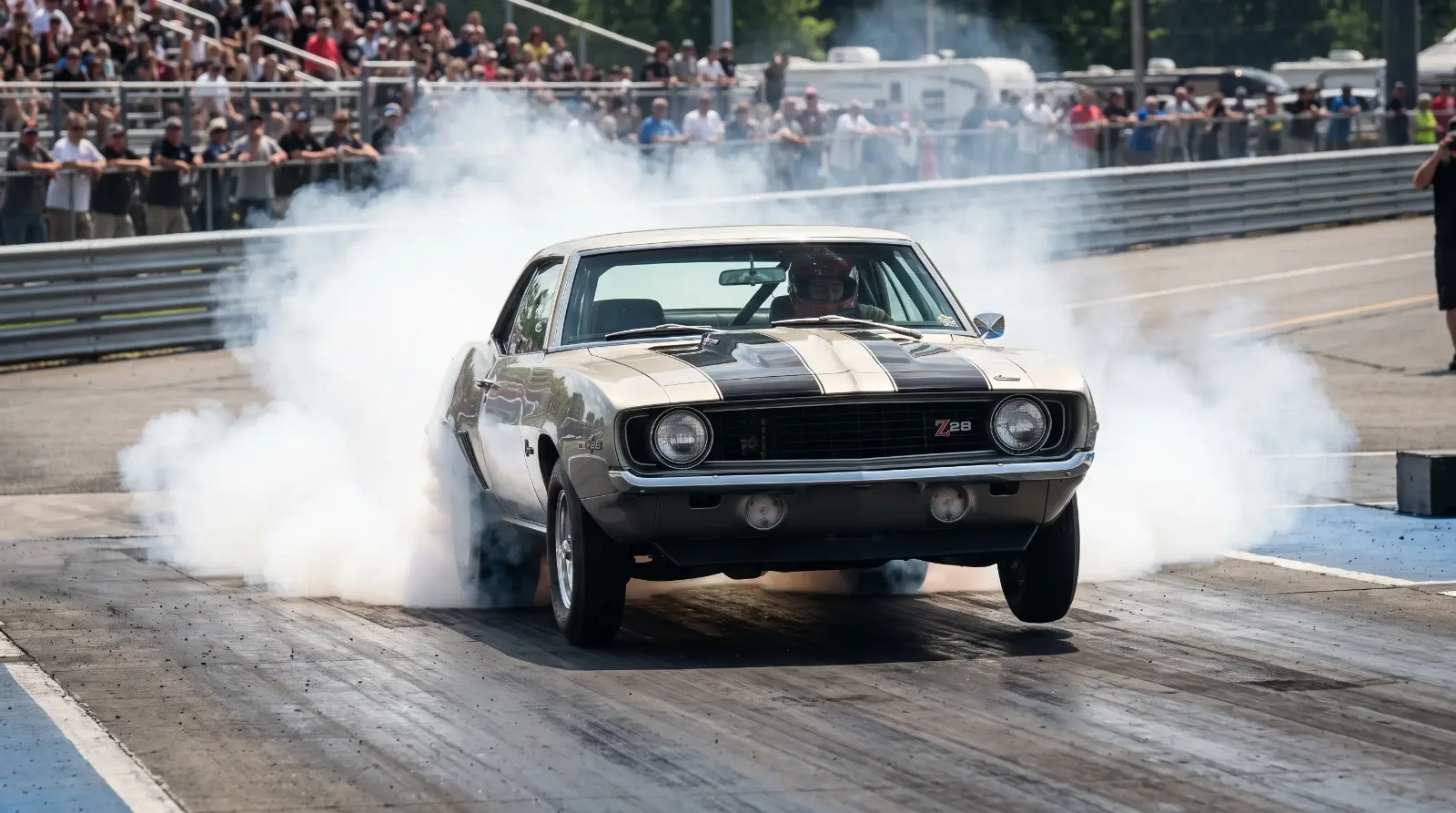
The Camaro's answer to the Trans-Am challenge was the Z/28, built around a bespoke 302-cubic-inch engine that mated components from different Chevrolet engine families. Its front-heavy weight distribution was a handling challenge that teams addressed through suspension geometry work, and the car's wider track gave it a stability advantage in fast corners that drivers learned to exploit. The engine's character was high-revving and responsive, rewarding a driving style that kept it on the boil through a lap.
Ford's response evolved across the series. The early Mustang Trans-Am cars used modified versions of existing engines before Ford introduced the Boss 302 for the 1969 season, a purpose-developed road racing powerplant that represented Ford's most serious technical commitment to the series. The Boss 302's breathing characteristics were exceptional for the class, and it allowed the Mustang teams to close a performance gap that had opened during 1968.
The teams and the talent
The driver and team quality on both sides was exceptional. The Penske-Donohue Camaro operation set a standard for preparation and execution that was widely acknowledged even by rivals. On the Mustang side, the Shelby American organisation and later the Bud Moore Engineering team brought their own levels of professionalism. Bud Moore's operation in particular, fielding Boss 302 Mustangs for Parnelli Jones (car #15) and George Follmer (car #16) across the 1969 and 1970 seasons, was capable of matching Penske on any given weekend; Jones and Moore's team went on to take the 1970 Trans-Am championship for Ford.
Individual race battles between the top Camaro and Mustang runners were often decided by seconds rather than minutes. Pit stop strategy, tire choice, and the specific character of each circuit all contributed to outcomes. The short, technical circuits where braking and cornering mattered most tended to suit the Z/28's setup, while faster circuits with longer straights sometimes favoured whichever team had found the most top-end engine performance, though in practice race outcomes turned on the full combination of car, driver, and preparation rather than circuit type alone.
"When you watched a Camaro and a Mustang come through the same corner ten seconds apart on lap one and three seconds apart on lap thirty, you understood what Trans-Am actually was. It was not about raw speed. It was about who had prepared harder and who refused to give ground."
— Patrick Walsh
What the rules created
The SCCA's production-based formula created something unusual in motorsport: a direct feedback loop between racing development and road car improvement. Engineering solutions found on track found their way into street cars. Brake improvements, suspension geometry changes, and engine breathing discoveries that worked at racing speeds were often carried across into production updates. Buyers of the street Z/28 and Boss 302 Mustang were, in a genuine sense, purchasing cars that had been made better by competition.
This feedback loop was understood and valued by both manufacturers. The investment in Trans-Am was not simply marketing expenditure, though it produced enormous marketing benefit. It was also genuine engineering investment that produced measurable improvements in the production vehicles, a dual return that justified the budget in ways that advertising alone could not.
The end of the first era
By 1970 and 1971, the nature of factory involvement in Trans-Am began to shift. Insurance cost increases, emissions regulations on the horizon, and changing priorities within both Ford and General Motors led to a reduction in the direct factory support that had sustained the high-intensity competition of 1968 and 1969. The series continued, and Camaros continued to race, but the specific combination of full factory backing, homologated street cars, and intense manufacturer rivalry that defined the peak years was not replicated.
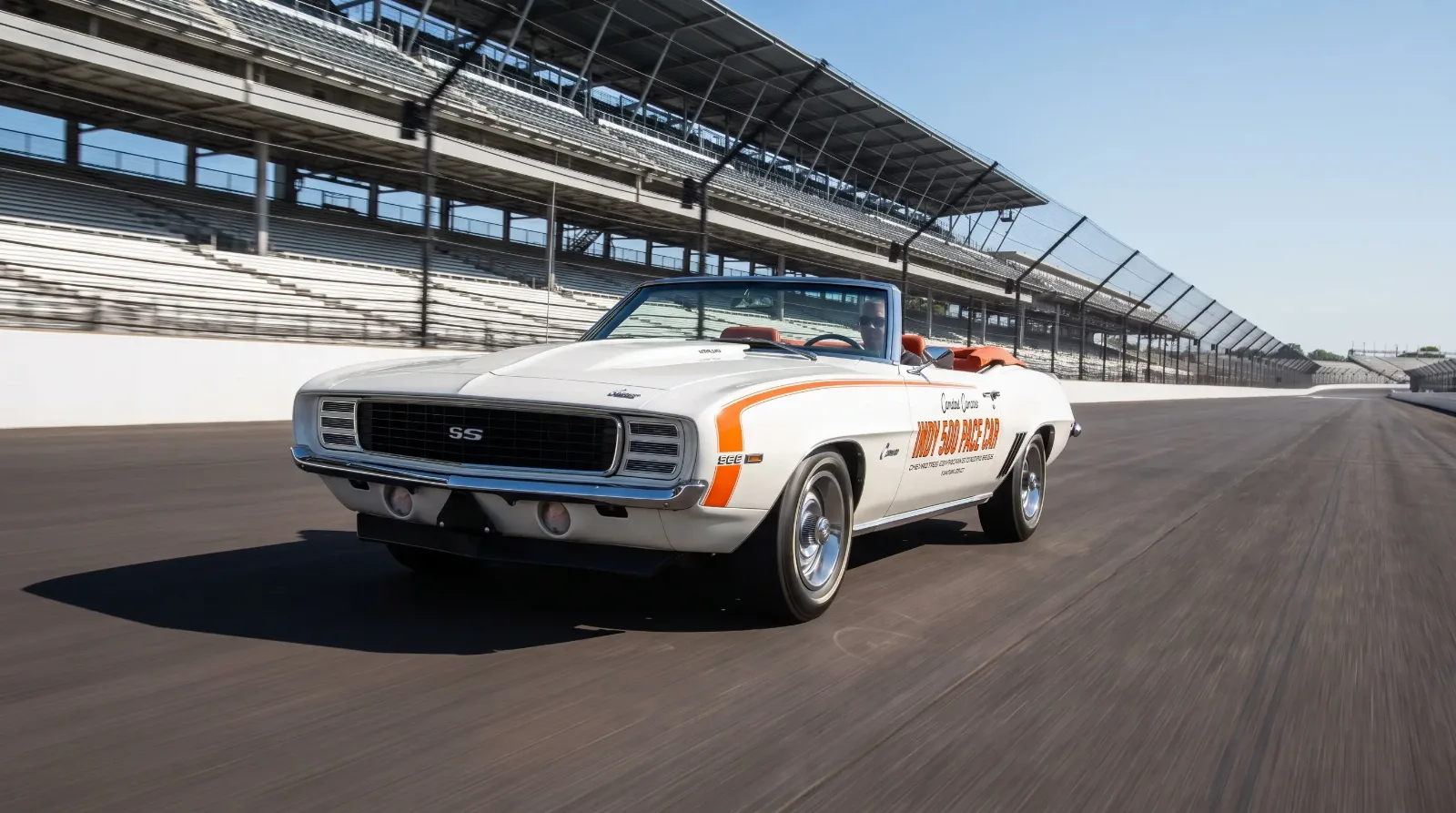
The legacy of the Camaro-Mustang Trans-Am battle is visible in how both cars are remembered today. Both have an authenticity of racing heritage that was earned rather than claimed. The full sweep of Camaro motorsport history shows how the Trans-Am era fits into a longer competition story. The Camaro's connection to American prestige events goes beyond road racing, and the next chapter covers a different kind of competition glory: the story of the Camaro pace car legacy at the Indianapolis 500.
| Model | Engine | Displacement | Era |
|---|---|---|---|
| Camaro Z/28 | 302 V8 | 302 cu in | 1967-1969 |
| Mustang Trans-Am | 289/302 V8 | 302 cu in | 1967-1968 |
| Mustang Boss 302 | Boss 302 V8 | 302 cu in | 1969-1970 |
Sources and notes
Production figures, engine specifications, codes, and dates in this article are cross-referenced from established Camaro references, period documentation, and owner registries. Where sources differ, the most commonly cited value is used. Cost figures are indicative and vary by supplier, region, and condition.