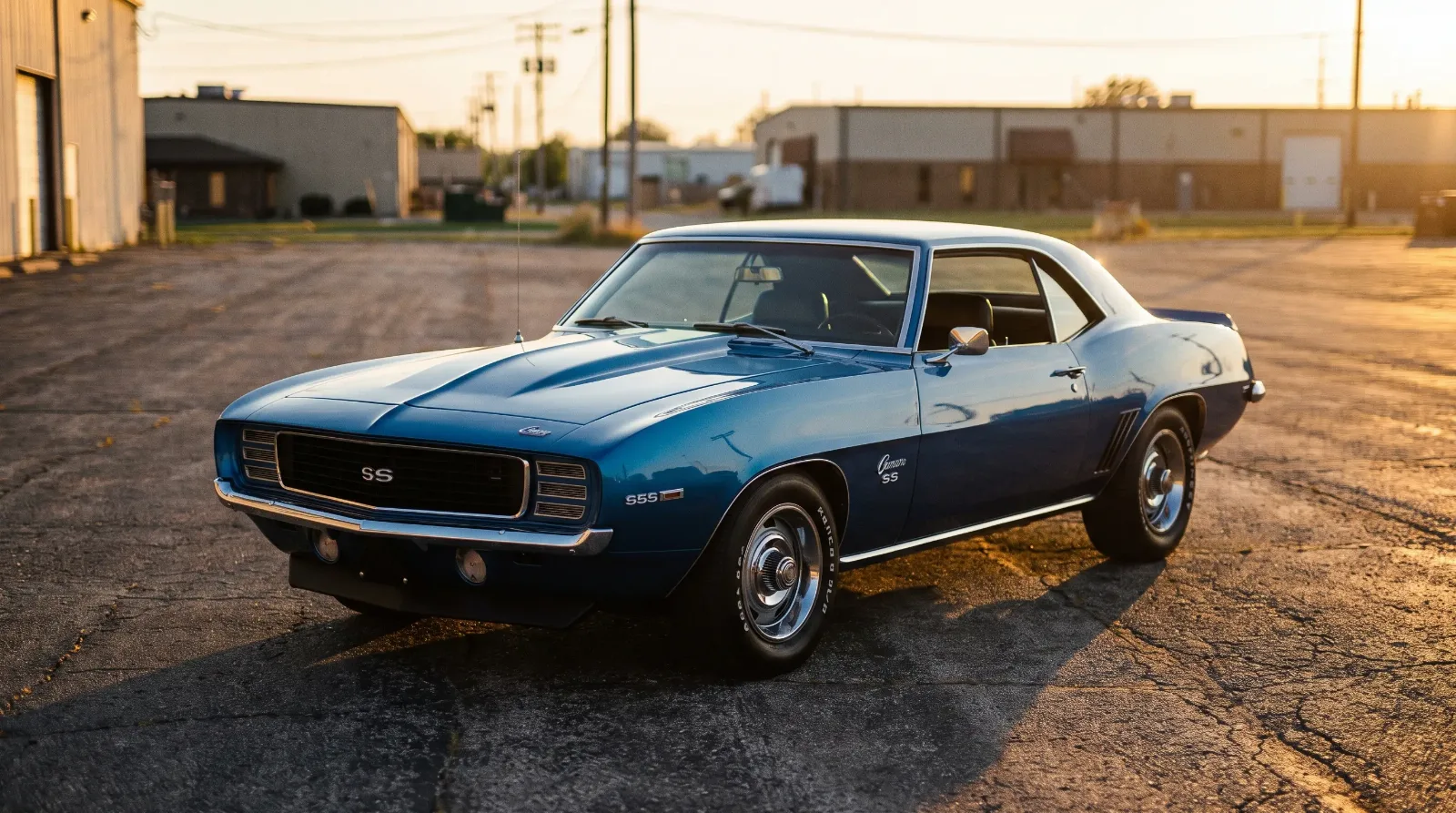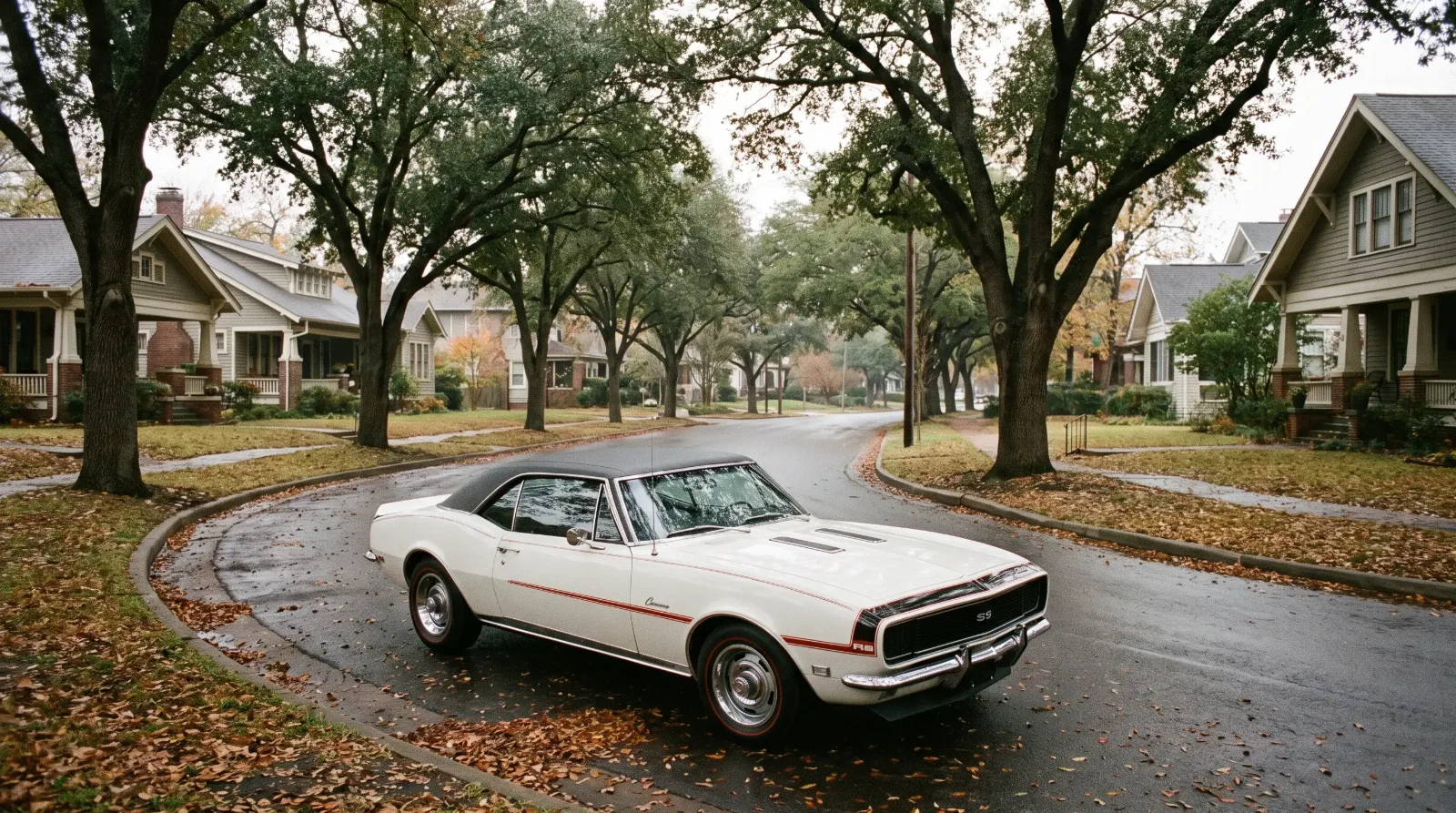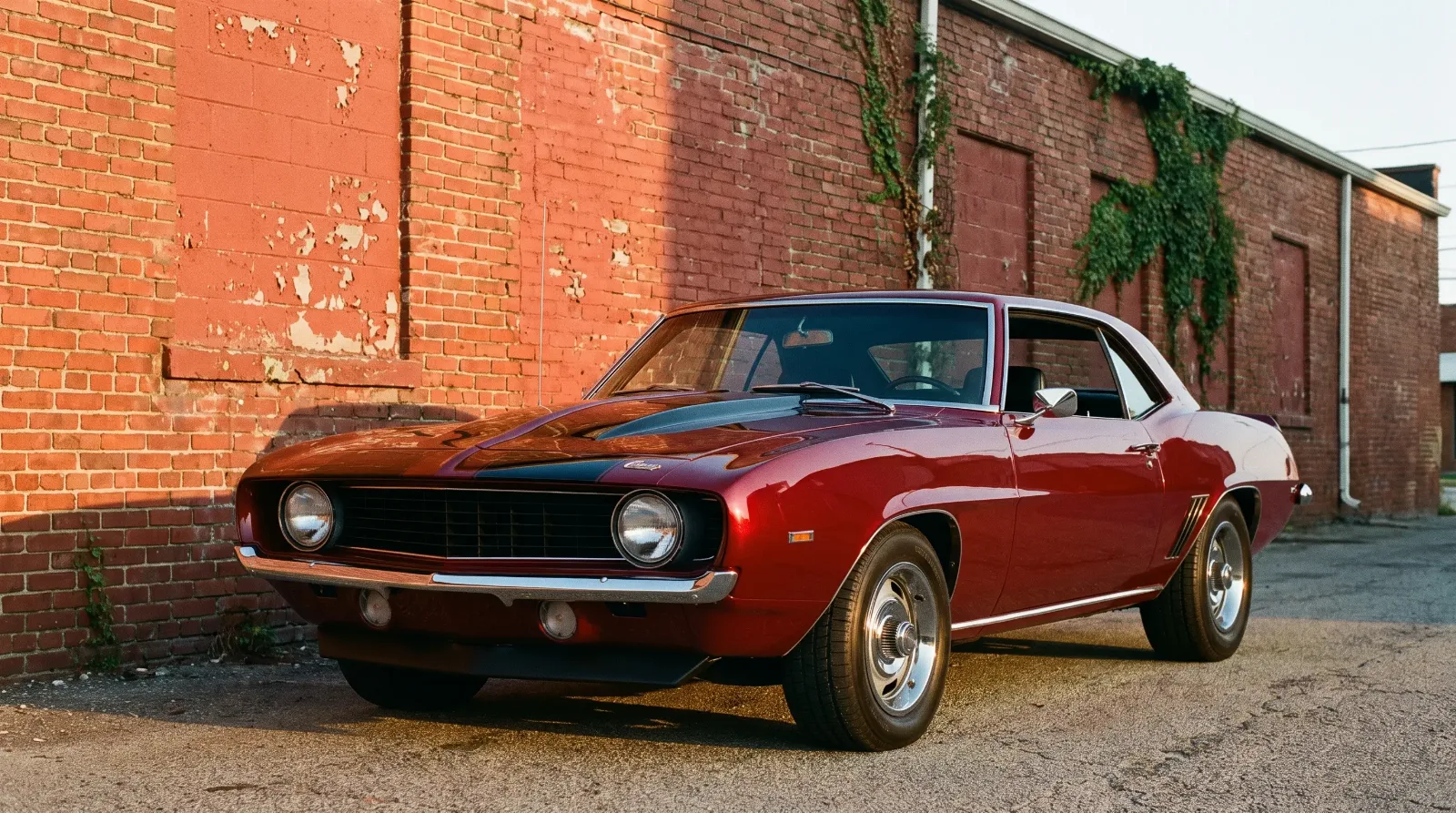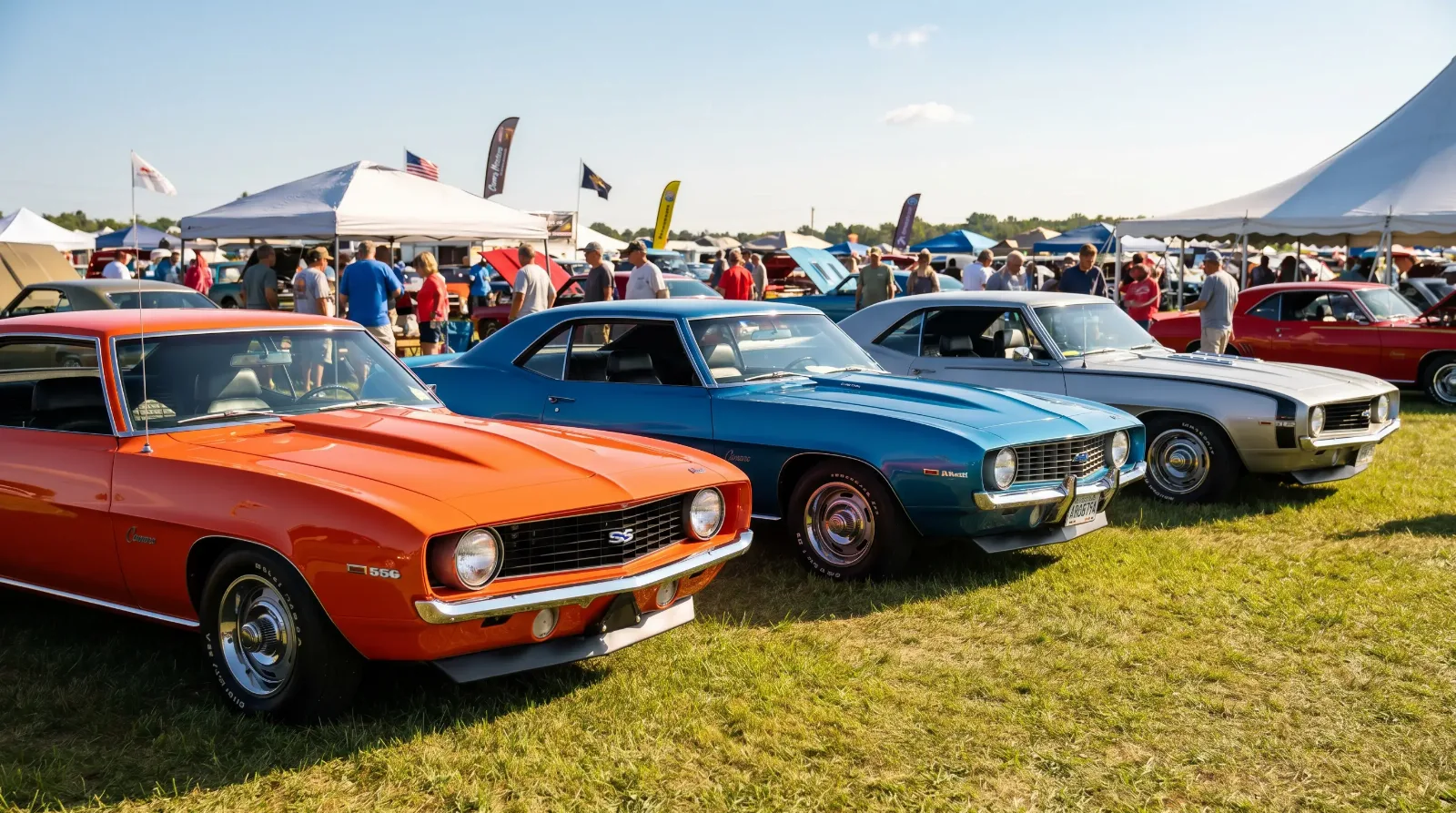
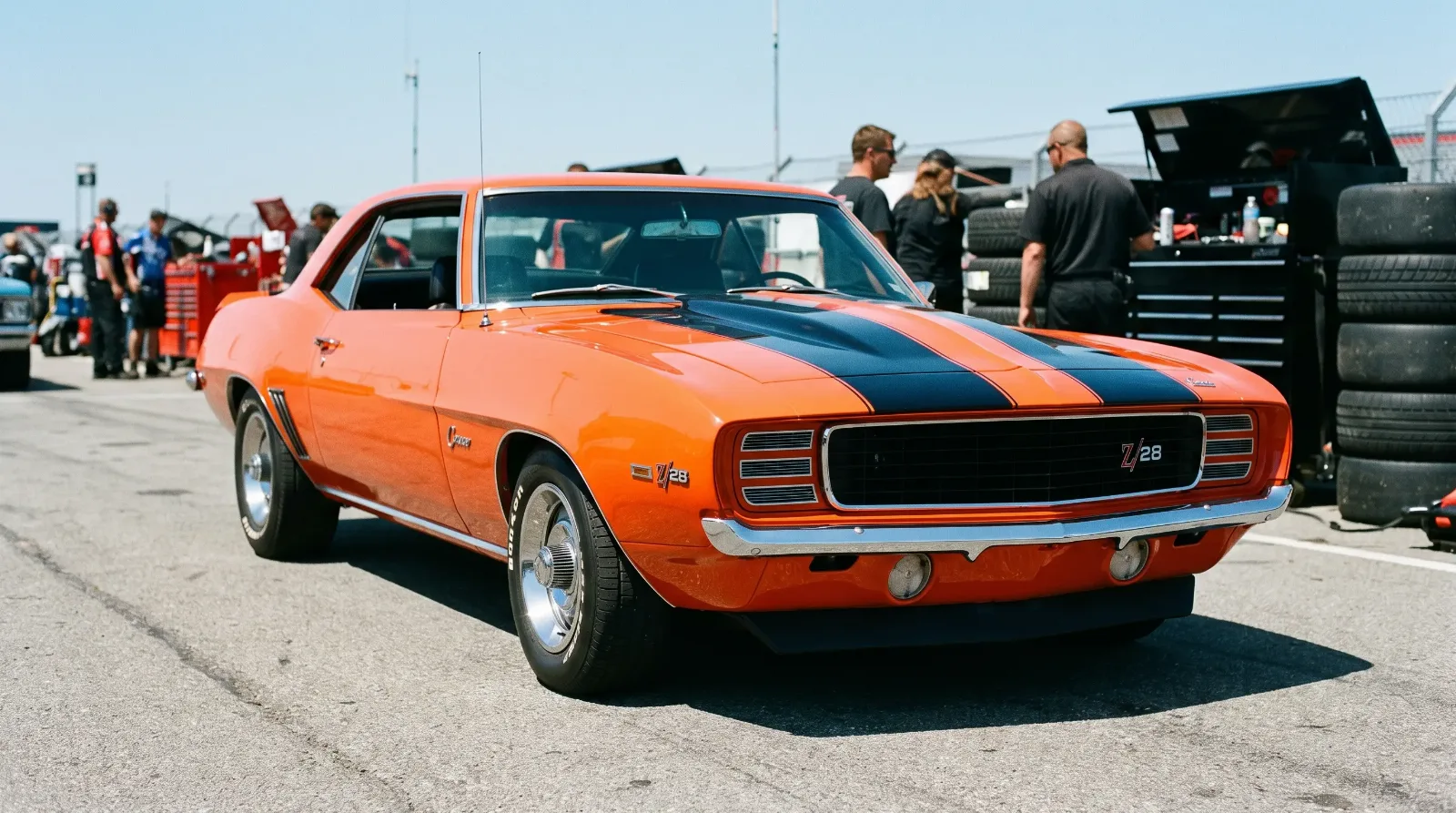
Chevrolet built a lot of Camaros. Between 1967 and 1969 alone the factory turned out well over 300,000 of them, and the vast majority were solid transportation with a V8 under the hood and not much else going on. But buried inside those production totals is a completely different story, one that involves a 302 small-block wound tight enough to rev past 7,000 rpm, a 396 big-block that could pull the front wheels off the ground, and a handful of 427-powered cars that a handful of dealers built specifically because GM's corporate rules said they couldn't. Those are the cars people actually want. Here's what separates them from the regular stuff.
If you are just getting oriented with the Camaro family, it helps to start with the classic Camaro overview before digging into the performance variants. The big-block SS and the COPO cars in particular make a lot more sense once you understand the platform they came out of.
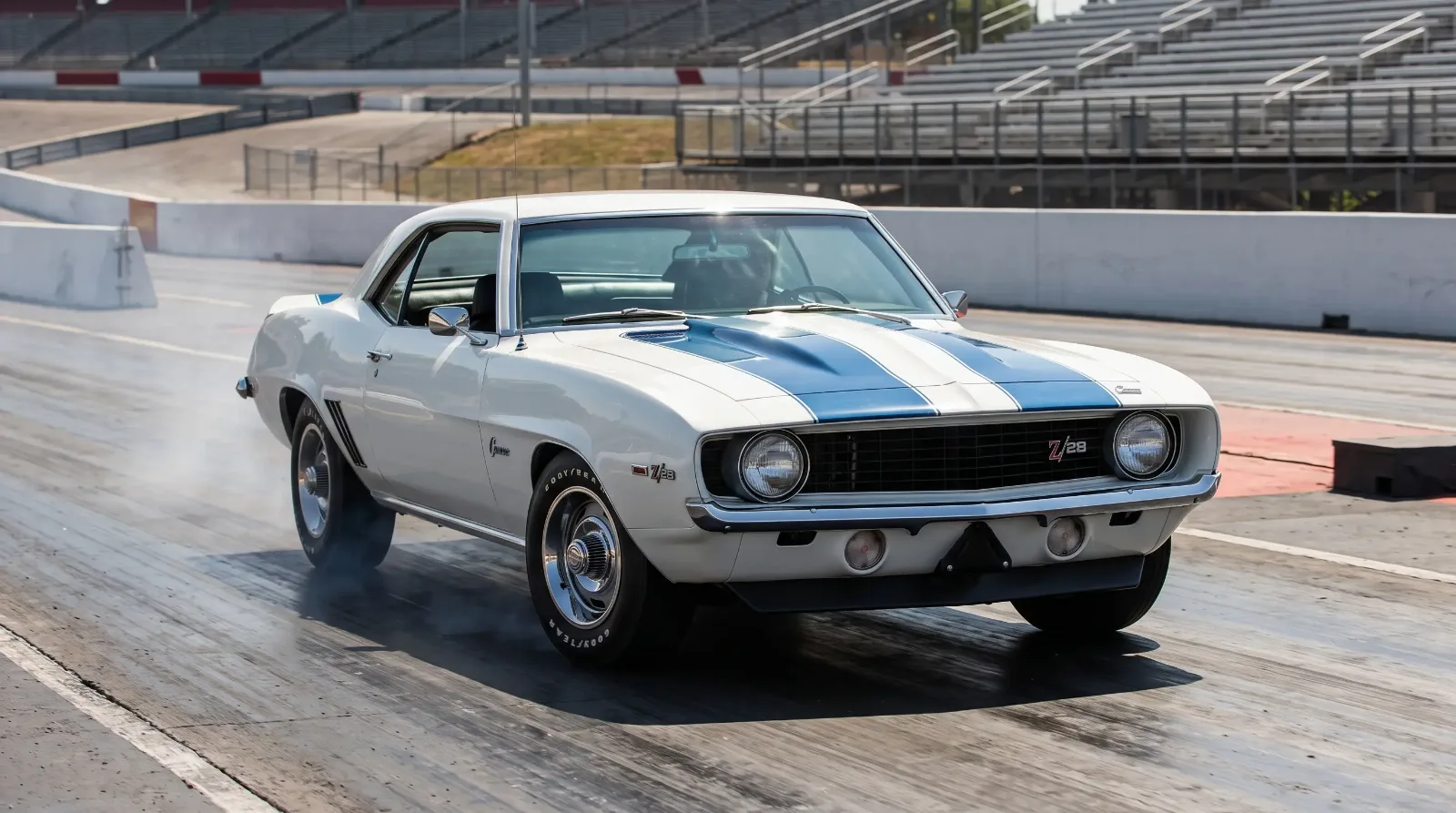
The Z/28 and the Trans-Am 302 small-block
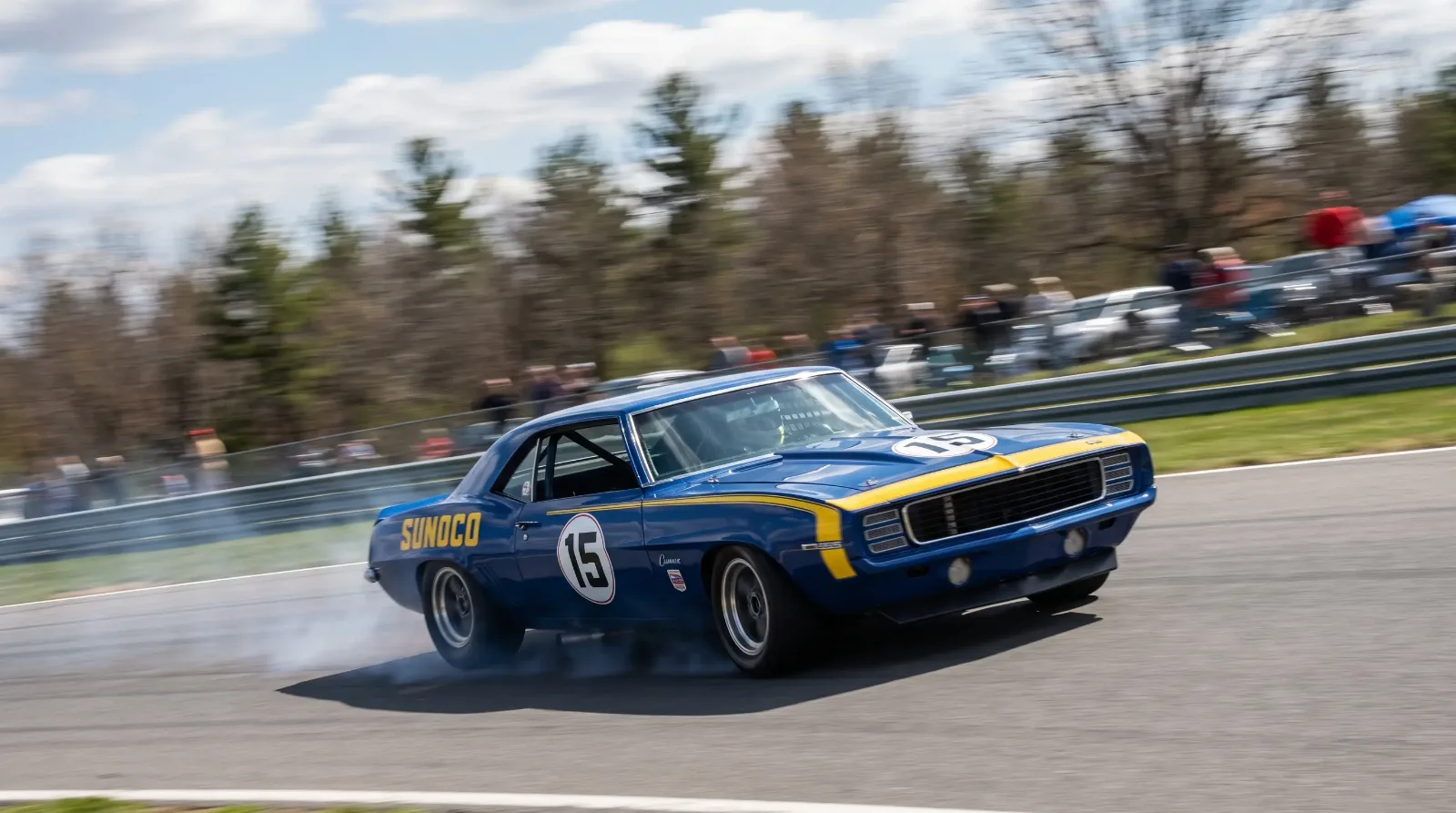
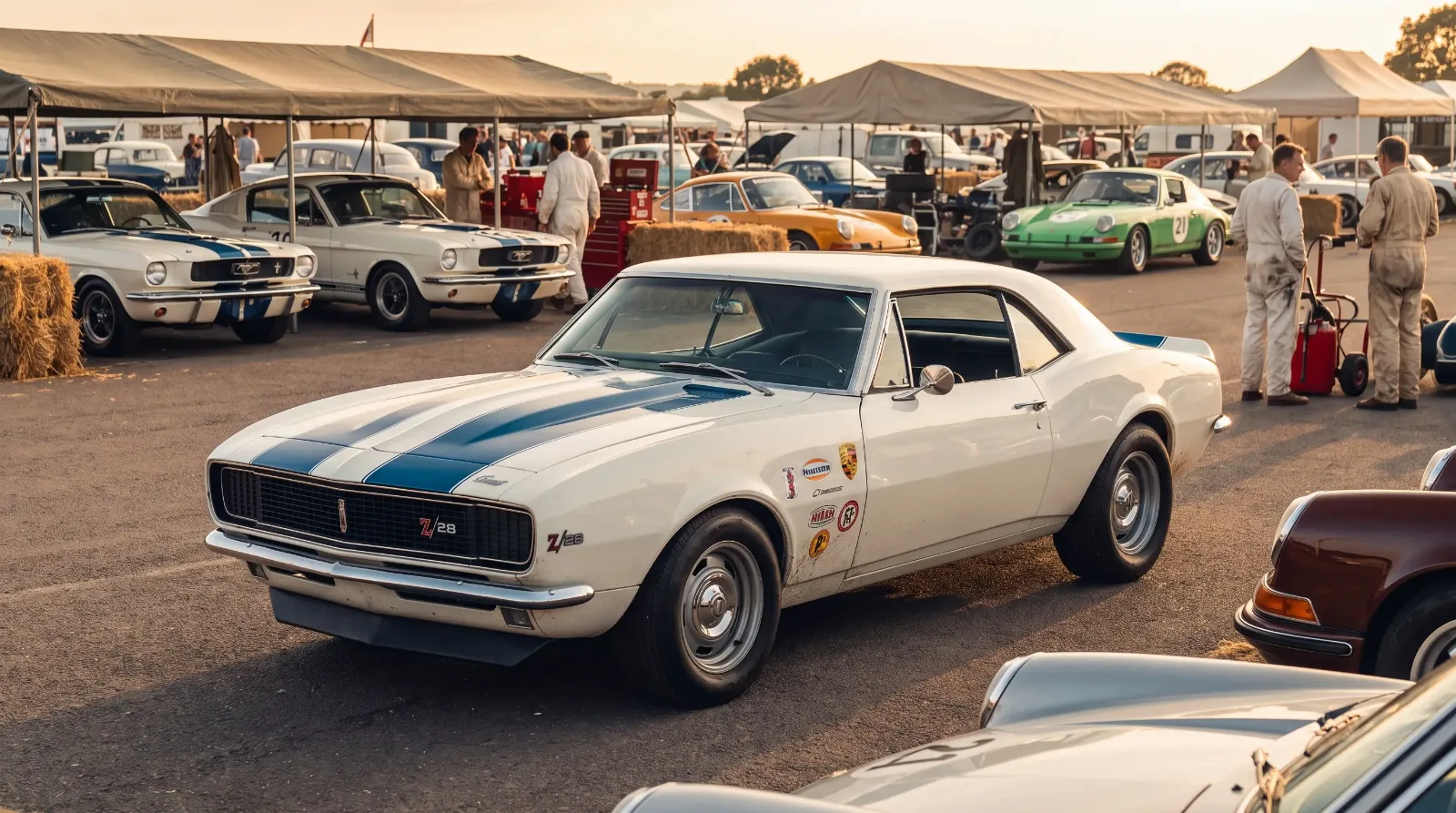
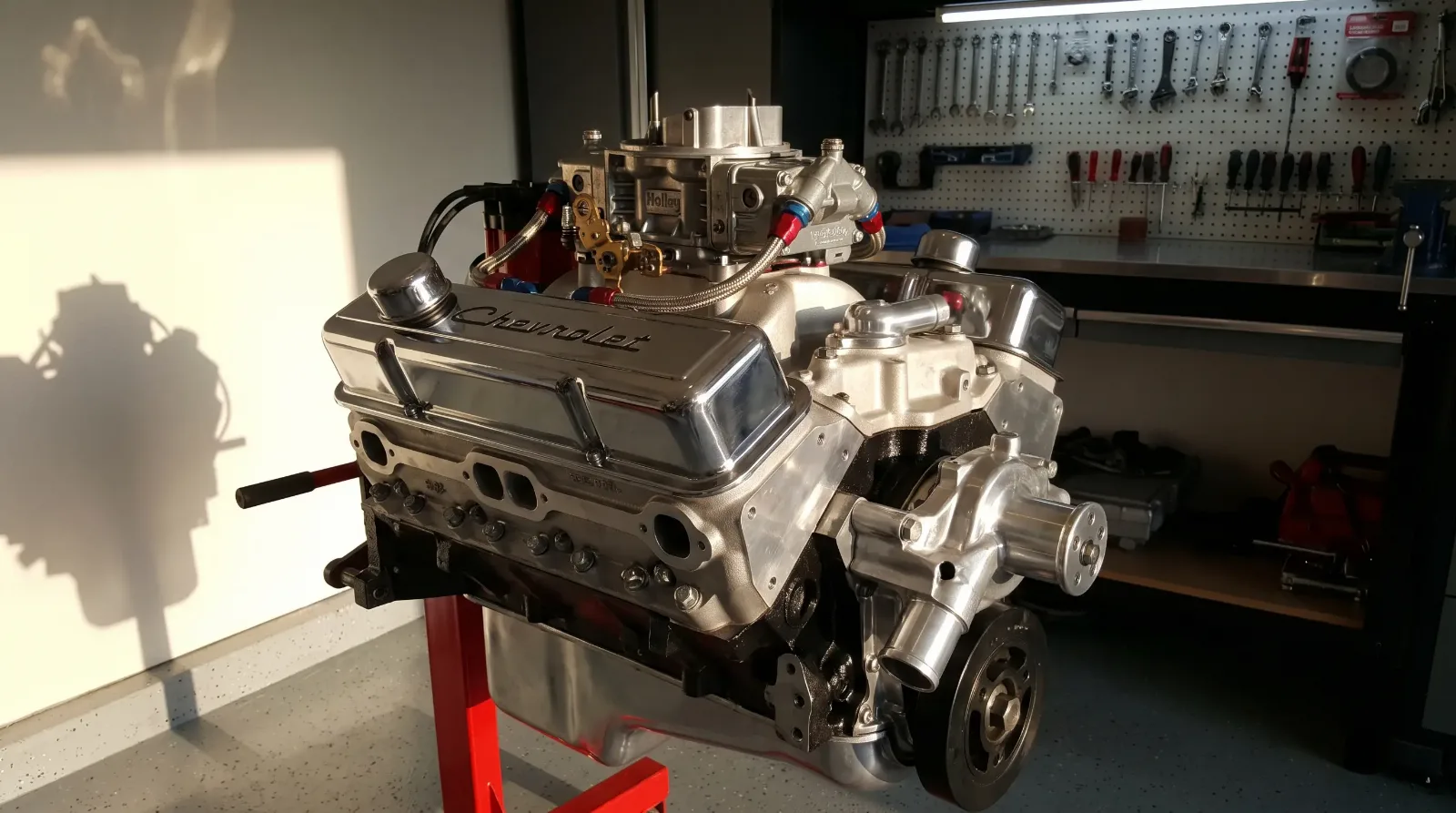
The Sports Car Club of America's Trans-Am series had a displacement limit of 305 cubic inches for its main class in 1967. The Camaro's standard small-block was a 327. To go racing, Chevrolet engineering needed something between those two numbers. What they came up with was the 302 cubic inch small-block, built by combining a 327 block with a short-stroke 283 crankshaft. The result was an engine that displaced exactly 302 cubic inches and, more importantly, could rev in a way that big-blocks never could.
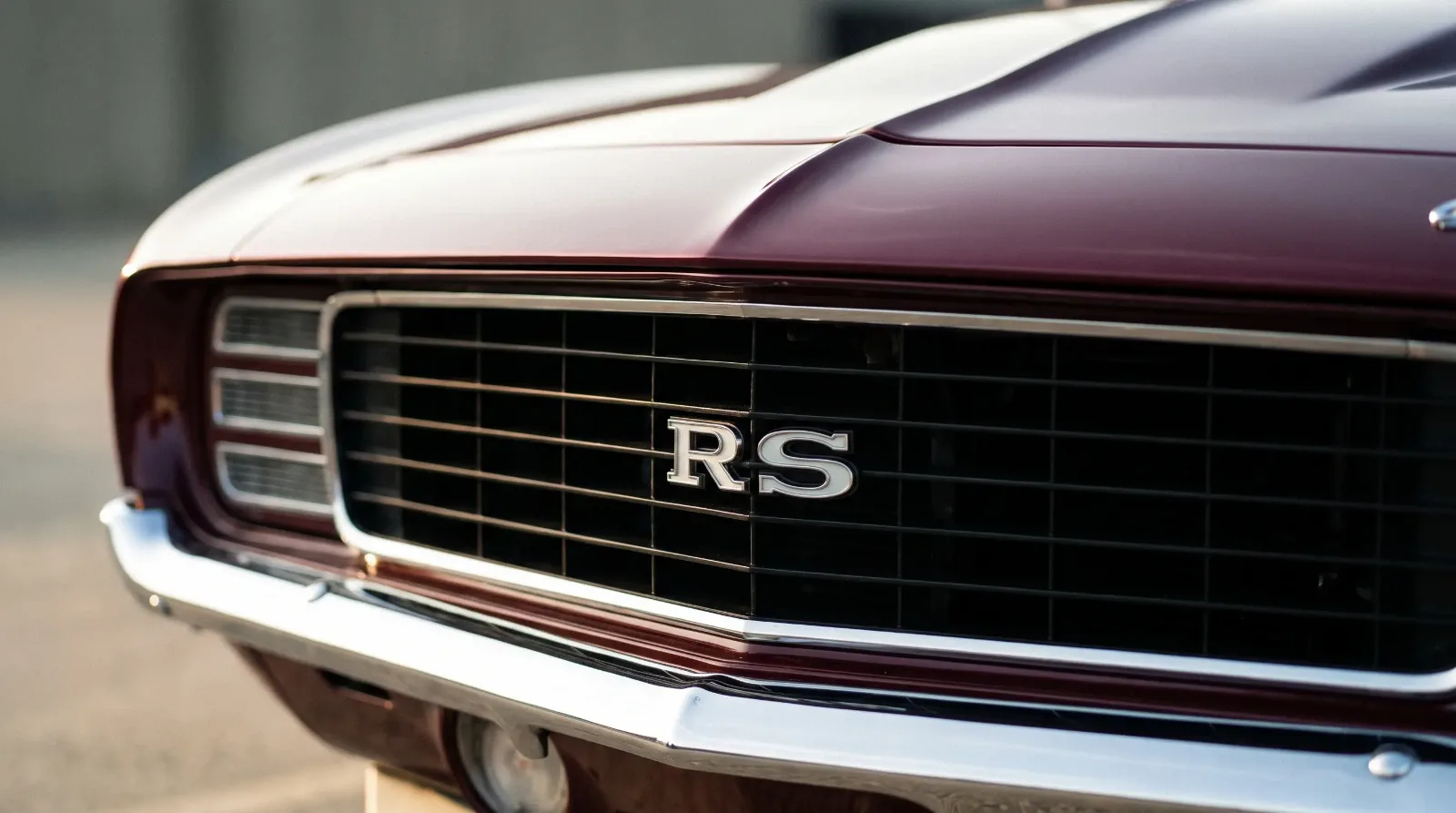
The Z/28 package, RPO Z28, debuted partway through the 1967 model year and was not listed in any Chevrolet sales brochure. You had to know to ask for it. The engine was rated at 290 hp from the factory, a figure that most people who have run one consider substantially understated. The camshaft timing, the solid lifters, the high-compression heads, and the high-rise intake topped by a single 780 cfm Holley four-barrel told a different story (a cross-ram dual-quad setup existed, but only as an over-the-counter dealer competition part, not standard equipment). Road testers at the time reported quarter-mile times in the low-14-second range, which was quick for a small-block car in 1967.
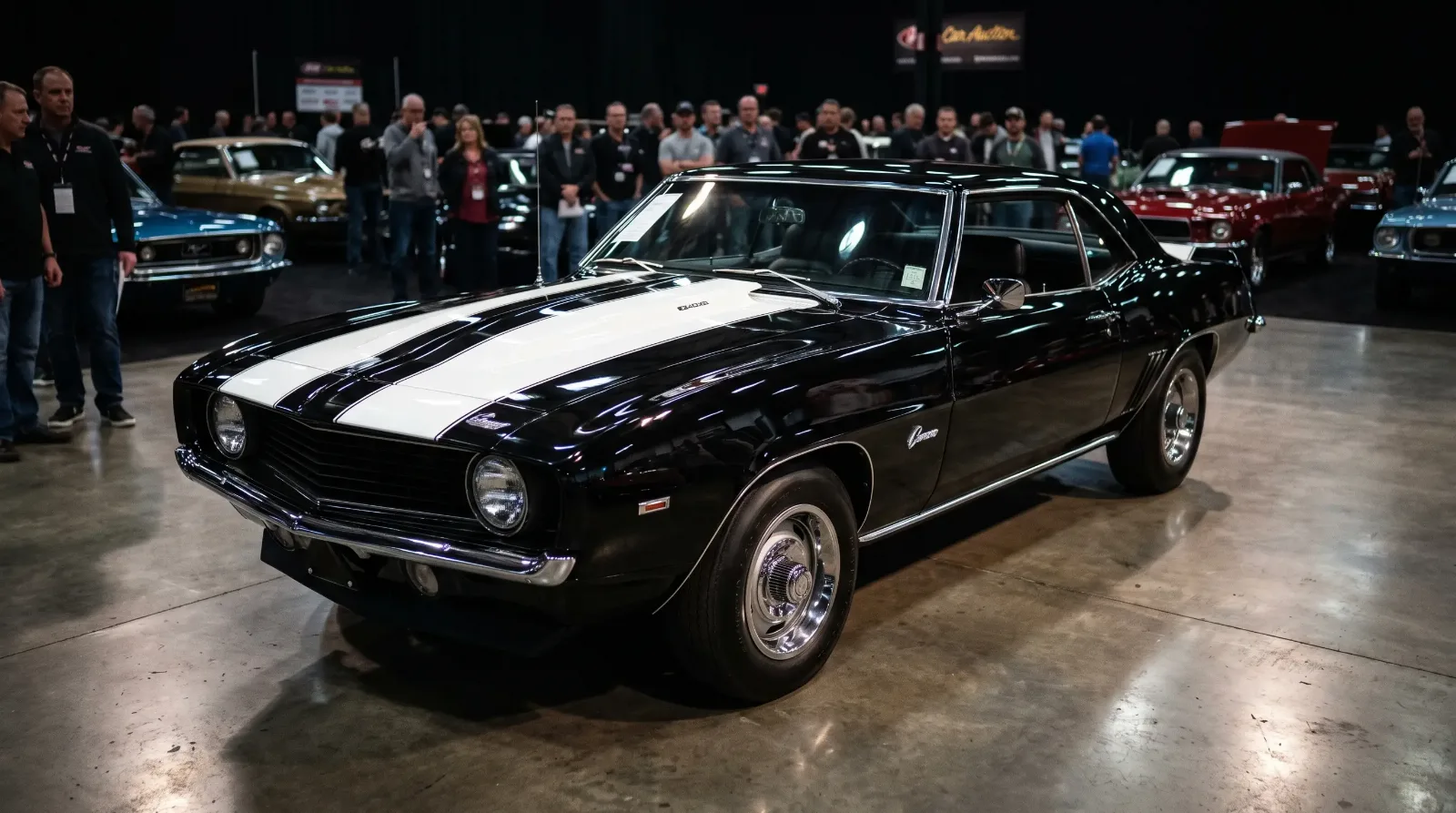
The 1968 Z/28 carried over the 302 with minor refinements. The 1969 car is the one most collectors want. That year the Z/28 got a Muncie close-ratio four-speed as standard equipment, front disc brakes, and a set of revised heads that improved airflow. Production numbers climbed significantly: Chevrolet built around 602 Z/28s in 1967, roughly 7,200 in 1968, and approximately 20,300 in 1969. The jump in 1969 numbers reflects both increased awareness and the car's proven performance record on the Trans-Am circuit. Penske Racing's Mark Donohue won the 1969 Trans-Am championship in a factory-supported Z/28, which did not hurt sales.
For a deeper look at how these cars performed on track, the Camaro's racing history covers the factory effort in Trans-Am and beyond, including the role the Z/28 played in Chevrolet's competition program through the early 1970s.
What to look for on a first-generation Z/28: the 302 engine carries specific casting numbers that differ from other small-blocks of the period. The block should show casting number 3914678 and the heads should be the 202/194 closed-chamber units. A lot of Z/28s have been engine-swapped over the decades, which is not a problem if you are buying a driver, but it is a serious problem if you are paying Z/28 money for what should be a numbers-correct car. Pull the engine codes and compare them to the trim tag before you talk price.
The SS 350 and SS 396: two very different animals
The Super Sport package, RPO Z27, was available on the Camaro from the start of the 1967 model year and could be ordered with either a 350 cubic inch small-block or the 396 big-block. On paper they are both SS cars. In practice they are not remotely the same experience.
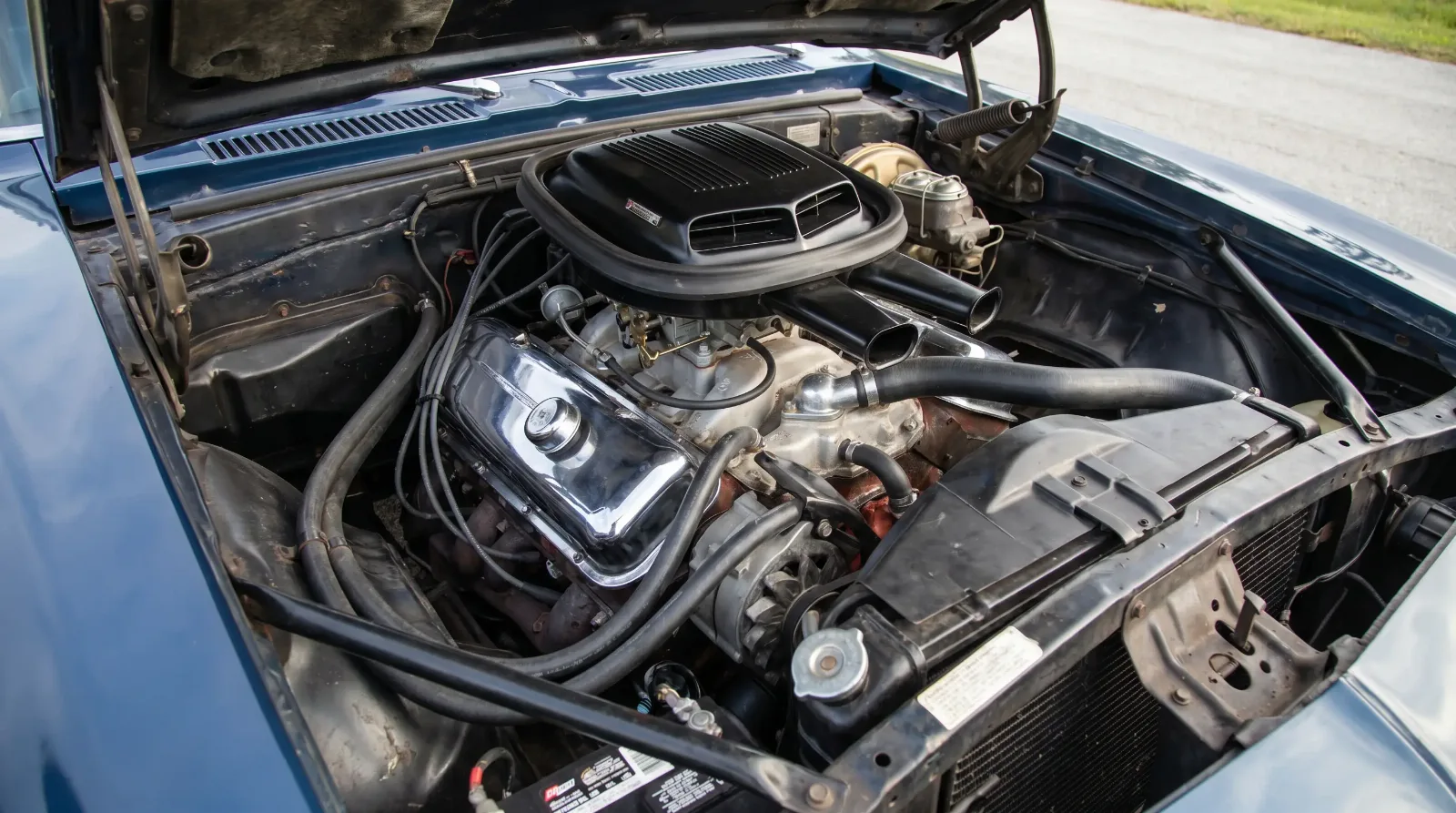
The SS 350 got a 295 hp version of the L48 350 in 1967. It was a competent performance car, pleasant to drive, easier on tires than the big-block, and significantly cheaper to buy new. The problem is that the SS 350 occupies an awkward middle position in the collector market. It is not exotic enough to command Z/28 or big-block SS prices, but it is not inexpensive enough to be a bargain. Solid examples in driver condition run $25,000 to $40,000 depending on options and documentation, and the supply is reasonably good.
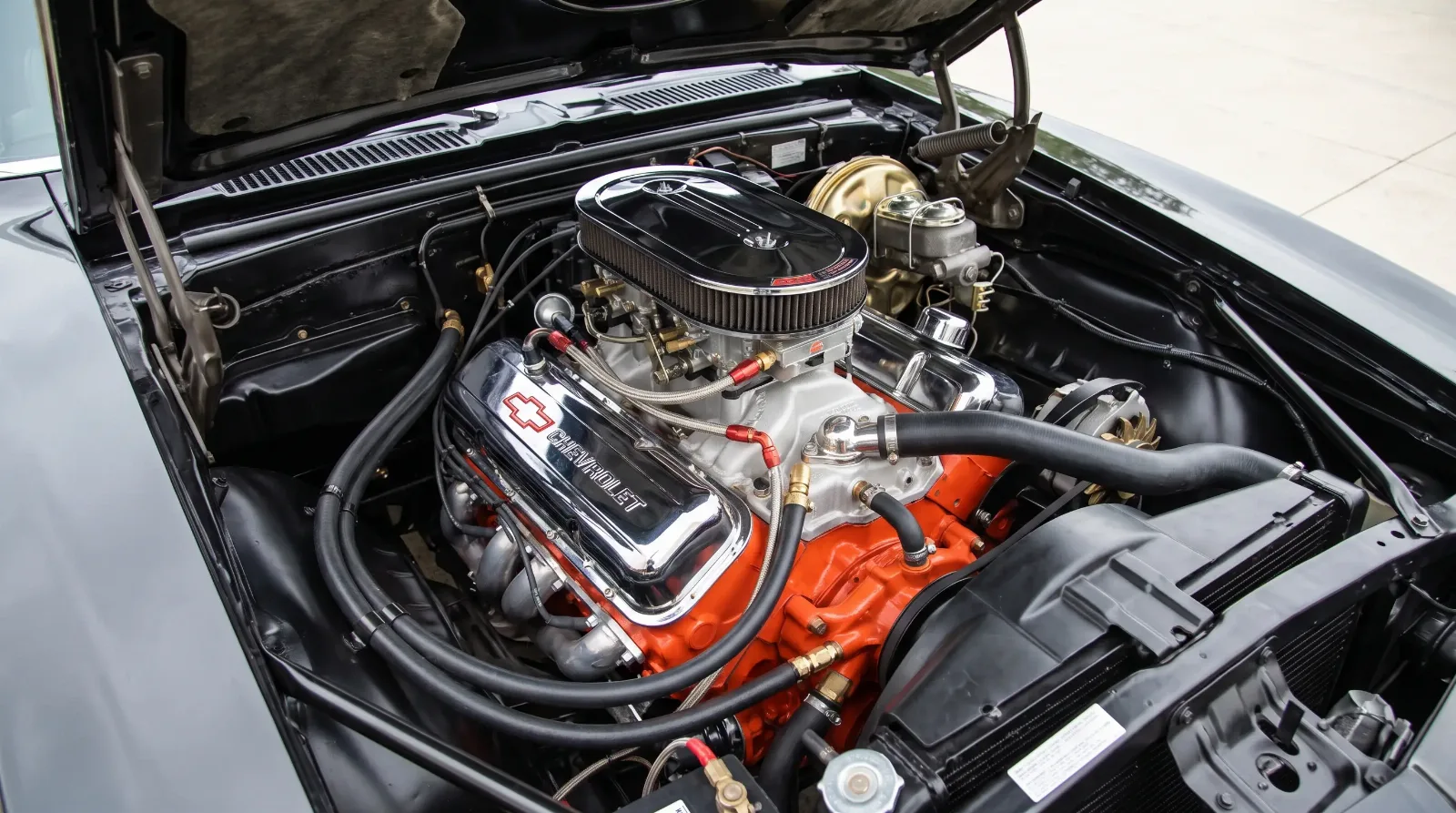
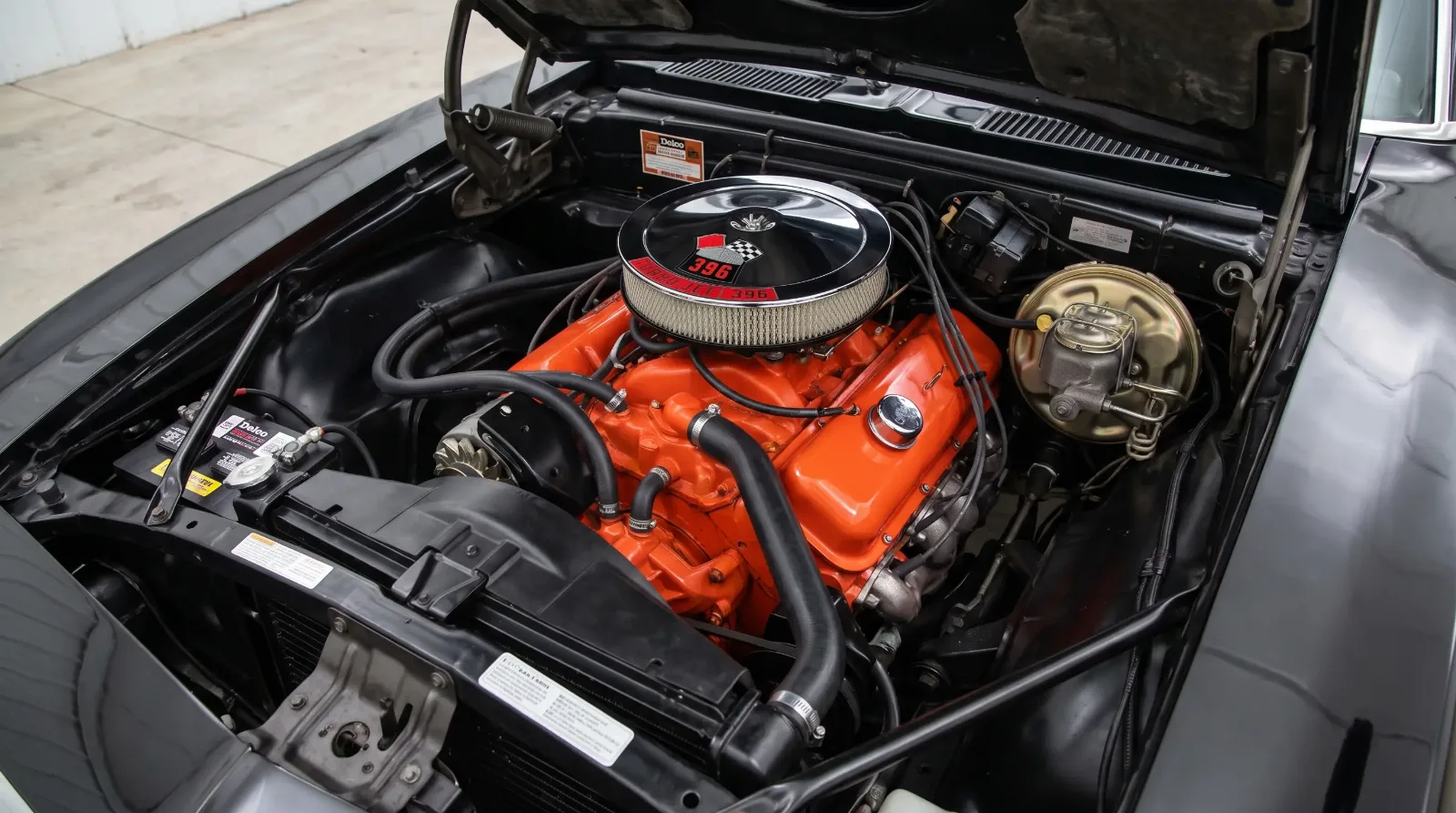
The SS 396 is the one that most people mean when they say "SS Camaro." Three versions of the 396 were offered across 1967 to 1969: the L35 at 325 hp, the L34 at 350 hp, and the L78 at 375 hp. The L78 is the one worth knowing about. It came with solid lifters, a high-lift camshaft, and an 11.0:1 compression ratio that required premium fuel and meant the engine would not run well on the pump gas formulations that became common after the early 1970s. Many L78 engines have been modified over the years to run on modern fuel, which is fine for a driver but something to note if originality matters to you.
| Package / engine | Years offered | Displacement | Rated horsepower | Lifters |
|---|---|---|---|---|
| Z/28 (302) | 1967-1969 | 302 ci | 290 hp | Solid |
| SS 350 (L48) | 1967-1969 | 350 ci | 295 hp | Hydraulic |
| SS 396 L35 | 1967-1969 | 396 ci | 325 hp | Hydraulic |
| SS 396 L34 | 1967-1969 | 396 ci | 350 hp | Hydraulic |
| SS 396 L78 | 1967-1969 | 396 ci | 375 hp | Solid |
| COPO 9561 (427 L72) | 1969 | 427 ci | 425 hp | Solid |
| COPO 9560 (ZL1 427) | 1969 | 427 ci | 430 hp | Solid |
The SS package added specific exterior badging, a hood with simulated air intakes (or functional ones on some versions), and a special instrumentation cluster. The factory also added front disc brakes as an option that was strongly recommended with the L78. Running an L78 car with four-wheel drums is technically possible, but I have seen what happens at the end of a long straightaway when someone tries it. Get the discs.
COPO and the 427 cars
In the late 1960s, General Motors had a corporate policy prohibiting passenger cars under 10 pounds per cubic inch of engine displacement from competing with full-size cars for buyers. In practical terms, this meant the Camaro could not be ordered from the factory with an engine larger than 400 cubic inches. Chevrolet's internal solution was the Central Office Production Order system, or COPO, which allowed fleet buyers and dealers to order cars with configurations outside the standard option list. It was designed for police departments and taxi companies. Drag racers and a few very motivated dealers figured out it worked for other things too.
All of this muscle grew out of the first three model years, the era covered in the first-generation Camaro story.
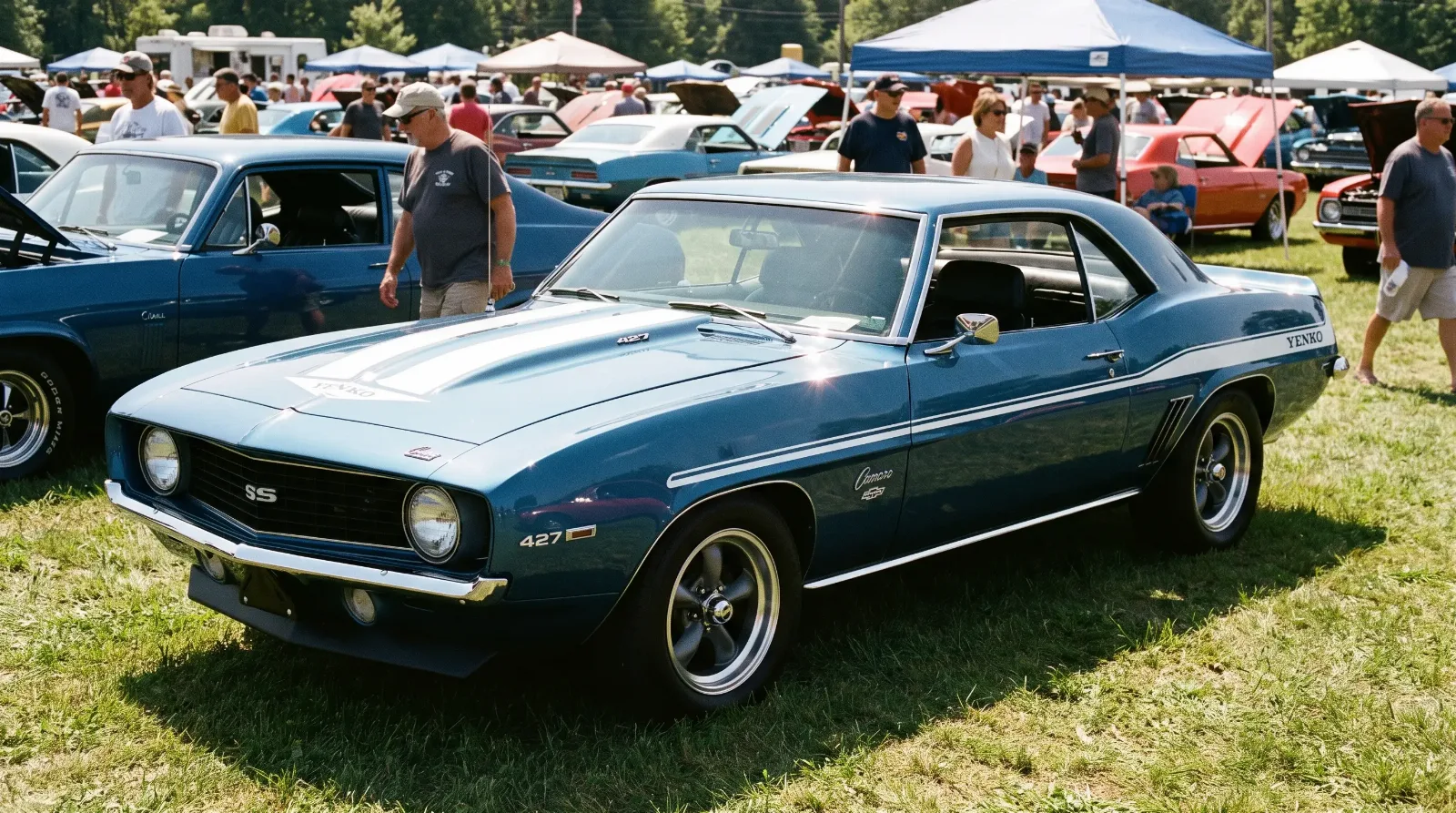
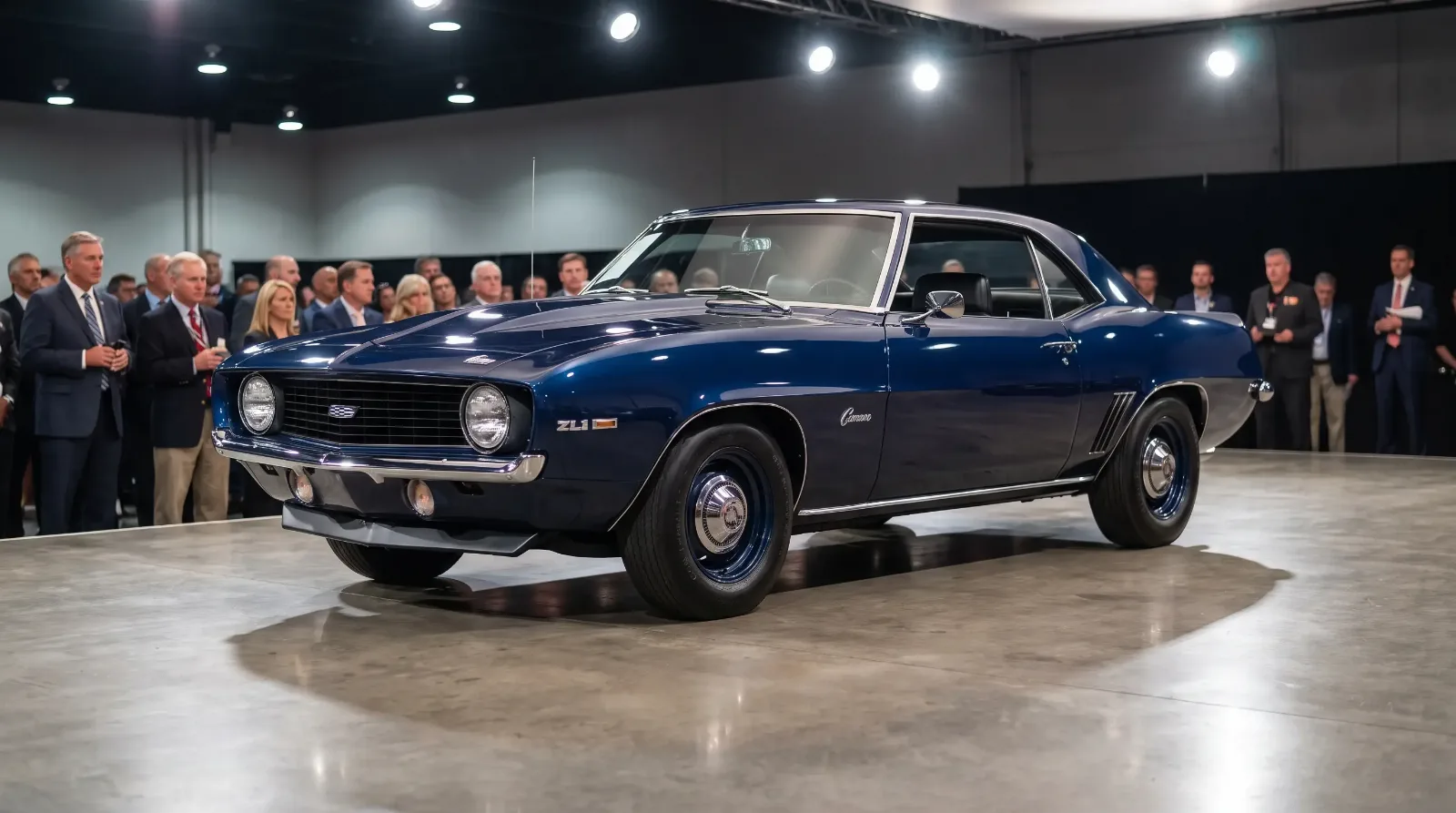
Don Yenko of Yenko Chevrolet in Canonsburg, Pennsylvania was the most visible dealer to exploit this channel. Fred Gibb Chevrolet in La Harpe, Illinois was another. The specific COPO codes that mattered for performance were 9561, which covered the iron-block L72 427 rated at 425 hp, and 9560, which covered the ZL1 aluminum-block 427 rated at 430 hp. The ZL1 is the serious one. With an aluminum block and aluminum heads, it weighed roughly 100 pounds less than the iron L72, and it was essentially a Can-Am racing engine stuffed into a production Camaro body. Chevrolet built somewhere around 69 COPO ZL1 Camaros in 1969. The ZL1 option alone added roughly $4,160, pushing the total car to around $7,200, which was significantly more than the base Camaro, and most of them went directly to drag strips.
Yenko Super Camaros: what the dealer added
Don Yenko's operation had two distinct phases. Before the COPO system was widely understood, Yenko's crew was pulling 350 engines out of new Camaros on the dealer lot and installing 427 Corvette engines, then titling the cars with the engine swap already done. These pre-COPO Yenko cars are real but present significant documentation challenges, because the drivetrain was not factory-installed.
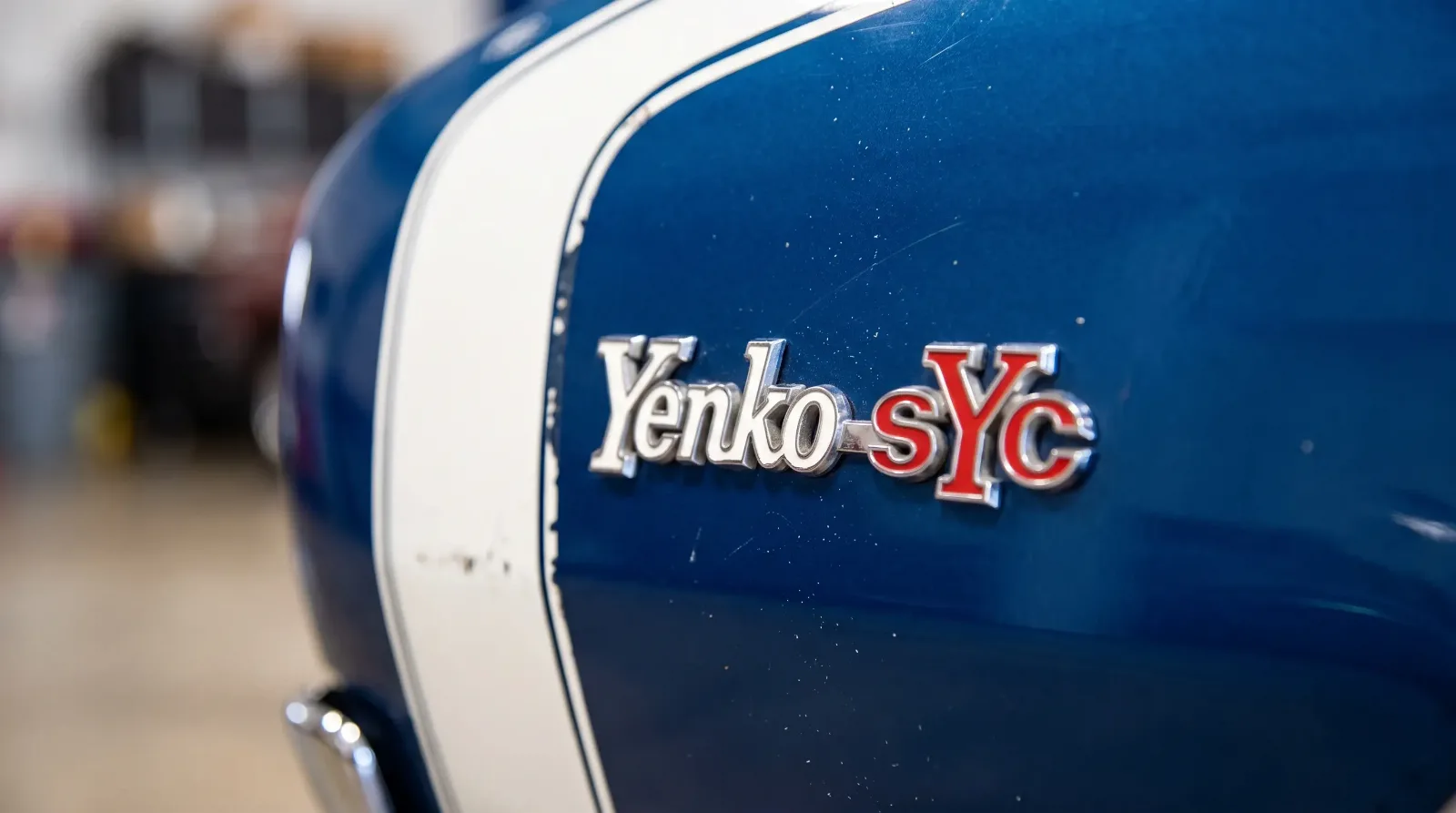
The 1969 COPO Yenko cars are a different situation. Yenko ordered Camaros through COPO 9561 with the L72 427 already in the car from the factory, then added his own appearance package: Yenko stripes, specific badging, and sometimes additional performance components. Around 201 of these were built. They came with a Super Sport appearance but the L72 under the hood rather than the SS 396. What makes them significant as collector cars is the factory documentation, the relative rarity, and the performance credentials. A well-documented 1969 Yenko COPO Camaro with its broadcast sheet and Protect-O-Plate is a serious piece.
The authentication process for these cars is not simple. There are known clones and tribute cars in circulation, some of them built with enough care to fool a casual buyer. If you are seriously considering a car represented as an original Yenko, you need someone who has worked through this specific documentation before. The Yenko registry and some of the COPO specialists in the muscle car community have seen enough originals to know what the paperwork should look like.
"I've looked at a lot of cars claimed to be Yenko COPOs over the years. The honest ones have paperwork that holds up. The ones you want to walk away from have a lot of explanations for why the paperwork is missing. Documentation on these cars doesn't disappear. It gets lost, or it gets hidden. Those are two very different things."
— Mike Sullivan
What to inspect before you buy any first-gen performance Camaro
The first-generation Camaro body has specific rust patterns that show up in the same places on almost every car. The lower rear quarters rust from the inside because the factory sealing in that area was not great and water gets trapped behind the wheel opening. The trunk floor rusts around the spare tire well. The floor pans under the carpet are worth pulling the mat back to check. These are not unusual problems, they are expected problems, and a car that has had them properly addressed in metal is fine. A car that has had them addressed with filler is not fine, and you will find out eventually, usually at the worst possible time.
🔧 Inspection Priorities
- Engine numbers and casting codes. On Z/28 and COPO cars especially, the cost of getting this wrong is enormous. Pull the partial VIN stamp on the block pad and compare it to the VIN plate. Check the casting numbers on the block and heads against documented correct numbers for the specific engine code. A mismatched engine on a Z/28 drops the value by 40 to 60 percent.
- Trim tag and build sheet. The trim tag is riveted to the firewall and carries the paint code, interior code, and some option data. On COPO and Yenko cars, the build sheet (often found under the rear seat or in the trunk area) is critical documentation. Missing trim tag means questions you need answered before money changes hands.
- Lower rear quarters and wheel openings. Press firmly on the lower rear quarter panels from the outside, directly below the body line. If it flexes or feels soft, the rust is behind the sheetmetal. A borescope through the wheel opening tells you more. Budget $2,500 to $6,000 per side for proper metal repair if the damage is moderate.
- Floor pans. Pull the carpet, both front and rear. The seam where the floor meets the firewall and the area around the driveshaft tunnel are the first places to check. Proper patch panels welded in are acceptable. Fiberglass mat and resin are not acceptable, and you will find them on cars that have been presented as restored.
- Subframe condition. The front subframe bolts to the body at four points and can be replaced, but subframe rust on a high-value car is a negotiating point at minimum. Check the subframe horns forward of the engine mount points. On cars that spent time in salt states, these can be significantly compromised.
What these cars are worth right now
The first-generation performance Camaro market has been active for long enough that most of the pure speculation has worked its way through. What's left is fairly straightforward: documentation matters, originality matters, and condition tier matters more than any other single variable.
A solid driver-quality 1969 Z/28 with matching numbers but no build sheet and some non-original details will run in the $55,000 to $75,000 range at auction. A well-documented example with correct everything can push past $100,000. The spread is wide because the documentation questions are real. On SS 396 cars, an L78 with a four-speed and documented history sits in the $45,000 to $70,000 range in comparable condition. The L35 and L34 cars are softer, typically $30,000 to $50,000 for solid examples.
COPO and Yenko cars are a different conversation. Authenticated examples trade at prices that reflect both the rarity and the documentation process required to establish authenticity. ZL1 cars have sold above $200,000 at major auctions for well-documented examples. L72 COPO cars with good provenance are typically in the $80,000 to $130,000 range, though strong individual examples exceed that.
If you want to skip the research phase and start looking at actual cars, the Camaro Z/28s for sale listings on Classic Cars Arena show current market availability with enough detail to start narrowing down what you are actually looking at.
Which one to buy
The honest answer depends on what you want to do with it. The Z/28 is the most rewarding to drive of the three performance families because the 302 revs freely in a way that a big-block never does. If you want a car you will actually take to track days or drive on Woodward Avenue on a summer evening, the Z/28 is the right answer. The SS 396 L78 is the street car, the one that launches hard and sounds like it means business and does not require the same mechanical sympathy. The COPO cars are collector pieces first. There are people who drive them, but you are mostly paying for what they represent at this point.
Whatever you buy in this segment, buy the best documentation you can afford before you buy the best condition you can afford. A well-documented car in good driver condition is a better investment than a pristine-looking car with questions around its history. I have seen enough of both to know which one causes regret.
Sources and notes
Production figures, engine specifications, codes, and dates in this article are cross-referenced from established Camaro references, period documentation, and owner registries. Where sources differ, the most commonly cited value is used. Cost figures are indicative and vary by supplier, region, and condition.
- CRG Research Report - The First-Generation Camaro Z/28 (Camaro Research Group)
- CRG Research Report - COPO 427 Camaro (Camaro Research Group)
- Camaro VIN, Cowl Tag, and Numbers Decoding (Camaro Research Group)
- History of the Trans-Am Series - Wikipedia
- The Heart Of A Legend: First-Gen Z/28 Camaro's DZ 302 - Chevy Hardcore