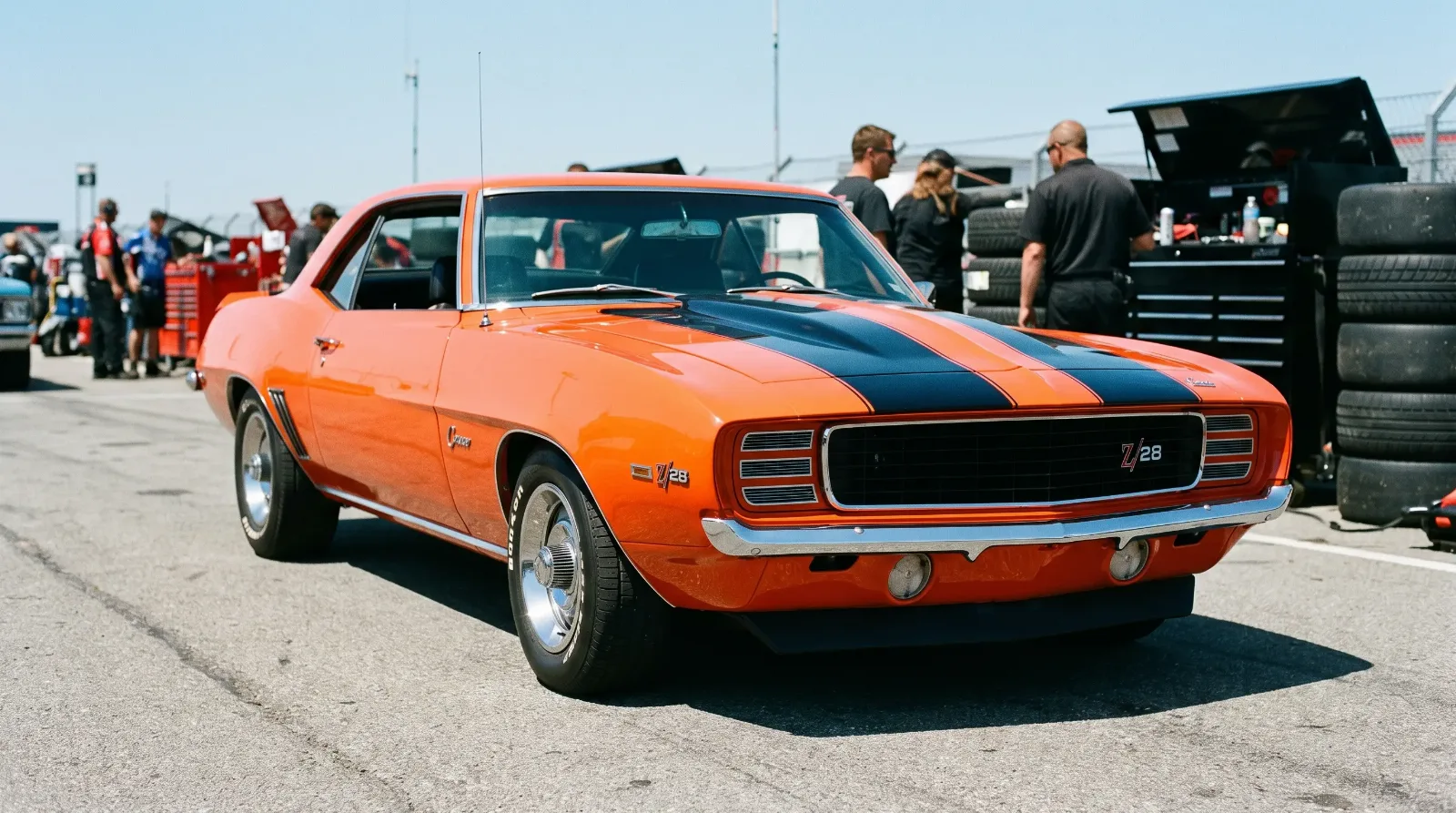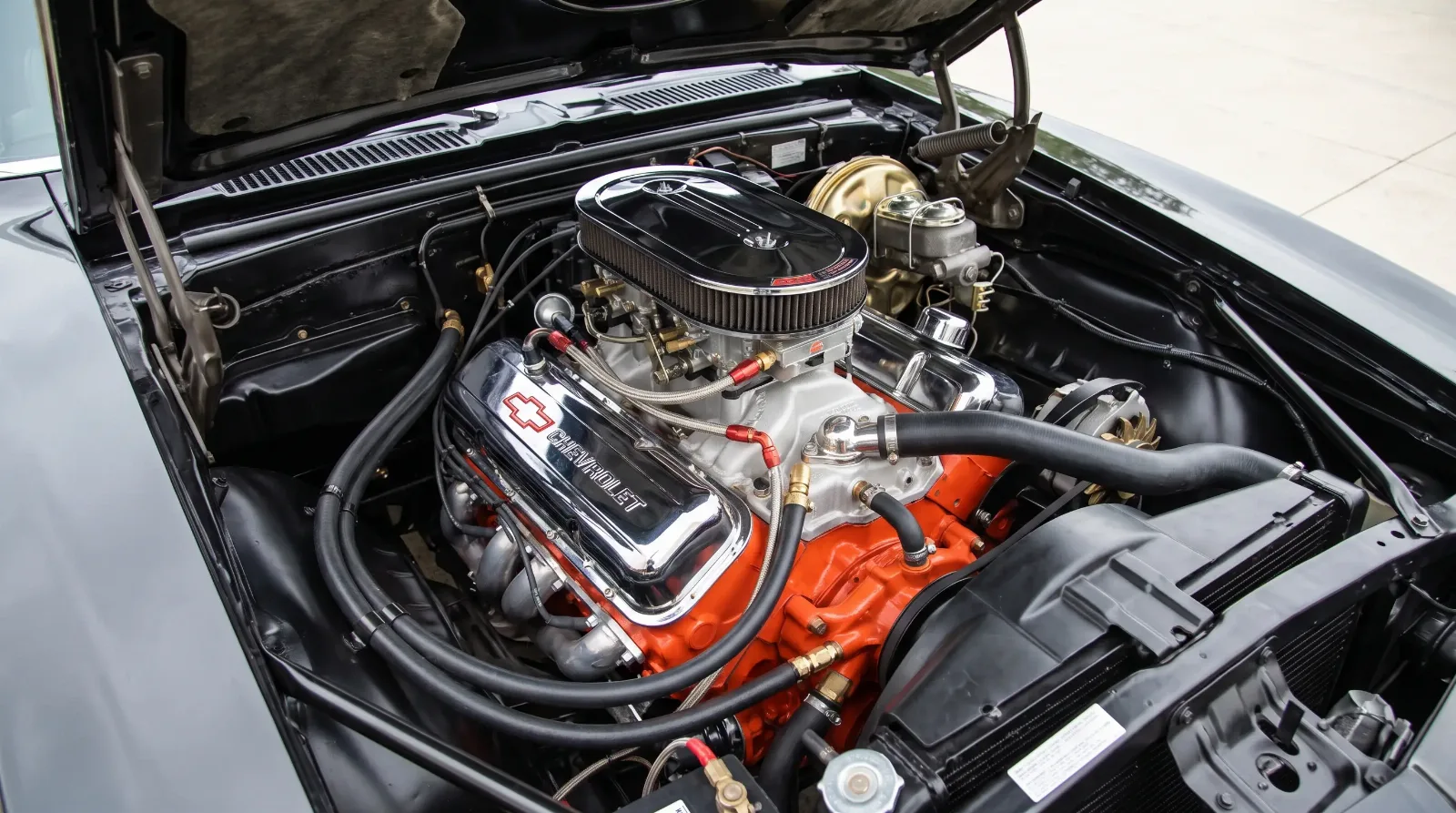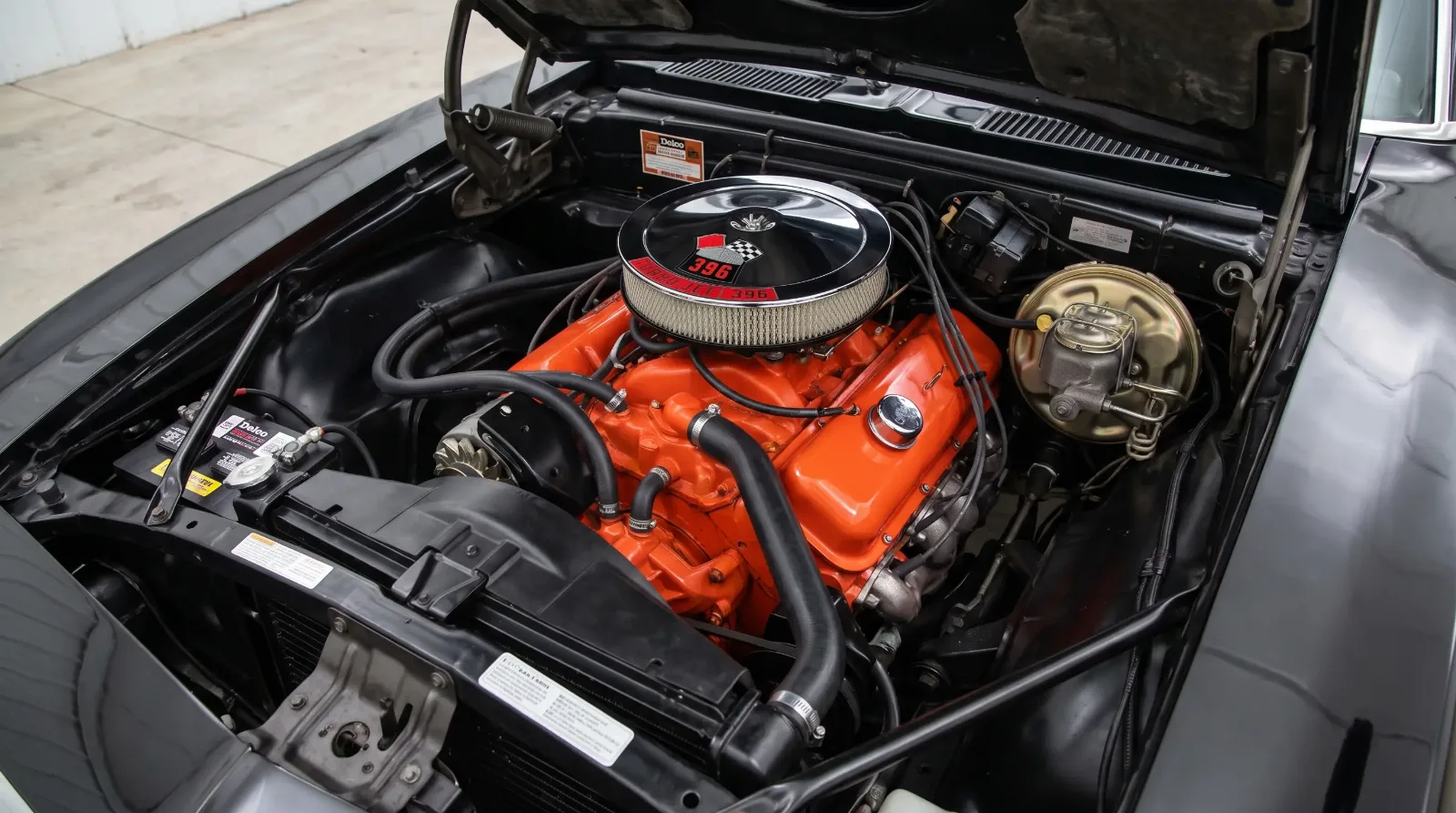
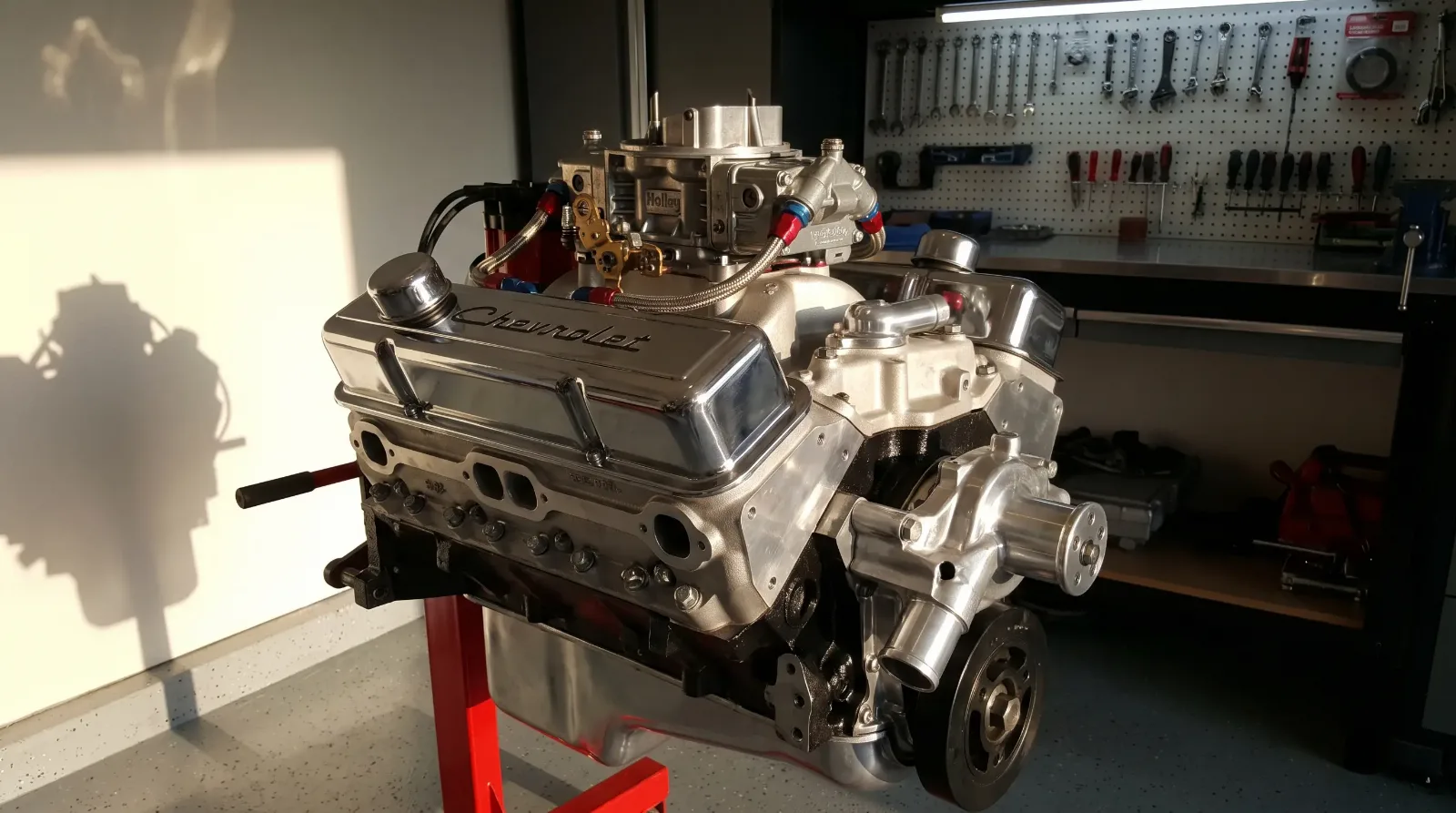
Pull the valve covers off a 1967 or 1968 Z/28 engine and you are looking at something Chevrolet never catalogued as a street engine in the traditional sense. The DZ 302, also referred to in factory documentation simply as the "302" or "Z/28 engine," was assembled with components that Chevrolet sourced from across its small-block parts bin specifically to create a high-revving, short-stroke racing unit that happened to also be streetable. Understanding what those parts are and why they were chosen tells you most of what you need to know about why this engine matters.
The displacement equation
The 302's displacement was not an accident. SCCA Trans-Am rules in 1967 set a maximum of 305 cubic inches (5.0 liters) for the sedan class. Chevrolet needed to get as close to that ceiling as possible while staying legal. The engineering team's answer was to combine two existing production components: the 327 cubic inch block, which had a 4.00-inch bore, with the crankshaft from the 283 cubic inch engine, which had a 3.00-inch stroke. Four inches times three inches gives you exactly 4.00 x 3.00, and 4.00 squared times 3.00 times 3.1416 times 8 cylinders divided by 4 equals 301.6 cubic inches, rounded to 302 for catalog purposes. The math was intentional, and the result was a uniquely short-stroke configuration by Chevrolet's standards at the time.
A short stroke means lower piston speed at any given rpm, which means the engine can spin faster before valve float and mechanical stress become limiting factors. The DZ 302 was designed to live at 6,500 to 7,000 rpm, territory that most American pushrod engines of the era found uncomfortable or outright destructive. The performance Camaro story traces how this engine philosophy shaped everything that followed in the Z/28 line.
Cylinder head castings and valve sizing
The heads on the DZ 302 were large-port, large-valve items. Specifically, the engine used a head casting with 2.02-inch intake valves and 1.60-inch exhaust valves, measurements that were generous for a small-block of that displacement and era. The intake ports were sized for high-rpm airflow rather than low-rpm throttle response, which contributed to the engine's somewhat lumpy behavior at idle and its narrow power band below 4,000 rpm.
The solid-lifter camshaft was another piece of the high-rpm puzzle. Hydraulic lifters, which were standard on most production Chevrolet engines of the period, have an inherent rpm ceiling because oil pressure inside the lifter body cannot collapse fast enough at high engine speeds. Solid lifters maintain a physical gap (lash) between the lifter and the pushrod tip, allowing the valvetrain to function accurately at much higher speeds. Setting the valve lash on a DZ 302 is a hands-on job that needs to be done with the engine warm, and it is a regular maintenance item rather than a set-and-forget adjustment.
Induction: the Holley carburetors
The DZ 302 used a single Holley four-barrel carburetor on most production applications, typically the 780 cfm 4150-series unit. Some race-prepared cars used cross-ram intake manifolds with dual Holley four-barrels, a setup that was sold over the counter through Chevrolet's dealer parts network as a performance accessory. The cross-ram setup was not street-legal in most jurisdictions by the early 1970s, but it appeared on many competition cars and has since become a popular period-correct modification on restored Z/28s.
The intake manifold on the production DZ 302 was an aluminum high-rise single-plane unit. Single-plane manifolds favor high-rpm power over low-rpm torque, which fits the engine's character. A dual-plane manifold, by contrast, improves throttle response and torque below 4,500 rpm at the expense of peak power. The DZ 302 made no apologies for its high-rpm bias.
| Component | Specification |
|---|---|
| Bore x Stroke | 4.00 in x 3.00 in |
| Displacement | 302 cu in |
| Compression ratio | 11.0:1 |
| Intake valve diameter | 2.02 in |
| Exhaust valve diameter | 1.60 in |
| Lifter type | Solid mechanical |
| Rated output (1967-68) | 290 hp (widely regarded as understated; ~350+ in reality) |
| Redline | Approx. 7,000 rpm |
| Primary carburetor | Holley 4150, 780 cfm |
On the street: what owning a DZ 302 actually means
Mechanics who work on these engines regularly note a few consistent characteristics. First, the solid-lifter camshaft calls for a periodic valve lash check, with the factory recommending the inspection roughly every 12,000 miles as part of a normal tune-up, and more often if the car sees track use. Second, the 11.0:1 compression ratio demands premium fuel, and in the current era of pump fuel that often measures 91 or 93 octane rather than the 100-plus octane fuel available in 1967, some owners run slightly retarded timing to prevent detonation. Third, the engine is not happy at city driving speeds. It wants to be at highway rpm at minimum to feel comfortable.
None of these quirks are flaws. They are consequences of building an engine for a purpose. The DZ 302 was designed to run at high rpm on a road race circuit, with a driver who understood the machine's requirements. That it also passed enough emissions certification to be sold as a street car was almost incidental. The 1967 Z/28 article covers how this engine translated into real-world racing results through the Trans-Am program.
Legacy parts and what to watch for
Reproduction parts for the DZ 302 are widely available, which is both good news and a complication for authentication. The 327 block used as the foundation was produced in very large numbers, so finding a correct-appearing block is not difficult. The key identification points are the casting date, which must precede the car's assembly date by several weeks, and the casting numbers, which must match documented production specifications for the appropriate model year.
The 283 crankshaft used in these engines was also a mass-production item, though fewer were produced than the 327 crankshaft. Authentic DZ 302 engines carry a forged crank, and the forging marks differ from cast cranks. A visual inspection by someone familiar with the components will identify the difference. Where the big-block SS story goes next is equally worth understanding, because the L78 396 was the DZ 302's philosophical counterpart in the Camaro lineup.
"Setting valve lash on a DZ 302 is one of those jobs that tells you right away whether the last person who worked on this engine knew what they were doing. The right spec is in the factory shop manual. If the lash is set wrong, you will know it the moment you start the car."
— Mike Sullivan
Sources and notes
Production figures, engine specifications, codes, and dates in this article are cross-referenced from established Camaro references, period documentation, and owner registries. Where sources differ, the most commonly cited value is used. Cost figures are indicative and vary by supplier, region, and condition.
- CRG Research Report - 1967-1969 Camaro Carburetors
- CRG Research Report - 302ci Engine OEM Valve Adjustment
- 1968-1969 Camaro Carburetor, Holley 4053 780 CFM Z/28 DZ 302 - Camaro Central
- The Heart of a Legend: First-Gen Z/28 Camaro's DZ 302 - Chevy Hardcore
- For Sale: A Rare Camaro Z/28 DZ 302 V8 Engine - Silodrome