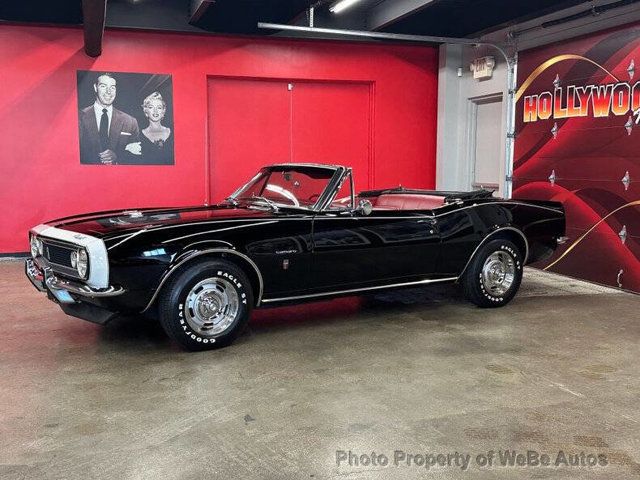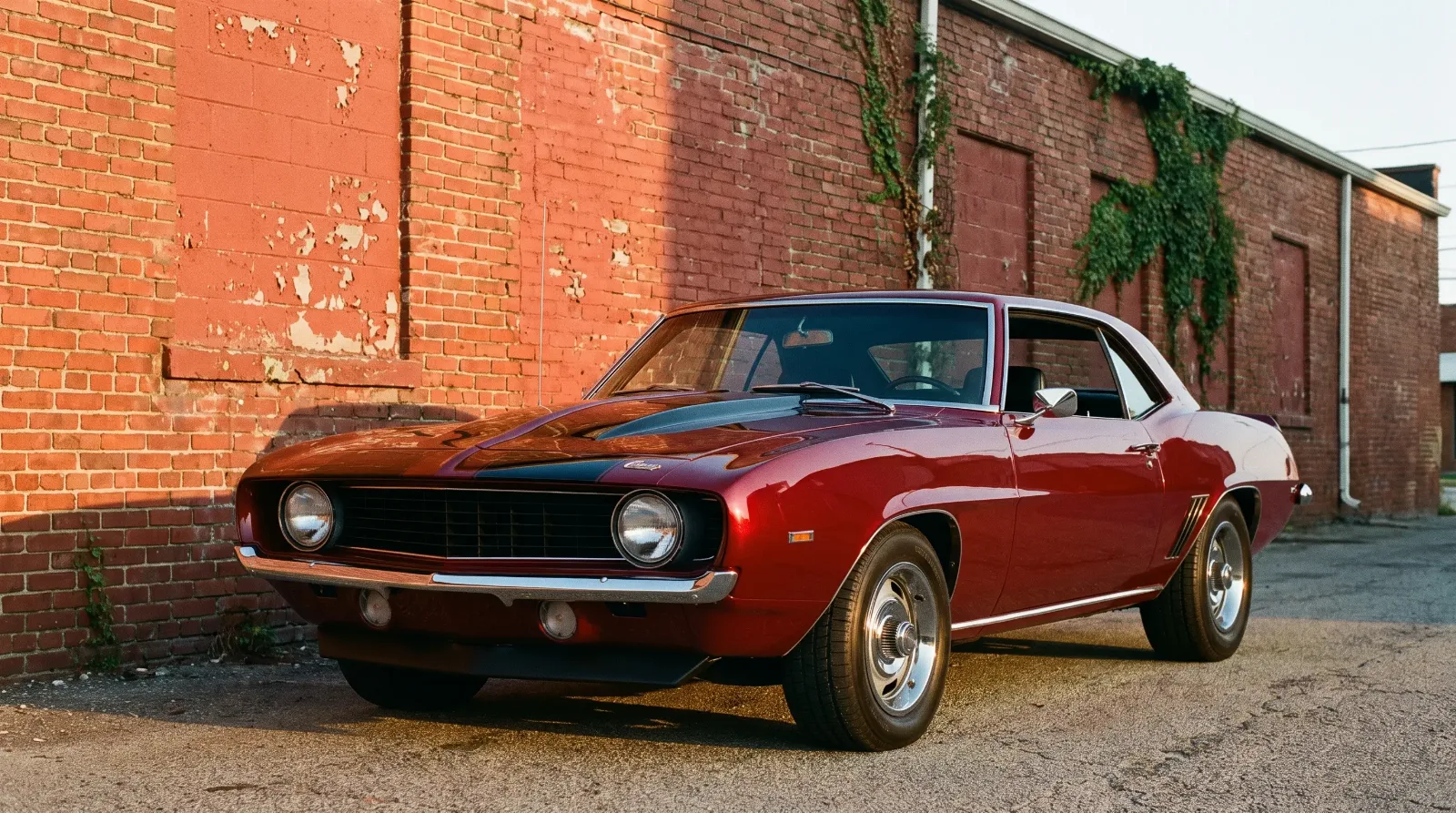

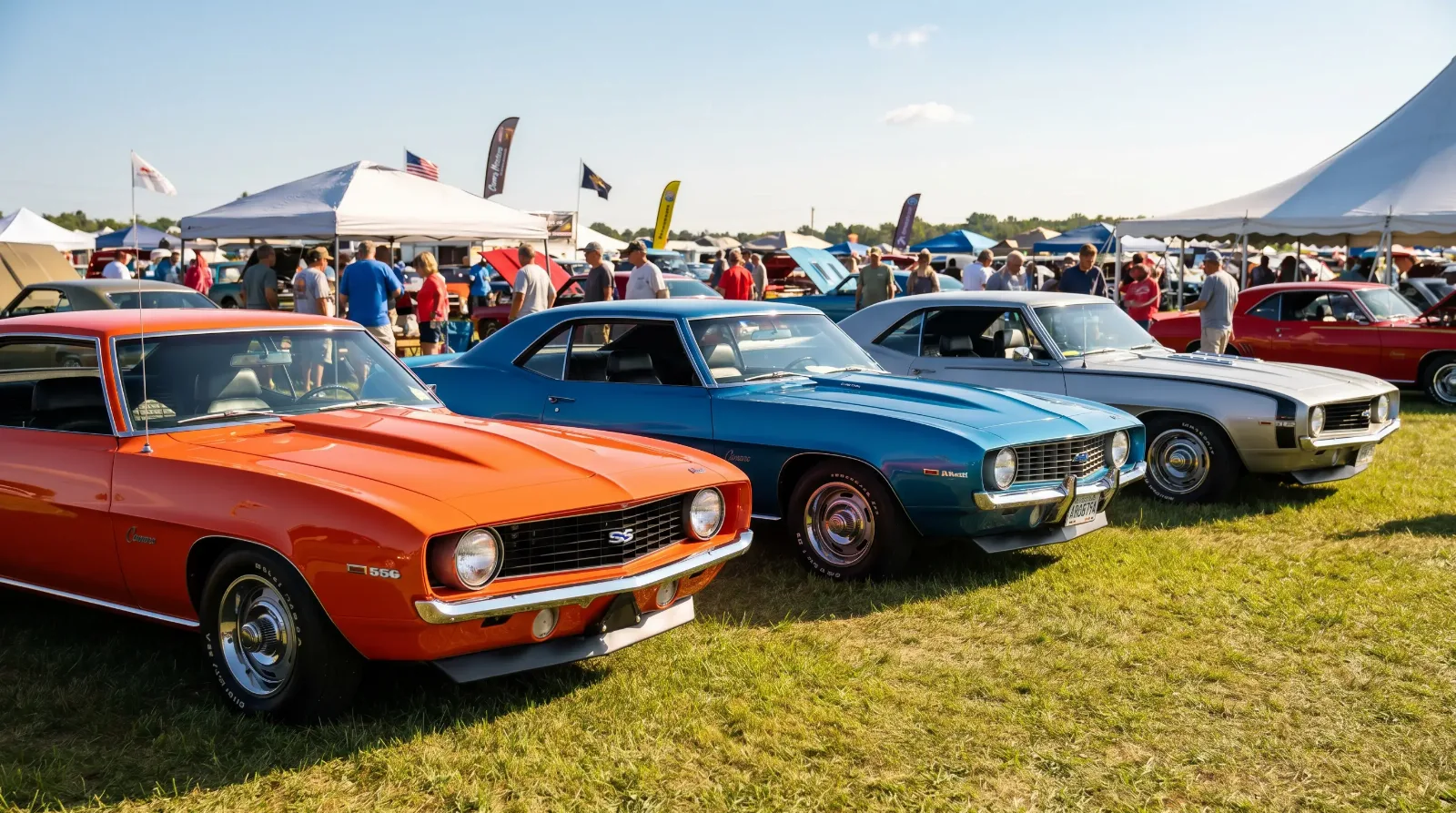
Walk through any classic car show with a row of first-generation Camaros and you will find people debating badges. "Is that a real SS?" "Can an RS also be a Z/28?" The confusion is understandable because Chevrolet designed the first-gen Camaro's option structure so that several packages could be layered on top of one another, creating combinations that look like a single model but are actually multiple RPO codes stacked together. Getting the definitions straight requires going back to what each code actually authorized.
The Rally Sport: appearance, not performance
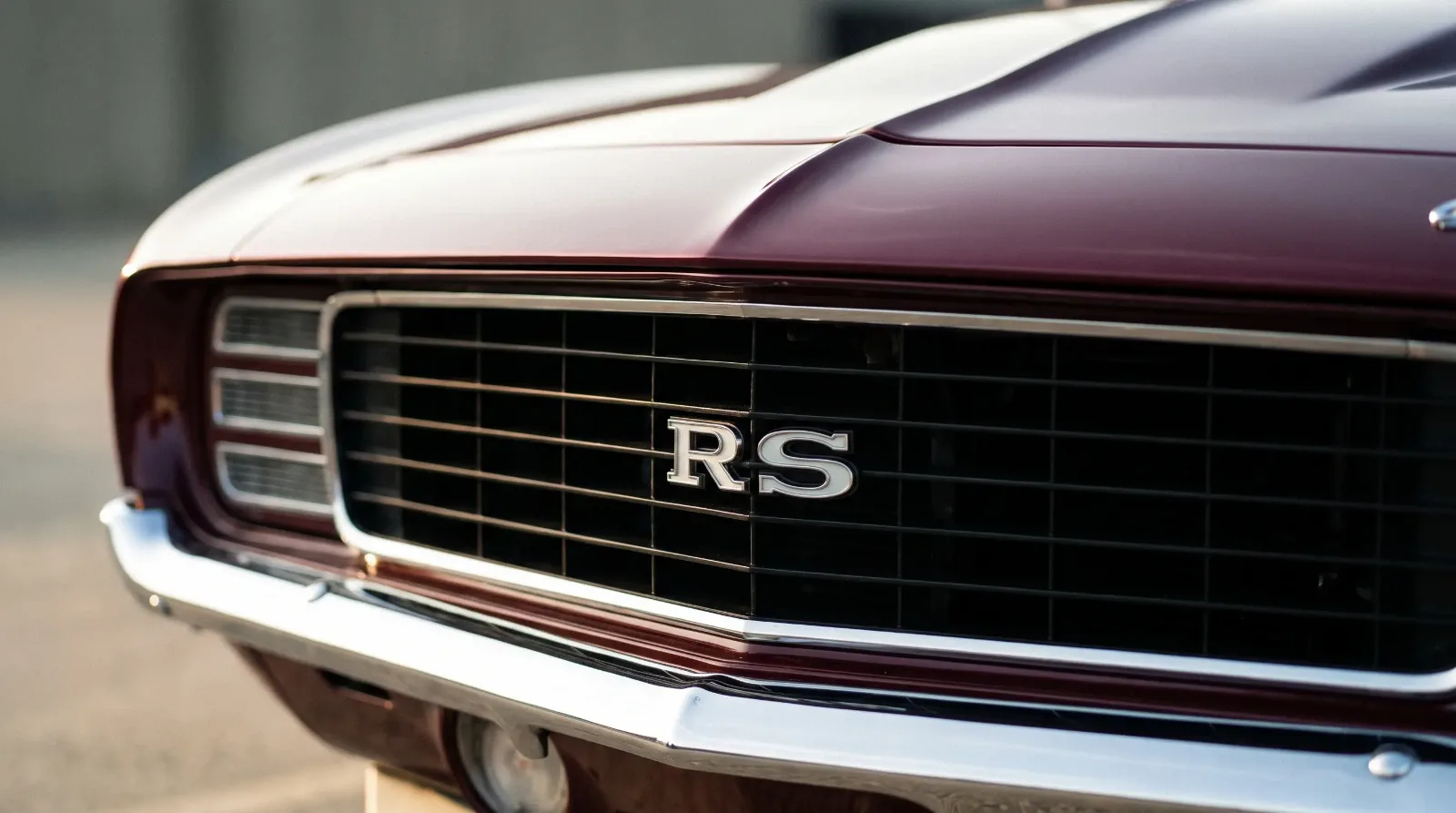
RPO Z22, the Rally Sport package, was an appearance group. It had nothing to do with engine output or suspension tuning. The defining visual element was the electrically operated hideaway headlight doors, which concealed the headlamps behind a body-color panel when not in use. The RS also included a specific grille, back-up lights relocated to the rear valance panel, RS badging, and a few other trim details that differentiated it visually from the base Camaro.
The important point is that the RS package could be ordered with any engine, from the base inline-six through the most powerful V8 options. An RS did not imply any performance content. A six-cylinder RS was a real RS. A Z/28 could be ordered with the RS package, making it an RS/Z28, and that combination did appear in production. Similarly, an SS with the RS package was an RS/SS, another real combination that appeared in dealer lots throughout the first generation. The full Rally Sport story covers the visual details and cultural significance of those hideaway doors in more depth.
The Super Sport: performance content with a visual element
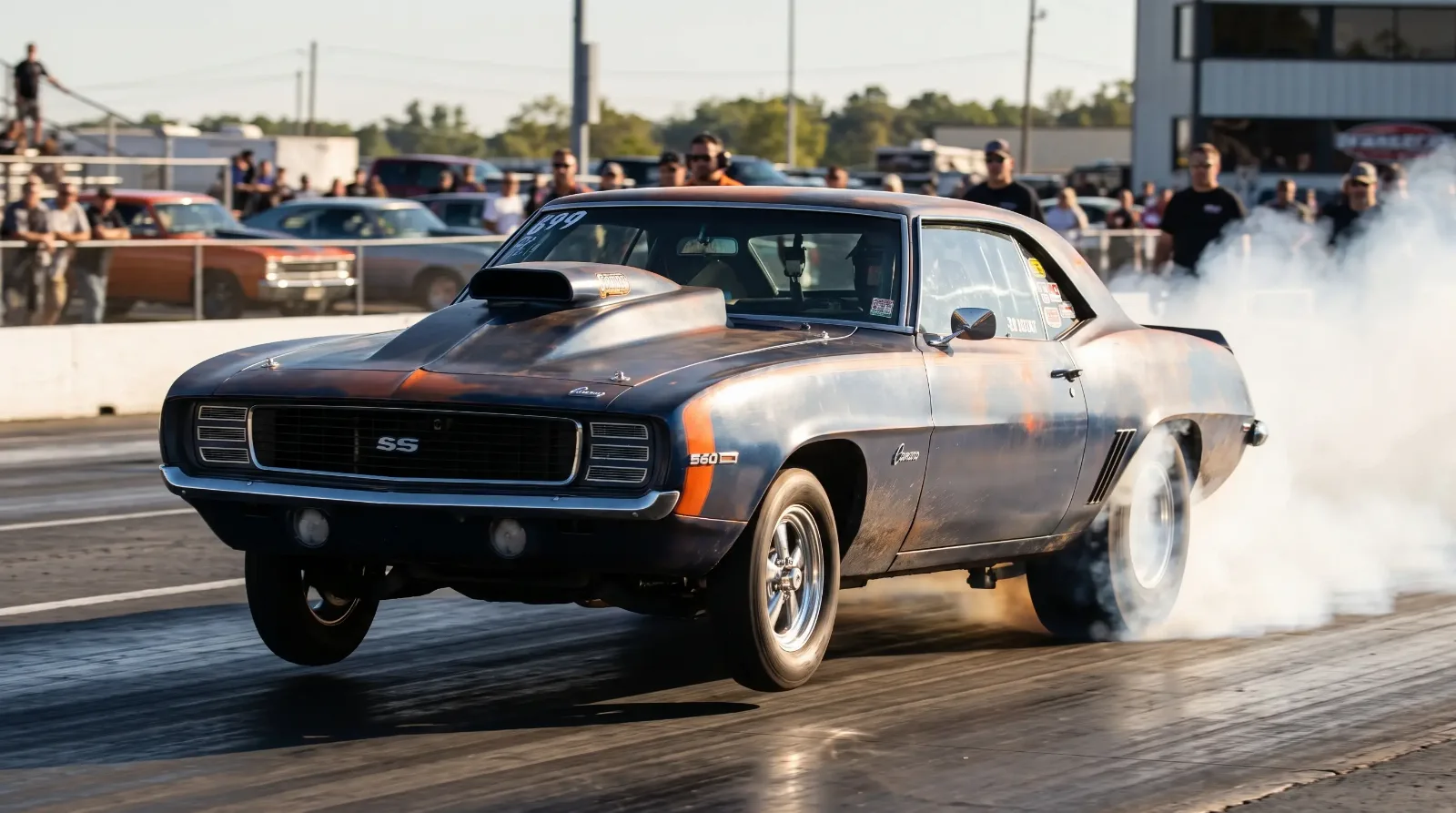
RPO Z27, the Super Sport package, included actual performance hardware along with visual enhancements. Standard content in the SS package included a heavy-duty suspension with stiffer springs and a larger front stabilizer bar, specific SS badges, a blacked-out grille, and a "bumblebee" stripe around the nose on 1967-68 cars. Buyers had to choose an engine from the SS-specific list, which excluded the base inline-six and most lower-output V8s.
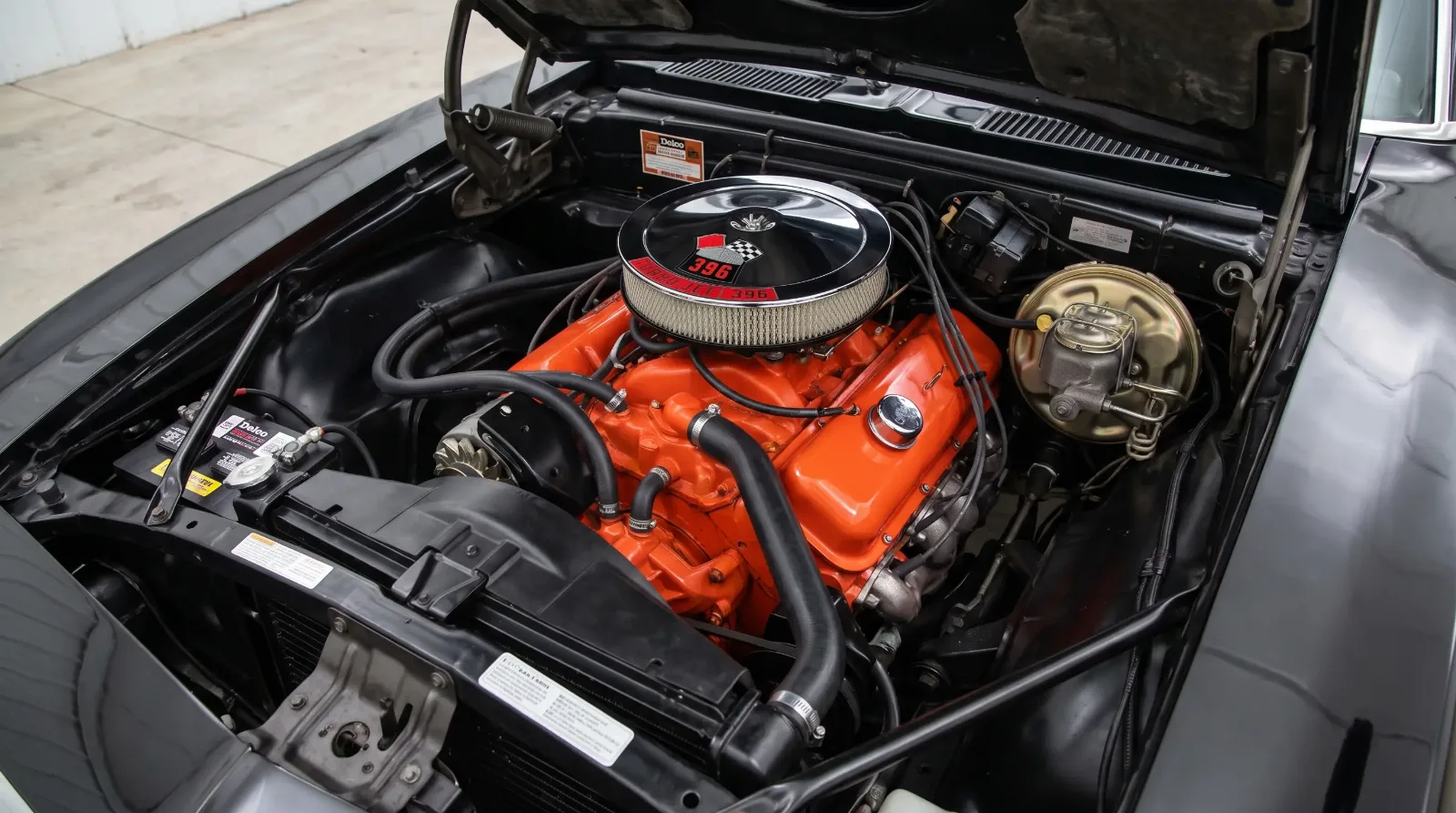
The SS engine options across the first generation included the L48 350 (in later years), the L35 396 at 325 horsepower, the L34 396 at 350 horsepower, and the L78 396 at 375 horsepower. The L78 396 specifically was the hottest regular-production engine the SS could carry. The SS package was about straight-line performance and boulevard presence, not road racing.
The Z/28: built for road racing, not drag racing
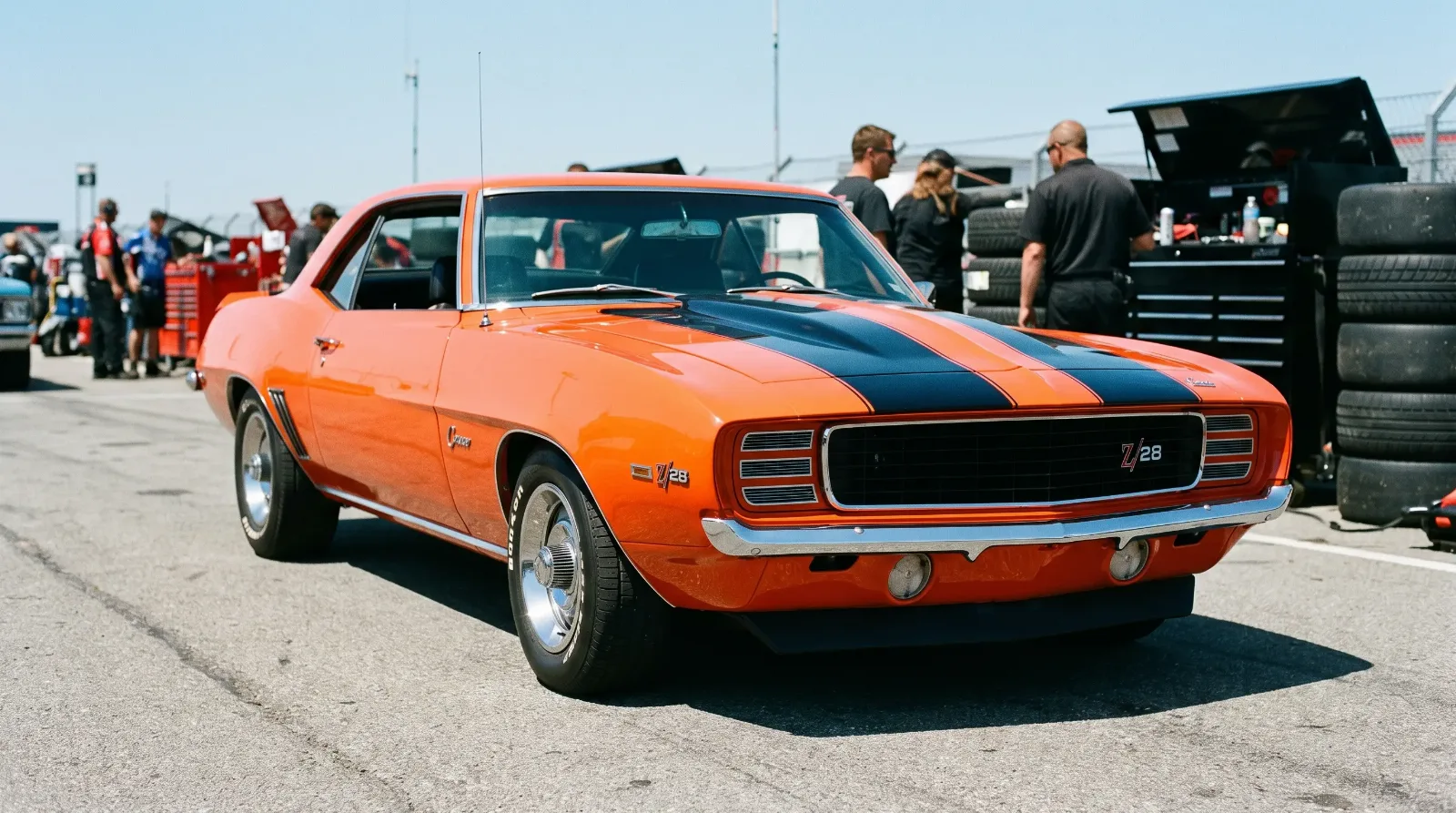
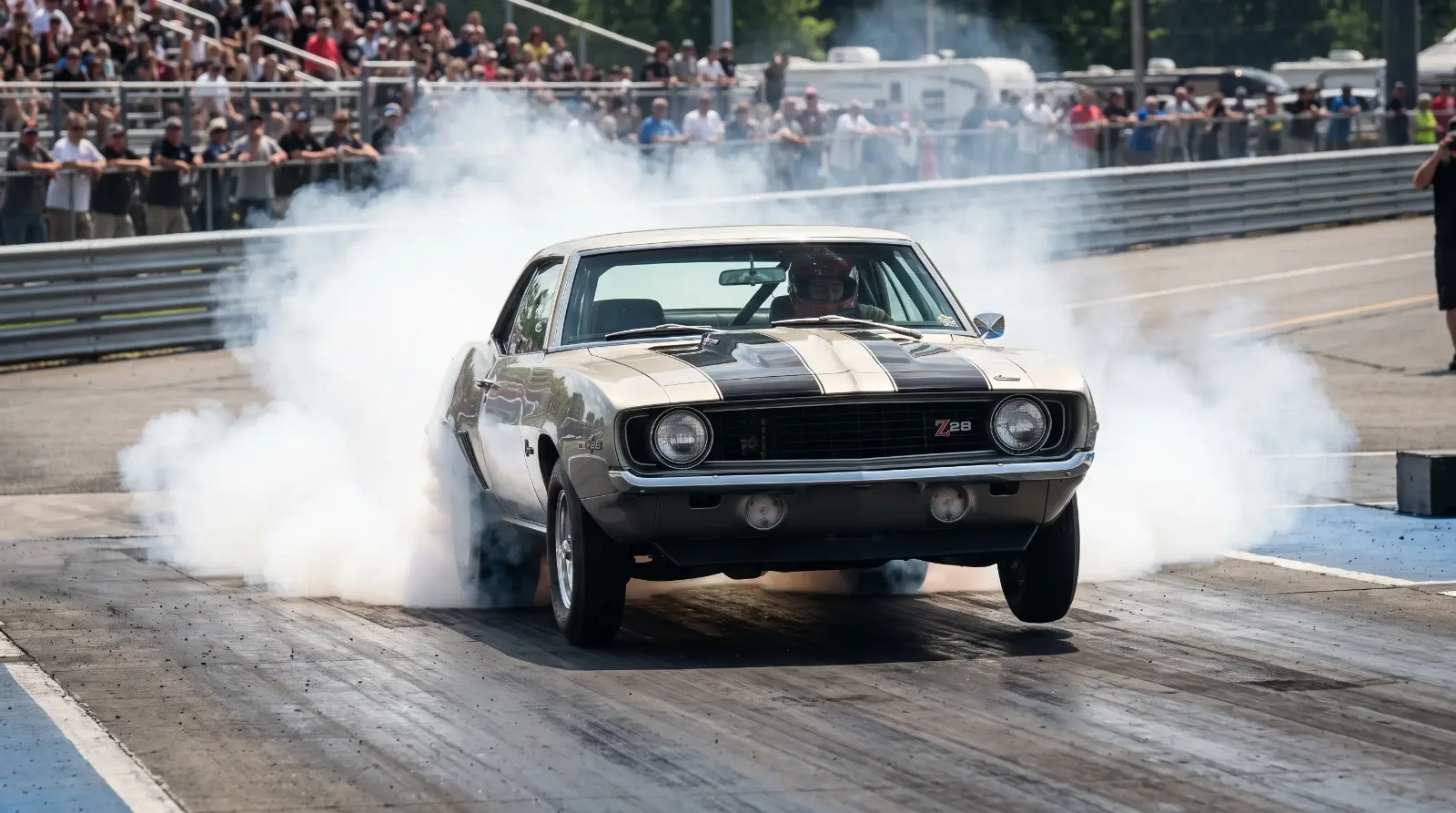
RPO Z/28 was not part of the SS package and could not be combined with it. This is the most common misconception about the badge hierarchy. A Z/28 was not an SS variant. It was a separate performance package built around a completely different engine, the 302 cubic inch small-block, and optimized for road racing rather than drag racing. The DZ 302 engine that powered the Z/28 was a high-revving, short-stroke unit with solid lifters and large-valve cylinder heads, characteristics that prioritized corner exit speed over low-rpm torque.
The Z/28 package included the 302 engine, a close-ratio Muncie four-speed, front disc brakes, heavy-duty suspension, a specific exhaust, and the Z/28 stripe package. What it did not include was any of the SS visual content. You could order the Z/28 with the RS appearance package (Z22), making an RS/Z28, but you could not order it with the SS package (Z27). The two performance packages were mutually exclusive.
The Camaro performance lineup article gives a broader overview of how these packages positioned the Camaro against competitors like the Mustang and Firebird, and why Chevrolet chose to separate road racing and drag racing orientations into distinct packages rather than one unified performance model.
How combinations worked in practice
| Combination | Valid? | Notes |
|---|---|---|
| RS only (Z22) | Yes | Appearance package, any engine |
| SS only (Z27) | Yes | Performance package, big-block or late small-block V8 |
| Z/28 only | Yes | Road-racing package, 302 engine mandatory |
| RS + SS (Z22 + Z27) | Yes | Very common combination, adds RS appearance to SS car |
| RS + Z/28 (Z22 + Z/28) | Yes | Less common; RS appearance on Z/28 car |
| SS + Z/28 (Z27 + Z/28) | No | Mutually exclusive packages |
| RS + SS + Z/28 | No | Not possible; SS and Z/28 cannot combine |
Why this matters for buyers and collectors
The package structure affects value considerably. An RS/SS is generally worth more than a plain RS or plain SS in comparable condition, because it combines the visual content of both packages. A Z/28 commands its own premium regardless of RS content, and a documented RS/Z28 is rarer than either alone. The key word throughout is "documented." Badges, stripes, and even the physical packages themselves can be added to any Camaro body after the fact. The trim tag, build sheet, and VIN decode are what separate a real example from a dressed-up base car.
The full Chevrolet Camaro history provides the production context that helps explain why certain combinations were produced in small numbers and why they command strong premiums today. Understanding the badge hierarchy is step one; finding documentation to prove what a specific car originally was takes considerably more work.
"I have seen beautifully badged RS/SS/Z/28 cars at auction that the sellers clearly believed were real. The three-badge combination is impossible from the factory. That does not stop people from putting all three badges on a base six-cylinder car and pricing it like a Z/28. Know what you are looking at before you write a check."
— Mike Sullivan
The Rally Sport package has its own detailed story. Read about the RS Camaro's hidden headlights and first-generation style next.
Sources and notes
Production figures, engine specifications, codes, and dates in this article are cross-referenced from established Camaro references, period documentation, and owner registries. Where sources differ, the most commonly cited value is used. Cost figures are indicative and vary by supplier, region, and condition.