
Land Rover Defender Buyer's Guide
The Land Rover Defender is the closest thing to a purpose-designed military vehicle that civilians can legally buy — an aluminum-bodied, coil-sprung 4x4 of extraordinary off-road capability that has been refined over 68 years of continuous production without ever compromising its fundamental character.

Emily Chen here. The Defender rewards the kind of analytical ownership that I find most satisfying: understanding why the engineering decisions were made, what their implications are in use, and how to maintain a 30-year-old vehicle to modern reliability standards. The Defender is not a comfortable car in the conventional sense. It vibrates, it's loud at highway speed, the steering is heavy, and the seating position looks like something from a 1953 farm tractor — because it essentially is. None of that matters when you engage low-range and point it down a slope that no other production vehicle would survive.
The "Defender" name was applied retroactively in 1990 to distinguish the original Land Rover from the new Discovery. But the car being called a Defender — the 90/110/130 designation referring to wheelbase in inches — dates from 1983 when Land Rover moved from leaf springs to coil springs. This guide covers the 1983–2016 coil-spring era.
The Coil Spring Revolution: 1983
The original Land Rover from 1948 to 1983 used leaf springs — simple, robust, appropriate for the era. In 1983, Land Rover replaced the front and rear leaf springs with coil springs on the 90 and 110 body styles, creating what they called the "Ninety" and "One Ten." The improvement in ride quality and axle articulation was significant. Coil springs allow greater suspension travel, which means better ground contact on uneven terrain — the opposite of what you want for everyday comfort but exactly what you need for serious off-road use.
This 1983 redesign established the platform that carried the Defender through to the end of production in 2016. Thirty-three years on essentially the same architecture, with engine and specification updates but no fundamental change to the body structure, the ladder frame, or the basic 4x4 layout.
Aluminum Body Over Steel Frame
The Defender's construction is the key to understanding both its durability and its specific failure modes. The body panels are aluminum — all of them, including the tub, the bonnet, the door skins. The chassis is steel. This combination delivers significant corrosion resistance on the body panels (aluminum doesn't rust), but creates a galvanic corrosion problem where aluminum and steel meet in the presence of moisture.
Engine Progression
The Defender ran several engine families across its production life, and the engine is one of the most important variables in any purchase decision.
| Engine | Code | Years | Notes |
|---|---|---|---|
| 3.5L V8 Petrol | Rover V8 | 1983–1994 | Smooth, thirsty; loved for character |
| 2.5L 4-cyl Diesel NA | 19J / 12J | 1983–1990 | Slow but durable; agricultural character |
| 2.5L Turbo Diesel | 200Tdi | 1989–1994 | Landmark improvement; reliable |
| 2.5L Turbo Diesel | 300Tdi | 1994–1998 | More refined than 200Tdi; well proven |
| 2.5L Turbo Diesel | Td5 | 1998–2006 | Electronic injection; more power but ECU-dependent |
| 2.4L / 2.2L Diesel | Puma | 2007–2016 | Ford-derived; modern but some reliability concerns |
The 300Tdi is the community consensus sweet spot: mechanical injection (no ECU dependency), proven reliability, sufficient power for most uses, and an extensive aftermarket. The 200Tdi is equally reliable and simpler; the Td5 is more powerful but adds electronic complexity. The Puma engines (Defender's final production years) are more refined but less characterful.
The NAS (North American Specification): 1993–1997
Between 1993 and 1997, Land Rover sold the Defender in the United States as the "NAS" model — a specially prepared version meeting American safety and emissions standards. Only about 7,000 NAS Defenders were sold across four years: primarily the 90 (the short-wheelbase variant) with the 3.9L Rover V8 petrol engine. These are the only Defenders that can be legally imported without the 25-year rule.
NAS values have risen dramatically — a clean original 1997 NAS 90 now commands $40,000–$80,000+, compared to $15,000–$25,000 a decade ago. The combination of legal status and genuine rarity has created a market that will only tighten as examples leave the legal driver pool through accidents and deterioration.
The Galvanic Corrosion Problem
Every Defender purchase requires a bulkhead inspection. The bulkhead is steel; it contacts aluminum body components in dozens of places; and galvanic corrosion (the electrochemical reaction between dissimilar metals in the presence of moisture) attacks the steel at every contact point. A severely corroded bulkhead requires either a new unit (expensive) or extensive welded repair (also expensive and technically challenging). Inspect it first, price it into the purchase, or walk away.
"I've approached every Defender I've owned the way I approach any engineering challenge: document the known issues, address them systematically, understand why each component was designed the way it was. The Defender rewards that kind of engagement. It does not reward being treated like a modern car."
— Emily Chen
Browse Land Rover Defender listings
 Dealer
 United States
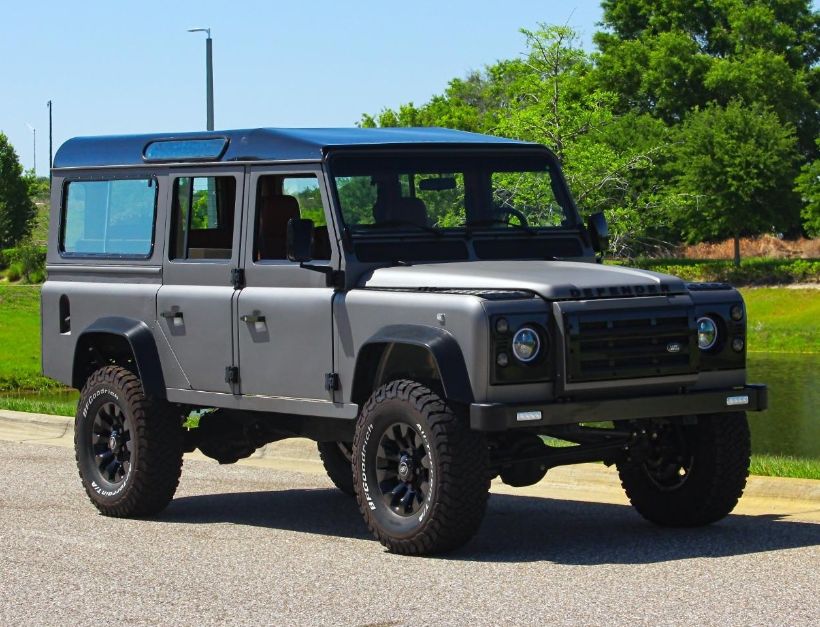
1997 Land Rover Defender
 Dealer
United States
Dealer
United States
1989 Land Rover Defender
What to Look For
The bulkhead inspection is mandatory before any Defender purchase — probe the steel bulkhead at every aluminum-to-steel contact point in the engine bay and inside the cab footwells. Rust perforations in the bulkhead range from manageable to catastrophically expensive depending on severity and location. Inspect the A-pillar bases and the sill sections where the aluminum tub contacts the steel chassis outriggers. On Td5 cars, connect an OBD scan tool and check for stored fault codes — ECU and wiring loom issues are common and non-trivial. On the Rover V8 NAS cars, check for oil leaks from the rear main seal and the rocker covers. Verify both gearboxes (main transmission and transfer case) shift correctly without crunching — worn synchromesh is common. Test the freewheeling front hubs if present and verify 4WD engagement in both high and low range.Pre-Purchase Checklist
-
Bulkhead Inspection
Probe the steel bulkhead from engine bay and cabin footwells — corrosion here is the costliest Defender repair. -
Sill and Outrigger Condition
Check aluminum tub sill contact points with steel chassis outriggers for galvanic corrosion. -
Td5 ECU Scan
On Td5 cars, connect OBD scan tool — ECU and wiring loom faults are common and non-trivial. -
Transfer Case Function
Test 4H, 4L, and the transition between them — verify clean engagement without grinding. -
Swivel Ball Seals
Inspect front swivel balls for oil leaks — a near-universal wear item but indicates maintenance standard. -
NAS Documentation (if applicable)
For NAS 90s, verify the complete documentation chain proving US-legal specification. -
Gearbox Synchromesh
Test all gear changes — worn synchromesh is common and a rebuild is expensive. -
Rover V8 Oil Leaks
On V8 NAS cars, check rear main seal and rocker covers — seals deteriorate with age. -
Service History
Documented service history is the most important single indicator of Defender value — any gap requires explanation.
Common Issues
Bulkhead corrosion — the most expensive and most common structural issue. Sill and chassis outrigger corrosion at aluminum-to-steel contact points. Td5 ECU failures and wiring loom deterioration. Rover V8 head gasket issues on overheated examples. Transfer case oil leaks from aged seals. Front swivel ball oil seal leaks (common on all Defenders). Rear main seal leaks on V8 cars. Door hinge wear causing misalignment and water intrusion. On late Puma-engine cars, timing chain tensioner issues. Fuel injection injector seal failures on 300Tdi.More Defender for sale
 Dealer
United States
Dealer
United States
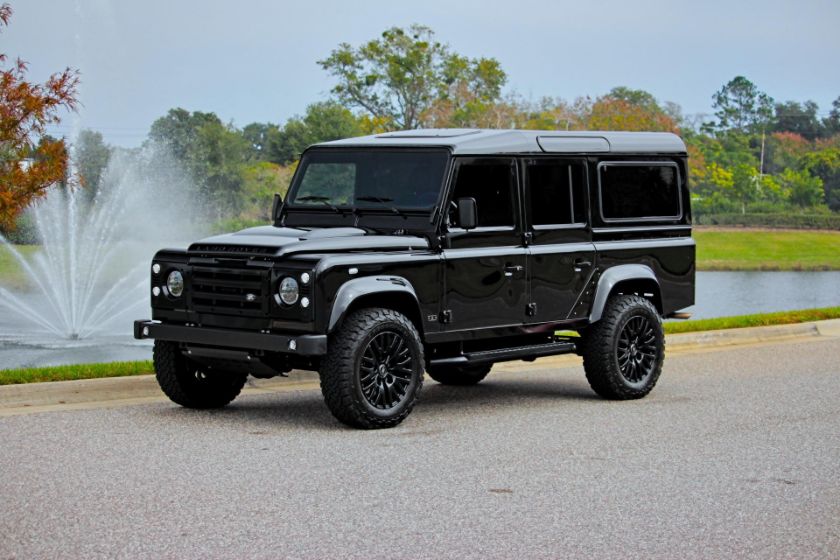
1989 Land Rover Defender
 Dealer
United States
Dealer
United States
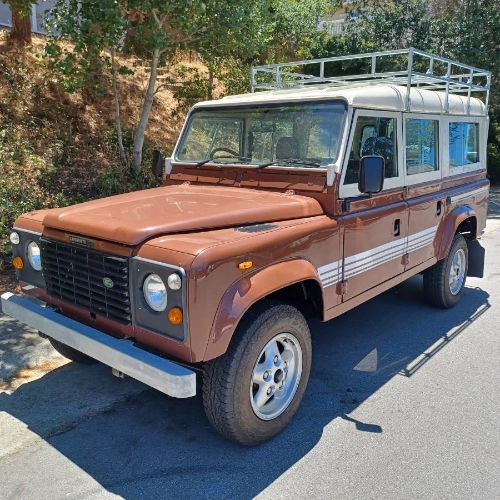
1983 Land Rover Defender
Pricing Guide
1983–1993 Defender 90/110 (200Tdi or NA diesel): $15,000–$35,000. 1994–1998 Defender 300Tdi: $22,000–$45,000. 1998–2006 Defender Td5: $20,000–$40,000. 2007–2016 Defender Puma: $30,000–$65,000. NAS 90 (1993–1997, US-legal): $40,000–$85,000+. Any Defender with documented service history commands a significant premium — maintenance documentation is the single most valuable thing a seller can provide.Fun Facts
The Land Rover Defender was in continuous production from 1983 (as the 90/110) through 2016 — 33 years on essentially the same aluminum-body-over-steel-ladder-frame architecture. The original Series I Land Rover of 1948 shared the basic concept, making the lineage 68 years old when production ended. The Defender was the official vehicle of the British Army, the UN, and virtually every humanitarian organization operating in difficult terrain — a track record that no automotive advertising can match. The NAS (North American Specification) Defenders sold in America 1993–1997 totaled approximately 14,000 examples across all variants — making them genuinely rare on the global scale.Frequently Asked Questions
Ready to find your Defender?
Browse 6+ active Land Rover Defender listings on Classic Cars Arena.
View Listings →