Elite Dealer

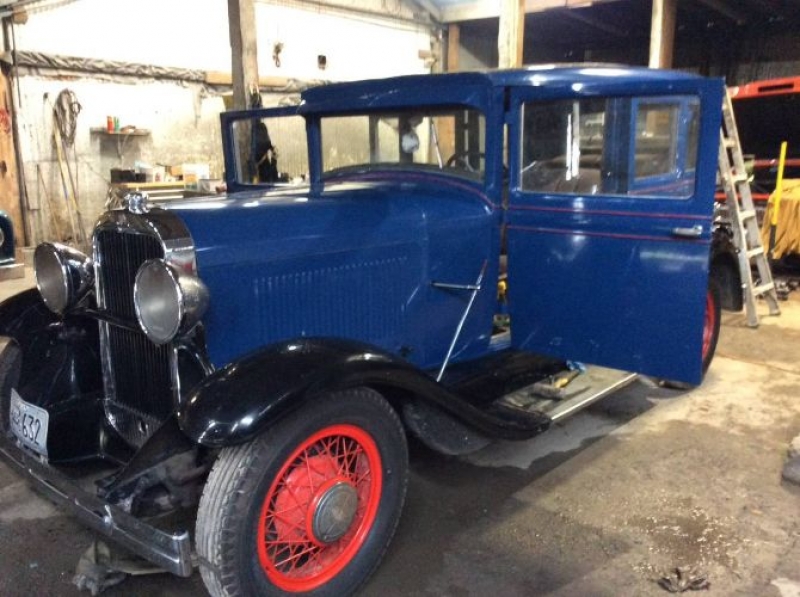
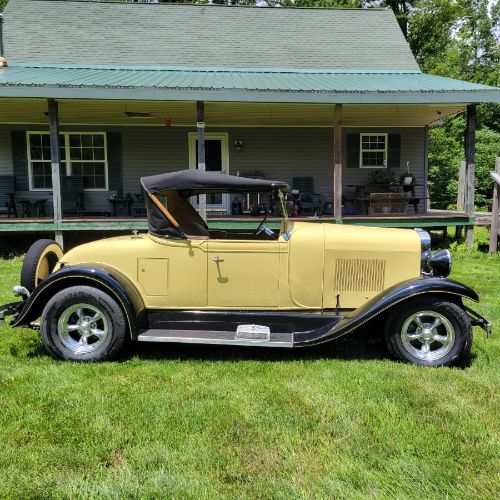
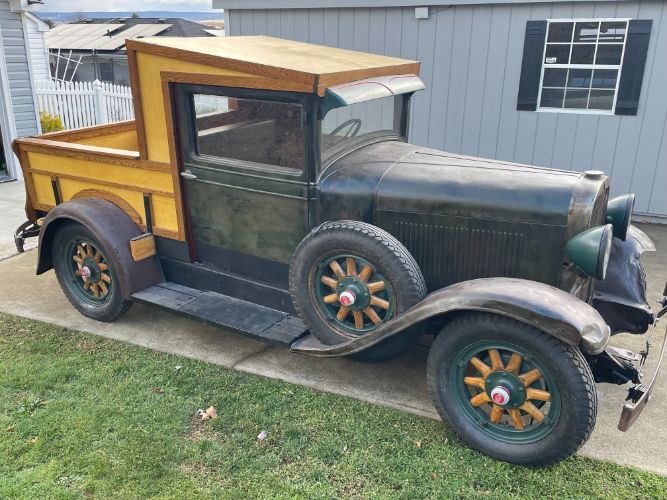
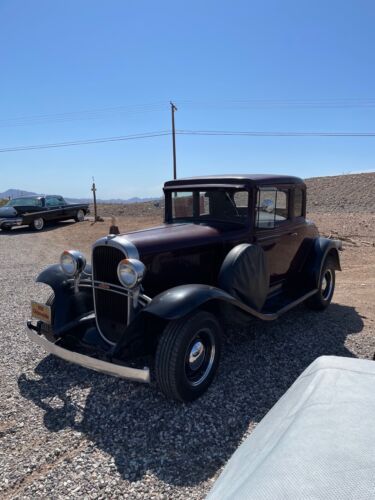
1968 Oldsmobile Cutlass

$27,995

1968 Oldsmobile Cutlass

Vehicle Details

Make

Oldsmobile

Model

Cutlass

Year

1968

Mileage

50,000 miles

VIN

AMS37469

Body Type

Convertible

Transmission

Automatic

Fuel Type

Gasoline

Engine

V8 2 Barrel

Description

1968 Oldsmobile Cutlass S convertible all stock original. Original condition, auto, AC that works, power top, new tires, battery, fuel pump, brakes, new master cylinder, shocks, exhaust, just completely serviced. Solid car, no rust V8 2 barrel.

Original mileage. You can drive this car anywhere with confidence. Please Note The Following **Vehicle Location is at our clients home and Not In Cadillac, Michigan. **We do have a showroom with about 25 cars that is by appointment only **Please Call First and talk to one of our reps at 231-468-2809 EXT 1 **

Classic Oldsmobile Cutlass Buyer's Guide

Full guide
M
Mike Sullivan
Muscle Cars
1961–1988
~4 min read
Updated Apr 2026
Definitive buyer's guide for classic Oldsmobile Cutlass 1961-1988. F-85, A-body, and G-body generations, 442 trim verification, frame inspection, current pricing.
This guide covers
✓ 10-point inspection checklist
✓ Common issues & what to avoid
✓ In-person inspection guide
✓ Market pricing by year & condition
✓ 5 FAQs answered
✓ History & fun facts

Oldsmobile Cutlass Market Overview

Based on 76 Oldsmobile Cutlass listings currently on ClassicCarsArena.com

76
Listed Now
$29,431
Avg. Asking Price
1963–1993
Year Range
Price Position on Our Site — Average Range
This car: $27,995
Low: $6,995 High: $149,495
Transmission Distribution
Automatic 76% ◄
Manual 9%
Condition Distribution
Excellent 4%
Good 5%
Fair 7%
Poor 4%
Data from ClassicCarsArena.com listings Browse all 76 listings →
💰

What is this car worth?

Check sold prices for the 1968 Oldsmobile Cutlass

Valuation Tool →

Classic Oldsmobile Cutlass Buyer's Guide

The Oldsmobile Cutlass launched for 1961 as the F-85 compact, became the foundation of the legendary 442 muscle-car program in 1964, and eventually grew into Oldsmobile's highest-volume nameplate by the late 1970s. Across twenty-eight years of classic-era production (1961-1988), the Cutlass spawned multiple legendary muscle-car variants: the original 442 (1964-1971), the Hurst/Olds limited editions (1968-1984), and the W-30 W-31 high-performance packages. The 1968-1972 A-body Cutlass 442 cars represent the high-water mark of Oldsmobile factory performance. The 1973-1977 Colonnade-body cars and the 1978-1988 G-body cars represent the bargain entry into Cutlass ownership today. This guide covers what every buyer should verify before paying premium money for any 442 or Hurst/Olds variant.

What to Check Before Buying

Verify body style code on cowl tag — Cutlass was offered in numerous body styles. Verify trim level and original equipment.
For 442 claims, verify build sheet and stampings — Oldsmobile has no PHS service; verify the build sheet, cowl tag, and engine casting plus stamp code. Mandatory for 442 verification.
Cross-reference VIN engine code with block casting — 5th digit of VIN identifies engine. 330, 350, 400, 455 V8s have specific casting numbers.
Read engine stamp code on front pad — Two-letter code identifies specific engine. Critical for 442 W-30 and W-31 verification.
Inspect A-body frame at body mount points — Same chassis as Chevelle, GTO, Buick Skylark, GS. Frame rust here = $1,500-$3,500 minimum repair.
Magnet test rear quarters and rocker panels — Body filler is non-magnetic. Driver-quality cars universally have filler.
Check trunk drop-offs and trunk floor — Lift trunk mat. Standard rust zones across all generations.
For Hurst/Olds claims, demand specialist authentication — Hurst/Olds 1968-1984 limited-edition cars require specific verification.
Examine cowl seam at windshield base — Where windshield meets firewall. Cowl rust drains into cabin and rots floor pans.
Compression test all eight cylinders — Should read 145-185 PSI uniformly. Variance over 15% = head gasket or worn rings.

Common Issues

Cutlass rust patterns follow the GM A-body and G-body convention. The 1968-1972 A-body cars rust at body mount points, lower rear quarters, trunk drop-offs, frame rails, floor pans, cowl seam, and lower fenders. The 1973-1977 Colonnade-body cars share rust patterns with similar A-body construction. The 1978-1988 G-body cars rust at rocker panels, lower quarter panels, trunk pan, and rear shock towers (unibody construction on G-body). Mechanically, the Oldsmobile small-block V8s (330, 350) and big-block V8s (400, 455) are bulletproof when maintained. The 350 Rocket V8 commonly exceeds 200,000 miles with proper service. Common issues include broken motor mounts on big-block cars, worn timing chains, leaky valve covers and oil pan gaskets, and tired Rochester Quadrajet carburetors. The 1973-1976 Olds 455 with the W-30 cam package required premium fuel — modern unleaded fuel can cause valve seat recession on these high-performance variants. The Turbo Hydra-Matic 350 and 400 transmissions are essentially indestructible. The Muncie M20/M21 four-speeds are robust. The Olds 12-bolt rear axle (in 442 and high-performance variants) is strong; the 8.5-inch 10-bolt (in base Cutlass) is weaker but durable. Electrical issues are universal classic-car concerns. The original wiring harnesses are 50+ years old and prone to chafing. The voltage regulators on 1970-1972 cars commonly fail. The dashboard climate control panel on 1973-1988 cars commonly fails — replacement requires specialist work.

What to Look For

The build sheet, cowl tag, and engine stampings are the gold-standard verification for any Cutlass 442 or Hurst/Olds claim. Oldsmobile has no PHS-style records service, so this physical evidence is what matters. The report confirms original engine, transmission, axle ratio, paint code, options, and dealer destination. Without a build sheet and matching stampings, treat all 442 claims as Cutlass S or Supreme clones with 442 trim added. For 442 claims (1968-1971 stand-alone models), verify the body code on the cowl tag identifies the 442 body style. The 5th digit of the VIN identifies the engine code. Engine identification by casting numbers and stamping codes is essential. The Oldsmobile V8 (330, 350, 400, 455) all have specific casting numbers on the back of the block. The two-letter stamp code on the front of the block (just below the cylinder head, on a flat pad) identifies the specific engine type. The most desirable codes are W-30-specific codes for 1966-1972 cars. For W-30 claims, demand specialist authentication. The W-30 package included a hot performance camshaft, dual-snorkel air cleaner, fiberglass inner fender wells, and special intake manifold. Re-stamped 455 blocks are well-documented forgeries. Specialist inspection ($200-$500) is mandatory for any car priced over $80,000. For Hurst/Olds claims, verify the Hurst-specific exterior trim package and unique badging. The 1968 H/O (Peruvian Silver and black two-tone), 1972 H/O (gold and white), 1975 H/O W-25 (gold and white), and 1983-1988 H/O variants each have specific equipment. The cowl tag and Hurst/Olds registry confirm original equipment. Frame inspection is the second non-negotiable. The A-body perimeter frame rusts at body mount points and front kick-up. Probe with a screwdriver. Body mount replacement is $1,500-$3,500 if the frame is solid; full frame replacement is $8,000-$15,000. Document the car. Photograph every panel, every cowl tag, every engine stamp, every chassis number, and every identifying tag. Build the case before you wire money.

Price Guide

1961-1963 F-85 Cutlass: driver-quality cars run $14,000-$28,000. The 1962-1963 Jetfire Turbo (the first turbocharged American production car) commands $25,000-$45,000+ for documented examples. 1964-1967 A-body Cutlass with 442 option package: driver-quality 442 cars run $35,000-$60,000. Documented 1965-1966 442 cars: $45,000-$75,000. The 1965 442 (the launch year) is increasingly desirable. 1968-1972 A-body Cutlass 442 (stand-alone model): driver-quality cars run $42,000-$75,000. Documented 442 W-30 cars: $80,000-$180,000+. The 1969-1970 442 W-30 cars are the high-water mark — $90,000-$220,000+ documented. 1973-1977 Colonnade-body Cutlass: driver-quality cars run $14,000-$28,000. Documented 1973-1974 442 cars (with the 455 V8): $32,000-$58,000. The 1975-1976 Hurst/Olds W-25 (gold and white): $25,000-$48,000. 1978-1988 G-body Cutlass: driver-quality cars run $10,000-$25,000. Documented Hurst/Olds 1983-1984 cars: $18,000-$32,000. The 1986-1988 442 (G-body, with 307 V8) commands $14,000-$28,000. Cutlass Supreme (high-trim) cars trade at modest premium over base Cutlass models across all eras. Cutlass S (sport-trim) cars are similarly modest premium. Project Cutlasses start around $8,000-$18,000 across most generations. Stripped roller candidates: $3,500-$8,000.

Did You Know?

The 1962 Oldsmobile F-85 Jetfire was the first turbocharged production passenger car in American automotive history. The Jetfire Turbo featured a 215 cubic inch aluminum V8 with a turbocharger producing 215 horsepower — at the time, an exceptional one-horsepower-per-cubic-inch achievement. The complexity of the turbocharging system proved unreliable in service, and Oldsmobile quietly discontinued the Jetfire after 1963 and offered free retrofits to remove the turbocharging system. Surviving original-Jetfire-equipped F-85s are extraordinarily rare and command significant premium pricing. The Oldsmobile 442 designation originally stood for "4-barrel carburetor, 4-speed manual, dual exhaust" — describing the actual factory equipment of the original 1964 option package. The naming convention paralleled Pontiac's GTO marketing approach. By 1968, the meaning had evolved in marketing literature ("400 cubic inch V8, 4-speed manual, 2 exhausts"), but the original three-element interpretation was historically accurate. The Cutlass became Oldsmobile's highest-volume nameplate in 1976, when the Cutlass Supreme coupe became the best-selling car in America for the model year. The Cutlass nameplate accounted for approximately 60% of total Oldsmobile sales through the late 1970s and early 1980s. The 1985-1988 Cutlass Supreme became the basis for the Cutlass Calais and Cutlass Ciera variants. The original Cutlass nameplate was discontinued after 1988 production, with the Cutlass Supreme name moving to a different platform for 1988-1997 production.

How Does It Compare?

Head-to-head matchups for the Oldsmobile Cutlass:

Browse all comparisons →

Similar Listings

Contact Seller

Share only if you'd like the seller to call you directly.

By contacting this seller you accept the Visitors Agreement

Call this seller?

You're about to call Classic Car Deals about the 1968 Oldsmobile Cutlass.

+1 (231) 468-2809

Before you call: Never wire money or share bank info over the phone. Read our scam-avoidance tips.
Call Now

Send to a Friend

Share this 1968 Oldsmobile Cutlass listing.

Report this Ad

Help us keep the marketplace clean. Our moderation team reviews every report within 24 hours.