What is the difference between Chevy LS and LT engines?

In my shop, the most common question from restoration customers who want modern drivability under a classic hood is: LS or LT? The answer used to be simple — it is still LS for 95% of applications. Here are the actual differences so you can make an informed call for your specific build.
LS Family (Gen III/IV, 1997–2013)
The LS replaced the old small-block Chevy in 1997 and ran in various forms through 2013. Key characteristics:
- All-aluminum block (most variants) or cast iron (truck versions like the LQ4/LQ9)
- Pushrod OHV design — compact dimensions that fit easily in classic car engine bays without modifying firewalls
- Returnless fuel injection — a single fuel pump, minimal modification for classic swaps
- Enormous aftermarket: Holley, Edelbrock, Chevrolet Performance all make direct-fit intake manifolds, carb-look throttle bodies, and swap headers for virtually every classic car platform
- Available displacement: LS1 (5.7L), LS2 (6.0L), LS3 (6.2L), LS6/LS7 for performance builds
LT Family (Gen V, 2014–present)
The LT arrived with the C7 Corvette and subsequently spread through the truck lineup. Key differences from LS:
- Direct injection — requires a high-pressure fuel pump and secondary low-pressure pump; significantly more complex fuel system for swaps
- Active Fuel Management (cylinder deactivation) — can be disabled via tune but adds controller complexity
- Variable valve timing — requires electronic control that is harder to integrate in period-correct builds
- Higher power output: LT1 in C7 makes 460 hp stock; LT4 supercharged makes 650 hp
The Verdict for Classic Car Swaps
For 99% of classic car swap builds, the LS is the correct answer. The LS6 (405 hp, available as Chevrolet Performance crate engine) or the LS3 (430 hp) are the sweet spots — both have complete swap kit ecosystems from multiple suppliers and produce power levels that overwhelm most classic car chassis. The LT makes sense only for a purpose-specific high-power build where 650 hp is genuinely necessary and fuel system complexity is acceptable.
Browse current listings
 Dealer
 United States
1963 Chevrolet C10
 Dealer
United States
Dealer
United States
1965 Chevrolet Impala
 Dealer
United States
Dealer
United States
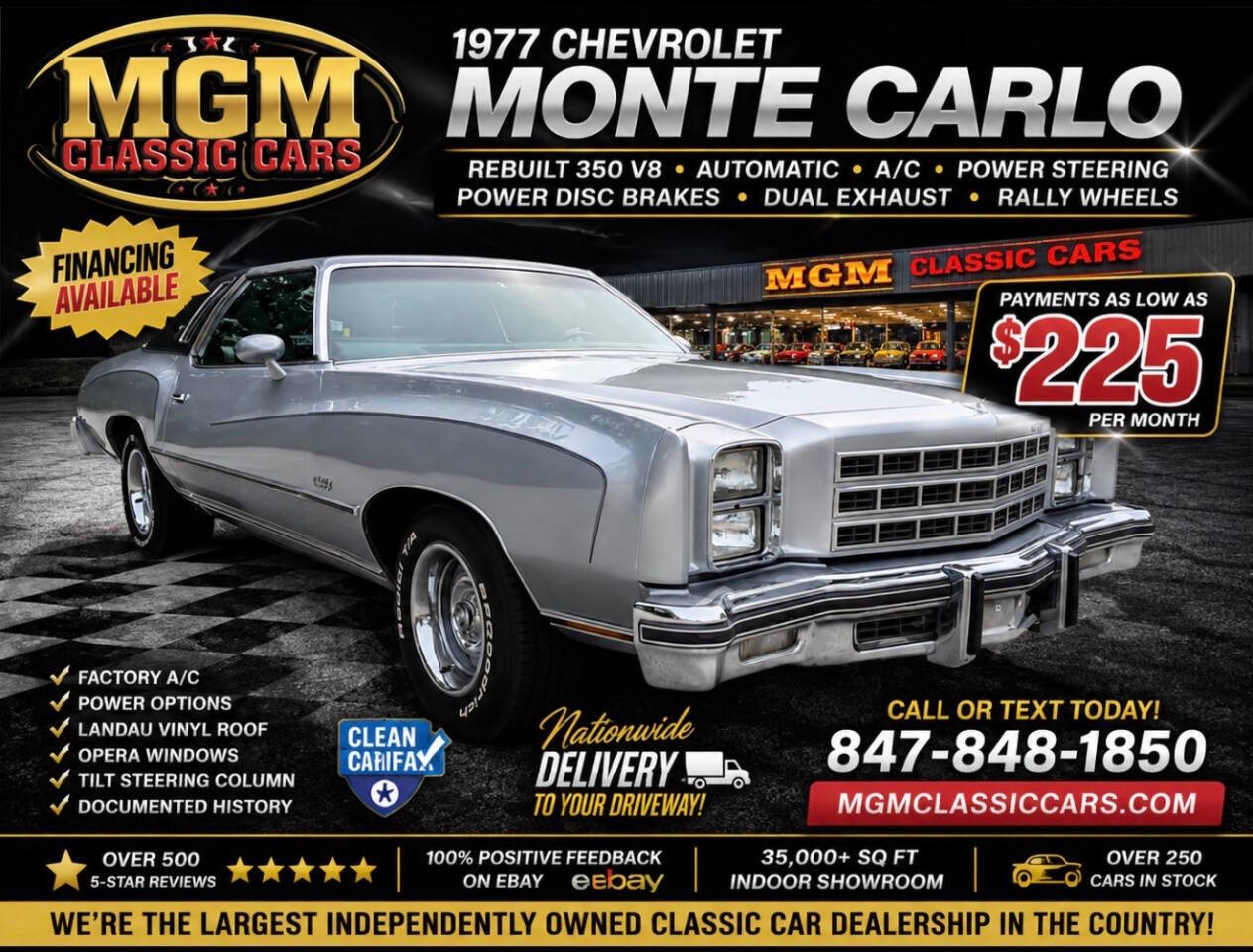
1977 Chevrolet Monte Carlo
 Dealer
United States
Dealer
United States