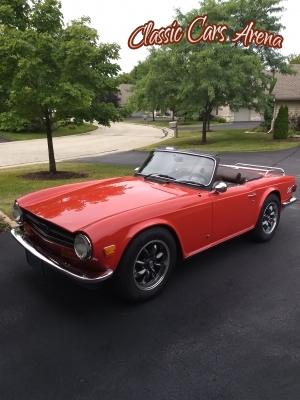
What is a Triumph TR6 worth in 2026?

The TR6 has a strong argument for being the most driver-focused British roadster of its era — more torque than an MGB, better handling than a Healey 3000, simpler mechanicals than a Jaguar E-Type. The market reflects this: values have been steadily climbing since 2018, especially for correctly restored examples in factory color combinations.
2026 Pricing by Condition
- Project or partial restoration: $6,000–$12,000
- Driver-quality, honest cosmetics: $18,000–$30,000
- Fully restored, correct colors: $32,000–$45,000
- Concours / show winner: $45,000–$58,000
- European-spec PI (fuel injection, documented): $38,000–$68,000
US vs European Specification
American-market TR6s (the vast majority in US collections) used twin Stromberg carburetors detuned to meet emissions, producing 104–106 hp. European-spec cars used a Lucas PI (petrol injection) fuel injection system producing 150 hp — significantly more spirited. The PI cars are rare in the US, and many have been converted to carbs over the decades. A documented, running PI system in the US commands a meaningful premium; a converted car is worth US-spec money regardless of what the seller claims.
Common Value Killers
Rust in the sills, floor pans, and rear wheel arches is the primary concern. A TR6 with solid bodywork is worth paying well for — those repairs are expensive and time-consuming. Engine work is relatively inexpensive (the 2.5-litre straight-six is well-supported), but body and paint work on a TR6 with comprehensive rust will easily exceed the car's market value. I've documented a number of these restorations and the structural work always runs longer than budgeted.
Best Years to Buy
The 1973–1974 cars hit a sweet spot: post-emissions tweaks but before the 1975 Federal bumper requirement that compromised the front appearance. The 1969–1970 early cars are the most correct visually and the most sought-after at shows. Avoid the very last 1976 US-spec cars — lowest power output and heaviest federalized equipment.