
Classic Studebaker Commander Buyer's Guide
Definitive buyer's guide for classic Studebaker Commander 1937-1964. Pre-war and post-war eras, body style verification, V8 inspection, current pricing for survivors and concours examples.

The Studebaker Commander represents nearly thirty years of orphan-marque American automotive history — Studebaker's mid-trim sedan series from 1937 through 1964, spanning multiple distinct eras that define independent automaker production from pre-war through the company's final years before its 1966 closure. From a concours judging perspective, the 1953-1958 Loewy-designed Commander Starlight Coupe and Hawk variants represent the apex of post-war Studebaker design — Raymond Loewy's European-influenced styling created some of the most beautiful American cars of the 1950s. The 1957-1958 Golden Hawk (with supercharged 289 V8) is the rarest and most desirable performance Commander. The 1962-1964 Gran Turismo Hawk (Loewy-redesigned refresh) is increasingly collected. For collectors entering the orphan-marque American collector segment today, the Studebaker Commander offers exceptional design heritage at attainable pricing — particularly given the active Studebaker National Museum, marque registry, and specialist parts support that supports continued ownership.
Overview
The Commander spans nearly three decades across multiple distinct platform generations. The pre-war Commanders (1937-1942) define late-pre-war American mid-trim sedan styling. The post-war 1946-1952 Commanders represent the modern Studebaker era. The 1953-1958 Loewy-designed cars are the apex of Studebaker styling. The 1959-1964 cars represent the final Studebaker era before the company's closure. Among the marque registries, each era has its own collector trajectory.
Generations Worth Knowing
Pre-War Era (1937-1942)
The original Commander era. 226 cubic inch flathead inline-six engine, traditional pre-war styling, wood inner body framing. Driver-quality 1937-1942 Commanders run $15,000-$32,000. Documented Loewy-designed coupe variants from this era are particularly desirable.
Post-War Era (1946-1952)
The 1947 redesign by Loewy was hailed as revolutionary — the "first all-new post-war American car." Modern slab-side proportions, refined dashboard, and the famous "spinner" front grille (1950-1951). Driver-quality cars run $14,000-$28,000.
Loewy Era (1953-1958)
The apex of Studebaker styling. Raymond Loewy's 1953 Starlight Coupe is widely considered one of the most beautiful American cars of the 1950s. The Commander Starlight (1953-1955) and Commander Hawk (1956-1958) variants are the most actively collected Studebakers. Driver-quality cars run $22,000-$48,000.
Golden Hawk (1957-1958)
The Golden Hawk featured a supercharged 289 cubic inch V8 producing 275 horsepower (gross) — among the most powerful American passenger-car engines of 1957-1958. Only 4,356 Golden Hawks were built across two model years, making them rare in surviving production. Documented original Golden Hawks command $50,000-$95,000+.
Final Era (1959-1964)
The 1959-1964 Commander era saw declining Studebaker production volume as the company struggled financially. The 1962-1964 Gran Turismo Hawk (Loewy-redesigned refresh) is increasingly collected. Driver-quality cars run $14,000-$28,000.
What to Look For (in person)
Body Style and Provenance Verification
Cross-reference any Commander against the Studebaker National Museum records (the museum maintains original production records and can verify chassis number, engine number, and original specifications). For Loewy-era cars priced over $30,000, museum verification is recommended documentation.
Pre-War Body Inspection
Pre-1939 Commanders have wood inner body framing. Probe the wood structure at door pillars, windshield post, and rear body corners. Soft, spongy, or rotten wood requires specialist coachbuilding repair.
Pricing Tiers
| Tier | Description | Price Range (2024) |
|---|---|---|
| Driver | 1937-1952 pre-war or post-war Commander sedan, decent condition, runs and drives | $14,000-$28,000 |
| Survivor | 1953-1958 Loewy-designed Starlight Coupe or Hawk with original drivetrain, original paint | $28,000-$50,000 |
| Concours | Documented 1957-1958 Golden Hawk or Loewy-era Commander, frame-off restoration, museum-verified | $50,000-$95,000+ |
Common Pitfalls
The biggest pitfall in Commander buying is paying premium money for a car with hidden wood structure damage on pre-1939 cars. Demand specialist coachbuilding inspection. The second pitfall is paying Golden Hawk money for a regular Hawk with supercharger swap. Specialist authentication is mandatory.
"Among the marque registries, the unrestored survivor in original Studebaker livery is consistently preferable to the freshly-restored car of unknown provenance. The market premium for a documented original-paint 1955 Commander Starlight Coupe with Studebaker National Museum verification is real — $10,000-$20,000 over equivalent restorations — and it pays to spend the time on proper authentication rather than chase a deal that turns out to be too good to be true. The Studebaker archives don't lie."
— Sarah Whitfield
Final Verdict
The Commander market rewards documentation, structural integrity, and patience. Documented Loewy-era cars and Golden Hawk variants are blue-chip orphan-marque investments. The active Studebaker National Museum and marque registry support continued specialist help and parts availability across the country.
For new buyers, start with a 1953-1955 Commander Starlight Coupe (Loewy-designed) with the V8 engine. They're affordable for legitimate Loewy-era cars, parts support is reasonable through specialist suppliers, and the cars represent some of the most beautiful American automotive design of the 1950s. From there, the upgrade path is clear: 1956-1958 Commander Hawk, then 1957-1958 Golden Hawk. Patience and Studebaker National Museum verification beat impulse buys every time in this orphan-marque market.
Browse Studebaker Commander listings
 Dealer
 United States
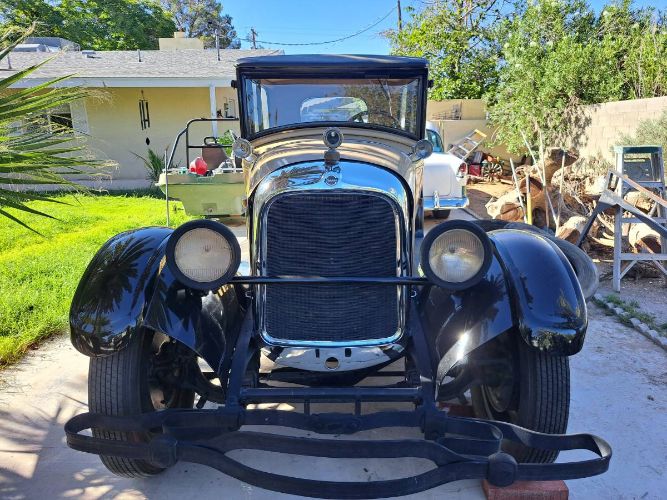
1927 Studebaker Commander
 Dealer
United States
Dealer
United States
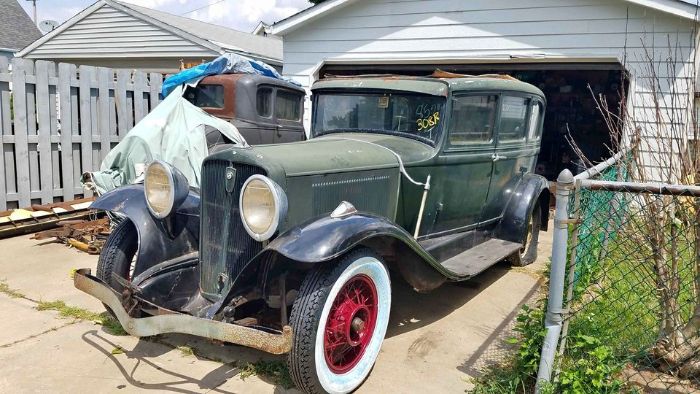
1931 Studebaker Commander
What to Look For
Cross-reference any Commander priced over $25,000 against Studebaker National Museum records. The Studebaker National Museum (South Bend, Indiana) maintains original production records and can verify chassis number, engine number, original paint code, and original specifications. Museum verification is recommended for any Loewy-era car (1953-1958).For 1957-1958 Golden Hawk claims, demand specialist authentication. Only 4,356 Golden Hawks were built across two model years (4,356 = 4,356 cars in 1957 and 878 cars in 1958). Specialist verification of supercharger originality and engine numbers is mandatory.
Body style verification is essential. Commander was offered in numerous body styles across multiple eras: sedan (4-door), coupe (2-door), Starlight Coupe (1953-1955 only), Hawk variants (1956-1964), station wagon. Each has different value trajectories.
Engine identification is essential for V8 cars. The Studebaker 232 V8 (1951-1954), 259 V8 (1955-1964), 289 V8 (1956-1964), 289 V8 supercharged (Golden Hawk 1957-1958), and 304 R-series (1962-1964 Gran Turismo Hawk) all have specific casting numbers and identifying features.
For pre-1939 Commanders, probe the wood inner body framing. Soft, spongy, or rotten wood requires specialist coachbuilding repair — $5,000-$15,000 typical depending on extent.
For Loewy-era 1953-1955 Starlight Coupes, the slim pillar styling is critical to value. Verify the original undamaged proportions and structure.
For 1957-1958 Golden Hawk cars, verify the McCulloch supercharger is original and functional. Replacement supercharger components are difficult to source.
Document the car. Photograph every panel, every chassis number, every engine bay component, every interior detail, and every identifying tag. Cross-reference against Studebaker Drivers Club records and the marque registry.
Pre-Purchase Checklist
-
Verify body style code on dataplate
Commander was offered in numerous body styles across multiple eras. Verify configuration. -
Cross-reference VIN with original engine spec
Studebaker engines varied by era — flathead six, OHV six, V8. Each has specific casting numbers. -
For pre-1939 cars, probe wood inner body framing
Pre-war Studebakers have wood inner framing. Wood rot = $5,000-$15,000 specialist repair. -
Inspect frame at body mount points
Pre-war and early post-war frames rust at body mount points and rear cross-member. -
Examine running boards and fender attachment
Universal rust zones. Fender mounting bolts commonly fail. -
For Loewy-designed cars (1953-1955), verify body integrity
Raymond Loewy-designed Starlight Coupe and Hawk variants are most desirable. -
Cross-reference against Studebaker National Museum records
Studebaker National Museum (South Bend, Indiana) maintains original production records. -
Check Hawk V8 cars for engine originality
Studebaker 232 V8, 259 V8, 289 V8, 304 R-series engines have specific casting numbers. -
Examine cowl seam at windshield base
Cowl rust drains into cabin and rots dashboard wood. -
Compression test all six or eight cylinders
Should read 130-170 PSI uniformly. Variance over 15% = head gasket or worn rings.
Common Issues
Commander rust patterns vary dramatically by era. Pre-1939 cars have wood inner body framing supporting steel outer panels — water penetration causes wood rot in addition to steel rust. Post-1939 all-steel cars rust at lower body panels, running boards, fender attachment points, rocker panels, and floor pans. The 1953-1958 Loewy-era cars rust at the lower rear quarters, rocker panels, and floor pans.Mechanically, Studebaker engines varied dramatically by era. The 226 flathead inline-six (1937-1947), 169/170/185 OHV inline-six (1948-1964), and Studebaker V8s (232, 259, 289, 304 R-series) are all robust when maintained. The supercharged 289 in the Golden Hawk (1957-1958) is rare and requires specialist knowledge — McCulloch supercharger components are difficult to source.
The Borg-Warner three-speed manual transmission (most pre-1956 cars), Studebaker automatic transmission (1950-1956), and Borg-Warner automatic (1957-1964) are all reasonably durable. Common issues include leaky transmission seals on neglected cars and tired carburetor settings.
Parts support is reasonable through specialist Studebaker suppliers (Studebaker International, Phil's Studebaker Parts, Studebakers Direct, others). Not as extensive as Big Three parts support, but adequate for proper restoration and maintenance work.
Electrical issues are universal classic-car concerns. Pre-1956 Studebakers used 6-volt positive-ground systems requiring specific bulbs and components. Many cars have been converted to 12-volt for modern reliability.
For 1957-1958 Golden Hawk cars, the McCulloch supercharger requires periodic seal replacement — typical maintenance cost $800-$1,500 every 5-10 years.
More Commander for sale
 Dealer
United States
Dealer
United States
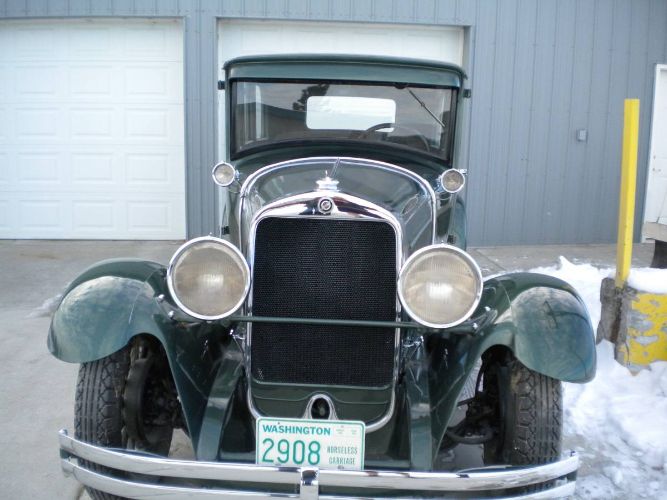
1928 Studebaker Commander
 Dealer
United States
Dealer
United States
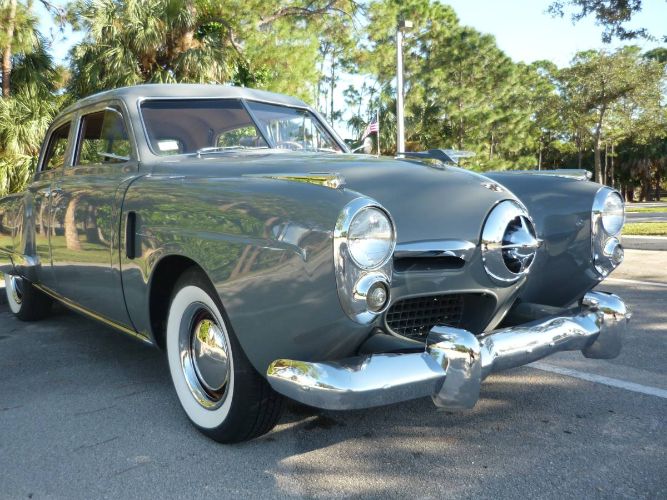
1950 Studebaker Commander
Pricing Guide
1937-1942 pre-war Commander sedans: driver-quality cars run $15,000-$32,000. Documented Loewy-designed coupe variants from this era: $22,000-$45,000+.1946-1952 post-war Commander sedans: driver-quality cars run $14,000-$28,000. The 1950-1951 "spinner" grille cars are most desirable.
1953-1955 Loewy-designed Commander Starlight Coupe: driver-quality cars run $22,000-$48,000. Documented original-paint cars: $35,000-$65,000+.
1956-1958 Commander Hawk variants: driver-quality cars run $22,000-$45,000.
1957-1958 Golden Hawk (supercharged 289 V8): driver-quality cars run $35,000-$70,000. Documented numbers-matching cars: $50,000-$95,000+.
1959-1961 Commander sedans: driver-quality cars run $12,000-$22,000.
1962-1964 Gran Turismo Hawk (Loewy-redesigned refresh): driver-quality cars run $18,000-$35,000. Documented cars: $25,000-$45,000.
1962-1964 Studebaker R-series Avanti-engined Commanders are extremely rare — these were dealer-installed packages typically with the R1 (240 hp) or R2 (290 hp supercharged) versions of the 289 V8.
Project Commanders start around $5,000-$15,000 across most generations. Stripped roller candidates: $2,000-$6,000. Restoration costs are higher than Big Three restoration due to Studebaker-specific parts scarcity.
Fun Facts
Raymond Loewy was Studebaker's consulting designer from 1936 through 1955 and is widely credited with establishing post-war Studebaker as a leader in modern automotive design. Loewy's 1953 Starlight Coupe (the basis for the Commander Starlight) was featured in the Museum of Modern Art's 1953 "Ten Automobiles" exhibition recognizing exceptional automotive design as art. Loewy's influence extended through the entire 1953-1955 Studebaker lineup, establishing styling cues that defined the marque's identity through its closure.The 1957-1958 Studebaker Commander Golden Hawk featured a McCulloch-supercharged 289 cubic inch V8 producing 275 horsepower (gross) — among the most powerful American passenger-car engines of 1957-1958. About 5,234 Golden Hawks were built across two model years (4,356 in 1957 and 878 in 1958). The supercharged engine setup was extremely rare in 1950s American production cars — Pontiac's 1957 Bonneville and Chevrolet's 1957 Corvette fuelies were the only contemporaries with similar performance. Documented original Golden Hawks now command $50,000-$95,000+ in concours condition.
Studebaker discontinued American production in 1963 (the Lark and Hawk were the final American-built Studebakers), with limited production continuing in Canada through 1966 (the final 1966 Studebaker Cruiser was the last car built by the company). Studebaker had been struggling financially since the late 1950s — the 1962-1964 Avanti was a desperate attempt to revive the brand with Loewy-designed performance, but it failed to generate enough sales to save the company. The Studebaker Commander represents the final mid-trim sedan effort of one of America's oldest independent automakers (founded 1852 as a wagon manufacturer).
Frequently Asked Questions
Ready to find your Commander?
Browse 6+ active Studebaker Commander listings on Classic Cars Arena.
View Listings →