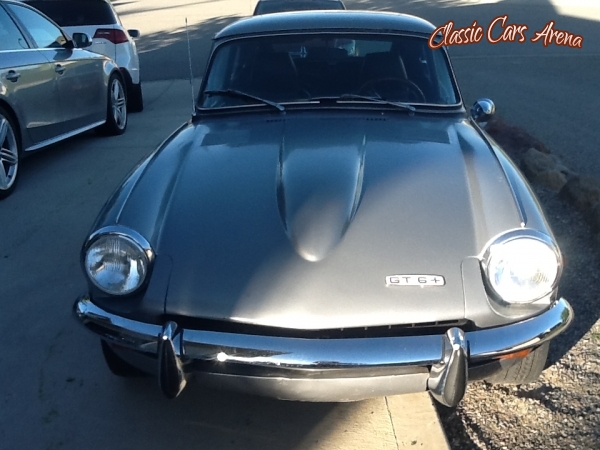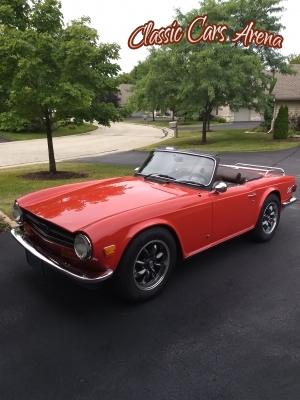
1978 Triumph Spitfire

San Angelo, Texas

$9,800

Vehicle Details

Make

Triumph

Model

Spitfire

Year

1978

Drivetrain

RWD

Fuel Type

Gasoline

Condition

Good

Description

A 1978 triumph Spitfire beautiful car grade handling took a lot of time and money to put this thing together and now it's looking for a good home so contact me if you're interested in buying this beautiful triumph Spitfire

Triumph Spitfire Buyer's Guide

Full guide
E
Emily Chen
JDM Classics
1962–1980
~3 min read
Updated Apr 2026
The Triumph Spitfire is the small British roadster argument stated as plainly as possible: 1,500 lbs, a 1.3-liter engine, no power anything, and a driving experience that communicates everything a sports car is supposed to communicate about the relationship between machine, driver, and road.
This guide covers
8-point inspection checklist
Common issues & what to avoid
In-person inspection guide
Market pricing by year & condition
4 FAQs answered
History & fun facts
💰

What is this car worth?

Check sold prices for the 1978 Triumph Spitfire

Valuation Tool →

Triumph Spitfire Buyer's Guide

Emily Chen here. I appreciate the Triumph Spitfire the way I appreciate a well-designed instrument — not for what it can do in absolute terms, but for how well it does exactly what it was designed to do. The Spitfire was not designed to be fast. It was designed to be light, to steer precisely, and to reward the driver who engages with it honestly. The 1,300cc engine produces 75 horsepower in the best specifications. 75 horsepower in a car that weighs 1,500 lbs produces a driving experience that a 300-horsepower car in a 3,500-lb body cannot replicate.

The Spitfire ran from 1962 to 1980 across four specification updates — Marks 1 through 4, then the 1500 designation for the final cars. Each update addressed the previous car's shortcomings with varying success. Understanding which Spitfire you're looking at determines both the driving experience and the practical ownership proposition.

What to Check Before Buying

Sill Condition — Probe both sills thoroughly — structural rust here is the most expensive Spitfire repair.
Floor Pan Integrity — Check front floor pans from underneath and inside for perforation.
Backbone Chassis — Inspect chassis at front subframe mounting points for bends or cracks.
Front End Latch — Verify the hinged front end mechanism operates smoothly and latches securely — safety critical.
1500 Head Gasket — On 1500 cars, check coolant for oil contamination — head gasket failures are more common on this engine.
Rear Suspension (Mark 1–3) — Check swing-axle geometry adjustment — incorrect setup causes handling unpredictability.
Soft Top Mechanism — Test top deployment and check frame condition — mechanism corrosion is common.
Overdrive Function — On overdrive-equipped cars, test engagement — overdrive unit failures are common.

Common Issues

Sill rust — the most expensive and most common structural failure on all Spitfires. Front floor pan perforation. 1500 head gasket failures — more common than on earlier engines. Swing-axle rear suspension wear causing handling unpredictability on Mark 1–3 cars. Soft top mechanism deterioration and frame corrosion. Lucas electrical system failures ("Prince of Darkness" electrics are a Triumph tradition). Overdrive unit failures on overdrive-equipped cars. Chrome trim sourcing increasingly difficult.

What to Look For

The sills are the most important structural inspection on any Spitfire — they are structural, and rust here is expensive to repair correctly. Probe both sills thoroughly before any other assessment. The front floor pans are the second location. On the backbone chassis, check for any bends or cracks at the front subframe mounting points. Verify the hinged front end mechanism operates smoothly and latches securely. On 1500 cars, check for head gasket failures — the Dolomite-derived 1493cc engine is more prone to gasket issues than the earlier units. Verify the rear suspension geometry on Mark 1–3 cars is correctly adjusted.

Price Guide

Spitfire Mark 1 (driver): $8,000–$16,000. Spitfire Mark 2 driver: $8,000–$16,000. Spitfire Mark 3: $9,000–$20,000. Spitfire Mark 4: $8,000–$18,000. Spitfire 1500: $7,000–$16,000. Show-quality restorations (any mark): $18,000–$32,000. US-market cars versus UK-spec cars: US cars have more available parts support; UK-spec have better power output.

Did You Know?

The Triumph Spitfire was named after the Supermarine Spitfire fighter aircraft — and in a rare example of corporate permission, Vickers-Armstrongs (the aircraft manufacturer) approved the name use, reportedly pleased by the association. The car's backbone chassis design, inherited from the Herald sedan, meant that the Spitfire was actually more structurally rigid than many contemporary sports cars that used separate ladder frames. The hinged front end was a genuine engineering convenience that was appreciated by owners who performed their own maintenance — exposing the entire engine, steering, and front suspension with one motion.

Similar Listings

Contact Seller

Share only if you'd like the seller to call you directly.

By contacting this seller you accept the Visitors Agreement

Send to a Friend

Share this 1978 Triumph Spitfire listing.

Report this Ad

Help us keep the marketplace clean. Our moderation team reviews every report within 24 hours.