SOLD on Jun 15, 2026
Elite Dealer

1932 Ford Tudor

Michigan

$61,995

1932 Ford Tudor

Vehicle Details

Make

Ford

Model

Tudor

Year

1932

VIN

AMS47277

Body Type

Coupe

Transmission

Automatic

Engine

V8

Description

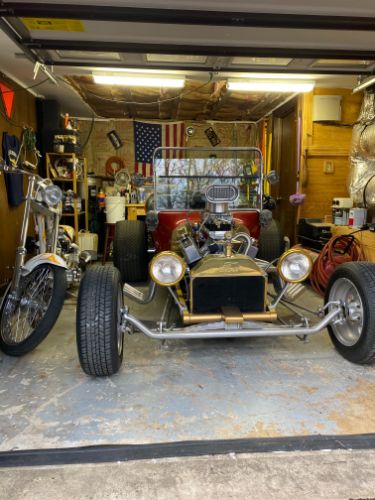
1932 Ford Tudor – Henry Steel Deuce, Fresh Build Stunning 1932 Ford Tudor built from original Henry Ford steel—fresh professional build with modern performance and classic hot rod styling. Details & Performance: Ford V8 engine AOD automatic transmission Ford 9” rear end Air conditioning Build & Condition: Fresh, professionally built All new components throughout Beautiful maroon and black finish Original VIN Clean title in my name Overview: A true “Deuce” with original Henry steel—combining timeless hot rod heritage with modern drivability. Turnkey and ready to show or cruise.

Ford Tudor Sedan Buyer's Guide (1928–1940)

Full guide
J
Jim Vasquez
Hot Rods
1928–1940
~5 min read
Updated Apr 2026
The Ford Tudor Sedan is one of the great kustom building blocks — the Model A through early V8 era produced a two-door sedan body that chop-and-channel artists have been working with since the 1940s. Original survivors are becoming genuinely rare. Know what you're looking at before the seller's story becomes your reality.
This guide covers
10-point inspection checklist
Common issues & what to avoid
In-person inspection guide
Market pricing by year & condition
4 FAQs answered
History & fun facts

Ford Tudor Market Overview

Based on 28 Ford Tudor listings currently on ClassicCarsArena.com

28
Listed Now
$36,756
Avg. Asking Price
1928–1949
Year Range
Price Position on Our Site — Above Average
This car: $61,995
Low: $3,995 High: $94,995
Transmission Distribution
Automatic 61% ◄
Manual 18%
Condition Distribution
Excellent 18%
Good 11%
Fair 4%
Poor 7%
Data from ClassicCarsArena.com listings Browse all 28 listings →

Ford Tudor Sedan Buyer's Guide (1928–1940)

There's a line from Sam Barris's shop in Maywood that runs directly to every kustom build you see at Oakland Roadster Shows today, and the Ford Tudor Sedan sits right in the middle of it. The Model A Tudor, the 1932–1934 Tudor, the 1935–1940 — these are the cars that defined what American kustom kulture could do with a factory body and some lead. What I tell first-time buyers is simple: the body is the building block. If it's straight and the metal is solid, everything else is time and money. If the metal is gone, you're starting from nothing regardless of what's on the title.

What to Check Before Buying

Magnet panel test — Run strong magnet over all lower panels — lead slides freely, Bondo attracts slightly
Roofline sight check — Sight down roofline front and rear — kinks or sags indicate bad previous chop
Cowl channel probe — Probe windshield base area — universal rust zone on prewar Fords
Lower rear quarters — Check fender-to-body seams for rust
Rocker panels — Probe lower body sills along full length
Floor pans — Check interior floor for rust-through
Panel gap evenness — Check all door gaps — uneven gaps indicate twisted structure or repair
Trunk floor — Remove mat and probe trunk floor at corners
Wiring safety check — Inspect cloth-insulated wiring for deterioration — fire risk on original systems
Previous modification quality — Assess any prior modifications: are they professional work or amateur attempts?

Common Issues

Cowl channel rust is universal on unrestored prewar Fords. Lower rear quarter rust at fender seams. Rocker panel rust along lower sills. Floor pan deterioration from age and moisture. Previous bad kustom modifications — incorrectly executed top chops, poor lead work over rust rather than over smooth metal, mismatched panel grafts — are the market's hidden cost. On Model A cars, the original four-cylinder engine is easily worn but often replaced with a flathead V8. Wiring on these cars is original cloth-insulated and should be replaced for safety on any driver-quality car.

What to Look For

Magnet test over all lower body panels — identifies lead vs plastic filler over unknown metal. Roofline inspection from front and rear — a bad previous chop has a visible kink or sag. Cowl channel probe at windshield base — universal prewar Ford rust zone. Lower rear quarters at fender seams. Rocker panels along sills. Floor pans inside car. Trunk floor. On 1937–1940 cars: area behind rear wheels at lower fender seam. Panel gap evenness — uneven gaps indicate twisted body structure or previous damage. Door operation and fit.

Price Guide

Original Model A Tudor driver: $12,000–$20,000; show: $22,000–$35,000. Deuce Tudor (1932–1934) driver: $20,000–$35,000; show: $38,000–$60,000. 1937–1940 Tudor driver: $18,000–$30,000; show: $32,000–$50,000. Quality kustom build: $60,000–$120,000+. Half-finished or badly modified kustom project: significant discount from original — sometimes 30–50% below equivalent unmodified car because the corrections cost more than starting fresh.

Did You Know?

Ford produced over 1.2 million Model A cars in 1929 alone — making the Model A Tudor one of the most common body styles in American automotive history, which is exactly why kustom builders had so many to work with. The term "Tudor" is Ford's phonetic play on "two-door" — a naming convention that continued through the 1950s with "Tudor" and "Fordor" sedans. Sam Barris's 1951 Hirohata Mercury — one of the most influential kustom cars ever built — used techniques refined on Model A and early V8 Tudors in his Maywood shop.

Similar Listings

Share only if you'd like the seller to call you directly.

By contacting this seller you accept the Visitors Agreement

Call this seller?

You're about to call Classic Car Deals about the 1932 Ford Tudor.

+1 (231) 468-2809

Before you call: Never wire money or share bank info over the phone. Read our scam-avoidance tips.
Call Now

Send to a Friend

Share this 1932 Ford Tudor listing.

Report this Ad

Help us keep the marketplace clean. Our moderation team reviews every report within 24 hours.