
Ford Tudor Sedan Buyer's Guide (1928–1940)
The Ford Tudor Sedan is one of the great kustom building blocks — the Model A through early V8 era produced a two-door sedan body that chop-and-channel artists have been working with since the 1940s. Original survivors are becoming genuinely rare. Know what you're looking at before the seller's story becomes your reality.

There's a line from Sam Barris's shop in Maywood that runs directly to every kustom build you see at Oakland Roadster Shows today, and the Ford Tudor Sedan sits right in the middle of it. The Model A Tudor, the 1932–1934 Tudor, the 1935–1940 — these are the cars that defined what American kustom kulture could do with a factory body and some lead. What I tell first-time buyers is simple: the body is the building block. If it's straight and the metal is solid, everything else is time and money. If the metal is gone, you're starting from nothing regardless of what's on the title.
The Tudor Through the Decades
Ford used "Tudor" to describe their two-door sedan body style through multiple generations of the Model A and early V8 era. Each generation has its own character and collector following:
Model A Tudor (1928–1931)
The Model A replaced the Model T in late 1927 and was a revelation — a conventional sliding-gear transmission, mechanical four-wheel brakes, and proper styling for the first time in a mass-production Ford. The Tudor was the two-door sedan in the lineup, practical and available in enormous numbers. The Model A Tudor is the foundational kustom body: its proportions reward a top chop, its simple construction makes lead work accessible, and its flathead four-cylinder responds to replacement with a flathead V8. Harry Westergard built his first significant kustoms on Model A Tudors in the early 1940s.
1932–1934 Tudor (The Deuce Era)
The 1932 Tudor shares the landmark Deuce body with the coupe and roadster — the same sweeping fenders, the same proportions that made the three-window coupe a legend. The Tudor is less celebrated than the coupe in hot rod culture, but in kustom circles it's equally significant. The V8 engine (Model 18 designation) arrived for 1932 alongside the four-cylinder Model B in the same body. This generation crosses between Jim Vasquez's kustom territory and the hot rod world — many of the great early kustom Tudors from this era use the flathead V8 with multiple carbs.
1933–1936 Tudor
Ford's styling evolved rapidly through this period — the 1933 and 1934 cars refined the Deuce proportions; Ford kept fabric-insert roofs until 1937, while the all-steel Turret Top roof was a General Motors design introduced in 1935. The 1936 Tudor is the last of the more purely streamlined prewar design language before the 1937 redesign.
1937–1940 Tudor
The 1937 Tudor is the styling peak of the era — fully streamlined, balanced proportions, a grille that reads as modern even today. The 1938–1940 cars continued the theme with minor revisions. These are the latest and largest of the classic prewar Ford Tudors and have strong appeal in both original-car and custom circles.
What Kustom Buyers Look For
The Tudor's value in the kustom world is its body: a straight steel shell with good panel fit is the starting point for a five-figure build. What kustom buyers evaluate: roof line straightness (a previous chop that was done badly is a nightmare to correct), panel gaps at the doors (twisted body = misaligned panels), the quality of any previous lead work (probe lead-filled areas with a magnet — lead doesn't attract, filler does), and most importantly the lower body structure. The rocker panels and lower quarters need to be solid metal. A beautiful roof on rotten lower metal is worthless as a build foundation.
Rust Inspection
Cowl channel at the windshield base — universal on unrestored prewar Fords. Lower rear quarters at the fender seams. Rocker panels along the lower body sills. Floor pans inside the car. On 1937–1940 cars, the area behind the rear wheels at the lower fender-to-body seam is a consistent rust zone. Trunk floor on all years.
| Generation | Years | Engine | Kustom Appeal |
|---|---|---|---|
| Model A | 1928–1931 | Model A flathead 4-cyl, 40 hp | Foundation kustom body — Westergard era |
| Deuce Tudor | 1932–1934 | Flathead V8, 65–75 hp | V8 power, peak hot rod/kustom crossover |
| Early V8 | 1935–1936 | Flathead V8, 85 hp | Turret top, streamlined body |
| Late prewar | 1937–1940 | Flathead V8, 85–95 hp | Best proportions, peak kustom donor |
"Every kustom show I've been to — Oakland, Sacramento, Pomona — there's always a Tudor in the top ten. The body just works. The proportions reward a chop, the doors are wide, the rear quarters have room for flowing bodywork. What I watch for is the guy selling a 'project' Tudor that someone else started badly. A bad chop on a 1940 Tudor is not a 'project' — it's a major correction. Know the difference before you hand over money."
— Jim Vasquez
Pricing
Original, unmodified Model A Tudor in driver condition: $12,000–$20,000. Show-quality original: $22,000–$35,000. 1932–1934 Tudor original: $20,000–$35,000 driver; $38,000–$60,000 show. 1937–1940 Tudor original: $18,000–$30,000 driver; $32,000–$50,000 show. Quality professional kustom builds — correct lead work, professional chop, finished interior — add significant value above original prices, potentially reaching $80,000–$120,000 for award-winning work. Half-finished or poorly executed kustom projects price at a significant discount to original cars.
Browse Ford Tudor listings
 Dealer
 United States
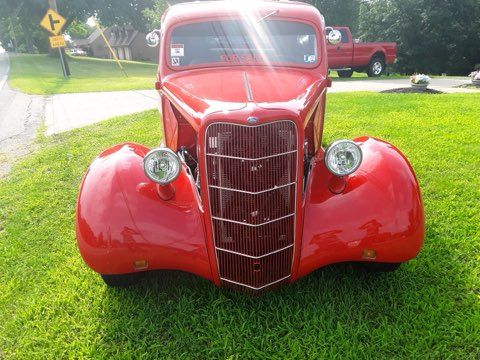
1935 Ford Tudor
 Dealer
United States
Dealer
United States
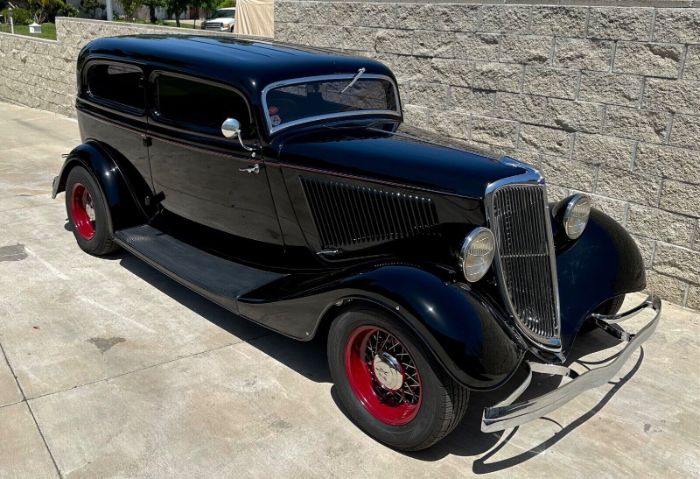
1934 Ford Tudor
What to Look For
Magnet test over all lower body panels — identifies lead vs plastic filler over unknown metal. Roofline inspection from front and rear — a bad previous chop has a visible kink or sag. Cowl channel probe at windshield base — universal prewar Ford rust zone. Lower rear quarters at fender seams. Rocker panels along sills. Floor pans inside car. Trunk floor. On 1937–1940 cars: area behind rear wheels at lower fender seam. Panel gap evenness — uneven gaps indicate twisted body structure or previous damage. Door operation and fit.Pre-Purchase Checklist
-
Magnet panel test
Run strong magnet over all lower panels — lead slides freely, Bondo attracts slightly -
Roofline sight check
Sight down roofline front and rear — kinks or sags indicate bad previous chop -
Cowl channel probe
Probe windshield base area — universal rust zone on prewar Fords -
Lower rear quarters
Check fender-to-body seams for rust -
Rocker panels
Probe lower body sills along full length -
Floor pans
Check interior floor for rust-through -
Panel gap evenness
Check all door gaps — uneven gaps indicate twisted structure or repair -
Trunk floor
Remove mat and probe trunk floor at corners -
Wiring safety check
Inspect cloth-insulated wiring for deterioration — fire risk on original systems -
Previous modification quality
Assess any prior modifications: are they professional work or amateur attempts?
Common Issues
Cowl channel rust is universal on unrestored prewar Fords. Lower rear quarter rust at fender seams. Rocker panel rust along lower sills. Floor pan deterioration from age and moisture. Previous bad kustom modifications — incorrectly executed top chops, poor lead work over rust rather than over smooth metal, mismatched panel grafts — are the market's hidden cost. On Model A cars, the original four-cylinder engine is easily worn but often replaced with a flathead V8. Wiring on these cars is original cloth-insulated and should be replaced for safety on any driver-quality car.More Tudor for sale
 Dealer
United States
Dealer
United States
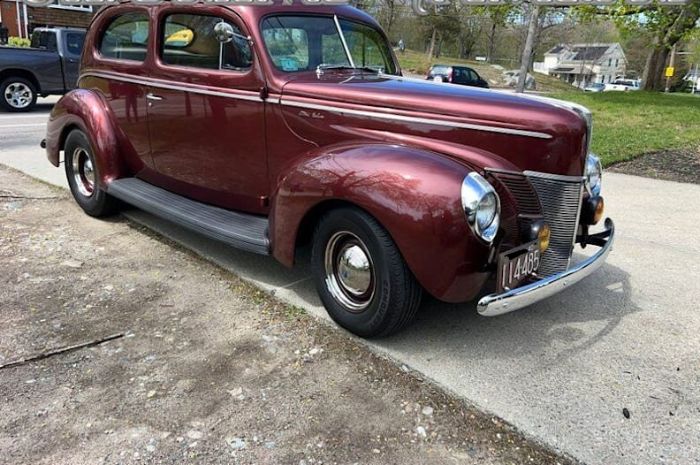
1940 Ford Tudor
 Dealer
United States
Dealer
United States
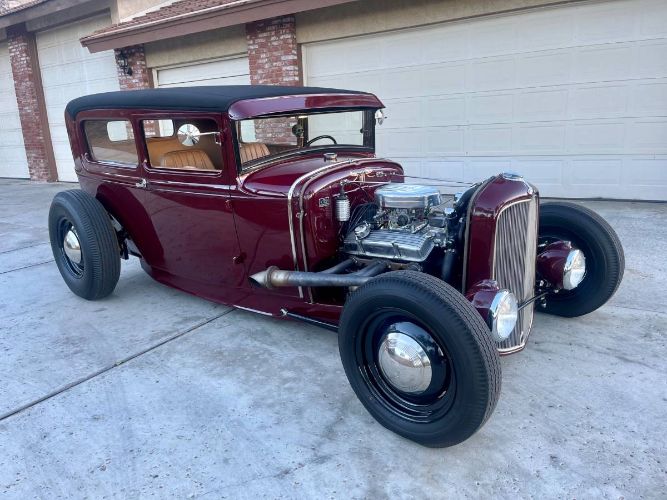
1931 Ford Tudor
Pricing Guide
Original Model A Tudor driver: $12,000–$20,000; show: $22,000–$35,000. Deuce Tudor (1932–1934) driver: $20,000–$35,000; show: $38,000–$60,000. 1937–1940 Tudor driver: $18,000–$30,000; show: $32,000–$50,000. Quality kustom build: $60,000–$120,000+. Half-finished or badly modified kustom project: significant discount from original — sometimes 30–50% below equivalent unmodified car because the corrections cost more than starting fresh.Fun Facts
Ford produced over 1.2 million Model A cars in 1929 alone — making the Model A Tudor one of the most common body styles in American automotive history, which is exactly why kustom builders had so many to work with. The term "Tudor" is Ford's phonetic play on "two-door" — a naming convention that continued through the 1950s with "Tudor" and "Fordor" sedans. Sam Barris's 1951 Hirohata Mercury — one of the most influential kustom cars ever built — used techniques refined on Model A and early V8 Tudors in his Maywood shop.Frequently Asked Questions
Ready to find your Tudor?
Browse 6+ active Ford Tudor listings on Classic Cars Arena.
View Listings →