
Classic Ford Thunderbird Buyer's Guide
Definitive buyer's guide for classic Ford Thunderbird 1955-1979. Two-seat Baby Bird era, Square Bird, Bullet Bird, and personal luxury generations, rust hotspots, current market pricing.

The Ford Thunderbird launched in 1955 as Ford's answer to the Chevrolet Corvette — a two-seat personal luxury convertible meant to position Ford as a maker of stylish, sporting cars. By 1958, Ford had pivoted the entire concept toward four-seat personal luxury, and the Thunderbird became the template for an entire genre of American automobiles. Across eight platform generations and 25 years of classic-era production (1955-1979), the Thunderbird represents one of the most varied collector markets in the American hobby — from the iconic two-seat "Baby Birds" to the personal-luxury "Square Birds," "Bullet Birds," and beyond. This guide covers what every buyer should verify before purchase across each major era.
Overview
The Thunderbird ran for 25 years across eight platform generations during the classic era (1955-1979), each with its own buyer profile and its own collector trajectory. The two-seat Baby Birds (1955-1957) are the icons; the four-seat Square Birds (1958-1960) created the entire personal-luxury segment; the Bullet Birds (1961-1963) refined the formula with sleeker styling; and the personal-luxury era cars (1964-1979) defined American premium motoring through the 1960s and 1970s. Understanding which Thunderbird era is yours is the first step toward smart buying.
Generations Worth Knowing
Baby Bird (1955-1957)
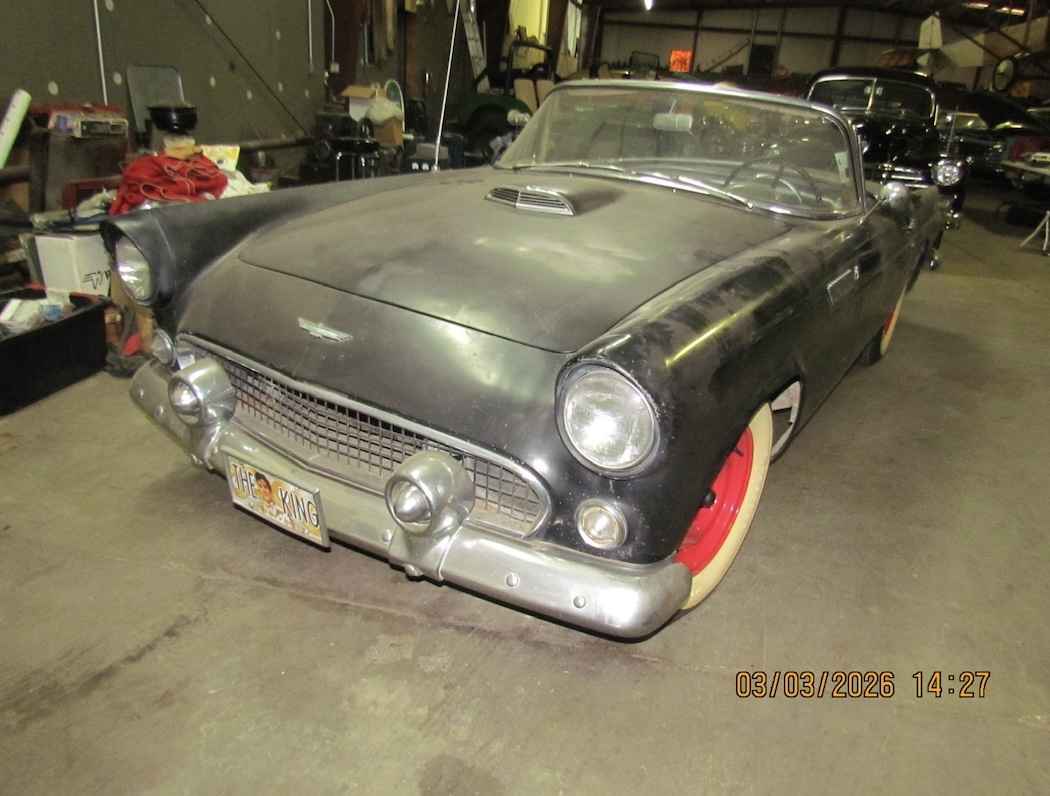
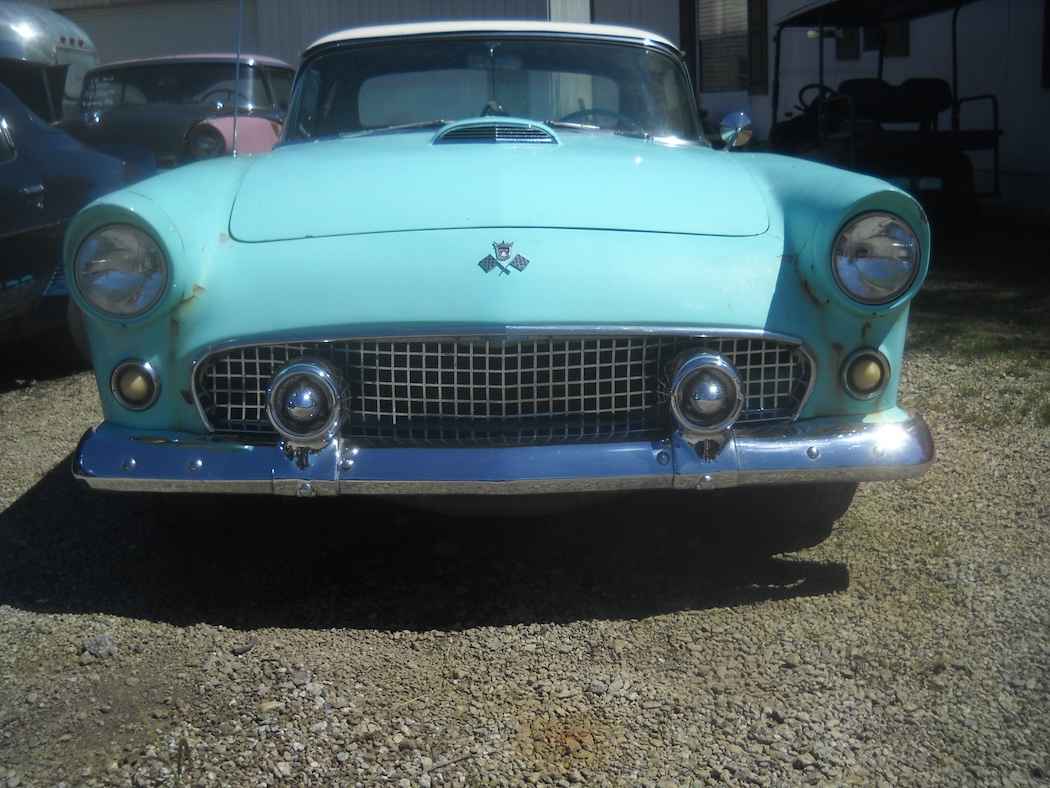
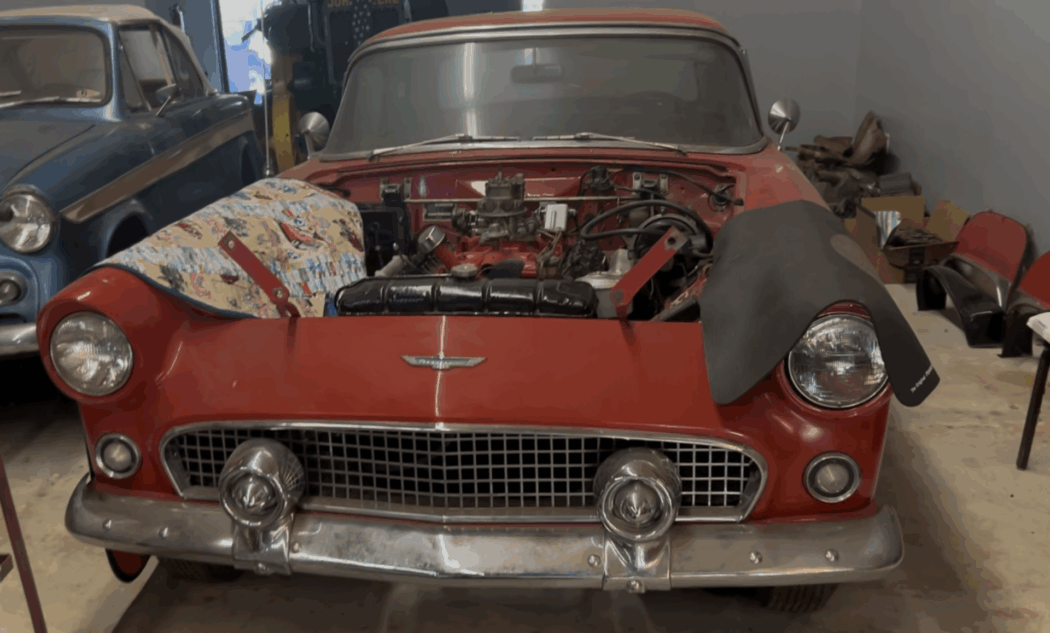
The original. Two-seat, removable hardtop, Y-block V8, body-on-frame construction. The 1955 launch year used the 292 cubic inch V8; 1956 brought the optional Continental kit and the porthole hardtop; 1957 introduced the larger 312 cubic inch V8 and refined trim throughout. Baby Birds are the most desirable Thunderbird generation and have appreciated steadily for three decades.
Square Bird (1958-1960)
The 1958 redesign added rear seats and pivoted the Thunderbird from two-seat sports car to four-seat personal luxury. Unibody construction, 352 FE-series V8 standard, and a more formal upright styling. The Square Bird is widely credited with creating the entire "personal luxury" automotive segment that came to dominate American premium car sales through the 1970s. Driver-quality cars at $22,000-$45,000 offer the full Thunderbird experience at a fraction of Baby Bird money.
Bullet Bird (1961-1963)
Sleeker, more aerodynamic styling, retractable headlights, aircraft-inspired interior design. Engine options included the 390 FE V8 standard with optional 390 high-performance and (1962-1963 only) the rare 406 cubic inch big-block. The 1962-1963 Sports Roadster (with removable fiberglass tonneau cover) is the rare and desirable variant of this generation.
Flair Bird and Glamour Bird (1964-1971)
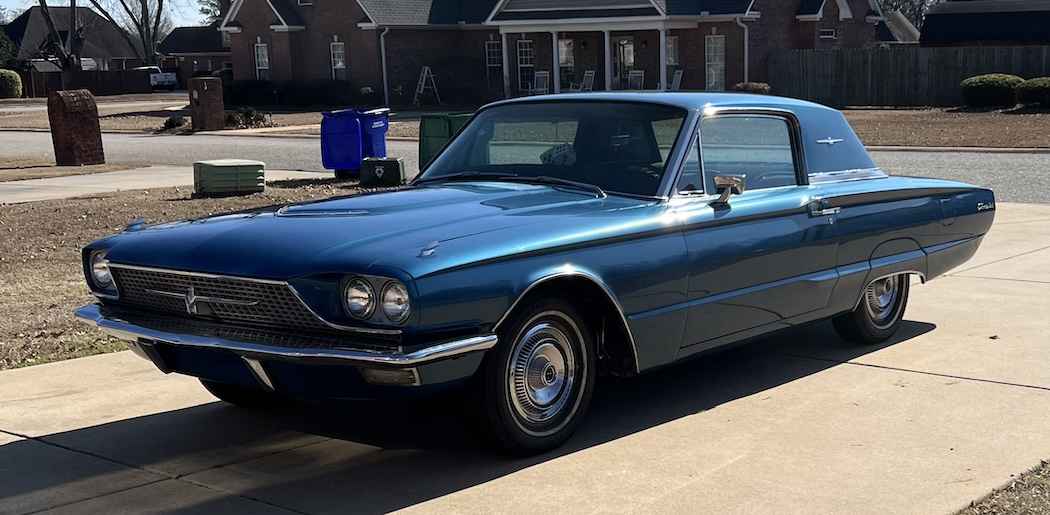
The 1964-1966 Flair Bird featured aircraft-inspired "jet age" styling with sequential turn signals (a Thunderbird signature). The 1967-1971 Glamour Bird added a four-door sedan body style for the first time and adopted more formal styling. Both eras represent affordable entry into Thunderbird personal-luxury ownership at $18,000-$35,000 for driver-quality coupes.
Big Bird and Personal Luxury (1972-1979)
The 1972-1976 Big Bird is the largest Thunderbird ever produced — over 220 inches long and 5,000 pounds. The 1977-1979 cars were dramatically downsized to share platform with the LTD II and represent the highest-volume Thunderbird production years (over 1 million units across three years). Both eras represent the bargain segment of Thunderbird ownership.
What to Look For (in person)
Baby Bird Verification
For 1955-1957 cars, verify the data plate on the firewall. The original removable hardtop is critical to value — cars missing the hardtop are dramatically less desirable. Original porthole hardtops (1956-1957) carry premium pricing. Body-on-frame inspection is mandatory: probe the X-member and body mount points with a flashlight and screwdriver.
Unibody Inspection (1958+)
For 1958-1979 cars, the unibody construction means rust isn't merely cosmetic. Inspect rocker panels, floor pans, firewall, and rear bulkhead. Convertible bodies require additional attention at the rear corners where the top mechanism mounts. Run a strong magnet over suspect areas. Body filler is non-magnetic.
Pricing Tiers
| Tier | Description | Price Range (2024) |
|---|---|---|
| Driver | 1972-1979 Big Bird or downsized Thunderbird, decent paint, runs and drives, light cosmetic wear | $10,000-$25,000 |
| Survivor | 1958-1966 Square Bird / Bullet Bird / Flair Bird with original drivetrain, documented mileage | $25,000-$50,000 |
| Concours | Documented 1957 Baby Bird with original hardtop, frame-off restoration, or Sports Roadster | $60,000-$220,000+ |
Common Pitfalls
The biggest pitfall in Baby Bird buying is paying premium money for a car missing the original hardtop. Reproduction hardtops are available but reduce value 5-15% versus an original hardtop. Always verify the hardtop is present and matches the body before purchase.
The second pitfall on later cars is failed climate control and power options. Heavily-optioned 1967-1979 Thunderbirds with non-functioning power windows, climate control, or seat motors require $2,000-$6,000 in proper specialist repair. Test every function before purchase.
"I've inspected dozens of supposedly original F-Code Thunderbirds over the years, and I'd say maybe one in three has the genuine McCulloch supercharger setup as it left the factory. The market premium for a documented F-Code is real — $80,000 or more — and it pays to verify with a Y-block specialist before paying premium money. The Marti Report doesn't lie on later cars, and specialist authentication doesn't lie on Baby Birds."
— Mike Sullivan
Final Verdict
The Thunderbird market rewards generation-specific knowledge and patience. Baby Birds (1955-1957) are blue-chip investments with steady appreciation curves. Square Birds, Bullet Birds, and Flair Birds (1958-1971) represent the smart-money entry into personal-luxury Thunderbird ownership. Big Birds and downsized cars (1972-1979) remain the bargain segment with appreciation potential as the era reaches collector-vehicle age.
For new buyers, start with a 1964-1966 Flair Bird or a 1972-1976 Big Bird with documented service history. They're the most affordable proper Thunderbirds, parts support is excellent, and both offer full personal-luxury character with V8 power. From there, the upgrade path is clear: Square Bird, Bullet Bird, then 1955-1956 Baby Bird, then 1957 Baby Bird, then F-Code or Sports Roadster. Patience and Marti Report (or specialist authentication) verification beat impulse buys every time in this market.
Browse Ford Thunderbird listings

What to Look For
Marti Auto Works build sheets are mandatory for any 1967-and-later Thunderbird priced over $25,000. The build sheet ($25 basic, more for elite reports) confirms original engine, transmission, axle ratio, paint, options, and dealer destination.For 1955-1957 Baby Birds, verify the data plate on the firewall. Cross-reference the body color, trim color, axle ratio, and accessory codes against the original equipment. The original removable hardtop is critical to Baby Bird value — cars missing the hardtop are 15-25% less desirable. Original porthole hardtops (1956-1957) carry premium pricing.
Body and unibody inspection is the second non-negotiable. For 1955-1957 cars, inspect the body-on-frame structure at the body mount points and the X-member. For 1958-1976 cars, inspect the unibody at the rocker panels, the firewall, and the rear bulkhead. Convertible bodies require additional attention at the rear corners.
Engine verification by casting numbers is essential across all generations. The Y-block 292/312 (1955-1957), FE-series 352/390/406/427/428 (1958-1976), and 351C/460 V8s all have specific casting numbers that verify originality. Cross-reference the VIN engine code against the actual block casting.
Interior inspection on personal-luxury era cars (1967-1979) requires close attention. Power options were extensive — power windows, power locks, power seats, climate control, and AM/FM stereo were common. Verify all functions work; failed systems on these heavily-optioned cars are expensive to repair properly.
Pre-Purchase Checklist
-
Order Marti Report for any 1967+ car over $25K
Marti Auto Works $25. Confirms original engine, transmission, axle, paint, options. -
Verify original removable hardtop on Baby Birds
1955-1957 cars without original hardtop = 15-25% value reduction. Porthole hardtops add premium. -
Cross-reference VIN engine code with block casting
Y-block 292/312, FE-series 352/390/406/427/428, 351C, 460. Each has specific casting numbers. -
Inspect body-on-frame structure (Baby Birds)
X-member and body mount points. Probe with flashlight and screwdriver. Frame rust = $8,000-$15,000 repair. -
Examine unibody (1958+) at rocker panels
Rocker panels, floor pans, firewall, rear bulkhead. Universal rust points on personal-luxury era cars. -
For convertibles, inspect rear corners
Top mechanism mounts here. Structural rust compromises top operation and convertible value. -
Test all power options (1967+)
Power windows, locks, seats, climate control, AM/FM stereo. Failed systems = $2,000-$6,000 repair. -
For F-Code claims, demand specialist authentication
McCulloch supercharger setup commonly forged. Y-block specialist verification mandatory. -
Verify Sports Roadster tonneau cover (1962-1963)
Original fiberglass tonneau cover adds significant value. Reproductions reduce value vs original. -
Compression test all eight cylinders
Should read 145-180 PSI uniformly. Variance >15% = head gasket or worn rings.
Common Issues
Thunderbird rust patterns vary significantly by generation. Two-seat Baby Birds (1955-1957) rust at the rear quarter panels, the rocker panels, the floor pans, the trunk pan, the rear bumper supports, and at the cowl seam. The body-on-frame construction means frame rust at the front X-member and the rear cross-member is also a structural concern.Square Birds (1958-1960) and Bullet Birds (1961-1963) use unibody construction. Critical rust zones include the rocker panels, the lower quarters, the floor pans, the front and rear bulkheads, and the firewall. Convertible bodies on these generations add structural concerns at the rear corners where the top mechanism mounts.
Mechanically, the Y-block 292/312 V8 (1955-1957) is bulletproof when maintained. The FE-series 352, 390, 406, 427, and 428 V8s (1958-1976) are similarly durable. Common issues include worn timing chain on Y-blocks, leaky valve covers and oil pan gaskets across all engines, and tired Holley or Autolite carburetors. The Ford-O-Matic and Cruise-O-Matic automatics are robust; the C6 (1966+) is essentially indestructible.
Personal luxury era cars (1972-1979) shift to Ford 351 Cleveland and Cleveland-Modified V8s, plus the 460 big-block on selected models. Common issues from this era include vacuum-actuated headlight failures, climate control system failures, and worn door hinges on the heavy doors.
More Thunderbird for sale
Pricing Guide
1955-1957 Baby Bird Thunderbirds remain the most collectible Thunderbird generation. Driver-quality 1955 cars run $32,000-$55,000. 1956 cars (with the optional Continental kit and porthole hardtop): $40,000-$70,000. 1957 cars (the most desirable, with the larger 312 V8 and refined trim): $45,000-$85,000. Documented original-paint, low-mileage Baby Birds: $75,000-$140,000+.1958-1960 Square Birds: driver-quality cars run $25,000-$45,000. Convertibles add $10,000-$15,000 to equivalent hardtop pricing. 1961-1963 Bullet Birds: driver-quality cars run $22,000-$42,000. Convertibles: $32,000-$55,000. The rare 1962-1963 Sports Roadster (with tonneau cover): $40,000-$75,000+ for documented originals.
1964-1966 Flair Birds: driver-quality cars run $18,000-$35,000. Convertibles: $28,000-$48,000. 1967-1971 Glamour Birds: $15,000-$32,000 for driver-quality coupes. 1972-1976 Big Birds (the largest Thunderbirds ever): $12,000-$28,000 for driver-quality cars.
1977-1979 Personal Luxury era Thunderbirds (downsized) are the bargain entry: $8,000-$22,000 for clean drivers. The 1977-1979 cars share platform with the LTD II and represent the end of the classic Thunderbird era — the 1980+ Fox-platform cars are different vehicles entirely.
Project Baby Birds: $15,000-$28,000. Project later cars: $5,000-$15,000. Rust restoration on a Baby Bird typically runs $30,000-$70,000 in body and frame work alone.
Fun Facts
The 1955 Thunderbird was developed in just 18 months as Ford's response to the 1953 Chevrolet Corvette launch. Ford's product planners deliberately positioned the Thunderbird as a "personal car" rather than a sports car, with creature comforts the spartan Corvette lacked: roll-up windows, a comfortable bench seat, and an optional removable hardtop. The strategy worked — the Thunderbird outsold the Corvette by more than 20-to-1 in 1955 (16,155 Thunderbirds versus roughly 700 Corvettes).The 1958 redesign (the "Square Bird") added rear seats and pivoted the Thunderbird from two-seat sports car to four-seat personal luxury. Ford's product planners had data showing many Thunderbird buyers wanted to bring family along — the four-seat configuration sold three times as many units in 1958 as the two-seat car had in 1957. The strategy created the entire "personal luxury" automotive segment that came to dominate American premium car sales through the 1970s.
The rare 1962-1963 Sports Roadster featured a removable fiberglass tonneau cover that converted the four-seat convertible into a two-seat roadster appearance. Only 1,427 Sports Roadsters were built in 1962 and 455 in 1963. Documented examples now command significant premium pricing — $50,000-$95,000+ for 1962 cars and $60,000-$120,000+ for the rarer 1963 cars.
Frequently Asked Questions
Ready to find your Thunderbird?
Browse 6+ active Ford Thunderbird listings on Classic Cars Arena.
View Listings →