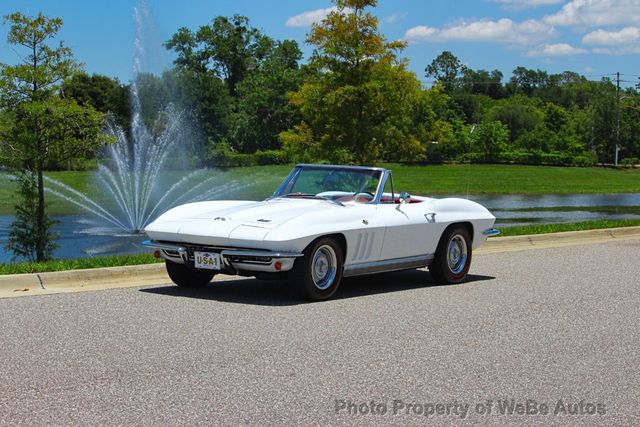
Steel was never the answer for a 300-car sports car
When General Motors engineers sat down in 1952 to figure out how to build Harley Earl's dream sports car, they ran into a wall almost immediately: steel stamping. Every American production car of the era used pressed steel body panels, but that process demanded enormous capital investment in dies and tooling. For a vehicle GM planned to build in the hundreds, possibly a few thousand units per year, those tooling costs could never be recovered. The math simply did not work.
Steel body tooling for a single model in the early 1950s cost millions of dollars. Amortized across 200,000 Chevrolets, the number becomes trivial. Amortized across 300 Corvettes, it becomes ruinous. The early Corvette history is, in part, a story of engineers solving an economic problem as much as an engineering one. The solution they reached, glass-fiber-reinforced polyester resin, would define the car for more than four decades.
What GM actually considered before choosing fiberglass
Fiberglass was not the first material on the table. GM's engineers examined aluminum seriously. Aluminum stampings could theoretically be produced in lower volumes than steel, and the material had prestige associations with European coachbuilders. But aluminum in 1952 required skilled hand-forming and was expensive at any realistic production volume. Welding aluminum was also a specialist trade, and Chevrolet's assembly workforce was trained for steel.
Plastic had been used in automobiles before, mostly for interior trim components. But using it as a structural body material for an entire car body was another proposition entirely. The material that caught engineers' attention was fiberglass, formally called glass-fiber-reinforced polyester resin. It could be shaped into complex curves without expensive dies, it did not rust, and it was light. The question was whether it could be produced consistently enough to sell as a finished automobile.
Owens Corning, hand-laid panels, and the 1953 production reality
The fiberglass material itself came from Owens Corning, the Ohio-based company that had developed glass fiber technology during World War II for insulation and reinforcement applications. Owens Corning supplied the glass fiber mat and roving that would be combined with polyester resin to form each body panel. The process chosen for 1953 and 1954 was hand-layup, meaning workers physically placed layers of glass fiber mat into open molds and saturated them with liquid resin by hand. Each panel cured in the mold and was then trimmed and fitted.
This process worked, but it introduced variability. No two hand-laid panels were precisely identical. Gel coat surfaces, the outer finish layer applied first into the mold before the structural layers, could trap air bubbles or produce slight thickness variations. Fitting panels together on an assembly line that was designed around much tighter steel tolerances created real headaches at Flint, Michigan, where the first Corvettes were assembled. Early buyers found that door gaps were inconsistent, that panel alignment required hand adjustment, and that the gelcoat surface, while paintable and colorfast, did not have the mirror smoothness of baked enamel over steel.
Repair was another complication. Body shops in 1953 were equipped for steel: hammers, dollies, lead filler, and welders. A fiberglass panel that cracked or was crushed in a collision required entirely different materials and techniques, specifically resin and fiber mat patching that most shops had never attempted. The early Corvette owner who had an accident often discovered that their local dealer was not equipped to fix the body properly.
The Blue Flame Six engine under the hood of those first Corvettes drew plenty of criticism, but the fiberglass body drew its own share, largely from service departments and body shops rather than drivers.
"What strikes me about the 1953 production records is how much of the manufacturing process was improvised. GM was essentially inventing the production fiberglass automobile as they went. The Flint assembly line was hand-fitting body panels that had tolerances no steel stamping plant would have accepted. That they got 300 cars out the door at all is the real engineering achievement."
— Tom Ramirez
The genuine advantages that kept fiberglass on the Corvette for 44 years
Despite the early production difficulties, fiberglass offered real advantages that became more apparent as manufacturing processes matured. Weight was the most straightforward benefit. A fiberglass body is substantially lighter than equivalent steel stampings, and on a sports car where the engineers were already fighting the weight of a cast-iron engine and a heavy chassis frame, every pound mattered.
Corrosion resistance was equally significant. Steel bodies rust. Fiberglass does not. In an era before galvanized steel became standard, a Corvette body would still be structurally intact decades later even if the chassis beneath it had deteriorated. This proved to be exactly true: C1 Corvettes from 1953 through 1962 survive today in remarkable numbers partly because their bodies did not rot away.
The ability to form complex curves without expensive tooling also gave designers freedom. Harley Earl's original Corvette shape, with its long hood, recessed headlights, and sculpted sides, would have required significantly more complex and expensive steel tooling than the relatively simple forms GM was used to stamping. Fiberglass allowed designers to specify shapes that steel economics would have forced them to simplify.
Over time, the manufacturing process improved substantially. By the mid-1950s, GM and its suppliers had developed better quality control for gel coat application and panel trimming. The fit issues of the first cars became less severe. The fiberglass body became something Corvette buyers accepted, then expected, then came to see as a defining characteristic of the car.
| Generation | Years | Body material | Process |
|---|---|---|---|
| C1 | 1953–1962 | Fiberglass (GRP) | Hand-laid polyester resin |
| C2 | 1963–1967 | Fiberglass (GRP) | Hand-laid, improved tooling |
| C3 | 1968–1982 | Fiberglass (GRP) | Hand-laid, T-top era |
| C4 | 1984–1996 | Fiberglass (GRP) | Hand-laid with improved gel coat |
| C5 | 1997–2004 | SMC (Sheet Molded Compound) | Press-molded composite |
| C6 | 2005–2013 | SMC / carbon fiber (Z06) | Press-molded; CF on performance variants |
| C7 | 2014–2019 | SMC / carbon fiber options | Press-molded; CF on Z06, ZR1 |
| C8 | 2020–present | SMC / carbon fiber options | Press-molded; CF standard on Z06, Z07 |
From hand-laid to SMC: how the material evolved without leaving fiberglass behind
The C5 Corvette, introduced for 1997, is often described as the moment GM abandoned fiberglass. The more precise description is that GM moved from hand-laid fiberglass to Sheet Molded Compound, known as SMC. SMC is still a glass-fiber-reinforced composite material. What changed was the manufacturing process: instead of workers hand-laying fiber mat into open molds, SMC panels are produced by pressing pre-compounded sheets of chopped glass fiber and resin between heated matched dies. The result is more consistent panel geometry, better surface quality, and faster production.
The shift to SMC was enabled by higher production volumes that made the investment in matched dies economical, and by decades of material science development that made SMC a viable alternative to hand-laid construction. The C8 generation, which launched in 2020 as the first mid-engine Corvette, uses SMC for most body panels while offering carbon fiber body components as options on performance variants including the Z06 and Z07 packages.
The thread from 1953 to the present day is unbroken: no production Corvette has ever had a steel body. The 1953 engineers' decision to build around a non-ferrous composite body, forced on them partly by economics and partly by the material's genuine advantages, established a template that survived seven complete generational redesigns. If you want a Corvette with a steel body, GM has never offered one. That consistency across 70 years of production is not an accident. It is the legacy of an engineering decision made when 300 cars had to be built affordably and the tooling budget for steel simply did not exist.
Browse early Corvettes for sale and you will find that fiberglass condition is one of the first things sellers describe, and buyers inspect. After seven decades, the material that was chosen partly out of economic necessity has become one of the Corvette's most durable identities.
Sources and notes
- National Corvette Museum — Corvette History — official historical archive covering production records and body material history across all generations.
- SAE Technical Paper 530099 — "The Corvette Plastic Body" (1953) — contemporary engineering paper presented at the SAE Annual Meeting describing the fiberglass body design and manufacturing process.
- Owens Corning — Company History — background on Owens Corning's development of glass fiber materials and their early automotive applications.
- MotorTrend — 1953 Chevrolet Corvette: The Full History — detailed account of the 1953 production run, assembly conditions at Flint, and early quality issues with the fiberglass body.