
The Motorama car that became a production reality
In January 1953, General Motors rolled a low white roadster onto the floor of the Waldorf-Astoria hotel in New York for its traveling Motorama show. The car wore a fiberglass body, a wraparound windshield, and a name borrowed from a fast British warship: Corvette. It was a concept, a dream car built to gauge public reaction. The reaction was strong enough that GM committed to production within months, and by June 30 of that same year the first car came down a makeshift assembly line in Flint, Michigan. The 1953 Motorama debut turned a styling exercise into a catalog model faster than almost anyone inside GM expected.
The man behind the shape was Harley Earl, GM's styling chief, who had watched American servicemen return from Europe with MG and Jaguar roadsters and saw an opening for a homegrown two-seater. The engineering fell to a small team that had to solve a hard problem on a short clock: how do you build a sports car body cheaply, without the tooling cost of stamped steel for a model nobody knew would sell? The answer was glass-reinforced plastic, and that single decision defined the whole first-generation Corvette. The full Corvette story begins here, with a body material chosen as much for economics as for ambition.
The crisis years and how the C1 nearly died in its crib (1953-55)
The first 300 Corvettes were all built by hand in Flint during the second half of 1953. Every one of them was Polo White with a red interior and a black canvas top. There were no options to speak of and no choices to make. Under the hood sat the Blue Flame Six, a 235.5 cubic inch inline-six fitted with three Carter side-draft carburetors and a high-lift cam to produce 150 horsepower. Behind it was a two-speed Powerglide automatic, the only transmission offered. A sports car with an automatic and no manual option was a contradiction that buyers noticed immediately. These hand-built 1953 cars are among the rarest and most valuable Corvettes ever made, but at the time they were a tough sell.
For 1954, production moved to a proper plant in St. Louis and capacity jumped. Chevrolet built 3,640 cars and offered three new colors alongside Polo White: Pennant Blue, Sportsman Red, and Black. The trouble was that the cars did not move. A large share of the 1954 run sat unsold on dealer lots into the following year. The 1954 sales crisis was severe enough that senior management openly debated killing the Corvette outright. The fiberglass roadster was losing money, the press was lukewarm, and a new rival was coming.
That rival was Ford's Thunderbird, which arrived for 1955 as a steel-bodied personal luxury car with a V8 and far better sales. The Thunderbird rivalry pressured Chevrolet to either commit fully or walk away. The 1955 model year was the low point by volume, with roughly 700 cars built. Had the decision gone the other way in that boardroom, the Corvette would be a footnote.
Zora, Ed Cole, and the small-block rescue (1955-57)
Two engineers turned the Corvette around. Ed Cole, Chevrolet's chief engineer, had developed the 265 cubic inch small-block V8 that debuted across the division for 1955. Dropping it into the Corvette gave the car 195 horsepower and, finally, the performance its looks had been writing checks for. Just as important, a three-speed manual transmission became available that year. The combination of V8 power and a stick shift made the Corvette a real sports car for the first time, even though only about 700 were built in 1955 as the line was being saved.
The second engineer was Zora Arkus-Duntov, a Belgian-born racer and engineer who had joined GM in 1953 and pushed hard for the Corvette to become a genuine performance machine. By the mid-1950s he was officially shaping its development, and his fingerprints are on everything that made the C1 fast. For 1956 the car received its first real restyle, with sculpted body coves along the sides, proper exterior door handles, roll-up windows, and dual exhaust. Chevrolet built 3,467 cars that year and expanded the color palette.
Then came 1957, the year the C1 grew up. The small-block was bored out to 283 cubic inches, and the option list now included RPO 579E, the Ram-Jet mechanical fuel injection system that produced 283 horsepower. Chevrolet advertised it as one horsepower per cubic inch, a milestone that earned the car lasting credibility. Carbureted versions of the 283 were available at 250 and 270 horsepower as well, and a close-ratio four-speed manual joined the options. The 1957 fuel-injected Corvette, known to collectors as the Fuelie, is the car that proved the Corvette belonged in the same conversation as Europe's best.
"I have spent years cross-checking factory build records against the legends people repeat at car shows, and the truth about the C1 is more dramatic than the myth. This car was not an instant hit. It was nearly cancelled twice, and it survived only because two engineers refused to let a beautiful body go to market with the wrong engine."
— Tom Ramirez
Year-by-year evolution
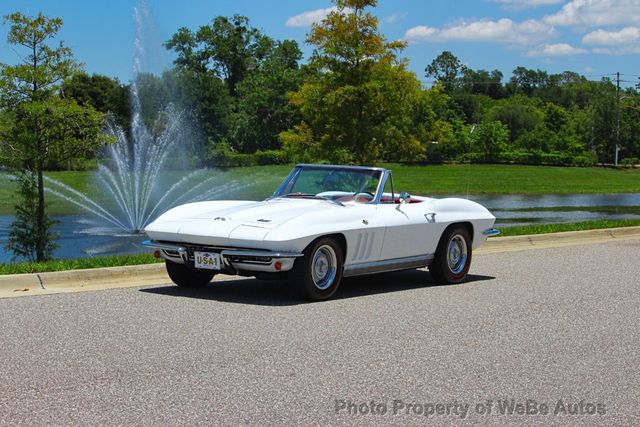
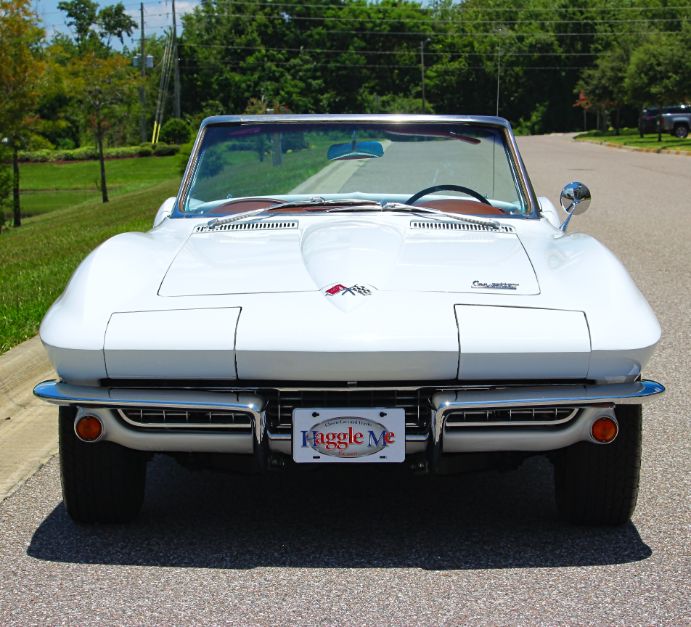
The C1 ran for ten model years, and tracing it year by year shows a car that started as a curiosity and ended as a mature, high-volume sports car. The 1958 model brought the controversial quad-headlamp face, more chrome, and two non-functional louvers stamped into the hood. Production climbed steadily from there. The 1961 model adopted a new pointed rear deck, the so-called duck tail, lifted from the Q-Corvette and Sting Ray show cars and previewing the look of the C2 that would follow. The 1962 car was the last of the line and the first to make a 327 cubic inch V8 standard.
| Year | Engine (ci / hp) | Units Built | Key change |
|---|---|---|---|
| 1953 | 235.5 ci Six / 150 hp | 300 | Hand-built in Flint; all Polo White; Powerglide only |
| 1954 | 235.5 ci Six / 150 hp | 3,640 | St. Louis production; four colors; many cars unsold |
| 1955 | 265 ci V8 / 195 hp | ~700 | V8 and manual added; near-cancellation low point |
| 1956 | 265 ci V8 / up to 240 hp | 3,467 | First restyle; side coves; door handles; dual exhaust |
| 1957 | 283 ci V8 / 250-283 hp | 6,339 | RPO 579E fuel injection; one hp per cubic inch; 4-speed |
| 1958 | 283 ci V8 / 230-290 hp | 9,168 | Quad headlights; faux hood louvers; more chrome |
| 1959 | 283 ci V8 / 230-290 hp | 9,670 | Cleaner trim; concave gauges; refined interior |
| 1960 | 283 ci V8 / 230-315 hp | 10,261 | First year past 10,000 units; aluminum radiator on FI cars |
| 1961 | 283 ci V8 / 230-315 hp | 10,939 | Duck-tail rear from Sting Ray show car |
| 1962 | 327 ci V8 / 250-360 hp | 14,531 | Last C1; 327 standard; highest production of the run |
The numbers tell the story plainly. The Corvette went from 300 hand-built cars in its first half-year to more than 14,000 in its last, a trajectory that few troubled launches ever recover to. The exact horsepower figures shifted within several model years as Chevrolet juggled carbureted and fuel-injected options, so the ranges above reflect the spread offered rather than a single rating.
The C1 legacy and what it proved
The first-generation Corvette settled three questions that were genuinely open in 1953. The first was whether fiberglass could work as a mass-production body material. It could, and the Corvette has used composite bodies ever since, a continuity that runs unbroken from Flint to the present mid-engine cars. The second was whether America could build a credible sports car rather than just a styling exercise with a soft engine. The 1957 Fuelie answered that. The third was whether a money-losing niche model could earn its place inside a corporation as numbers-driven as 1950s General Motors. By 1962 the Corvette was profitable and growing, and it had become a halo for the entire Chevrolet brand.
What the C1 proved, more than anything, is that persistence beats a slow start. Two near-death experiences in the first three years would have ended most projects. Instead the car got the right engine, the right transmission, and an engineer in Zora Arkus-Duntov who treated it as a serious machine. Collectors today chase every variant of the run, and a clean, documented classic C1 Corvette for sale draws the kind of attention that the unsold 1954 cars on those dealer lots could never have predicted. The roadster that GM nearly cancelled became the longest-running nameplate in American sports car history.
Sources and notes
- National Corvette Museum — production figures, model-year specifications, and archival history of the C1 generation.
- Hemmings Motor News — reference material on 1953-1962 Corvette engines, options, and market context.
- Motor Trend — historical coverage of the Blue Flame Six, the small-block V8, and the 1957 fuel-injection milestone.
- Road & Track — period and retrospective reporting on the Corvette and the Thunderbird rivalry.