
A System Born in Competition
By 1956, General Motors knew the Corvette was on borrowed time. Ford's Thunderbird was selling briskly, and the two-seat sports car from Chevrolet — once derided as underpowered and impractical — desperately needed a technical statement. The answer came from an unlikely partnership between a Ukrainian-born racing engineer and a carburetor specialist who would together create something American automakers had never attempted at production scale: a mechanical fuel injection system destined to redefine what a road car could be.
The story of 1957 Corvette fuel injection begins not in a boardroom but at a drafting table in Warren, Michigan, where Zora Arkus-Duntov — Chevrolet's famed chief engineer and the man most responsible for transforming the Corvette from a show-car curiosity into a serious performance machine — had been lobbying for fuel injection since he arrived at GM in 1953. His vision aligned perfectly with that of John Dolza, a GM research engineer who had been quietly developing a continuous-flow injection concept. The two men collaborated through 1956 to bring what would become the Rochester mechanical fuel injection system from prototype to production reality.
The timing was deliberate. Chevrolet had watched the 1956 Corvette redesign breathe new life into sales, and the engineering team understood that 1957 needed to go further — both on the street and on the racetrack. Fuel injection was the mechanism to do both at once.
One Horsepower Per Cubic Inch
The number that echoed through American automotive culture in 1957 was deceptively simple: 283 horsepower from a 283 cubic inch engine. One horsepower per cubic inch. No American production car had achieved that ratio before, and Chevrolet was not shy about saying so in period advertising.
The Rochester continuous-flow mechanical injection system that made it possible worked on a different principle than the carburetor systems it replaced. Rather than relying on intake vacuum to draw fuel through jets, the Rochester unit used a gear-driven fuel meter — driven off the distributor — that continuously metered fuel to individual nozzles, one per cylinder. This approach eliminated the flat spots and fuel starvation that carbureted engines suffered at high rpm and under hard cornering, where fuel pooled or sloshed away from the float bowl.
The complete 1957 engine lineup illustrated just how seriously Chevrolet took the performance hierarchy that year:
| Engine | Displacement | Induction | Compression | Horsepower | RPM |
|---|---|---|---|---|---|
| Base V8 | 283 cu in | Single 4-bbl carburetor | 8.5:1 | 220 hp | 4800 |
| 245 hp V8 | 283 cu in | Single 4-bbl carburetor | 9.5:1 | 245 hp | 5000 |
| 270 hp V8 | 283 cu in | Dual 4-bbl carburetors | 9.5:1 | 270 hp | 6000 |
| 250 hp Fuelie | 283 cu in | Rochester fuel injection | 9.5:1 | 250 hp | 5000 |
| 283 hp Fuelie | 283 cu in | Rochester fuel injection | 10.5:1 | 283 hp | 6200 |
The top-specification 283 hp version — the one that claimed the magic ratio — paired high compression with the Rochester system and solid valve lifters, producing an engine that was as demanding to live with as it was thrilling to drive. Period road tests from Road & Track and Sports Cars Illustrated reported 0–60 times in the vicinity of 5.7 seconds and quarter-mile times around 14.3 seconds, figures that stood comfortably among the fastest production cars of any nationality available in America at the time.
"The fuel injection Corvette is a machine that can humble drivers who come to it overconfident. It rewards precision and punishes carelessness. In that respect it is more European than American."
— Sports Cars Illustrated, road test, 1957
The $484 Question
The Rochester fuel injection system was available as a factory option — RPO 579 — priced at $484.20 when the base Corvette listed at $3,176. That $484 premium represented roughly fifteen percent of the car's base price, a substantial commitment for a buyer who could simply tick the dual-carburetor option and get a thoroughly fast Corvette for far less.
The pricing reflected real cost. The Rochester unit was a precision instrument requiring closer manufacturing tolerances than any carburetor GM had produced, and it arrived at dealers with a reputation that preceded it — mostly for complexity. Dealers who understood the system could tune it properly; many could not. The mixture enrichment device, the altitude compensator, and the individual fuel nozzle calibration all required competence that was genuinely rare in 1957 service departments.
The result was predictable. Historians generally agree that a meaningful number of early Fuelie owners — faced with rough cold starts, difficult hot-start behavior, and mechanics who shrugged — eventually authorized the conversion back to a dual-four-barrel setup. The carbureted 270 hp engine was not dramatically slower in real-world driving and was vastly more tractable in traffic. Some period accounts suggest the swap rate ran as high as thirty percent in the first two years, though reliable production data on how many injection units were subsequently removed is difficult to establish.
That temperament is part of the Fuelie's mythology. The owners who learned to master the system — who understood the cold-start drill, who kept the nozzles clean and the fuel pressure correct — became a self-selecting group of enthusiasts who felt, with some justification, that they were operating at a different level from the carburetor crowd. The difficulty was a filter.
Racing Credibility and the SCCA
Duntov's ambitions for the fuel-injected 283 were never purely commercial. The SCCA's production-class racing rules required that competing cars be genuinely available for public purchase, and the Fuelie Corvette satisfied that requirement while delivering performance that could trouble the Jaguar D-Types and Ferrari 250s that had dominated American club racing.
The 1957 racing season demonstrated what the system could do in competition. At Sebring in March 1957, a pair of fuel-injected Corvettes finished twelfth and fifteenth overall — respectable placings in a field that included factory-backed European machinery — and won their class. The result was reported widely in the enthusiast press and did exactly what Duntov intended: it established the Corvette as a legitimate competition tool rather than a boulevard cruiser with sporty styling.
The SCCA's B-Production class became a natural home for the Fuelie, and throughout 1957 and 1958, privately entered examples compiled a record that helped shift the Corvette's reputation decisively. The fuel injection system's advantage in sustained high-rpm running — where a carburetor's fuel delivery could become uneven under the G-loads of hard cornering — was a genuine technical edge in endurance events.
This racing dimension connected directly to the car's identity in a way that the birth of the C1 Corvette had never quite managed. The early straight-six cars, however charming in retrospect, had struggled to earn respect from the sports car establishment. The Fuelie answered the establishment's skepticism with lap times.
For readers interested in how the model evolved before this breakthrough, the C1 Corvette history overview traces the full arc from the 1953 debut through the pivotal years of the mid-decade.
The Badge of Honor That Endured
The term "Fuelie" entered the American automotive vernacular in 1957 and never left. It carried a specific gravity — not merely "fuel injected" but this fuel injection, this particular Rochester system on this small-block Chevrolet in this two-seat body. The word compressed an entire set of meanings: speed, sophistication, expense, mechanical difficulty, and the slightly obsessive devotion of the people who kept the systems running.
GM would continue offering fuel injection on the Corvette through 1965, when the system was finally discontinued — ironically, in part because a new generation of Holley carburetors could deliver comparable power with far less fuss, and in part because increasingly stringent emissions requirements made the continuous-flow injection system difficult to calibrate cleanly. The L84 327 cu in fuel-injected engine of the early 1960s would build on the 1957 foundation, and "Fuelie" would follow along as the honorific for any of those variants.
But 1957 was the origin. The combination of the landmark power ratio, the racing results at Sebring, the story of Duntov and Dolza's collaboration, and the sheer audacity of offering mechanical fuel injection on a production sports car at a time when American automobiles were largely defined by cubic inches and carburetor count — all of it crystallized in that first year. The story of the Corvette as America's sports car has many chapters, but the 1957 Fuelie is the one where the character was finally, unmistakably fixed.
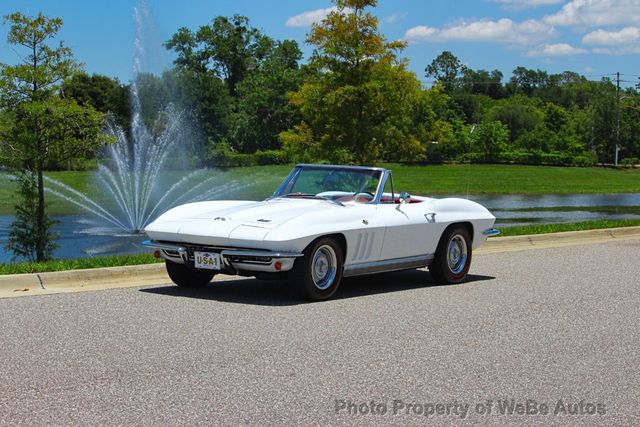
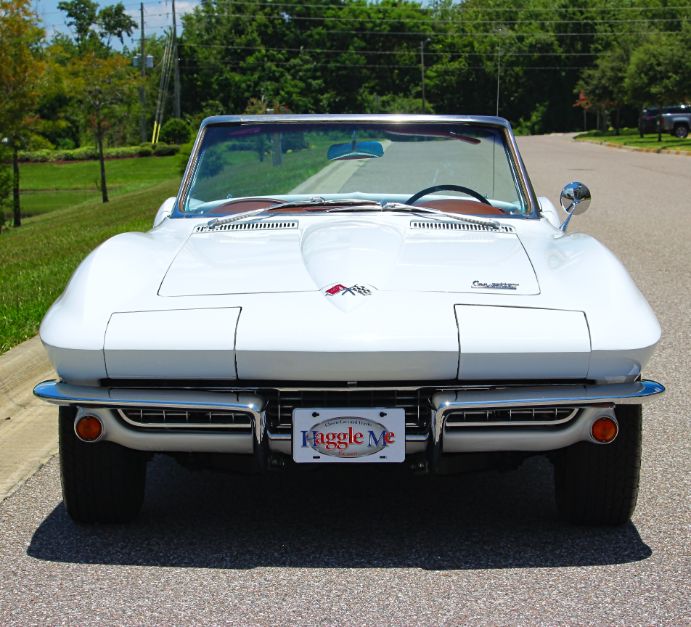
To own a genuine, documented 1957 fuel injection Corvette today is to hold a piece of that moment: a car that was temperamental, expensive, demanding, and — for those who understood it — perfect. The Fuelie did not just change the Corvette. It changed what American performance cars believed themselves capable of becoming.
Sources and notes
- National Corvette Museum — Corvette History — institutional archive of Corvette production history, model specifications, and milestone documentation
- Car and Driver — Corvette History Feature — long-form retrospective covering the 1957 fuel injection introduction and its engineering context
- Hagerty Media — The 1957 Corvette Fuelie Explained — collector-market analysis and technical breakdown of the Rochester injection system
- Super Chevy — History of Rochester Fuel Injection — detailed technical history of the Rochester continuous-flow system, its development by Dolza and Duntov, and its production evolution through 1965
- MotorTrend — Chevrolet Corvette History — period road test archives and production records for the 1957 model year