The Last Pure C2: How 1967 Became the Definitive Corvette Sting Ray
Among the five model years of the second-generation Corvette, the 1967 occupies a peculiar and permanent place at the top of the collector hierarchy. It is not the rarest C2 — that distinction belongs to the 1963 split-window coupe — nor is it the highest-production year. Yet auction results, NCRS rankings, and the opinions of marque historians converge on a single conclusion: if you are searching for the most complete expression of what the C2 Sting Ray was designed to be, the 1967 is the answer. The reasons illuminate not just a single car but an entire philosophy of automotive refinement that Chevrolet's engineers managed to execute perfectly just once.
The Corvette had been reshaped for 1963 into something genuinely dramatic — independent rear suspension, a removable-top coupe, styling so confident it startled even its own designers. Over the next four years, General Motors methodically refined that original vision, stripping away elements that had softened its clarity and sharpening the details that defined it. By 1967, the last year before the body would be replaced entirely by the wider, more theatrical C3, that process of refinement had reached its endpoint.
Styling Refinements: The Cleanest C2
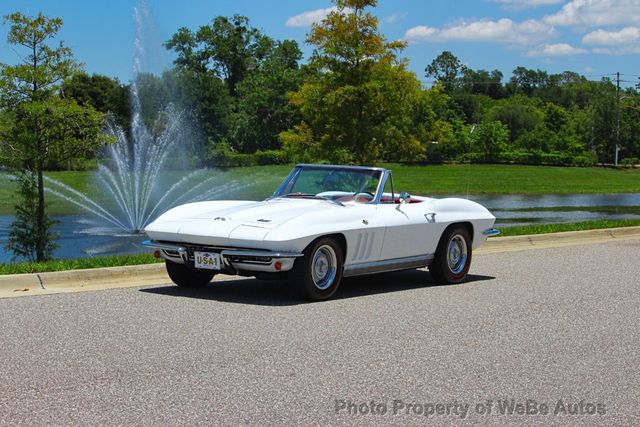
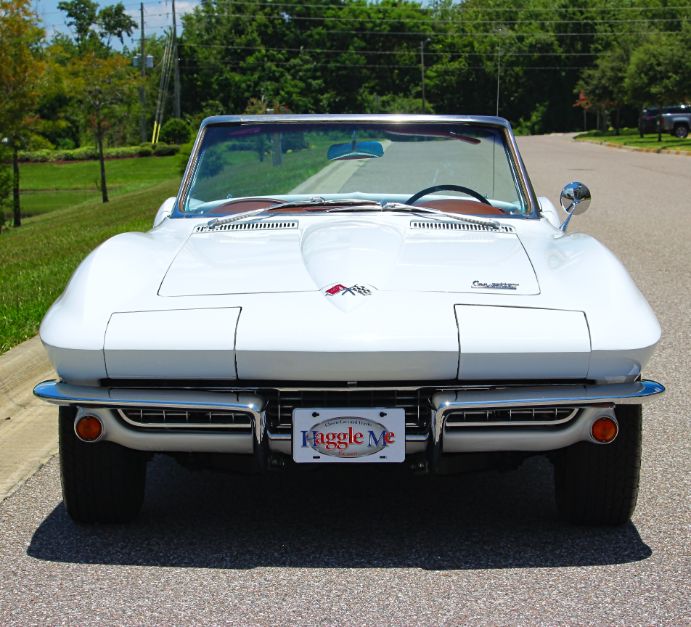
Ask a Corvette designer to describe the difference between a 1966 and a 1967 from ten paces, and the answer arrives quickly: the fender vents. Previous C2 coupes wore three large, horizontal extractor vents on each front fender — functional in purpose, but visually dense in a way that competed with the overall line. For 1967, Chevrolet replaced them with five smaller, more gracefully spaced vents. The change sounds minor. The visual effect is not. The fender reads as more resolved, the relationship between the vent cluster and the body surface more considered.
The alterations continued along the rocker panels. The chrome rocker molding that had appeared on earlier C2s was deleted entirely, leaving an unbroken sill that let the body's lower crease read without interruption from nose to tail. At the rear, the backup lamps were relocated from their previous position on the body into the license plate housing, freeing the tail's face for a cleaner, more purposeful look. The interior received a revised handbrake console with a more functional, upright lever — a small ergonomic correction, but one that signaled how seriously the 1967 treatment took the car as a driver's instrument.
These were not the changes of a committee trying to justify a new brochure. They were the considered edits of stylists who had spent four years looking at the same car and knew exactly what needed to go. The C2 Sting Ray's story is one of progressive clarification, and 1967 is where that story reaches its conclusion.
The Engine Lineup: Five Choices and One Legend
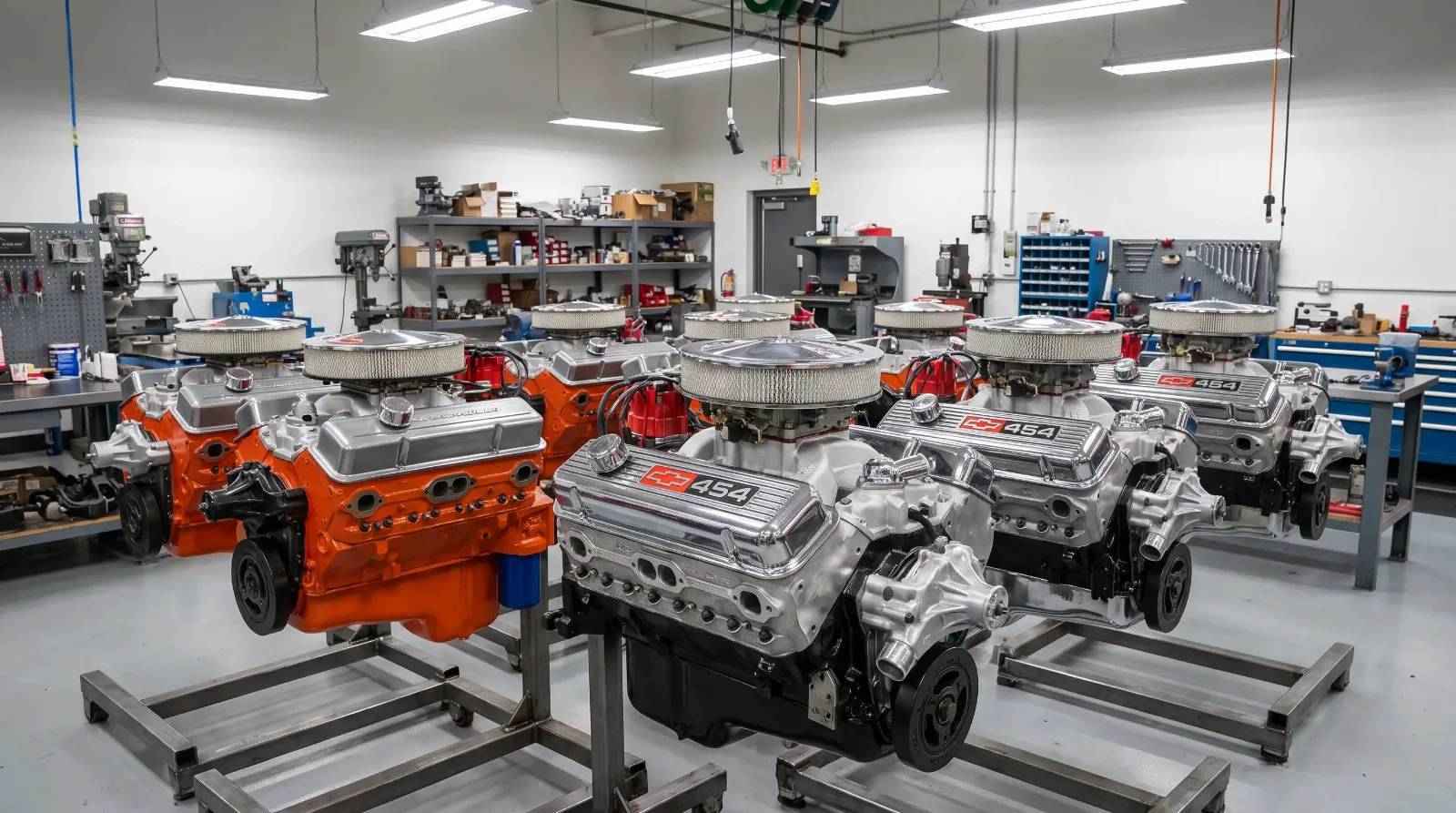
If 1967 represented the apex of C2 styling, it also brought the most formidable engine lineup the Sting Ray would ever carry. The 327 cubic-inch small-block, which had powered Corvettes since 1962, appeared in two final configurations: the L75 at 300 horsepower with a single four-barrel carburetor, and the L79 at 350 horsepower with a high-compression head and solid-lifter camshaft. Both were refined, capable engines — but they were the last of their kind in the Sting Ray. The 427 big-block, which had arrived in 1966, now dominated the options sheet in ways that made the small-block feel almost like the economy choice.
The 427 came in four configurations spanning nearly 50 horsepower from bottom to top. The L36 produced 390 horsepower from a single Holley four-barrel and hydraulic lifters — the most tractable big-block for everyday use. The L68 added two additional two-barrel carburetors in a three-carb arrangement, raising output to 400 horsepower while adding a mechanical drama that buyers found irresistible even if the power increase was modest. The L71 used the same triple-carburetor layout but added solid lifters, hotter camshaft timing, and aluminum cylinder heads to reach 435 horsepower — a figure that made it the fastest regularly available Corvette to date.
| RPO Code | Engine | Horsepower | Induction | Approx. Production |
|---|---|---|---|---|
| L75 | 327 ci | 300 hp | Single 4-barrel | ~6,375 |
| L79 | 327 ci | 350 hp | Single 4-barrel | ~6,375 |
| L36 | 427 ci | 390 hp | Single 4-barrel | ~3,832 |
| L68 | 427 ci | 400 hp | Three 2-barrels | ~1,932 |
| L71 | 427 ci | 435 hp | Three 2-barrels | ~3,754 |
| L88 | 427 ci | 430 hp* | Single 4-barrel (Holley 850 cfm) | ~20 |
| *L88 rated 430 hp but widely understood to produce 550+ hp; rating was intentionally low to deter street use. Total 1967 production: 22,940. | ||||
The L88: Twenty Cars and a Racing Intent
And then there is the L88.
In the history of factory-built American performance cars, few options carry the mythological weight of the 1967 Corvette L88. Approximately twenty were built. Chevrolet assigned them an official horsepower rating of 430 — less than the L71 — in what amounted to a deliberate act of misdirection. The company understood, and intended, that the L88 would be raced. Its official underrating was designed to keep the car out of street use: the L88 required 103-octane racing fuel, deleted the heater, and came with a warning label advising that it was not suited for highway use. These were not caveats. They were a job description.
The actual output of the L88 has been estimated variously at 550 to 560 horsepower in race trim — a figure that made the L71's published 435 look conservative by comparison. The engine featured aluminum cylinder heads shared with the L71 but breathed through a Holley 850-cfm four-barrel carburetor drawing from a cold-air induction hood that sealed against the underside of the hood in a functional ram-air arrangement. The camshaft timing was extreme. The compression ratio, at 12.5:1, was incompatible with any fuel that could be purchased at a filling station.
What makes the L88 historically significant beyond its rarity is the clarity of purpose it represented. Just as the 1963 Z06 had established that Chevrolet would build genuine racing hardware under the Corvette's civilian skin, the L88 carried that tradition to its logical conclusion. It was not a road car with racing ambitions. It was a racing car that happened to be road-registered. Roger Penske ran L88-equipped Corvettes at Sebring and Daytona. Grady Davis, Gulf Oil's vice president, used his to campaign across the SCCA circuit. The twenty or so owners of 1967 L88s were not driving to the grocery store.
"The L88 was Chevrolet speaking in code. The low horsepower rating, the missing heater, the race-fuel requirement — each detail was a message to anyone who could read it: this car belongs on a track. The twenty people who ordered one in 1967 understood exactly what they were buying."
— Tom Ramirez
Production Numbers and the Collector Hierarchy
Total 1967 Corvette production reached 22,940 units — a figure that, viewed in isolation, suggests a healthy model year. Viewed in the context of the C2's run, it tells a more nuanced story. The 1966 model year had produced 27,720 Corvettes, a high-water mark for the generation. The drop to 22,940 in 1967 reflected partly the transition planning underway for the incoming C3 and partly the higher price of the increasingly option-laden cars. Buyers who wanted serious performance were not buying base models — they were building expensive, heavily optioned machines that carried price tags that gave pause even in an era of relative prosperity.
Within that production total, the collectible hierarchy is steep. An L71-equipped 1967 coupe in correct condition commands significant premiums over a base L75 car. An L88, when it surfaces at auction — which happens rarely, since the owners who have found them tend to keep them — becomes a national event. The most expensive Corvettes ever sold at auction have included 1967 L88 examples, and the prices have reflected not just rarity but historical significance.
The styling decisions that defined the C2's appearance were arrived at through iteration, and 1967 was the last opportunity to apply what had been learned. When the C3 arrived for 1968 with its Coke-bottle curves, wider body, and more overtly muscular proportions, it was commercially successful and technically capable — but it was a different aesthetic statement. The C3's design drew from Mako Shark II show car influences and pointed Corvette toward spectacle rather than precision. The C2's design had pointed toward purity.
Why 1967 Stands Alone
The collector market's preference for the 1967 over every other C2 year rests on a convergence of factors that rarely align. The styling had been refined to its most resolved state. The engine lineup had never been broader or more powerful. The production numbers were lower than the peak years, creating natural scarcity. And the car carried a historical weight — the last expression of a design approach before it was superseded — that only grows with time.
Compare it to the other C2 years and the logic clarifies. The 1963 has the split-window coupe, a singular styling choice that Bill Mitchell pushed through over functional objections, and that was corrected in 1964. The early cars have nostalgia and novelty. But they also have the rough edges of a design that had not yet been fully worked out. The 1964 and 1965 models show the refinement process underway. By 1966, the car had reached a mature state, but the fender vents and rocker moldings still complicated the body's visual logic.
The 1967 is what the designers had been working toward. The deleted chrome, the revised vents, the cleaner tail — each change removed something that didn't need to be there. The result is a car that reads with unusual clarity: purpose without ornamentation, performance without theater. For a collector interested in the C2 as a design object rather than simply a power plant, the 1967 represents the fulfillment of the form rather than its beginning.
Lower production, superior refinement, and an engine lineup that included one of the rarest and most historically significant American performance options ever offered — the 1967 Corvette Sting Ray earns its reputation not through mythology but through evidence. It is the final chapter of a story that Chevrolet told well, and knew when to end.