
The question that has never had a clean answer
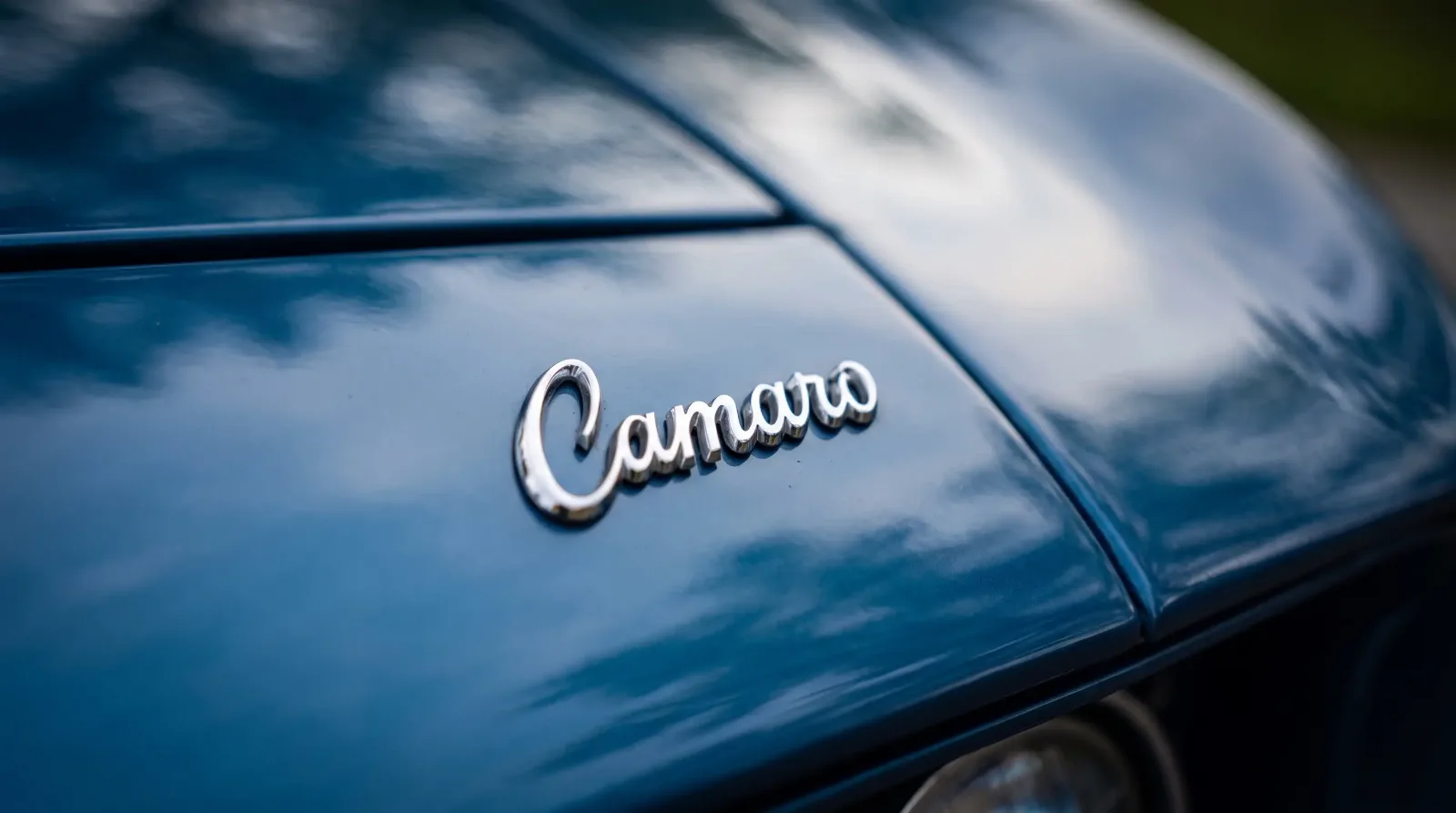
If you ask what does camaro mean, you will get at least three different answers depending on who you ask and when in the car's history you are asking. Chevrolet's own official explanations have shifted. Etymological claims made in the press have been repeated without verification and have become accepted as fact despite weak sourcing. The honest position, backed by available evidence, is that the word's origin is contested and probably more complicated than any single tidy story.
What is clear is that Chevrolet chose the name deliberately and announced the car to the press in September 1966. General Manager Pete Estes, when asked what the word meant, gave the famous answer about a small, vicious animal that ate Mustangs. This was almost certainly a line written for the press conference, not an etymology. It was branding, not linguistics. But it was so quotable that it got repeated alongside whatever actual etymology was offered, and the two merged in popular memory.
The French connection: what the evidence shows
The most widely cited etymology is that Camaro is a French word, used in some obscure contexts to mean friend or comrade. This claim appears in Chevrolet press materials from the mid-1960s and has been repeated in automotive journalism ever since. The problem is that camaro does not appear in standard French dictionaries as a common word. Linguistic historians who have looked at this claim note that it may be an archaic or regional French term, or it may be a creative explanation attached to a word chosen primarily for how it sounded rather than what it meant [VERIFY with linguistic sources and GM historical communications].
The Spanish word camaro means shrimp, which is sometimes raised by skeptics as proof that the French etymology is a post-hoc rationalization. This is probably not the right conclusion either. The Spanish usage is straightforward and common, but the Chevrolet naming team was working in an American corporate context where French associations carried positive connotations in the mid-1960s. Calling your performance car something that evoked French sophistication rather than shellfish was clearly the intent, even if the specific word choice was more about sound than established meaning.
"The word Camaro probably means whatever Chevrolet needed it to mean at the time of the press conference, which is how a lot of automotive names work. The car was so good that nobody cared enough to push back on the etymology."
-- Patrick Walsh
What Chevrolet's own records show
In various authorized histories and official communications over the decades, Chevrolet has described Camaro as meaning different things. Friend appears in some sources. Companion appears in others. Comrade appears in a few. These are all possible translations of the French term, assuming the French term is the correct source, and they are also all words that communicate the right marketing idea for a car positioned as a driver's companion. Whether the word came first and the meaning was discovered, or the meaning was chosen and a word was found to fit it, is not clear from the available documentation [VERIFY with GM Heritage Center or published corporate histories].
What does seem clear is that the name was chosen in part for its phonetic qualities. Camaro is easy to say in English, Spanish, and French. It has two stressed syllables and a hard consonant cluster at the start. It sounds aggressive without being cartoonishly so. These are qualities that naming consultants look for deliberately, and in 1966, even without formal naming research, experienced marketing people understood that a name had to sound right to stick.
The Mustang comparison and what it reveals
The contrast with Mustang is instructive. Mustang has a clear, universally understood reference in American culture: the wild horse of the western frontier and the fighter plane of World War II. The name works because everyone already knows what it means. Camaro had no such pre-existing reference. It was a new word in the context it was being used, which meant Chevrolet had to supply the meaning rather than borrowing it.
This is actually a more sophisticated naming strategy than it might appear. A pre-loaded name carries associations you cannot control. A name with an uncertain etymology carries only the associations the car itself creates. After almost six decades, Camaro means first-generation pony car, muscle car era, Bumblebee, Z/28, and everything else the car has been in the culture. None of that was available when Pete Estes was deflecting questions in September 1966. The car created the meaning that the word carries now.
The camaro name across cultural contexts
One curious result of the name's ambiguous etymology is that it travels well internationally. In Spanish-speaking markets, the shrimp connection creates minor amusement but does not damage the brand. In French-speaking markets, the claimed etymology functions as intended. In markets where neither French nor Spanish is common, the word carries no external baggage at all and functions purely as a brand name that has earned its own associations.
The Camaro in pop culture traces all the ways the car has built meaning beyond the nameplate, in film, television, music, and the broader car community. And this series comes full circle back to where it started: the next article looks at how Bumblebee put the word Camaro in front of a whole new generation who cared about the car before they ever understood anything about its name. Read back at the Bumblebee Camaro to follow the full loop. For the historical record on the car's development, the Chevrolet Camaro story is the definitive reference on Classic Cars Arena.
Sources and notes
Production figures, engine specifications, codes, and dates in this article are cross-referenced from established Camaro references, period documentation, and owner registries. Where sources differ, the most commonly cited value is used. Cost figures are indicative and vary by supplier, region, and condition.