
What a Mustang VIN actually tells you
Before you can call a classic Mustang numbers-matching, you need to read its VIN honestly. The Vehicle Identification Number stamped on every 1965 through 1973 Mustang is a compact sequence of letters and digits, and each position carries a specific piece of factory data: the model year, where the car was built, the body style, the engine it left the line with, and its place in the production run. Understanding that sequence is the first step in any serious Mustang identification process.
Collectors, restorers, and auction inspectors all use the classic mustang vin decoder process the same way: systematically, position by position, cross-referencing against the car's data plate and any surviving documentation. This article walks through that process for the 1965-1973 generation.
Where the VIN is stamped and how to find it
Ford stamped the VIN in several locations on first-generation Mustangs, and knowing all of them matters when you are evaluating a car for authenticity.
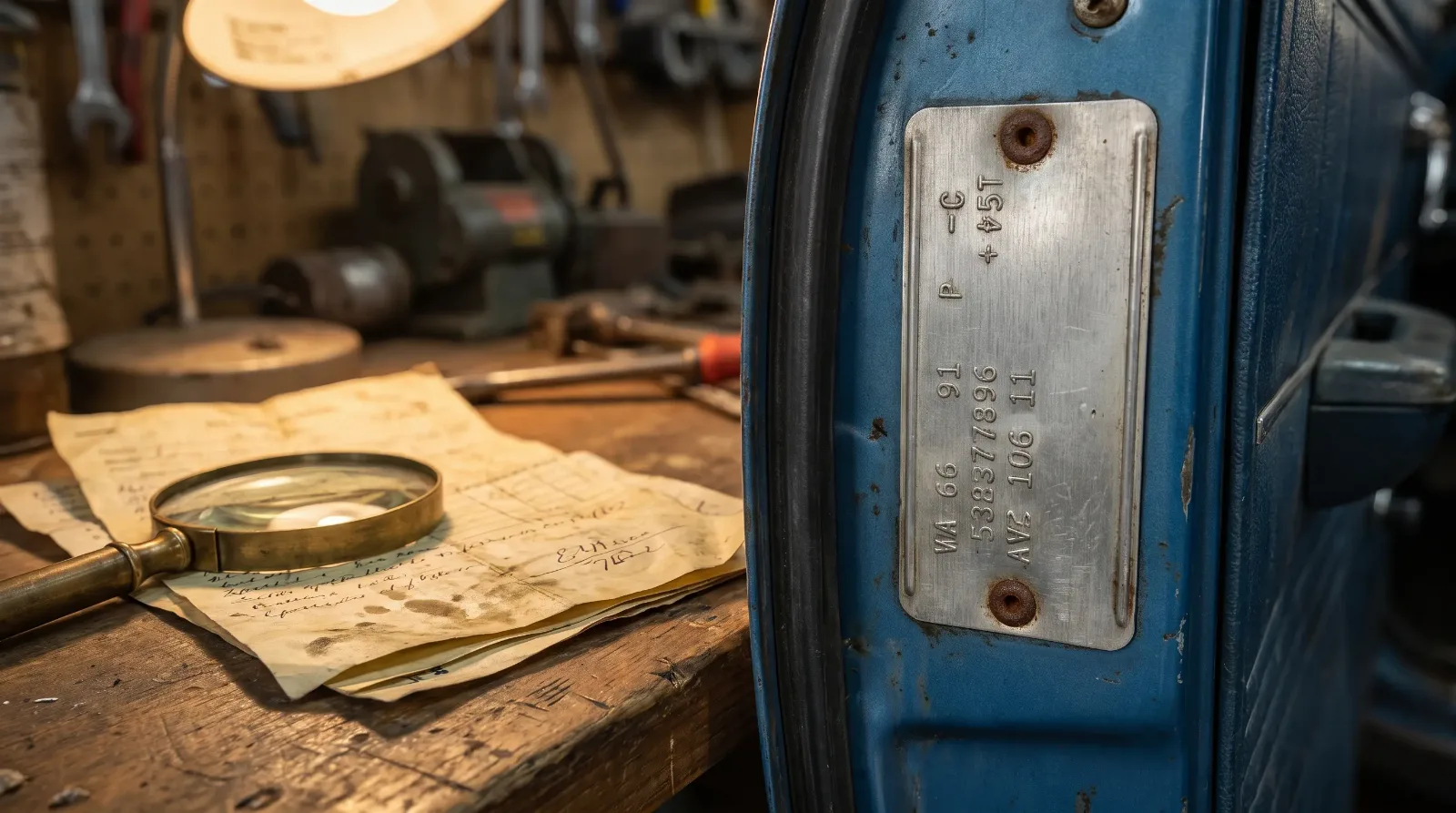
- Dashboard plate (primary): A small aluminum tag riveted to the top of the instrument panel on the driver's side, visible through the windshield from outside the car. This is the location most buyers check first.
- Driver's door jamb: A certification label on 1968 and later cars carries the VIN along with the build date code and GVWR.
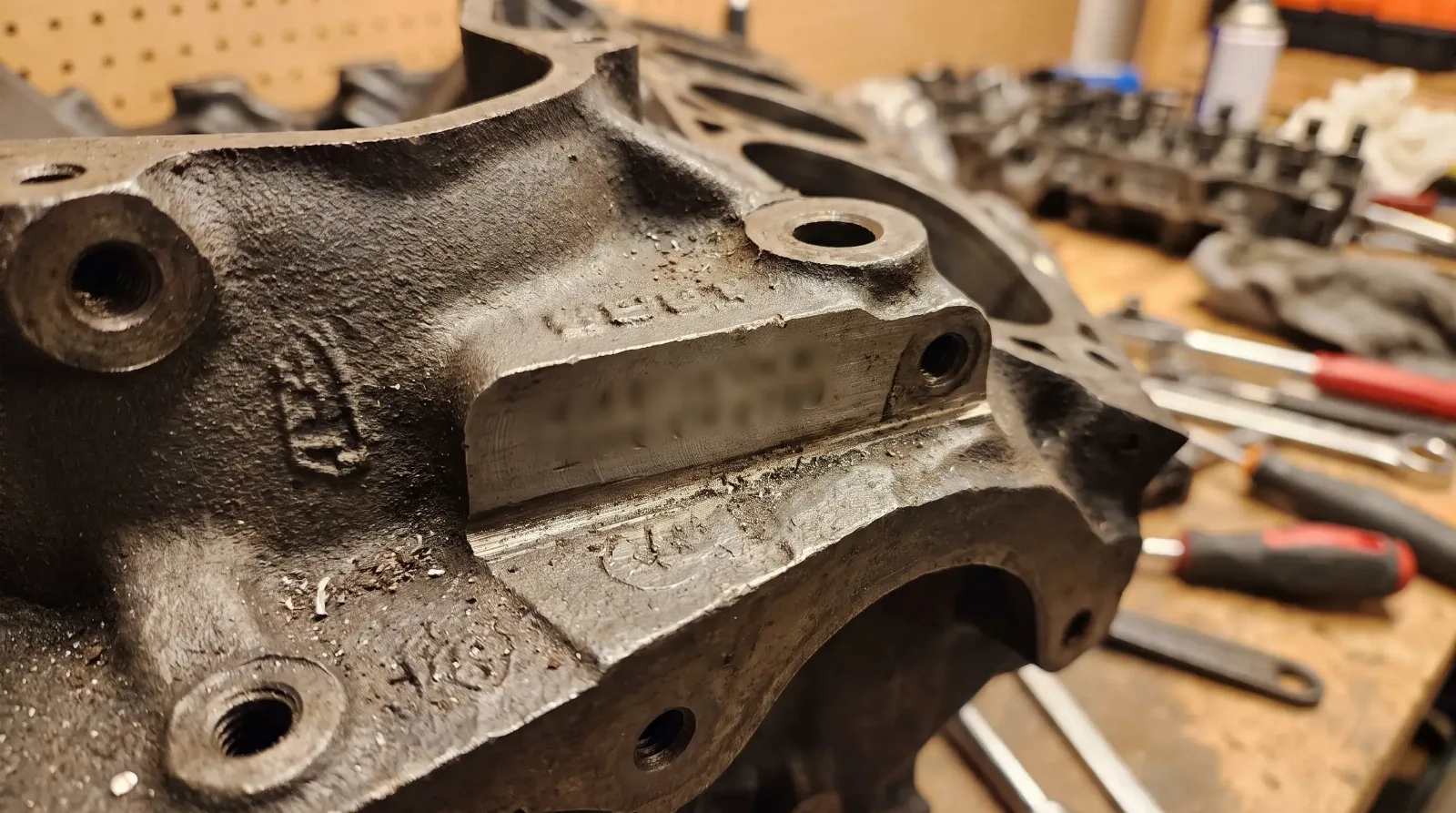
- Engine block: The partial VIN or a warranty number is stamped directly into the block on many cars. On the 289 and 302 small-blocks, look for a stamp on the left (driver's) side of the block above the oil pan rail near the front.
- Frame rail: Some Mustangs carry a partial VIN stamped into the inner frame rail on the driver's side. This is a secondary confirmation point used by professional appraisers.
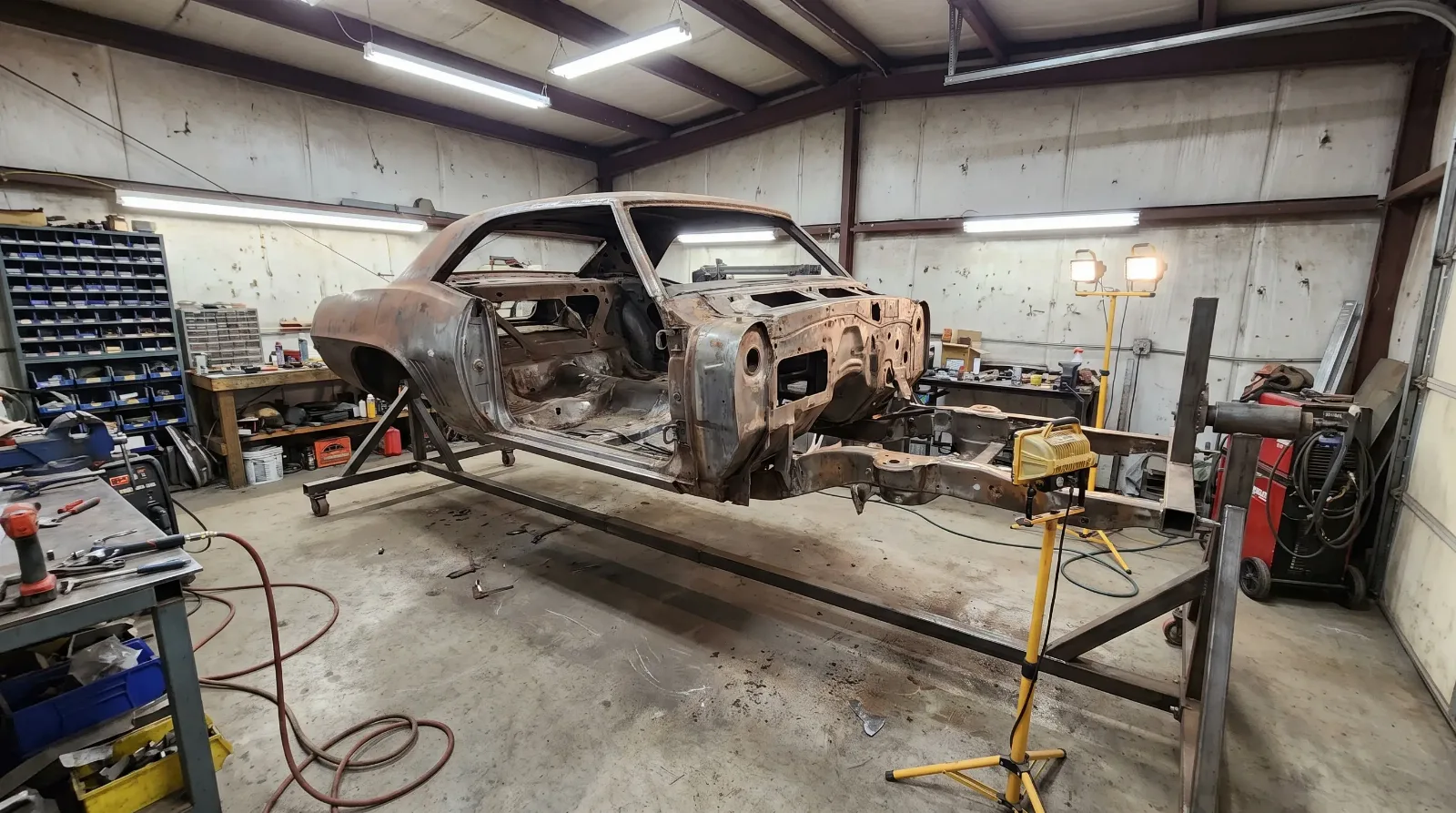
Mismatched numbers across these locations are a red flag, though not always proof of fraud. Replacement blocks, rebuilt engines, or previous body-off restorations can produce discrepancies that have innocent explanations. Document everything you find before drawing conclusions.
The VIN structure decoded: position by position
From 1965 through 1969, Ford used an 11-character VIN for Mustangs. Starting with the 1970 model year, the industry moved toward longer formats, and by 1972-1973 the sequence had expanded. The table below covers the core 1965-1969 format, which applies to the most actively collected cars in this generation.
| Position | What it encodes | Example values |
|---|---|---|
| 1 | Model year | 5 = 1965, 6 = 1966, 7 = 1967, 8 = 1968, 9 = 1969 |
| 2 | Assembly plant | F = Dearborn, MI; R = San Jose, CA; T = Metuchen, NJ |
| 3 | Body serial / model | 1965-66: 07 = hardtop, 08 = convertible, 09 = fastback. 1967-73: 01 = hardtop, 02 = fastback (later SportsRoof), 03 = convertible |
| 4-5 | Body serial detail | Refines the body configuration within the model line; read together with the body code above |
| 6 | Engine code | See engine code table below |
| 7-11 | Consecutive unit number | Sequential production number starting from 100001 at each plant |
For 1970-1973 Mustangs, Ford expanded the format to accommodate the new decade digit and additional body codes introduced with the SportsRoof and Mach 1 variants. The plant codes (F, R, T) remained consistent throughout the full 1965-1973 run.
Reading the engine code letter
The single engine code letter at position 6 of the VIN is the most scrutinized character when buyers are evaluating a Mustang for numbers-matching authenticity. It tells you what engine Ford installed on the assembly line, which should match both the data plate and the block stampings. The following codes cover the most significant powerplants of the era.
| VIN engine code | Engine | Notes |
|---|---|---|
| U | 170 ci six-cylinder | Base engine, 1965 only |
| T | 200 ci six-cylinder | Replaced the 170 as the base six from 1966 onward |
| C | 289 ci V8, 2-barrel carburetor | Entry-level V8, rated 200 hp (1965-1968) |
| A | 289 ci V8, 4-barrel carburetor | 225 hp version; popular performance upgrade (1965-1967) |
| K | 289 ci Hi-Performance V8 | The "Hi-Po" 289; solid-lifter, high-revving unit; most sought-after pre-1967 code |
| F | 302 ci V8, 2-barrel | Introduced 1968; replaced the base 289 |
| J | 302 ci V8, 4-barrel | 1968 only; rated 230 hp (the regular 302 4V, not the Boss). In 1971 the letter J was reused for the 429 Cobra Jet Ram Air |
| G | 302 ci V8, 4-barrel (Boss 302) | The Boss 302, 1969-1970 only; solid-lifter Trans-Am homologation engine |
| S | 390 ci FE V8, 4-barrel | Big-block GT option, 1967-1968 |
| R | 428 ci Cobra Jet V8 | In 1968 R was the 428 Cobra Jet; in 1969-1970 R denotes the 428 Cobra Jet Ram Air (functional Shaker/Ram Air hood). One of the most desirable big-block codes |
| Q | 428 ci Cobra Jet V8 (non-Ram-Air) | 1969-1970; the 428 Cobra Jet without Ram Air. The Super Cobra Jet was a drag-pack option added on top of Q or R cars, not a separate VIN letter |
| H | 351 ci V8, 2-barrel | 1969 onward (Windsor in 1969, Cleveland from 1970); became the dominant V8 into the early 1970s |
| M | 351 ci V8, 4-barrel | 1969 onward (Windsor in 1969, Cleveland from 1970). The one-year Boss 351 of 1971 is a different code (R), not M |
The K-code Hi-Po 289 commands a premium in the market for good reason. Ford built it with a solid-lifter camshaft, stronger connecting rods, a higher compression ratio, and a Holley carburetor. These mechanical differences made it a genuine high-performance unit from the factory, not a dealer-installed upgrade. A VIN showing K at position 6 is worth confirming carefully against the block stampings and the door data plate, because K-code cars attract the most ambitious attempts at re-creation.
"The engine code letter is where the money conversation starts. Before I look at anything else on a car, I check whether the VIN, the data plate, and the block all agree on what engine left Dearborn with it."
— Tom Ramirez
Cross-checking the VIN against the data plate
The VIN does not stand alone as a verification tool. Ford attached a warranty plate (commonly called the data plate or door tag) to the driver's door or door jamb of every Mustang, and it encodes much of the same factory information in a different format. When you are working through a classic mustang vin decoder exercise on a real car, comparing the two is essential.
The data plate carries the body color code, the interior trim code, the transmission type, the axle ratio, and the district sales code, among other details. The engine code on the data plate should correspond directly to the engine letter in the VIN. If the plate shows a K-code engine and the VIN shows something different, one of the two has been altered or the plate has been swapped from another car.
Look for consistency in the date code as well. The data plate lists the build date, typically expressed as a month and year (for example, "8B" for February 1968). The engine block and certain body stampings carry date codes that should be on or before the assembly date, never after. A block date that postdates the car's assembly is a certain sign of a replacement engine.
Partial VIN stamps on body components such as the door, trunk lid, and fender aprons also align with the dashboard plate on unmodified cars. The presence of matching partial VINs on these panels is one of the strongest indicators of a solid, unrepaired body.
What the consecutive unit number reveals
The last five or six digits of the VIN, the consecutive unit number, identify the car's place in the production sequence at its specific assembly plant. The sequence started at 100001 at the beginning of each model year at each plant, so a low unit number indicates early production.
Early production cars from the first weeks of a model year can carry pre-production variations in trim, hardware, or assembly specifications that differ from the final production standard. These differences are documented in the Mustang hobby and can add collector interest, though they also mean a given car may not exactly match the specifications listed in the standard factory documentation for that year.
Very low unit numbers, typically below 100200 or so at any plant, sometimes show up in show car histories or early press fleet records. If a seller is making claims based on a low unit number, verify those claims through independent Mustang registries rather than taking them on faith.
Sources and notes
This guide is provided for general identification and educational purposes only. VIN and data-plate codes varied across model years and running production changes, and individual cars can carry factory exceptions or later modifications. Always confirm a specific car against its own data plate, block stampings, and a marque-specific registry or a professional appraiser before relying on numbers-matching claims for a purchase.
- Classic Industries — 1964-1973 Ford Mustang VIN Decoder & Buyer's Guide
- JEGS — 1965-1973 Ford Mustang (First Gen) VIN Decoder
- CJ Pony Parts — Mustang VIN and Data Plate Decoders (year by year)
- FastbackStack — 1965-1970 Mustang Body Style Codes
- Hagerty — Sorting out the Mustang's 351 Cleveland engines (Boss 351 R-code)
- Classic Pony Cars — 1965 Mustang Data Plate & VIN Decoder