
Why authentication matters before anything else
The Shelby Mustang market is full of cars that wear the name without earning it. Tribute builds, cloned coupes, and outright fakes have circulated for decades, and the gap between a documented original and a convincing replica can span six figures at auction. Before you commit serious money or serious research hours to any candidate car, you need to understand exactly what makes a factory Shelby a factory Shelby, and where the paper trail either confirms or kills the story. If you want the full history behind why these cars became so sought-after, start with the full Shelby story.
How the Shelby serial number system works
On the early cars, Shelby American carried a unique Shelby serial number on a separate data plate, distinct from the standard Ford VIN. The 1965 and 1966 cars used the prefix SFM, which stands for Shelby Ford Mustang, followed by the last digit of the model year, then a type letter, then a sequential unit number. So a 1965 GT350 carries a number beginning SFM5, and a 1966 car begins SFM6. In 1965 the type letter distinguished the road cars from the racers: S denoted the standard street GT350, while R was reserved for the race-prepared GT350R variants. From 1966 onward the cars were effectively all street models, so the S designation carried forward.
The system changed as production moved. The 1967 cars used a different, longer Shelby serial format rather than the simple SFM prefix, and from 1968 through 1970 the cars carried standard Ford VINs with no SFM plate at all. That is why authentication for 1968-1970 Shelbys, including the GT500, leans more heavily on the Ford VIN, the build records, and the SAAC registry than on a distinctive Shelby serial plate. Knowing which convention applies to the year in front of you is itself a basic authenticity check.
On the 1965-1966 cars this Shelby plate was riveted to the top of the driver's-side front fender apron under the hood, in the area carrying the Ford identification, rather than to the door jamb. The rivet pattern, plate material, and stamping depth on genuine examples differ from reproductions, and a knowledgeable inspector can feel the difference. Crucially, the underlying Ford VIN must still match all other VIN stampings on the car, including the dashboard tag, the inner fender, and the engine block pad. When those numbers align, you have a strong foundation to work from.
The SAAC registry as the authentication authority
The Shelby American Automobile Club, known universally as SAAC, functions as the primary independent authority on Shelby Mustang authentication. Founded in 1975, the organization maintains a registry that cross-references production records, dealer correspondence, window stickers, and Marti Reports (the official Ford production data decoder) against each car's physical evidence. When a car appears in the SAAC registry with a complete documentation file, that record carries more weight than any seller's verbal history.
Requesting a registry search before purchase is not optional on a serious acquisition, it is the first call you make. SAAC can confirm whether a given SFM number was assigned to the configuration the seller claims, whether the car has prior registry history, and whether any known discrepancies have been flagged. A car that does not appear in the registry is not automatically fake, but it is unverified, and unverified means discounted price or walk away.
The SAAC registries are published in print and maintained by volunteer registrars, so building a documentation file on a specific car can take time and may involve a modest cost. Treat that as part of due diligence rather than a formality, and start it early enough that the answers come back before you are standing in front of the car with a checkbook.
"The registry entry is not a guarantee, but a missing registry entry is always a red flag worth pursuing before you sign anything."
— Tom Ramirez
What separates a real Shelby from a clone or tribute
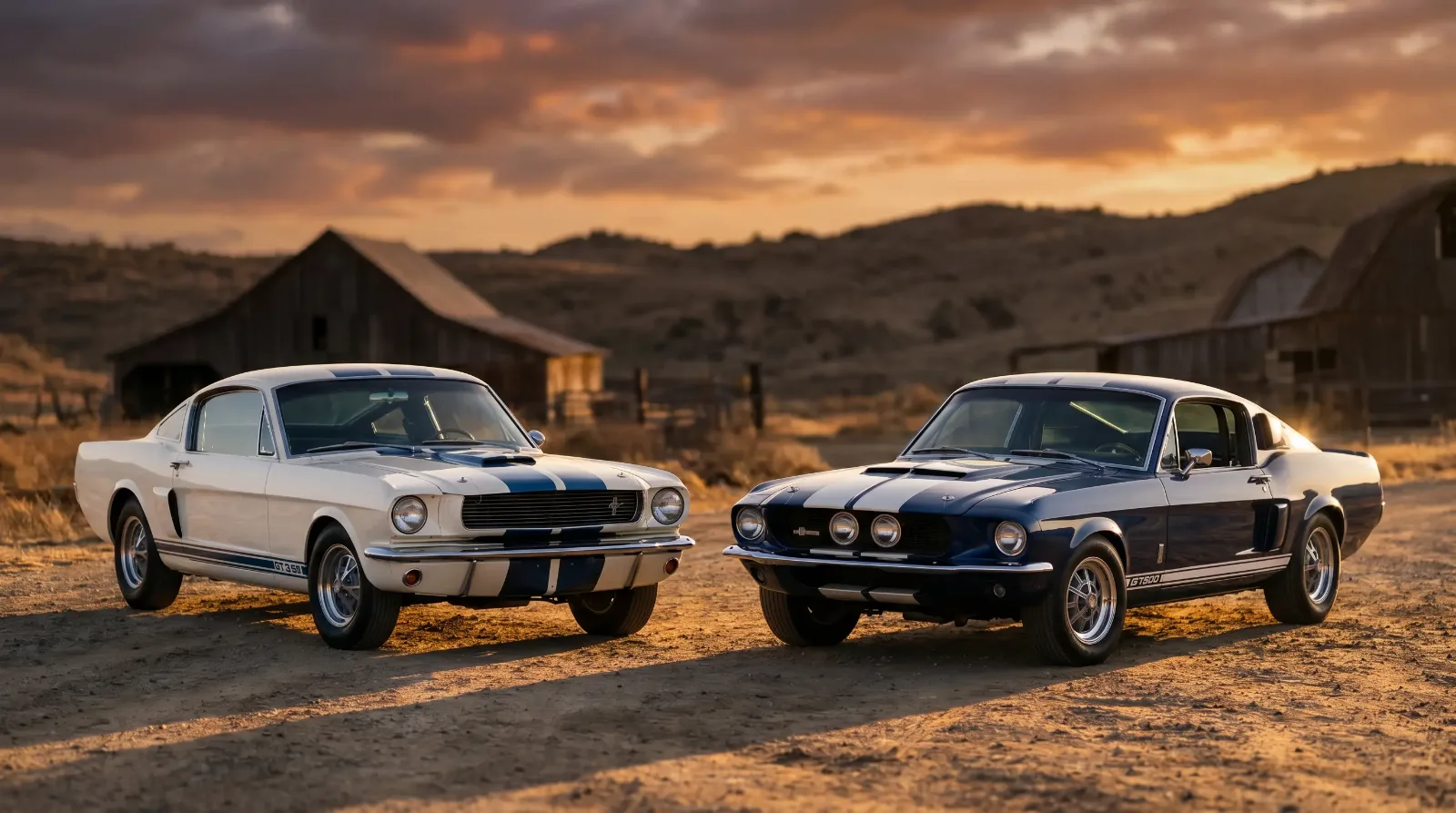
The factory GT350 and GT500 were not simply dress-up packages, and where the cars were built changed over the program's life. For 1965, 1966 and 1967, Shelby American in Southern California took base fastback Mustangs from Ford's San Jose, California plant, performed documented modifications, and returned them as completed vehicles with their own paperwork. In 1968 the operation moved east: base Mustangs came from Ford's Metuchen, New Jersey plant and were converted by the A.O. Smith Company in Ionia, Michigan. For 1969 and 1970, with Ford effectively in control of the program, production continued at the A.O. Smith facility in Ionia, Michigan. The physical evidence of that transformation is what you are looking for.
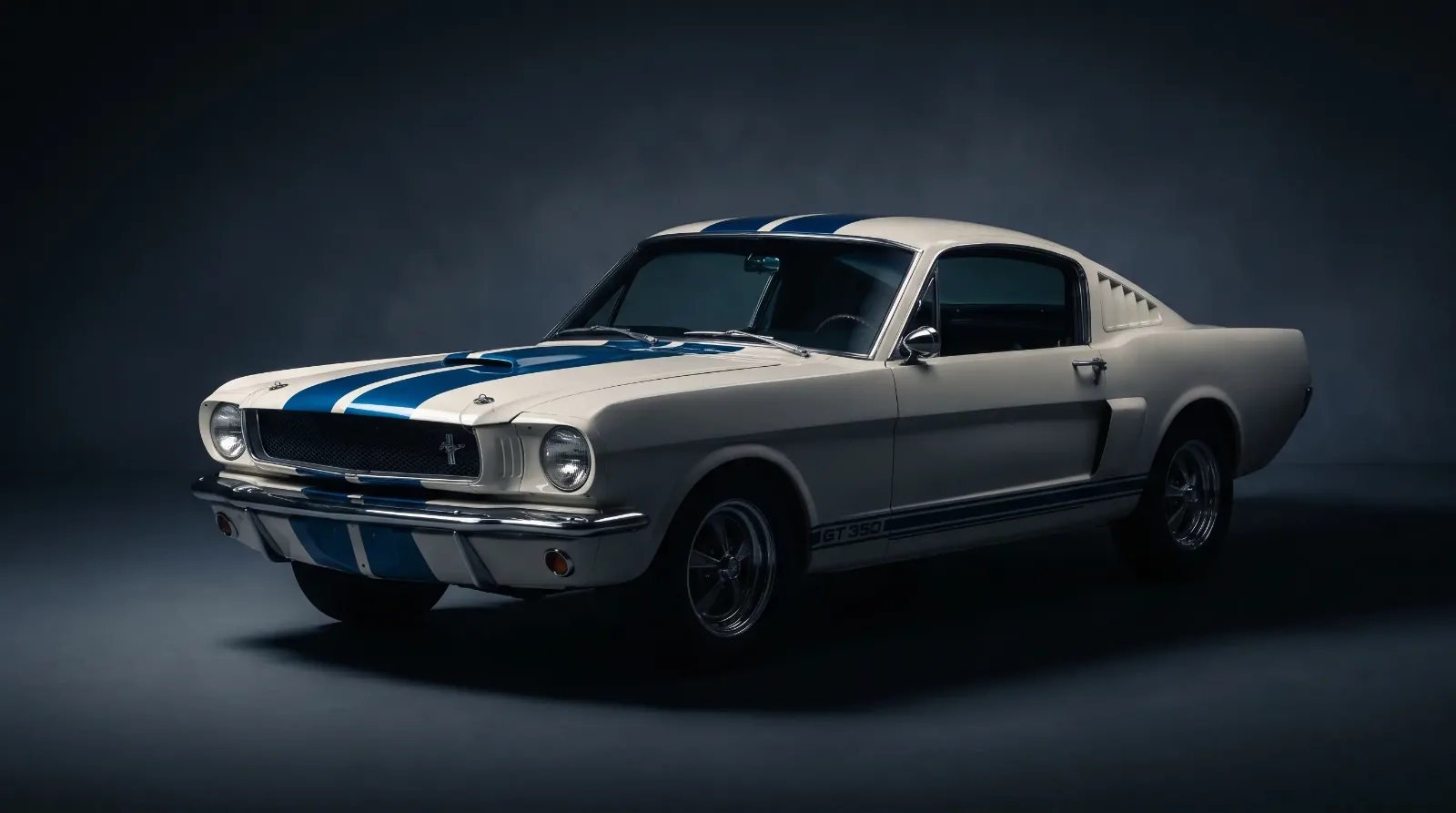
On the 1965-1967 cars, a genuine example will have the Shelby serial plate riveted in place, not screwed or bonded. The fiberglass hood, front apron, and rear treatment should match documented production specifications for that specific model year, since Shelby changed body details year to year. The interior will carry factory Shelby instrumentation, including the correct gauge cluster housing and placement. On the early GT350 fastbacks, period-correct details such as the 1965 rear-seat delete with its fiberglass shelf, and the plexiglass rear quarter windows that replaced the stock louvers beginning in 1966, are the kind of features a clone builder would have had to recreate from scratch.
The build documentation is equally critical. A genuine Shelby should ideally have its original window sticker, the Shelby delivery invoice, and a Marti Report confirming the factory-installed options on the base Ford. When sellers claim a car is "documented" but cannot produce the actual documents, ask specifically which documents, from which sources, and be prepared to verify each one independently.
Common fakes and the tells that expose them
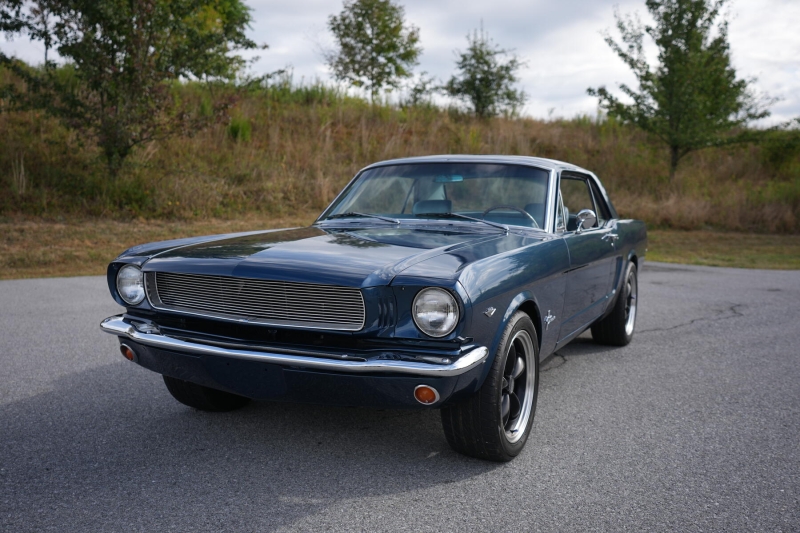
Clone Mustangs range from honest tributes built for driving enjoyment to deliberate frauds assembled to deceive buyers. The most common type is a fastback Mustang with Shelby cosmetic parts added: the fiberglass hood, the side scoops, the emblems. These cars are often called "Shelby clones" or "tribute cars" by sellers who want to imply more than they are stating directly. The absence of an SFM plate is the immediate disqualifier, but you need to look further.
Some fraudulent builds do carry a Shelby plate, sourced from a wrecked or destroyed original. In those cases the SFM number on the plate will not match any legitimate production record, or will match a car that has a separate documented history. Cross-referencing the number against the SAAC registry exposes this immediately. A less sophisticated fraud will have an SFM number that simply does not follow the established prefix logic for the claimed year and model.
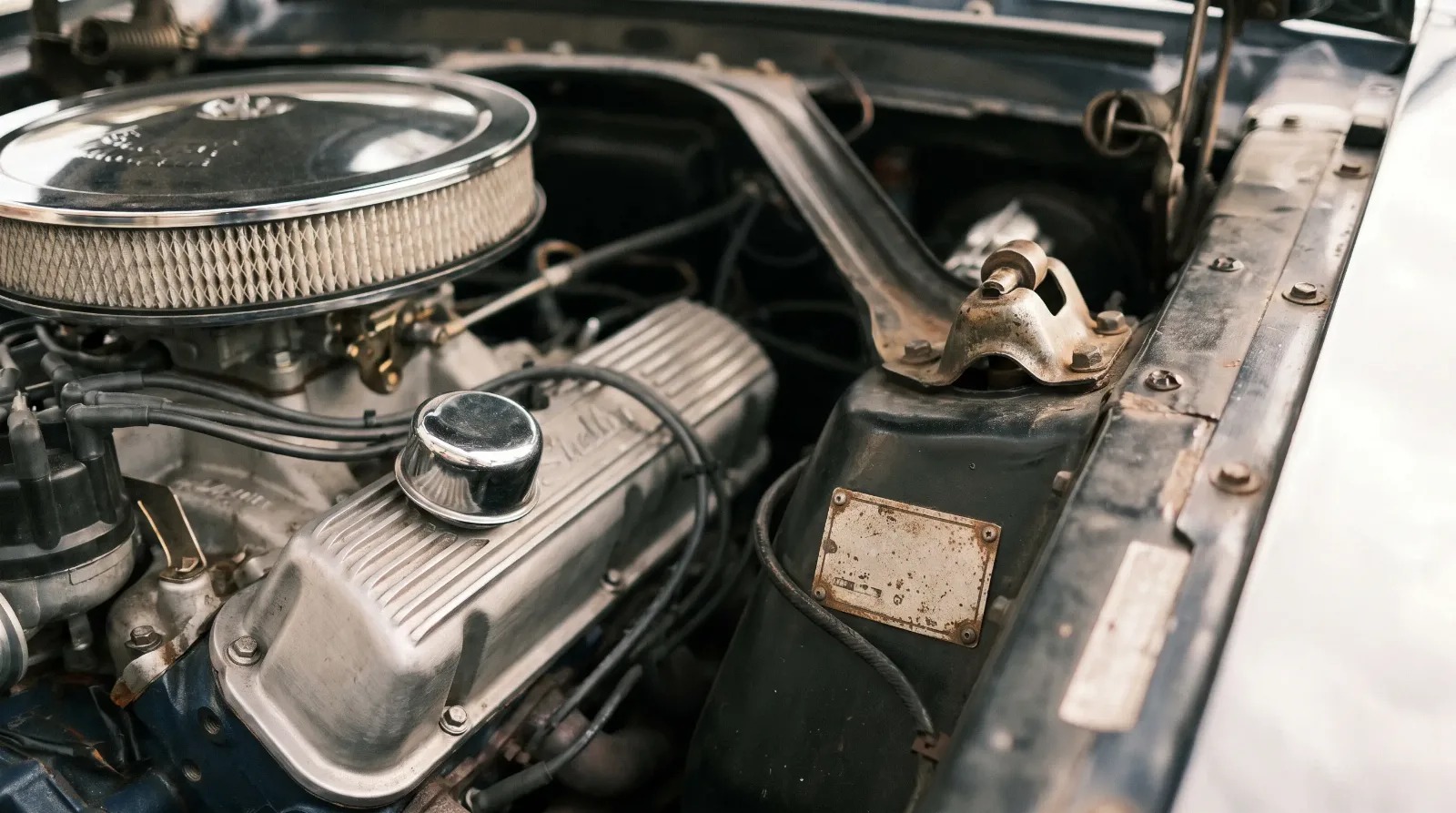
On the mechanical side, a genuine GT350 from 1965 started with Ford's K-code "Hi-Po" 289 cubic-inch small-block, which Ford rated at 271 horsepower, and Shelby reworked it with a high-rise aluminum intake, a large four-barrel Holley carburetor, finned aluminum valve covers, and other documented changes to a rating of 306 horsepower for the street GT350. The handful of competition GT350R cars were tuned considerably higher, into the 350-plus horsepower range. A car with a 302 or 351 in a 1965 body is not factory-correct regardless of how otherwise clean the presentation is. Engine swaps are not disqualifying for a driver-quality car, but they are disqualifying for any claim of numbers-matching authenticity, and that distinction drives a large part of the value difference.
Why documentation drives value
At auction, a fully documented Shelby Mustang with its original Shelby invoice, Marti Report, SAAC registry file, and a consistent ownership history will consistently outperform an equivalent car without paperwork. The premium is not sentimental. It reflects the market's recognition that documentation is the only reliable hedge against future authentication disputes.
For collectors considering a purchase, the investment in a proper pre-purchase inspection by a Shelby specialist, combined with SAAC registry verification and a Marti Report, represents a small fraction of the transaction value and eliminates the most common sources of post-purchase regret. For sellers with genuine cars, assembling that documentation package before listing is the single most effective step to achieving full market value. You can begin your search for classic Shelby Mustangs once you know exactly what to look for.
Sources and notes
This article is provided for general educational purposes and reflects publicly available production history. Serial number formats, factory ratings, and assembly details varied by model year and individual car, and some figures were quoted differently in period. It is not a substitute for a professional pre-purchase inspection or a formal authentication through the official Shelby registries. Always verify any specific car against primary documentation before making a purchase decision.
- Shelby Mustang — Wikipedia (model history, engine ratings, and year-by-year assembly locations)
- MotorCities — The 1968 Shelby Mustang and the A.O. Smith Corporation (1968 Metuchen build and A.O. Smith conversion in Ionia, Michigan)
- Shelby American Collection — 1965 Shelby Mustang GT350 (1965 GT350 specification and history)
- Mustang Specs — 1965 Shelby GT350R In-Depth Guide (GT350R competition engine output and production numbers)
- Shelby American — Registry (official Shelby registry reference)
- Classic Motorsports — SAAC and the Shelby Registry (SAAC founding in 1975 and its role as the authentication authority)