
How the factory built your Mustang: body styles and the base car
When Ford released the Mustang in April 1964, buyers did not simply walk in and choose a color. They worked through a layered ordering system that let dealers configure each car from a menu of body styles, equipment groups, engines, transmissions, and axle ratios. Understanding that system is what separates a knowledgeable buyer or restorer from someone guessing at whether a car is genuine. The first step in decoding a classic Mustang is knowing what choices were available in the first place.
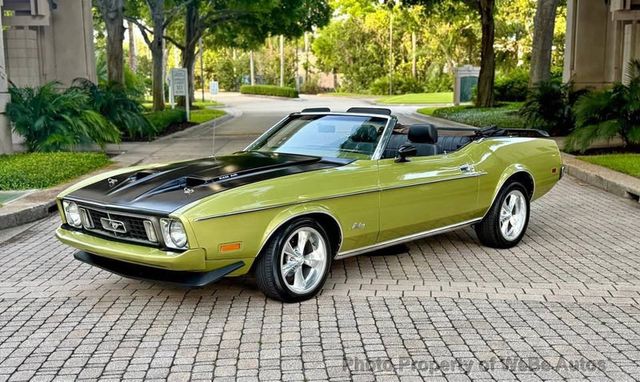
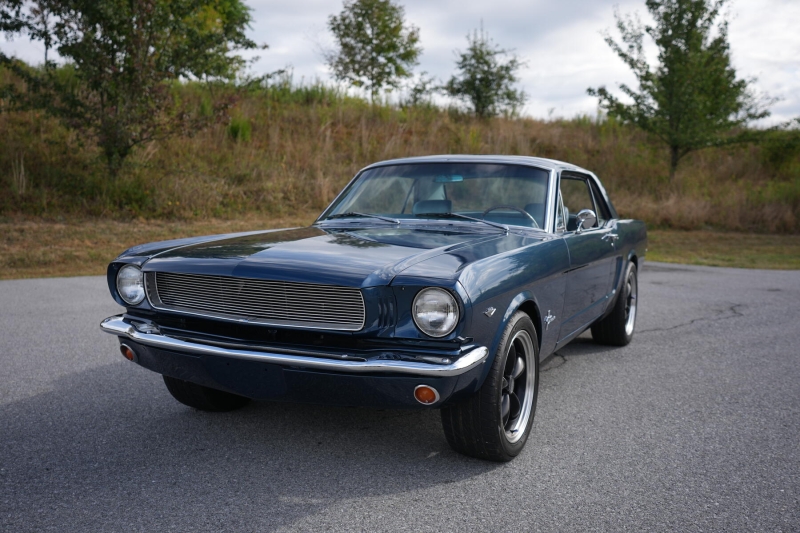
Ford offered three body styles throughout the first generation. The hardtop coupe arrived at launch and remained the volume seller. The convertible followed within weeks of introduction. The fastback, formally called the 2+2, joined the lineup for 1965 and gave the Mustang the roofline that defined its visual legacy. Base prices in 1965 ranged from roughly $2,372 for the hardtop to $2,614 for the convertible, with the 2+2 fastback at about $2,589, sitting in between. Each body style could then be built up through a series of option packages and individual codes.
The GT Equipment Group: the most misunderstood package
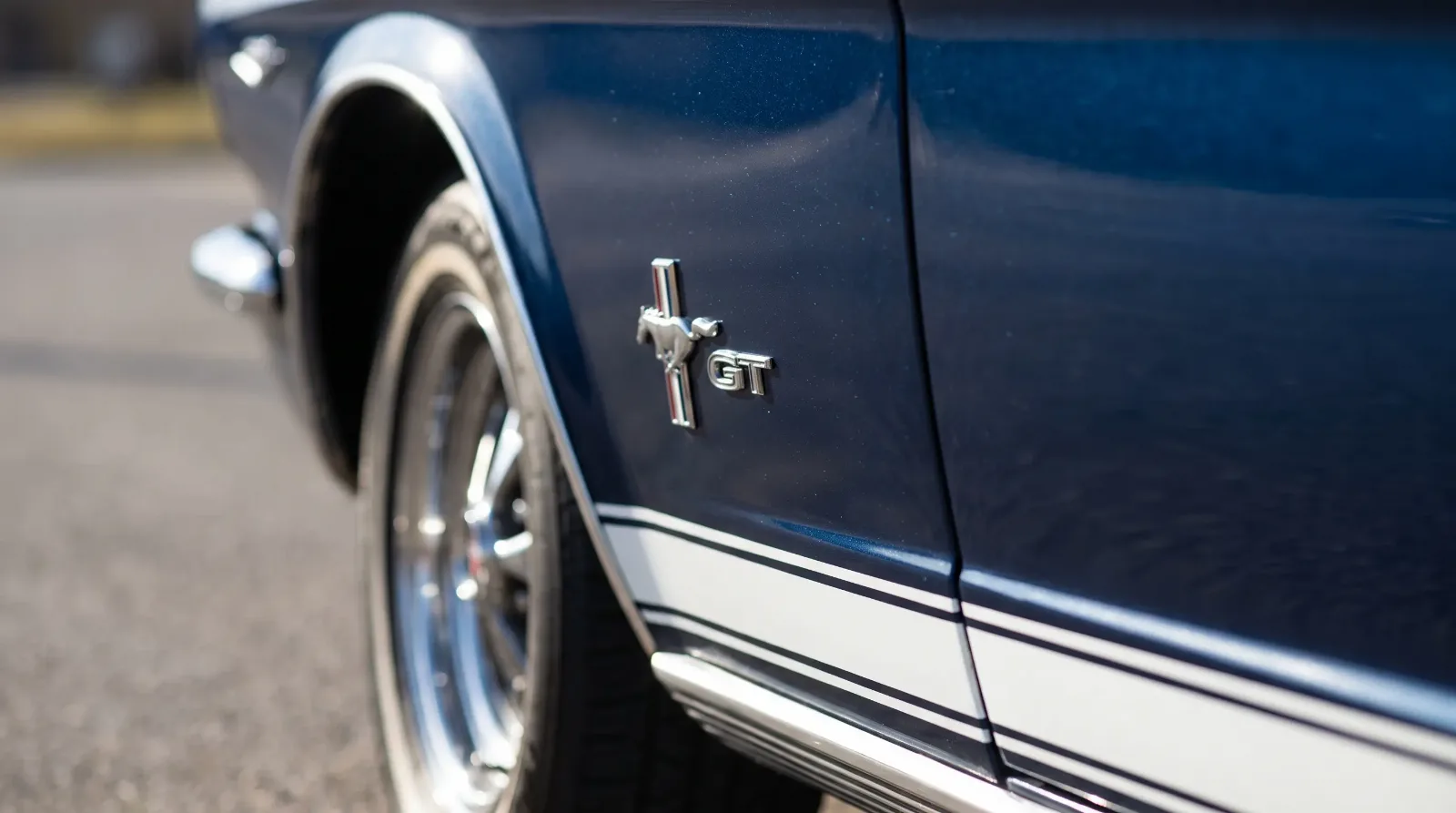
The GT Equipment Group, introduced on April 17, 1965, is the most discussed and most misrepresented of all first-generation Mustang packages. It was not a separate model. It was an option, available only when the buyer also selected one of the larger 289 V-8s, either the 225-horsepower four-barrel or the 271-horsepower high-performance K-code. What came with it was specific: front disc brakes, a dual exhaust with chrome tips exiting through the rear valance, fog lamps mounted in the grille bar, GT emblems and lower bodyside stripes, a firmer suspension with quick-ratio steering, and a five-dial instrument cluster replacing the base car's strip-style instrumentation.
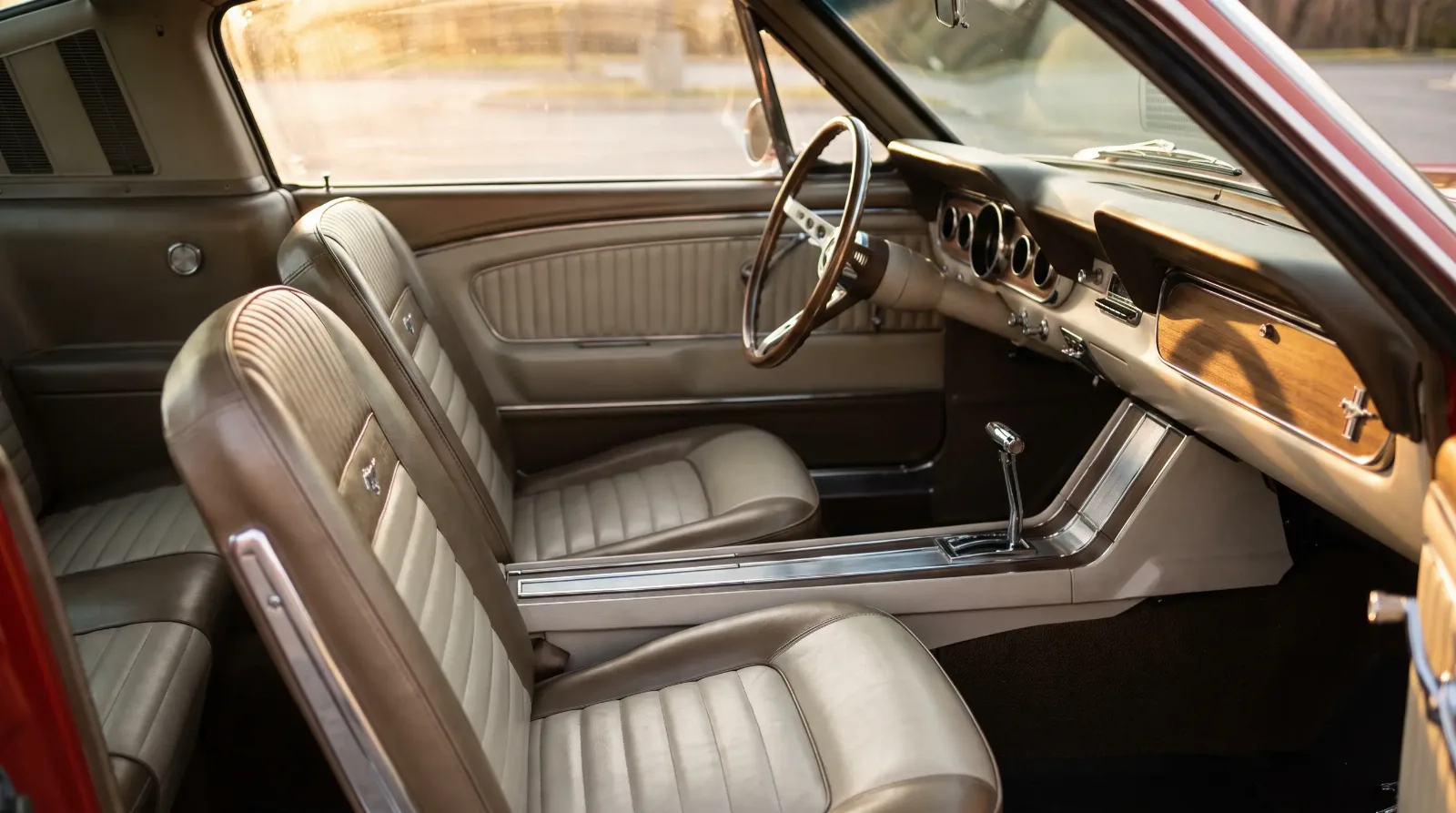
The GT package is why the term "GT clone" exists. Because the visual elements, fog lamps, side stripes, and badging, could be added later from a parts catalog, cars are frequently represented as genuine GTs when they are not. A real GT will show the correct codes on its data plate, carry the proper front disc brake hardware, and have the exhaust cutouts in the rear valance. Comparing those physical features against the data plate is the only reliable authentication method. The Interior Decor Group, universally called the Pony interior, could be combined with the GT package to produce what many collectors consider the definitive early Mustang specification. It replaced the standard door panels with embossed running-pony stampings, upgraded the seat inserts, and added a distinct steering wheel with a horse-medallion horn button.
Sprint packages and other factory bundles worth knowing
Ford periodically organized combinations of options into promotional packages marketed under names like Sprint. The Sprint 200 of 1966 was built around the 200 cubic inch inline six and grouped wire-style wheel covers, painted bodyside accent stripes, an engine dress-up kit with a chrome air cleaner and decal, and a center console. The 1968 Sprint packages, by contrast, were appearance-oriented bundles offering C-stripes, wheel-lip moldings, full wheel covers, and a pop-open gas cap, with a V-8 version that added styled steel wheels and fog lamps. These promotional packages sometimes appeared only in specific sales regions or for limited windows during the model year, which makes documentation critical. A Sprint package documented only by exterior appearance, without corroborating paperwork, is impossible to authenticate with certainty.
Other factory bundles worth knowing include the Visibility Group, the Convenience Group, and the Exterior Decor Group, sometimes called the Pony Exterior, which brought bodyside accent moldings and a distinct rocker panel treatment. The fold-down rear seat was an unusual option on early fastbacks. Factory air conditioning on a high-performance V-8 car is uncommon because most buyers who ordered the 271-horsepower K-code 289 or later the 428 Cobra Jet skipped A/C to preserve cooling capacity. When air conditioning does appear on a documented high-performance car, it signals a specific factory combination that adds context and, in some cases, value.
Engine, transmission, and axle codes: the mechanical foundation
The engine choices across the first generation are central to any value discussion. The 1964-and-a-half cars launched with a 170 cubic inch inline six and a 260 cubic inch V-8. By the full 1965 model year, the 260 had been replaced by the 289 in two-barrel and four-barrel form, with the high-performance 289 (K-code, rated at 271 horsepower) at the top. The 390 cubic inch FE V-8 at 320 horsepower arrived for 1967. The 428 Cobra Jet, introduced in April 1968 and widely regarded as underrated by Ford at 335 horsepower, followed. The 428 Super Cobra Jet added a nodular-iron crankshaft, heavier 427-style LeMans cap-screw connecting rods, and an external engine oil cooler for sustained high-rpm and drag use.
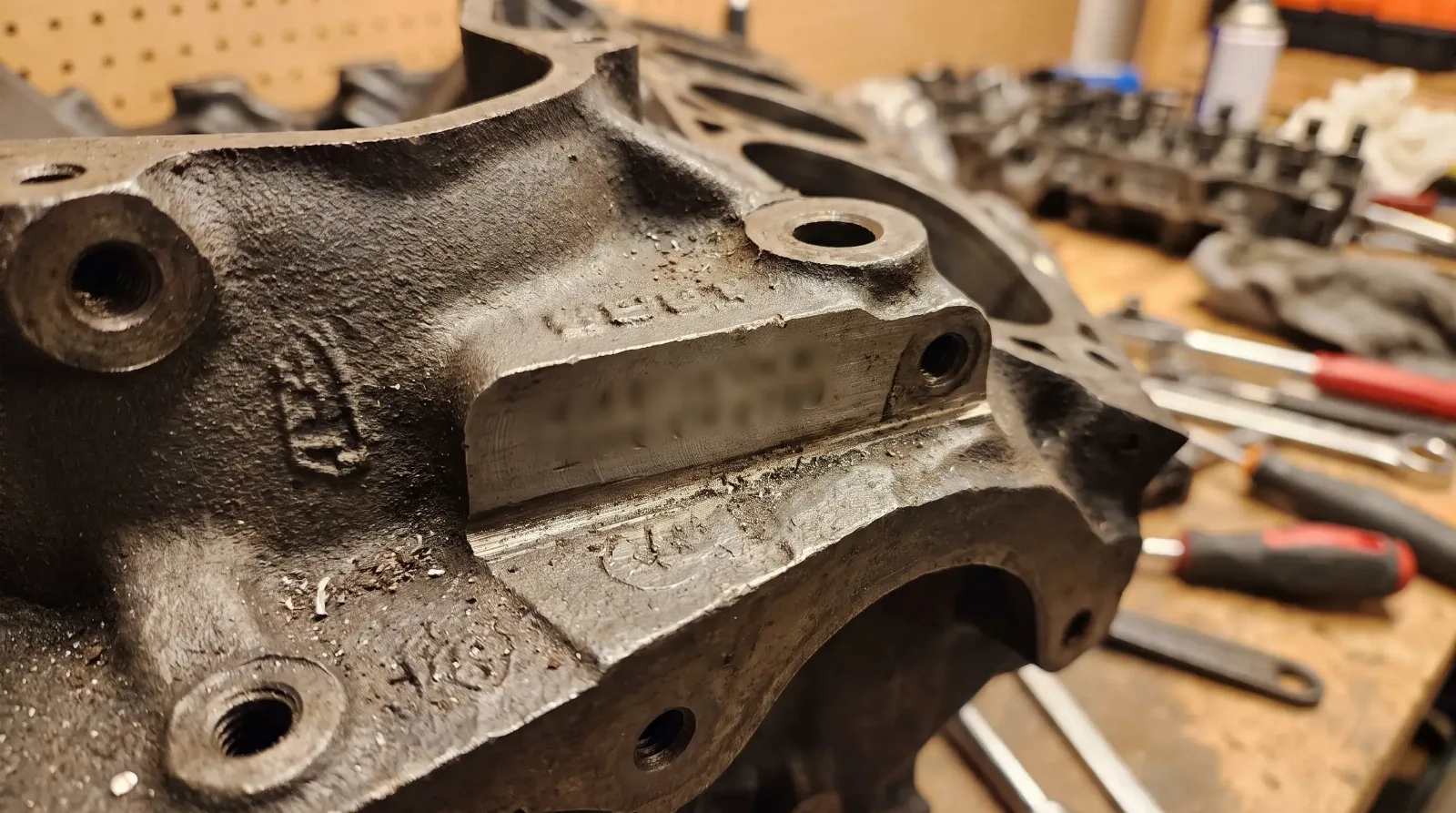
Each engine carried a specific code that appears on the data plate. The K-code 289 is particularly significant because its presence is verifiable through the block casting, the distributor, the carburetor, and the valve covers, all of which differ from lower-output 289 variants. Transmissions were likewise coded: three-speed manual, four-speed manual in close- or wide-ratio form, and the Cruise-O-Matic automatic each carried a distinct identifier. Rear axle ratio codes rounded out the drivetrain documentation. A correctly coded numbers-matching drivetrain, where engine, transmission, and axle codes all correspond to the data plate, is the foundation of a serious restoration or an investment-grade purchase.
Reading the data plate and the Marti Report
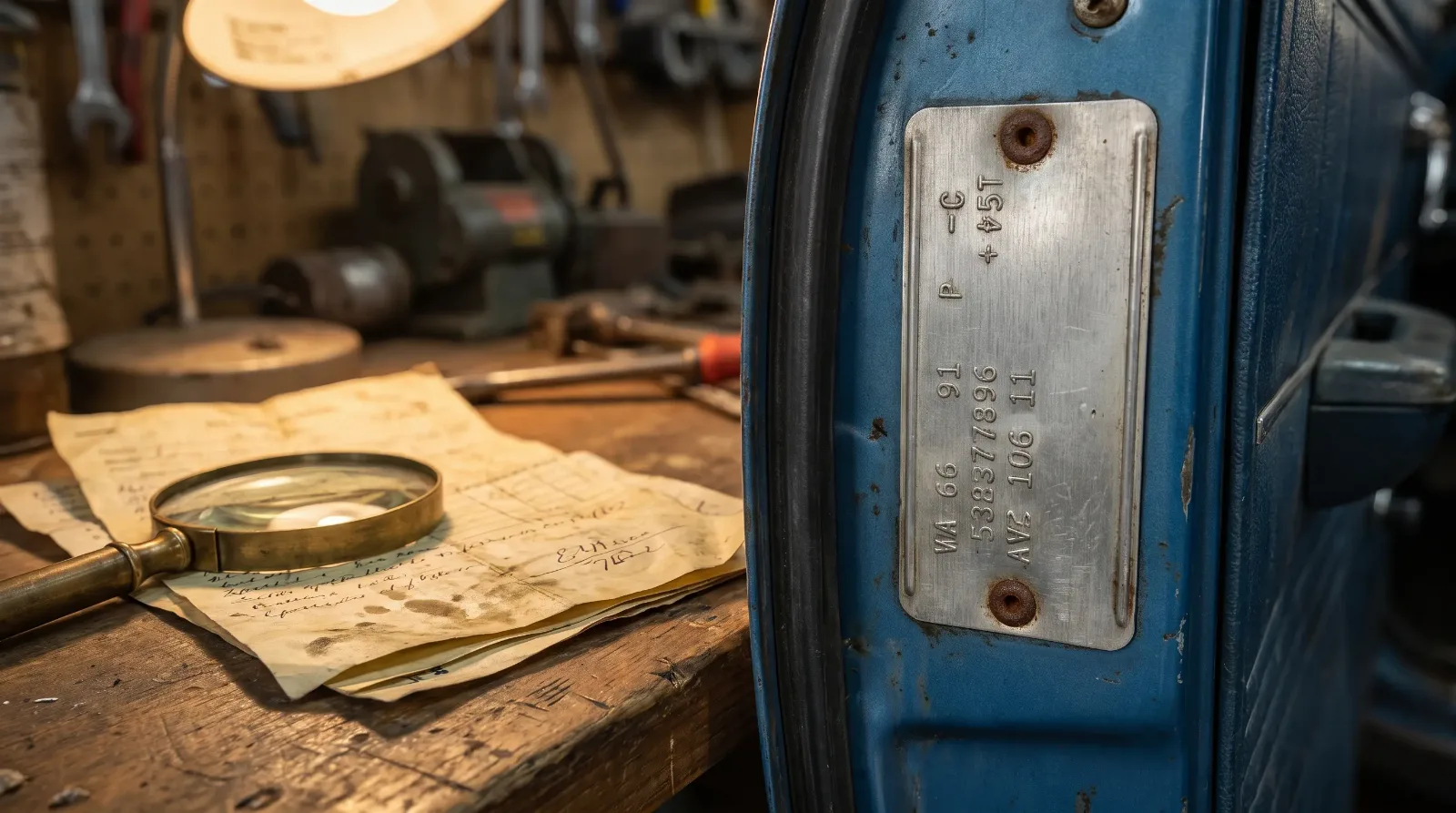
The data plate, sometimes called the warranty plate, is the small aluminum tag riveted to the driver's door jamb. It encodes the body style, color, trim level, transmission, and rear axle in a standardized sequence. Knowing how to read it is covered in detail at the data plate guide, but the key point for option authentication is that the plate records only what the car left the factory with. If a code is not there, the option was not ordered.
For 1967 and later first-generation cars, a far more detailed resource exists. Marti Auto Works licensed the original Ford production database and issues Marti Reports that show the complete build specification of any surviving 1967-1973 Mustang by VIN. A Marti Report confirms engine, transmission, axle, every factory option, the production sequence, the shipping destination, and the dealer. It also shows how many other cars were built with the same combination, which directly informs rarity. For pre-1967 cars, authentication relies on the data plate, the build sheet when one survives (typically found under the seat or in the trunk), and physical inspection of date-coded components against the model year.
"A code on the data plate is a fact. Everything else, the story the seller tells, the badge someone bolted on twenty years ago, is just noise until you verify it against the documentation."
— Tom Ramirez
Sources and notes
This article is provided for general historical and educational reference. Option availability, package contents, and production figures varied during the model year and across assembly plants, and figures cited here reflect the best available published records rather than official factory totals. Always authenticate any specific car against its data plate, surviving build documentation, and a Marti Report (1967 and later) before making a purchase or restoration decision.
- Wikipedia — Ford Mustang (first generation): GT Equipment Group, engine ratings, and the 15,079 figure
- MustangSpecs — 1966 Mustang Sprint 200 Limited Edition package contents
- MustangSpecs — 1967 Mustang 390 FE V8 specifications (320 hp)
- The Mustang 428 Cobra Jet Registry — introduction and April 1968 availability of the 428 Cobra Jet
- The Mustang 428 Cobra Jet Registry — Super Cobra Jet crankshaft and connecting-rod details
- CJ Pony Parts — overview of the 1966 and 1968 Mustang Sprint editions