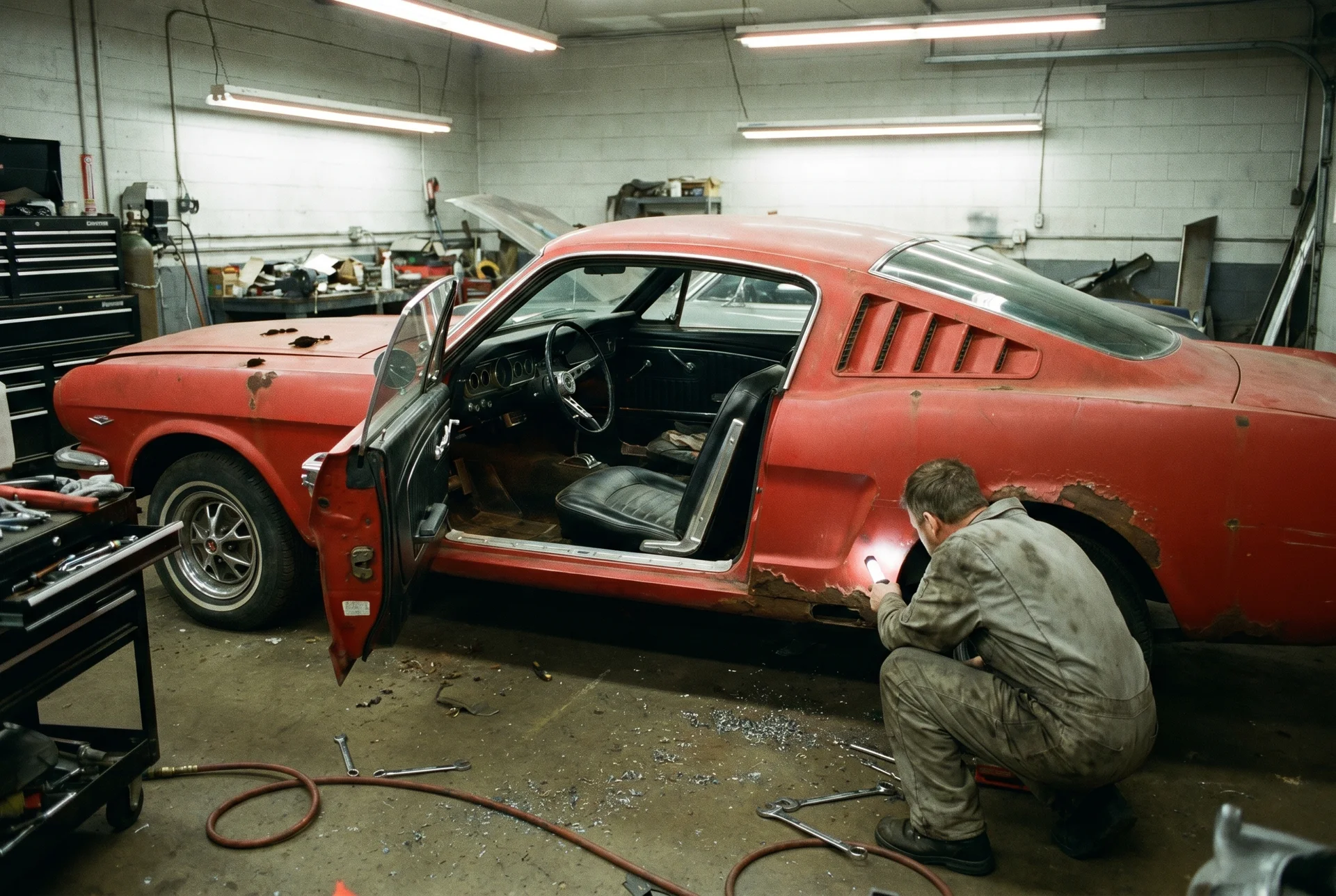
Nothing kills a classic car deal faster than the word "rust." Nothing also creates more buying opportunities for the informed buyer, because most people — including many sellers — don't understand the difference between rust that matters and rust that doesn't. Let me clarify that distinction.
Surface Rust: The Cosmetic Category
Surface rust is oxidation on the top layer of metal that hasn't yet penetrated through the panel. It looks alarming in photos. It is, in most cases, not a major mechanical concern. Surface rust on hood interiors, trunk floors (on top of the metal, not eating through it), and the tops of frame rails is a normal condition for a car that's fifty years old and has lived in a humid environment.
Addressing surface rust is labor-intensive but not technically complex: media blast the affected area to bare metal, apply a quality etching primer, and coat with your choice of finish. The cost is time and materials, not specialized fabrication. A rust converter followed by proper sealer is acceptable for areas that won't be seen; it is not acceptable as a substitute for proper treatment on structural areas.
Scale Rust: The Middle Category
Scale rust has started eating into the metal but hasn't penetrated fully through it. You'll see it as rough, flaking, orange or brown oxidation that has texture — it's no longer smooth metal. Scale rust is repairable, but the repair requires removing all of the rust and addressing the underlying metal, not just coating over it.
The dishonest repair for scale rust — the one you'll find under a lot of "restored" cars — is to grind down the worst of it, coat with filler, and paint over the top. This fails. The rust continues underneath the filler and paint, and you'll see it again within three to five years as bubbles under the paint. A proper repair removes all rust to bright metal, treats with phosphoric acid to convert any remaining traces, and seals with quality primer before the topcoat goes on.
Structural Rust: The Category That Changes Everything
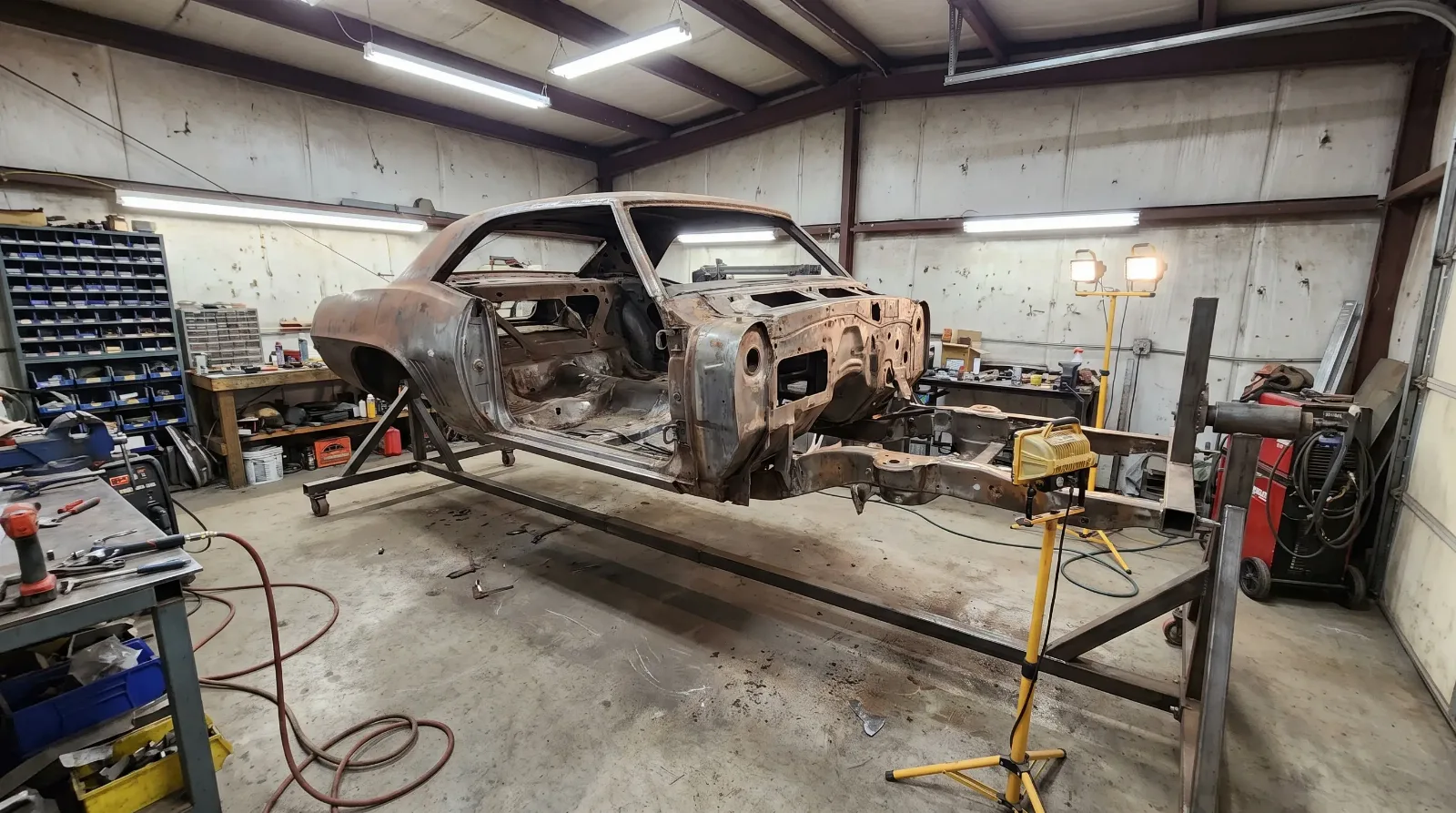
Structural rust has penetrated through the metal. You can push a screwdriver through the affected area. This is where a car transitions from "project with a known cost" to "money pit with an unknown ceiling."
Frame rust on a body-on-frame car (most pre-1970 American cars) means the structural spine of the vehicle is compromised. Frame repair is specialized work: section replacement requires precise jig alignment and welding that most body shops can't do correctly. Complete frame replacement means sourcing a correct-date replacement unit, which may not exist in acceptable condition. Budget $8,000–$20,000 for proper frame work on a car with significant structural rust, and understand that number can grow.
Floor pan rust is probably the most common structural rust issue and the most approachable to fix. Patch panels for popular models are available from restoration suppliers, and a competent welder can install them correctly. Budget $800–$2,500 per panel for proper patch work, depending on how much of the floor needs replacement and what access the car's structure allows.
Torque box and frame rail rust (on unibody cars) is the most serious category. The torque boxes are where the front subframe connects to the unibody structure, and rust here means the car's handling and crash structure are compromised. Proper repair requires specialized attention; improper repair — filling and coating — is not a repair, it's concealment. Walk away from any car with serious torque box rust unless you're a professional restorer with a dedicated project budget and no timeline.
The Regional Reality
Rust patterns are regional. Cars from the upper Midwest, the Northeast, and the Pacific Northwest are rust candidates. Cars from Arizona, Nevada, New Mexico, and Southern California are often astonishingly clean underneath even when the body has cosmetic issues. A "desert car" is not marketing; it's a real and meaningful descriptor that impacts value.
The practical implication: a $25,000 project car from Michigan that looks clean but needs an under-car inspection is a different proposition from a $25,000 project car from Phoenix. The Phoenix car almost certainly has better bones. Pay the $300 for a proper pre-purchase inspection. Bring a magnet. Bring a flashlight. Bring someone who's done this before.
The Bottom Line on Rust and Value
Surface rust: discount the asking price by what cleanup costs and buy confidently. Scale rust: get a proper inspection and a written repair estimate before negotiating. Structural rust: get two written estimates from professional shops, understand the full scope before you commit, and price the car accordingly — meaning discount its asking price substantially. If the seller won't discount for documented structural rust, there are better cars out there.