
Mercury Eight Buyer's Guide
The Mercury Eight was born to be hot-rodded — a factory hot rod from the moment it left Dearborn. With a flathead V8 that out-displaced and out-styled everything Ford offered, the Mercury became the foundation of California custom culture.

Jim Vasquez here, and I want to be honest about my bias: the Mercury Eight is my people's car. When guys like Harry Westergard and the Ayala brothers were shaping what custom culture would become, they kept coming back to the same starting point — the Mercury Eight. The proportions were right, the mechanicals were willing, and that flathead V8 just begged to be modified.
The Mercury Eight ran from 1939 through 1951, and every single year produced something special. The pre-war cars (1939–1942) established the template. The postwar cars (1946–1951) refined it, culminating in the 1949–1951 fastback body styles that James Dean made immortal. If you want to understand where hot rodding and custom culture came from, you need to start here.
Ford's Premium Brand Gets Its Own V8
When Henry Ford introduced the Mercury for 1939, it was positioned as a step above Ford but below Lincoln — a mid-price car with genuine performance credentials. The key differentiator was the engine: a 239.4ci flathead V8 producing 95 horsepower, compared to Ford's 221ci unit making 85. It was a modest difference on paper but enormous in practice. The Mercury felt like a performance car in a way that the contemporary Ford didn't quite manage.
The pre-war Mercurys (1939–1942) are among the best-styled American cars of their era. The long hood, flowing lines, and integrated fender shapes anticipated the postwar styling revolution by years. Enzo Ferrari reportedly bought a 1940 Mercury to study its proportions. Whether or not that story is apocryphal, it captures something true about these cars — they had an elegance that transcended their price point.
Why Hot Rodders Loved the Flathead Mercury
The flathead V8 in its Mercury state of tune was just the beginning. The aftermarket ecosystem that developed around it was staggering: multiple carburetor setups, high-compression heads, better ignition systems, and displacement increases to 256ci or beyond were all available by the late 1940s. Speed shops in California, particularly in the San Fernando Valley, developed a complete cottage industry around Mercury flathead performance.
The engine's architecture — valves in the block, not the head — made it uniquely easy to modify. The relatively simple casting meant that machine shop work to improve flow, increase compression, or bore the cylinders was inexpensive and effective. By the early 1950s, a well-built Mercury flathead could make 150–200 horsepower — two to three times the factory output. These were genuine performance numbers for the era.
The 1949–1951 Mercury: A Cultural Touchstone
The 1949 Mercury represented a complete redesign that produced one of the most beautiful American cars of the twentieth century. The "bathtub" shape — smooth, rounded, with no vestigial fenders — was shocking in its modernity. The fastback coupe body is the quintessential custom platform: the C-pillar rakes at just the right angle, the body proportions are nearly perfect for customizing, and the wheelbase is long enough to look aggressive once lowered.
The "Merc" became a cultural symbol through a combination of road racing, drag racing, and Hollywood. Dean's "Little Bastard" was a Porsche, but his cultural association with the Mercury (through the film "Rebel Without a Cause") made these cars synonymous with mid-century teenage rebellion. That association has never faded, and it drives collector demand today as powerfully as any mechanical consideration.
Choosing Your Mercury
Pre-war cars (1939–1942) are rarer and more focused on concours restoration. The 1939 is the rarest and commands the highest prices among collectors who want original numbers-matching examples. The 1941 coupe is arguably the most beautiful of the pre-war cars.
The postwar cars (1946–1948) are excellent choices for restorations that want to drive regularly. They share the pre-war mechanicals with updated styling, and parts availability is good. The 1949–1951 cars are the custom builder's choice — the body is incomparable, the flathead is at its final state of development, and the cultural cachet is maximum.
Buying Considerations
Rust follows predictable patterns: the lower rear quarter panels, the trunk floor, the floor pans, and around the door bottoms. These are all structurally significant areas on a unibody or full-frame design. Get a proper underbody inspection on any car you're considering seriously. Surface rust on the frame rails is normal and manageable; structural rust that has compromised the frame or body structure is a much more serious concern.
Engine condition is critical. Flathead V8s are genuinely durable but wear in specific ways: the water passages in the block can corrode and cause overheating, the original style head gaskets are prone to leaking, and the babbitt bearings in early examples should be inspected. A properly rebuilt flathead with modern head gaskets, a repaired cooling system, and upgraded ignition is a delight to own. A neglected one with unknown history is a liability.
Browse Mercury Eight listings
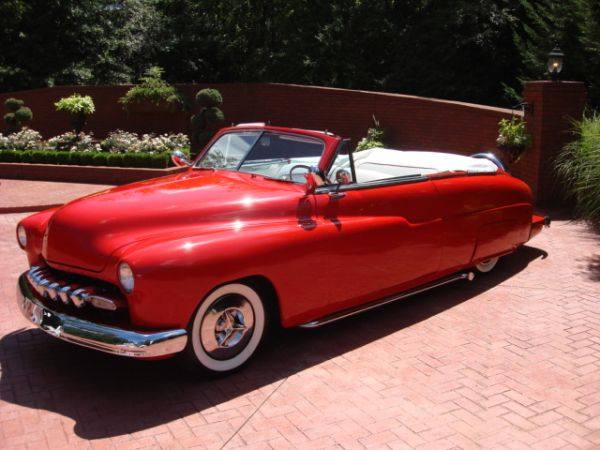 Dealer
 United States
1949 Mercury Eight
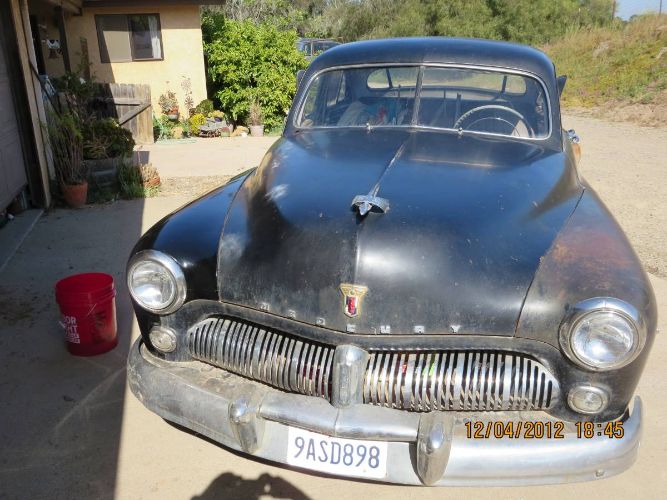 Dealer
United States
Dealer
United States
1949 Mercury Eight
What to Look For
Inspect the lower rear quarters and trunk floor for rust — these are the most expensive areas to repair on a Mercury Eight. Check floor pans and rocker panels from underneath. Verify the flathead V8 runs without overheating — cooling system issues are common and the fix involves pulling the engine in severe cases. Look for cracked cylinder heads from overheating events (look at the top of the block between cylinders). Check body alignment and panel gaps, which reveal previous accident damage or poor restoration work. Confirm authenticity of any claimed numbers-matching drivetrain.Pre-Purchase Checklist
-
Lower Quarter Rust
Inspect lower rear quarter panels and trunk floor area — probe with a pick tool, not just visual inspection. -
Floor Pan Condition
Check floor pans from underneath for rust perforation, especially at the sill welds. -
Flathead Cooling System
Warm the engine to operating temperature and monitor for overheating — note coolant color and condition. -
Head Gasket Condition
Look for white exhaust smoke on warm startup and check oil for coolant contamination (milky appearance). -
Body Alignment
Check door gaps and hood alignment — uneven gaps indicate prior collision damage or poor restoration. -
Glass & Trim
Inspect all glass for cracks or delamination, and trim pieces for completeness — reproduction quality varies widely. -
Brakes
Test hydraulic brakes thoroughly — original systems are cable or early hydraulic, both require careful inspection. -
Numbers Matching
Record and verify the engine number against the title — important for concours or insurance valuation. -
Drivetrain
Test the 3-speed manual or available overdrive transmission for smooth shifting and no grinding.
Common Issues
Lower rear quarter and trunk floor rust, often severe on unrestored examples. Flathead V8 cooling system failures from corroded water passages in the block. Head gasket failures (modern replacement gaskets are superior to originals). Babbitt main bearing wear on high-mileage engines. Cracked or warped cylinder heads from overheating. Body panel availability issues for pre-1946 models. Correct trim and glass reproduction quality varies by year.More Eight for sale
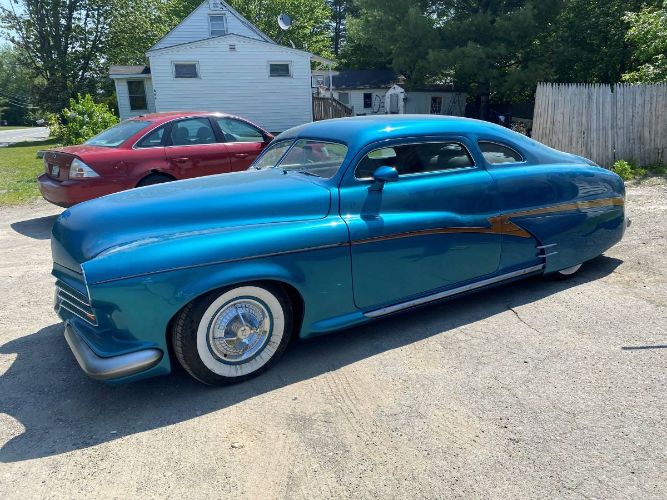 Dealer
United States
Dealer
United States
1950 Mercury Eight
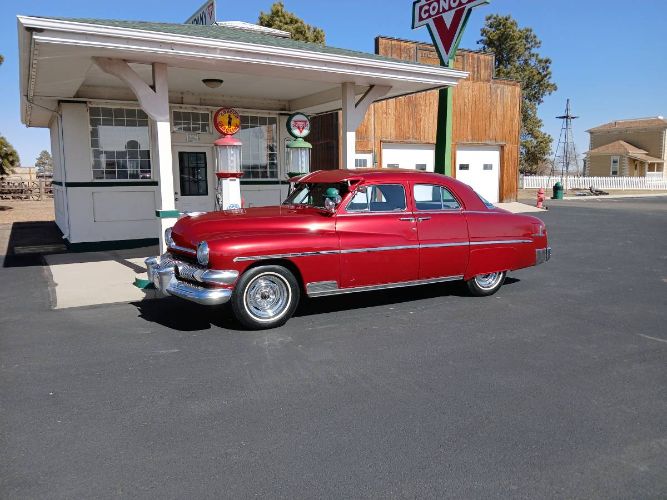 Dealer
United States
Dealer
United States
1951 Mercury Eight
Pricing Guide
1939–1942 coupes in driver condition: $18,000–$35,000. Concours 1939–1942 cars: $45,000–$75,000+. 1946–1948 cars: $12,000–$28,000 for drivers, $35,000–$55,000 restored. 1949–1951 fastback coupes (the classic custom body): $20,000–$45,000 unmodified drivers, $50,000–$100,000+ for show-quality restorations. Custom-built show cars can exceed $200,000. Convertibles command a 25–40% premium across all years.Fun Facts
The 1940 Mercury was so well-styled that it reportedly influenced European designers including those at Ferrari. The flathead V8 in Mercury trim was used extensively in early Indianapolis 500 racing — several midget and sprint car racers were flathead-based. James Dean's association with the Mercury Eight through "Rebel Without a Cause" was so powerful that Mercury dealers reportedly saw a sales spike after the film's release, even though Dean drives a Merc in only a few scenes. The 1949 Mercury is one of the most-chopped cars in American custom history — literally hundreds of examples exist with their rooflines lowered 3–5 inches.Frequently Asked Questions
Ready to find your Eight?
Browse 6+ active Mercury Eight listings on Classic Cars Arena.
View Listings →