
Mercury Monterey Buyer's Guide
The Mercury Monterey gave the custom culture its most iconic raw material in the 1952–1956 era, and then reinvented itself as a serious big-block performer with the 427 FE engine in the 1960s. Two completely different collector cars wearing the same badge.

Jim Vasquez here. When people talk about the "'51 Mercury," they usually mean any early-1950s Merc — and the Monterey is the car they mean. It was Mercury's top trim level for most of its run, the version that came with the most chrome, the best interior, and the proportions that George Barris, the Ayala brothers, and a hundred backyard customizers attacked with lead sleds and lowering blocks. The 1952–1956 Monterey is custom culture's favorite canvas.
But the Monterey story doesn't end in the 1950s. By 1966, Mercury was dropping the 427ci FE big block into the Monterey — a NASCAR-derived engine in a full-size cruiser. Same name, completely different animal. Two very different cars for two very different collectors.
The Custom Era: 1952–1956
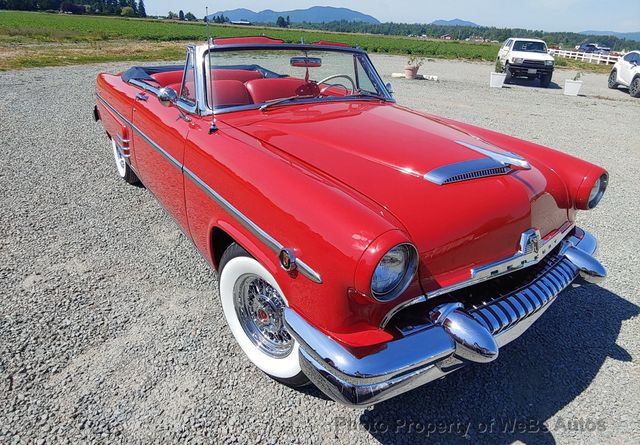
The Mercury Monterey launched as a top-trim variant in 1952. The proportions were right from the beginning: long hood, low roofline, smooth body sides, and enough chrome to signal luxury without overwhelming the form. The early Monterey hardtop — the "Sun Valley" with its Plexiglas roof section (1954) and the standard pillared hardtop — gave customizers a template that worked in every direction.
Lead sleds happened to these cars because the proportions invited it. Lower the suspension, chop the top three or four inches, fill the chrome holes with lead, and the Monterey becomes something that looks like it was designed that way from the start. George Barris built customs on early Mercury platforms. The Hirohata Merc — the most famous custom car ever built — used a 1951 Mercury body. The Monterey name arrived in 1952 but the cultural moment was the same car family.
Flathead to Y-Block
The early Montereys used Ford's 255ci flathead V8 — the same engine family that underpinned the hot rod culture. In 1954, Mercury made the jump to the modern overhead-valve 256ci Y-block V8, which was smoother and more powerful but lacked the flathead's particular tuning mystique. For custom purists, the flathead-powered 1952–1953 Montereys are the most authentic; for practical driving, the Y-block cars are preferable.
The Performance Era: 1965–1969
By the mid-1960s, the Monterey had grown into a full-size Mercury platform — longer, heavier, and aimed at a different buyer than the custom car crowd. What makes the 1965–1969 cars interesting to a different audience is the engine options. Mercury offered the 427ci FE big block in the full-size Mercury from 1962 to 1965, the same high-performance engine Ford was winning Le Mans with, in a full-size family sedan.
| Era | Engine | Output | Character |
|---|---|---|---|
| 1952–1953 | 255ci Flathead V8 | 125 hp | Custom era, hot rod foundation |
| 1954–1956 | 256ci Y-Block V8 | 161 hp | Early OHV, cleaner performer |
| 1965–1968 | 390ci FE V8 | 265–330 hp | Strong cruiser |
| 1966–1967 | 428ci FE V8 | 410–425 hp | NASCAR engine, rare factory option |
| 1968–1974 | 429ci / 460ci V8 | 320–365 hp | Final big-block era |
The 427-equipped Monterey is a sleeper — it looks like a family car and runs like a muscle car. These are rare: most buyers of the era chose the 390, and the 427 option added significant cost. Documentation of the factory 427 is essential before paying the performance premium.
The Final Generation: 1971–1974
The last Montereys are comfortable, understated full-size cruisers with the 429ci and 460ci Lima V8 engines. These are competent cars that don't command significant collector premiums but represent excellent value as drivers — the same basic platform and mechanicals as the concurrent Lincoln Continental, at much lower prices.
"I've built on early Montereys and worked on maybe a dozen customs that started from a '52–'56 shell. The proportions are so good that the car almost builds itself. Chop it three inches, drop it, fill the chrome holes — the lines work every time. It's not an accident that the customizers kept coming back to this car."
— Jim Vasquez
Browse Mercury Monterey listings
 Dealer
 United States
1954 Mercury Monterey
 Dealer
United States
Dealer
United States
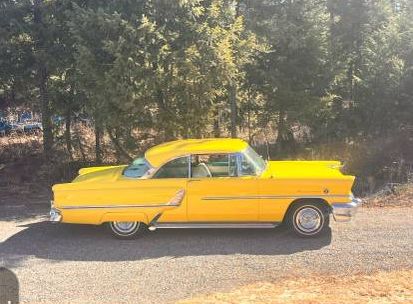
1955 Mercury Monterey
What to Look For
On 1952–1956 Montereys, inspect the lower door skins, sill areas, and floor pans — standard rust locations on any early Ford-family car. The flathead V8 in 1952–1953 cars is prone to cracked blocks from overheating — verify the cooling system has been maintained and the block has been magna-fluxed if there's any doubt. On the Sun Valley (1954), inspect the Plexiglas roof insert for cracks and yellowing — replacement is difficult and expensive. On 1966–1967 claimed 427 FE cars, verify the engine codes against the VIN and any available broadcast sheet documentation — a transplanted 427 has no performance provenance. On any full-size Monterey, inspect the rear trunk floor for water intrusion rust and check the power window circuits for connector corrosion.Pre-Purchase Checklist
-
Lower Door Rust (1952–1956)
Probe lower door skins and sills — standard failure locations on all early Ford-family cars. -
Flathead Block Integrity
On 1952–1953 flathead cars, verify no cooling system history of overheating — cracked blocks are a known risk. -
Sun Valley Plexiglas
On 1954 Sun Valley, inspect the roof Plexiglas for cracks and yellowing — replacement is expensive and difficult. -
427 FE Documentation
On claimed 427 cars, verify engine codes against broadcast sheet or VIN documentation — clones exist. -
Trunk Floor Rust
Check trunk pan for water intrusion rust — common on all full-size Mercurys of any era. -
Power Window Circuits
Test all power windows through full travel — connector corrosion causes common failures. -
FE Carburetor Condition
Cold start and warm idle on 390/427 FE — varnished carbs from sitting are standard on undriven cars. -
Exhaust Manifolds
Listen for ticking at cold start — FE manifold cracks are common on high-mileage examples.
Common Issues
Lower door rust and floor pan corrosion on 1952–1956 cars. Flathead V8 overheating and block cracking if cooling system has been neglected. Sun Valley Plexiglas roof yellowing and cracking — extremely difficult to source correct replacements. Mid-1960s power window circuit failures. 427 FE documentation absent on claimed original cars — clone risk. 390 FE carburetor varnish on long-stored cars. Exhaust manifold cracks on high-mileage FE engines. 1971–1974 trunk floor rust from water intrusion through aging seals.More Monterey for sale
 Dealer
United States
Dealer
United States
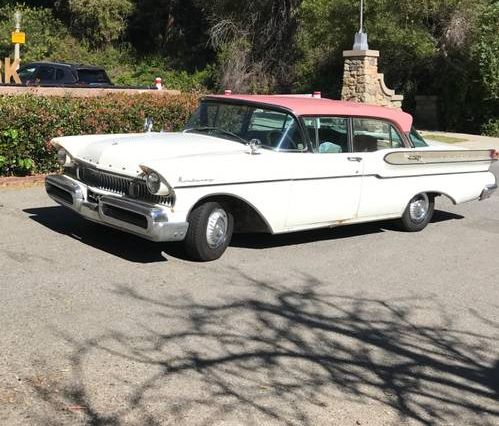
1957 Mercury Monterey
 Dealer
United States
Dealer
United States
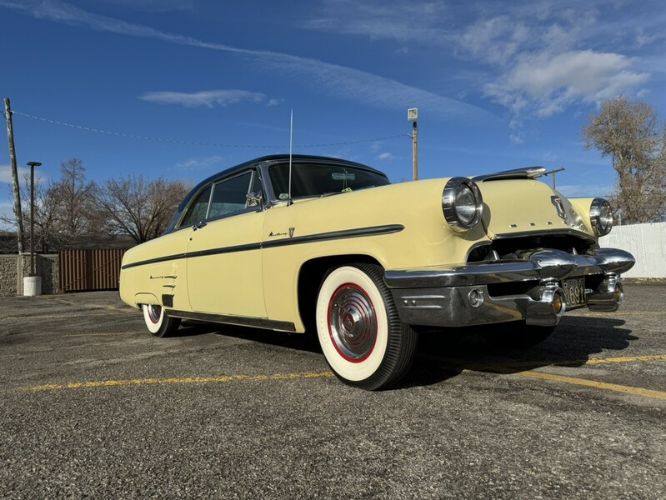
1953 Mercury Monterey
Pricing Guide
1952–1953 Monterey flathead V8 (driver): $12,000–$25,000. 1954–1956 Monterey Y-block (driver): $10,000–$22,000. 1954 Sun Valley Plexiglas (original): $25,000–$50,000. 1966–1967 Monterey 390ci: $9,000–$20,000. 1966–1967 Monterey factory 427ci (documented): $28,000–$55,000. 1968–1970 Monterey 429ci: $8,000–$18,000. 1971–1974 Monterey: $5,000–$12,000. Custom-built early Montereys (show quality): $30,000–$150,000+ depending on builder and provenance.Fun Facts
The 1954 Mercury Monterey Sun Valley with its transparent Plexiglas roof insert was one of America's first production cars with a factory sunroof concept — and it was discontinued after one year because the greenhouse heat made summer driving unbearable. The Hirohata Merc — the most famous custom car ever built, completed by the Barris shop in 1952 — used a 1951 Mercury as its base, one year before the Monterey name arrived. The 427ci FE engine offered in the 1966–1967 Monterey was the same engine winning Le Mans and Daytona for Ford during those years — making the full-size Monterey the only family-car-sized vehicle that shared an engine with Le Mans winners.Frequently Asked Questions
Ready to find your Monterey?
Browse 6+ active Mercury Monterey listings on Classic Cars Arena.
View Listings →