
What goes wrong with a Datsun 240Z?

I've documented every nut and bolt on multiple 240Z restorations since 2010. The car's failure modes are well-understood and mostly addressable — but rust is the one variable that determines whether a Z is worth buying at all, and it must be evaluated in person before any money changes hands.
Rust: The Deal-Breaker
No other issue on a 240Z comes close to rust in cost and complexity. The critical zones are:
- Frame rails: The main unibody rails on either side of the car. Rust here is structural — expensive to repair correctly and impossible to hide from an informed inspector.
- Floor pans: Virtually every survivor has some floor pan rust. Replacement pans are available from vendors including Motorsport Auto and are DIY-installable with patience.
- Front strut towers: Where the MacPherson strut bolts to the unibody. Rust here compromises suspension geometry and requires welding by someone who knows Z chassis geometry specifically.
- Rocker panels: External but structurally significant on the Z's unibody. Surface rust is manageable; through-rust requires panel replacement.
- Spare tire well: The first place water typically pools. A rotted spare tire well usually means the adjacent rear frame rails are compromised as well.
Carburetion
The twin SU carburetors (HS-type on 1970–1972 cars) are straightforward when properly synchronized but frustrating when out of sync or worn. Rebuilding the diaphragms, needles, and seats is a weekend job with a rebuild kit ($80–$120 per carb). Many owners convert to Weber DCOE sidedrafts — better performance and simpler adjustment, but a departure from originality that affects collector value.
Suspension Bushings
Original rubber suspension bushings are degraded on every unrestored 240Z. Urethane replacements from Energy Suspension or Prothane cost $150–$300 for a complete set and transform the car's handling precision. Rear differential mounts also deteriorate and affect wheel alignment under load — check these at inspection.
Engine Notes
The L24 straight-six is genuinely reliable when the cooling system is maintained, valve clearances are adjusted every 30,000 miles, and oil is changed regularly. Head gasket failure is uncommon on healthy engines; the typical culprits are overheating from neglected coolant or sludging from extended oil change intervals. On any unknown Z engine, run a compression test first — healthy L24s read 170–185 psi, even across all six cylinders.
Browse current listings
 Dealer
 United States
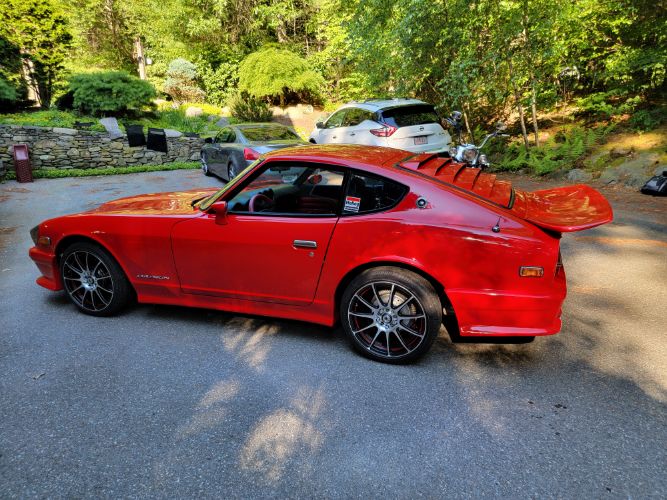
1973 Datsun 240Z
 Dealer
United States
Dealer
United States
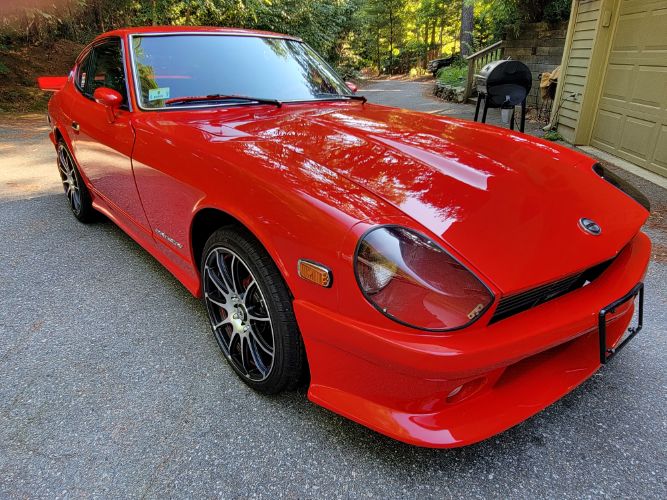
1973 Datsun 240Z
 Dealer
United States
Dealer
United States
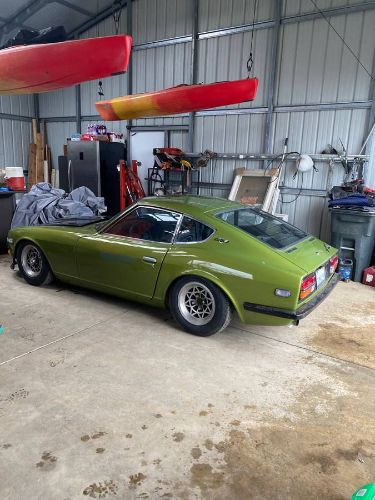
1970 Datsun 240Z
 Dealer
United States
Dealer
United States
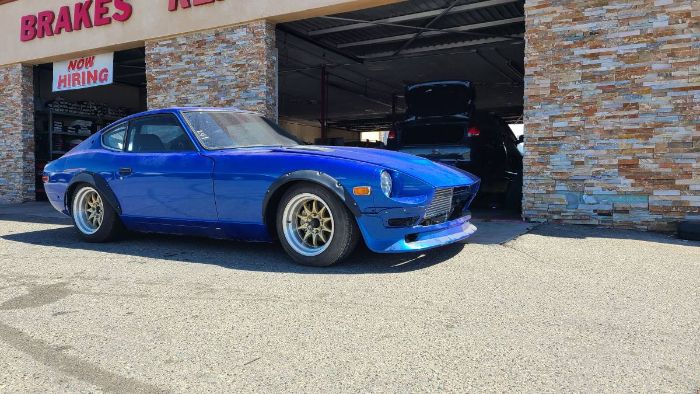
1974 Datsun 240Z
 Dealer
United States
Dealer
United States
1973 Datsun 240Z
 Dealer
United States
Dealer
United States